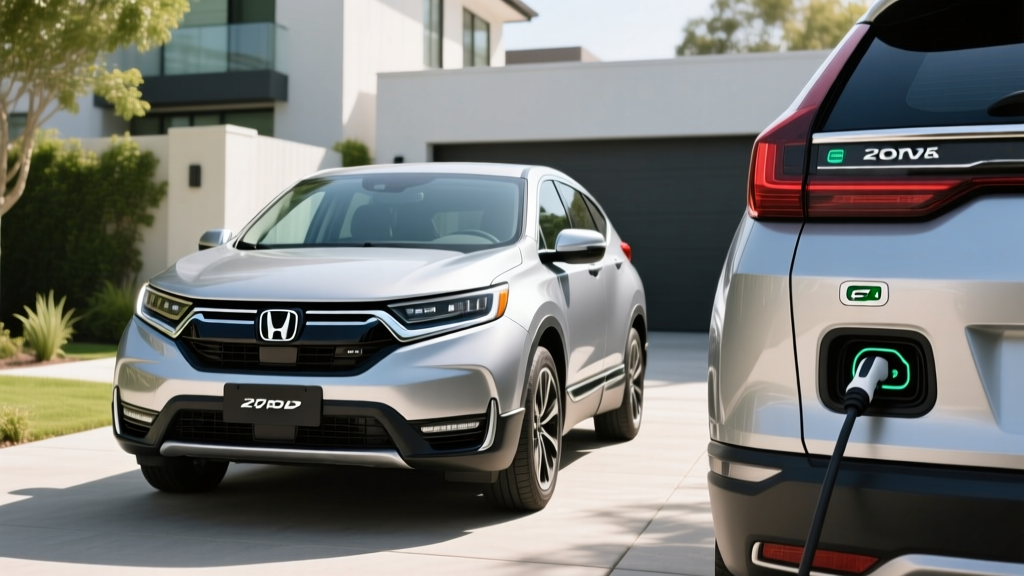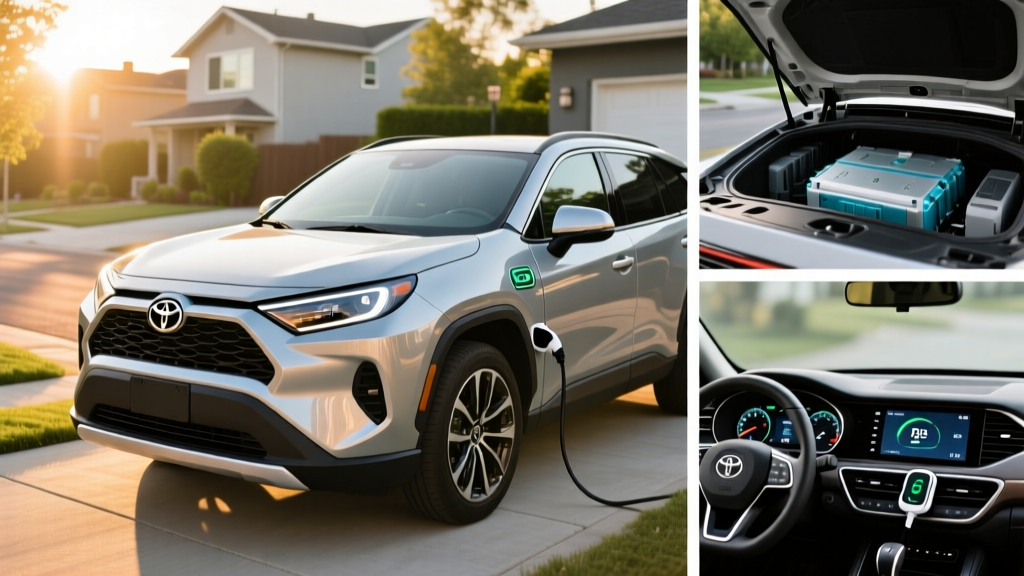
If you've ever watched a Toyota Prius glide silently away from a stoplight or seen a RAV4 Prime blast past merging traffic on pure electric power, you've witnessed hybrid motor technology in action. But the question remains: how does a hybrid motor work, and what actually separates a conventional hybrid (HEV) from a plug-in hybrid (PHEV)?
This guide breaks down the engineering behind hybrid powertrains using real 2026 model-year data — EPA MPG figures, battery capacities, charging times, and ownership costs — so you can decide whether an HEV, PHEV, or full battery-electric vehicle (BEV) fits your driving life.
The Core Principle: Two Power Sources, One Drivetrain
A hybrid vehicle pairs an internal combustion engine (ICE) with one or more electric motor-generators and a battery pack. The electric motor doesn't just assist the engine — in many modern hybrids, it's the primary drive source at low speeds, with the gasoline engine acting as a generator or supplemental power provider.
Here's what happens under the hood during typical driving:
- Low-speed / city driving: The electric motor propels the car using energy from the battery. The gas engine may stay off entirely.
- Acceleration: Both the engine and electric motor deliver torque simultaneously, giving hybrids their characteristic punch off the line.
- Cruising: The gas engine takes over at steady highway speeds, operating in its most efficient RPM range.
- Deceleration and braking: The electric motor reverses function, becoming a generator that captures kinetic energy and sends it back to the battery. This is regenerative braking — the reason hybrids achieve such strong city MPG.
- Idle / stopped: The engine shuts off completely, eliminating fuel waste at red lights.
The magic lies in the power-split device (in Toyota-style systems) or the clutch-based architecture (in Hyundai/Kia and European designs) that seamlessly blends power from both sources without the driver noticing transitions.
HEV vs PHEV: What's the Real Difference?
This is where buyer confusion starts. Both are "hybrids," but the ownership experience is fundamentally different.
| Feature | Conventional Hybrid (HEV) | Plug-In Hybrid (PHEV) |
|---|---|---|
| Battery size | 1.0–2.0 kWh (small) | 13–25 kWh (large) |
| Plug-in charging | No — charges via engine + regen | Yes — Level 1/Level 2 required for full benefit |
| Electric-only range | 1–2 miles at low speed | 25–50 miles (EPA rated) |
| Gas engine role | Primary power source, motor assists | Backup / range extender after battery depletes |
| Best for | No home charging access, high-mileage commuters | Home chargers, short commutes + occasional road trips |
| Federal tax credit (§30D) | Not eligible | Up to $7,500 (subject to income, MSRP, sourcing rules) |
| Typical price premium over gas model | $1,500–$3,000 | $5,000–$10,000 |
The critical takeaway: conventional hybrids never need to be plugged in. They generate all their electricity internally through regenerative braking and the engine-driven generator. PHEVs can operate without plugging in, but you'll forfeit the electric-only range that makes them worthwhile.
How the Hybrid Motor Actually Drives the Wheels
Modern hybrid systems use one of three architectures, each with distinct trade-offs:
Series-Parallel (Power-Split) — Toyota, Lexus
A planetary gearset connects the engine, motor-generator 1 (MG1), and motor-generator 2 (MG2). MG2 drives the wheels; MG1 acts as a starter and generator. The system continuously varies the ratio of engine-to-electric power. This is why the 2026 Toyota Prius achieves an EPA-estimated 57 MPG combined — the engine almost never operates outside its peak efficiency band.
P2 Parallel Hybrid — Hyundai, Kia, BMW
An electric motor sits between the engine and transmission, connected via a clutch. The motor can drive the wheels independently (EV mode), assist the engine, or regenerate during braking. This architecture delivers stronger electric-only performance and more natural driving feel, at the cost of slightly lower overall efficiency.
Series Hybrid (Range Extender) — Some PHEVs
The gas engine never directly drives the wheels. It only generates electricity to feed the motor or charge the battery. This is rare in passenger cars but common in heavy-duty applications.
Real-World MPG: What the EPA Sticker Doesn't Tell You
Hybrid fuel economy is uniquely sensitive to driving conditions. Here's how EPA numbers translate to real roads:
| 2026 Model | Type | EPA City | EPA Hwy | EPA Combined | Real-World Expectation |
|---|---|---|---|---|---|
| Toyota Prius LE | HEV | 57 | 56 | 57 | 52–60 MPG (city-favors hybrid) |
| Honda Accord Hybrid | HEV | 51 | 44 | 48 | 44–52 MPG (exceeds EPA in stop-and-go) |
| Toyota RAV4 Prime | PHEV | 94 MPGe | 84 MPGe | 38 MPG (gas only) | 42 mi EV range; 36–40 MPG after depletion |
| Hyundai Tucson PHEV | PHEV | 80 MPGe | 77 MPGe | 35 MPG (gas only) | 33 mi EV range; 32–36 MPG after depletion |
| Ford Escape Hybrid | HEV | 42 | 36 | 39 | 36–43 MPG (city-heavy drivers see gains) |
Key pattern: Hybrids consistently exceed their EPA city rating in stop-and-go traffic because regenerative braking recovers energy that gas cars waste as heat. Highway MPG may fall slightly below EPA at sustained 75+ mph speeds where aerodynamic drag dominates and regen opportunities are minimal.
PHEV electric-only range reality check: EPA-rated EV range assumes moderate temperatures and mixed driving. In cold weather (below 35°F), expect 15–25% range reduction due to battery resistance and cabin heating demands. Highway-speed EV range will also be 10–20% lower than rated due to the energy cost of overcoming drag without engine assistance.
PHEV Deep Dive: Battery, Charging, and Electric Range
If you're considering a plug-in hybrid, the battery and charging specs determine whether it fits your routine.
| 2026 PHEV Model | Battery (kWh usable) | EV Range (EPA) | Level 2 Charge Time (0–100%) | DC Fast Charge | Combined HP |
|---|---|---|---|---|---|
| Toyota RAV4 Prime | 14.9 kWh | 42 mi | ~2.5 hrs (240V/16A) | No | 302 hp |
| Jeep Wrangler 4xe | 17.3 kWh | 22 mi | ~2.0 hrs (240V/32A) | No | 375 hp |
| Hyundai Tucson PHEV | 13.8 kWh | 33 mi | ~1.75 hrs (240V/32A) | No | 261 hp |
| BMW X5 xDrive50e | 25.7 kWh | 38 mi | ~3.5 hrs (240V/32A) | No (7.4 kW AC max) | 483 hp |
| Chrysler Pacifica PHEV | 16.0 kWh | 32 mi | ~2.0 hrs (240V/32A) | No | 260 hp |
Important note on DC fast charging: As of 2026, the vast majority of PHEVs do not support DC fast charging. Their batteries are small enough that Level 2 (240V) charging fully replenishes them in under three hours, making DC infrastructure unnecessary for most owners. If you need rapid charging, a full BEV is the appropriate choice.
Charging Costs for PHEVs
At the US average residential electricity rate of ~$0.17/kWh (EIA, 2025 data), fully charging a 14.9 kWh RAV4 Prime battery costs roughly $2.53. That's about $0.06 per electric mile — compared to $0.14–$0.18 per mile on gasoline at $3.50/gallon and 35 MPG.
Battery Longevity: Warranty, Degradation, and Replacement Cost
Hybrid battery warranty standard: Federal emissions regulations require manufacturers to warranty hybrid battery packs for a minimum of 8 years / 100,000 miles (10 years / 150,000 miles in California and states adopting CARB standards). This applies to both HEVs and PHEVs.
Hybrid battery degradation is real but manageable:
- HEV batteries (1–2 kWh) experience shallow charge/discharge cycles — they rarely go below 40% or above 80% state of charge. This conservative management means many original Prius batteries exceed 200,000 miles before significant capacity loss.
- PHEV batteries (13–25 kWh) cycle more deeply but still maintain a buffer. Expect 10–15% capacity loss over 10 years / 100,000 miles based on current NMC chemistry data.
Replacement Costs
If a hybrid battery fails outside warranty:
- HEV (Prius, Camry, Accord Hybrid): $2,000–$4,500 for OEM replacement; refurbished options available for $1,000–$2,000
- PHEV (RAV4 Prime, Tucson PHEV): $6,000–$10,000 for OEM replacement due to larger pack size
For context, Consumer Reports data indicates that fewer than 5% of hybrid owners report battery failure before 150,000 miles. The risk is real but statistically low.
Tax Credits and Incentives: What You Actually Qualify For
Federal and state incentives differ sharply between HEVs and PHEVs:
- Conventional hybrids (HEVs): Not eligible for the federal §30D Clean Vehicle Credit. Some states offer modest rebates ($250–$500) — check your state energy office.
- Plug-in hybrids (PHEVs): May qualify for up to $7,500 under IRS §30D, subject to:
- Buyer income caps: $150,000 single / $300,000 joint MAGI
- MSRP caps: $80,000 for SUVs, pickups, vans; $55,000 for sedans
- Battery component and critical mineral sourcing requirements (phased in through 2026)
- Point-of-sale transfer available — dealer applies credit at purchase
2026 reality: Battery sourcing requirements have tightened significantly. Several PHEVs that qualified in 2024 no longer meet critical-mineral thresholds. Always verify current eligibility on the fueleconomy.gov tax credit lookup before purchasing.
Hybrid vs PHEV vs EV: Which Fits Your Life?
Choose a conventional hybrid (HEV) if:
- You cannot install a home charger (apartment, street parking)
- You drive 15,000+ miles/year with mixed city/highway
- You want maximum MPG without changing any habits
- Upfront budget is tight — HEVs carry the smallest price premium
Choose a plug-in hybrid (PHEV) if:
- You have home Level 2 charging (240V outlet or hardwired station)
- Your daily commute is under 40 miles round-trip (covers most US commutes)
- You take 2–4 road trips per year and don't want to plan around charging
- You qualify for the §30D credit, offsetting the higher purchase price
Choose a full battery-electric vehicle (BEV) if:
- You have reliable home charging and access to DC fast chargers for trips
- You want zero tailpipe emissions and minimal maintenance (no oil changes, no engine)
- Your daily driving is predictable and under 250 miles
- You plan to own the vehicle 8+ years (lower total cost of ownership despite higher upfront cost)
Pros and Cons: The Honest Hybrid Ownership Picture
Advantages
- HEVs deliver 40–57 MPG with zero behavioral change — no plugs, no apps, no range planning
- PHEVs offer 25–42 miles of silent, zero-emission commuting with a gas backup for road trips
- Regenerative braking extends brake pad life — many hybrid owners report 80,000+ miles on original pads
- Hybrid batteries carry 8–10 year warranties, and real-world failure rates are low
- Strong resale value — Toyota and Honda hybrids consistently rank among the best-retained vehicles
Limitations
- HEVs still burn gasoline — no electric-only commuting, no emissions-free operation
- PHEVs require home charging infrastructure to justify the price premium ($1,000–$2,000 for Level 2 installation)
- PHEV battery replacement costs ($6,000–$10,000) are significantly higher than HEV ($2,000–$4,500)
- PHEV cargo space is often reduced due to larger battery placement under the rear seat or floor
- Most PHEVs lack DC fast charging, limiting quick top-ups on road trips
- Hybrid powertrains add mechanical complexity — two systems to maintain instead of one
Frequently Asked Questions
How many MPG does a hybrid get in real-world driving?
Conventional hybrids like the 2026 Toyota Prius LE achieve an EPA-rated 57 MPG combined. In real-world city driving with frequent stops, many owners report 55–62 MPG because regenerative braking recovers energy gas cars waste. Highway-only driving at 75+ mph may drop to 48–52 MPG. PHEVs deliver 80–94 MPGe in electric mode and 33–40 MPG after the battery depletes.
How far can a PHEV go on electric only?
Current 2026 PHEVs offer 22–42 miles of EPA-rated electric-only range. The Toyota RAV4 Prime leads at 42 miles; the Hyundai Tucson PHEV delivers 33 miles. In cold weather (below 35°F), expect 15–25% range reduction. Once the battery depletes, the gas engine engages seamlessly and the vehicle operates as a conventional hybrid with 33–40 MPG.
Do conventional hybrids need to be plugged in?
No. Conventional hybrids (HEVs) charge their small battery entirely through regenerative braking and the engine-driven generator. You simply fill up with gas and drive. Plug-in hybrids (PHEVs) can be plugged in to charge a larger battery for electric-only driving, but will still operate as a hybrid if you never plug them in — you just lose the EV range benefit.
Is a hybrid reliable, and what does battery replacement cost?
Hybrid powertrains from Toyota, Honda, and Hyundai have strong reliability records. Hybrid batteries are warranted for 8 years/100,000 miles (10 years/150,000 miles in CARB states). Out-of-warranty HEV battery replacement costs $2,000–$4,500; PHEV replacement runs $6,000–$10,000. Statistical failure rates before 150,000 miles are under 5% based on long-term ownership data.
Does a hybrid qualify for a federal tax credit?
Conventional hybrids (HEVs) do not qualify for the federal §30D Clean Vehicle Credit. Plug-in hybrids (PHEVs) may qualify for up to $7,500, subject to buyer income limits ($150K single / $300K joint), MSRP caps ($80K SUVs / $55K sedans), and battery sourcing requirements that have tightened through 2026. Always verify eligibility at fueleconomy.gov and consult a tax professional before relying on credit estimates.
Should I buy a hybrid, PHEV, or full electric vehicle?
If you lack home charging, choose an HEV — it requires no infrastructure changes. If you have home charging and a commute under 40 miles, a PHEV lets you drive electric daily while keeping gas flexibility for road trips. If you have home charging, access to DC fast chargers, and predictable driving under 250 miles daily, a full BEV offers the lowest operating costs and zero tailpipe emissions over 8+ years of ownership.