If you've ever wondered how a car can sip fuel in stop-and-go traffic yet still deliver confident highway passing power, the answer lies in hybridization. Unlike a conventional gasoline car that relies solely on an internal combustion engine (ICE), a hybrid pairs that engine with one or more electric motors and a battery pack. The result is a vehicle that recaptures energy normally wasted during braking, shuts off the engine when it isn't needed, and in some cases drives on electricity alone for short distances.
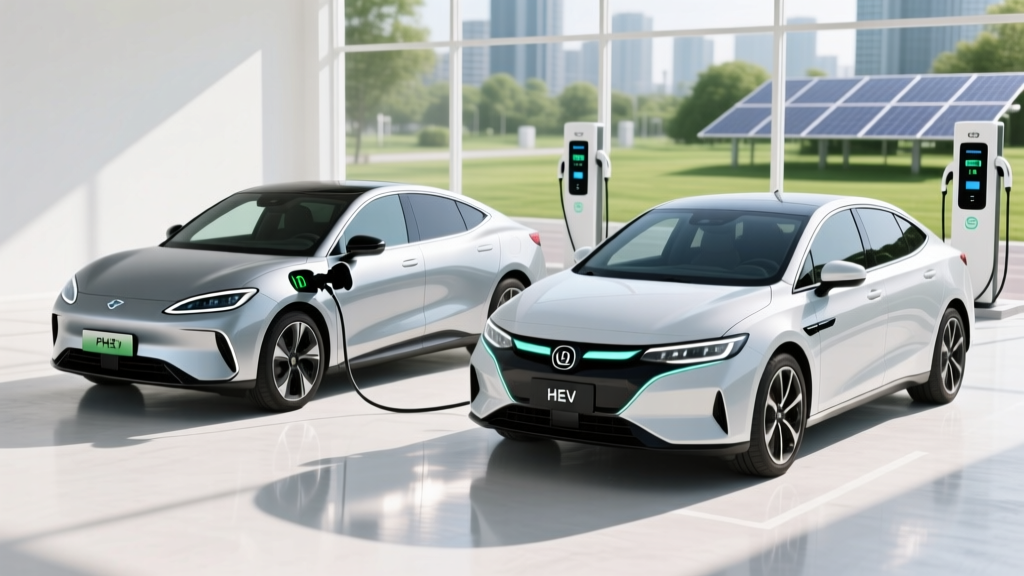
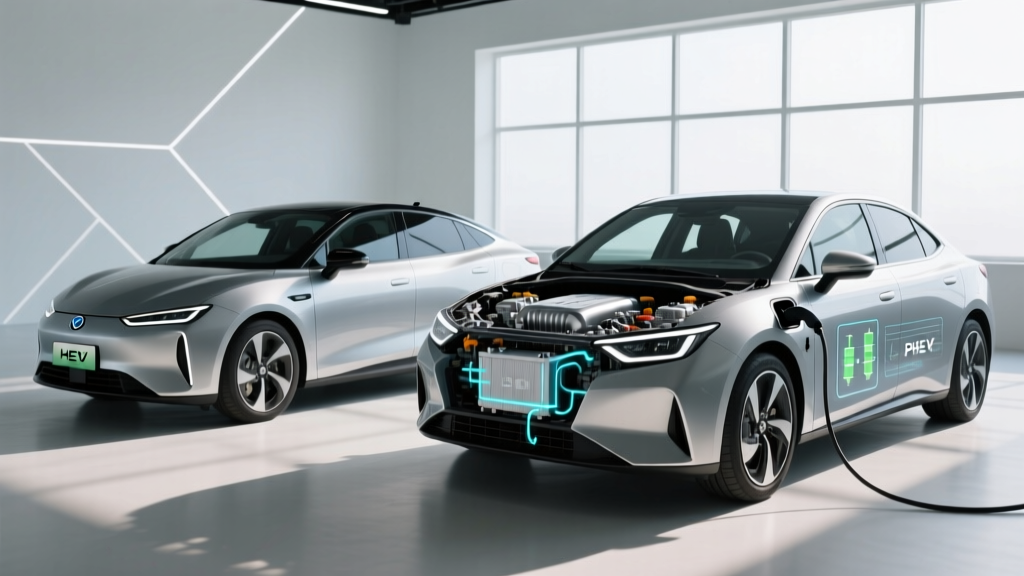
But not all hybrids are the same. The two architectures on the market today — conventional hybrids (HEVs) and plug-in hybrids (PHEVs) — function differently, cost different amounts, and suit different lifestyles. This guide breaks down exactly how each works, the real-world MPG you can expect, battery longevity, and whether a hybrid, PHEV, or full battery-electric vehicle (BEV) is the right move for your garage.
Conventional Hybrid (HEV) vs Plug-In Hybrid (PHEV): The Core Difference
HEV (Conventional Hybrid)
A conventional hybrid has a small battery — typically 1.0 to 1.8 kWh — that you never plug in. The battery charges exclusively through regenerative braking (converting kinetic energy back into electricity during deceleration) and by the gasoline engine acting as a generator. The electric motor assists the engine during acceleration and can power the car at very low speeds for brief distances (usually under 1 mile). Examples: Toyota Prius, Honda Accord Hybrid, Hyundai Tucson Hybrid.
PHEV (Plug-In Hybrid)
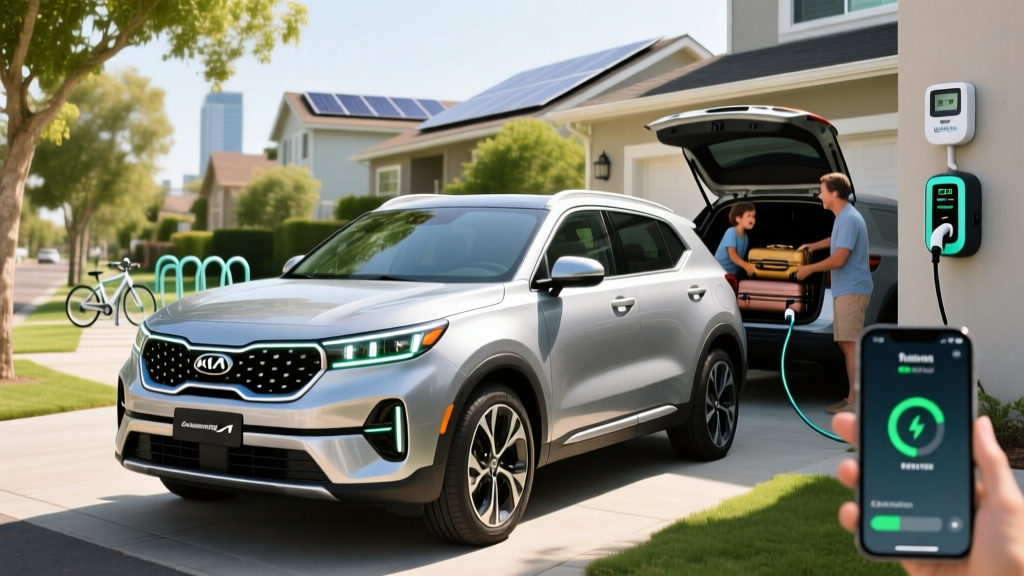
A plug-in hybrid carries a much larger battery — typically 13 to 25+ kWh — that you plug in to charge via a standard J1772 connector (Level 1 or Level 2). This larger battery enables 25 to 50+ miles of pure electric driving before the gasoline engine engages. Once the battery depletes, the vehicle operates as a conventional hybrid. Examples: Toyota RAV4 Prime, Jeep Wrangler 4xe, Hyundai Tucson PHEV.
| Attribute | HEV (Conventional Hybrid) | PHEV (Plug-In Hybrid) |
|---|---|---|
| Battery size | 1.0–1.8 kWh | 13–25+ kWh |
| Plug-in charging | No — self-charging only | Yes — Level 1 (120V) or Level 2 (240V) |
| Electric-only range | Under 1 mile at low speed | 25–50+ miles at highway speed |
| DC fast charging | N/A | Rare; some models (e.g., Mitsubishi Outlander PHEV) support it |
| Gasoline engine role | Primary propulsion + generator | Backup after EV range depletes; highway assist |
| Federal tax credit (§30D) | Not eligible | Up to $7,500 if eligible (see below) |
How a Hybrid Powertrain Actually Works
At the heart of every hybrid is an energy management system — a computer that decides, dozens of times per second, whether the engine, the electric motor, or both should provide propulsion. Here's the sequence in everyday driving:
- Start-up and low-speed driving: The electric motor propels the car using battery energy. The gasoline engine stays off, producing zero fuel consumption and zero noise.
- Acceleration: Both the engine and electric motor work together, combining their torque for stronger acceleration than either could produce alone. This is where hybrids shine — electric motors deliver peak torque from 0 RPM, filling in the low-end gap that small engines often have.
- Cruising: The engine runs at its most efficient RPM range. Excess engine power can spin a generator to recharge the battery.
- Deceleration and braking: Regenerative braking engages. The electric motor reverses its function, acting as a generator that converts the car's kinetic energy into electricity, storing it in the battery. This is energy that a conventional car wastes as heat in the brake pads.
- Stopped: The engine shuts off completely. The battery powers climate control, infotainment, and accessories. When you press the accelerator, the electric motor launches the car instantly while the engine restarts seamlessly.
In a PHEV, steps 1 and 2 can operate in pure EV mode for an extended range because of the larger battery. The engine doesn't engage until you exceed EV range, demand heavy acceleration, or drive at sustained high speeds where the engine is more efficient.
Real-World MPG: What the EPA Numbers Mean
Hybrids are rated by the EPA using standardized city, highway, and combined cycles. Here's a representative look at popular 2025–2026 models, with data from fueleconomy.gov:
| Model (2025/2026) | City MPG | Hwy MPG | Combined MPG | EV Range (PHEV) |
|---|---|---|---|---|
| Toyota Prius (HEV) | 57 | 56 | 57 | N/A |
| Honda Accord Hybrid | 51 | 44 | 48 | N/A |
| Toyota RAV4 Hybrid | 41 | 38 | 39 | N/A |
| Toyota RAV4 Prime (PHEV) | 94 MPGe | 84 MPGe | 94 MPGe | 42 mi |
| Hyundai Tucson PHEV | 80 MPGe | 75 MPGe | 80 MPGe | 33 mi |
| Jeep Wrangler 4xe (PHEV) | 49 MPGe | — | 49 MPGe | 21 mi |
PHEV Electric-Only Range and Total Range
For PHEV buyers, the electric-only range is the number that matters most for daily commuting. Here's how the leading models break down:
- Toyota RAV4 Prime: 42 miles EV-only on a full 18.1 kWh battery. Total combined range (EV + gas): ~600 miles.
- Hyundai Tucson PHEV: 33 miles EV-only on a 13.8 kWh battery. Total combined range: ~440 miles.
- Toyota Prius Prime: 44 miles EV-only (SE trim) on an 13.6 kWh battery. Total combined range: ~610 miles.
- Chrysler Pacifica PHEV: 32 miles EV-only on a 16 kWh battery. Total combined range: ~520 miles.
Charging time: Most PHEVs charge on Level 1 (120V household outlet) in 8–12 hours, or on a Level 2 (240V) home charger in 2–4 hours. This is practical for overnight charging. DC fast charging is extremely rare on PHEVs — the Mitsubishi Outlander PHEV is one of the few that supports it, accepting up to 22 kW DC to reach 80% in roughly 38 minutes. Most PHEVs rely on Level 2 exclusively.
Powertrain Specs: Where the Power Comes From
Hybrid powertrains combine engine and motor output, often producing more combined horsepower than the gasoline engine alone. Here are representative figures:
| Model | Engine | Electric Motor | Combined HP | 0–60 mph |
|---|---|---|---|---|
| Toyota Prius (HEV) | 2.0L I4 | 83 hp (front) | 196 hp | 7.2 sec |
| Toyota RAV4 Prime (PHEV) | 2.5L I4 | 182 hp (front) + 54 hp (rear) | 302 hp | 5.7 sec |
| Honda Accord Hybrid | 2.0L I4 | Two-motor system | 204 hp | 7.0 sec |
| Jeep Wrangler 4xe (PHEV) | 2.0L Turbo I4 | Integrated motor | 375 hp / 470 lb-ft | 6.0 sec |
The RAV4 Prime is a standout example: its 302 combined horsepower makes it the quickest RAV4 Toyota sells — quicker than the gas-only V6 variant — while still returning 94 MPGe in EV mode. That dual benefit (performance + efficiency) is the core appeal of PHEV architecture.
Pricing and Federal Tax Credit Eligibility
Hybrid and PHEV pricing spans a wide range. Here's what the current market looks like at base MSRP:
- Toyota Prius (HEV): Starting ~$28,350
- Toyota Prius Prime (PHEV): Starting ~$33,475
- Honda Accord Hybrid: Starting ~$33,655
- Toyota RAV4 Prime (PHEV): Starting ~$44,615
- Hyundai Tucson PHEV: Starting ~$39,725
- Jeep Wrangler 4xe (PHEV): Starting ~$50,690
- MSRP cap: Vans, SUVs, and trucks must be under $80,000; sedans under $55,000.
- Buyer income cap: Modified AGI must not exceed $150,000 (single), $225,000 (head of household), or $300,000 (joint).
- Battery sourcing: Critical minerals and battery components must meet phased-in domestic/free-trade-partner sourcing thresholds that tighten each year.
- Point-of-sale transfer: As of 2024, you can transfer the credit to the dealer for an immediate price reduction rather than claiming it at tax time.
Rules change annually. Consult a tax professional and verify current eligibility at fueleconomy.gov before purchasing.
Battery Longevity, Warranty, and Replacement Cost
Hybrid Battery Warranty Standards
Federal law mandates that hybrid and EV batteries carry a minimum warranty of 8 years / 100,000 miles. In states that follow California Air Resources Board (CARB) standards — including California, New York, Massachusetts, and several others — the warranty extends to 10 years / 150,000 miles.
Most manufacturers warrant the battery to retain at least 60–70% of its original capacity over the warranty period. In practice, hybrid batteries degrade slowly. Toyota's nickel-metal hydride (NiMH) packs in the Prius have a well-documented track record of lasting 150,000–200,000+ miles with minimal degradation. Modern lithium-ion packs in PHEVs show similarly gradual capacity loss.
Replacement cost: If a hybrid battery does fail outside warranty, replacement costs vary:
- Toyota Prius HEV battery: $2,000–$4,000 (remanufactured or new OEM)
- RAV4 Prime / larger PHEV battery: $6,000–$12,000 depending on capacity and sourcing
- Third-party refurbishment: Some shops offer individual cell replacement for $500–$1,500, though this is less common for newer models
The fear of a catastrophic battery replacement bill is largely overstated for hybrids. Unlike early-generation EVs, hybrid batteries are small, thermally managed, and never cycled to full 0% or 100% state of charge — the onboard computer maintains a buffer that dramatically extends cycle life.
Hybrid vs PHEV vs EV: Which Fits Your Life?
Choose a Conventional Hybrid (HEV) If:
- You lack access to home or workplace charging
- You want maximum simplicity — no plugs, no charging apps, no range planning
- Your budget is under $35,000
- You drive mostly in the city where regenerative braking maximizes efficiency
- You want proven long-term reliability with minimal new technology risk
Choose a PHEV If:
- You can charge at home (even a 120V outlet works overnight)
- Your daily commute is under 40 miles round-trip (you'll rarely use gas)
- You take occasional long road trips and want zero range anxiety
- You want EV-like daily driving without committing to full electrification
- You qualify for the federal tax credit, offsetting the higher MSRP
Choose a Full EV (BEV) If:
- You have reliable home Level 2 charging
- Your daily driving is within the vehicle's real-world range
- You want the lowest per-mile fuel cost and zero tailpipe emissions
- You're ready to plan longer road trips around DC fast-charging stops
- You want maximum performance and minimal maintenance
Reliability: What the Data Shows
Hybrids consistently rank among the most reliable vehicles in long-term ownership surveys. Toyota's hybrid system, in particular, has an extensive track record — the Prius has been in continuous production since 1997 globally, and its powertrain architecture has been refined across five generations. Consumer Reports frequently ranks Toyota and Lexus hybrid models at the top of their reliability charts.
The reason is partly mechanical simplicity: hybrid systems eliminate the traditional starter motor, alternator, and in many cases the conventional transmission (Toyota's e-CVT uses a planetary gearset with no clutches or bands to wear). Fewer moving parts means fewer failure points.
For PHEVs, reliability data is more limited but trending positively. The additional complexity of a larger battery, onboard charger, and charge port does introduce more potential failure points than a conventional HEV. However, the battery and powertrain components are well-warrantied, and the electric drive system itself has fewer wear items than a gasoline powertrain.
Frequently Asked Questions
How many MPG does a hybrid get?
It varies by model and driving conditions. The most efficient conventional hybrid, the Toyota Prius, achieves an EPA-estimated 57 MPG combined. Midsize sedans like the Honda Accord Hybrid deliver 48 MPG combined. Compact SUV hybrids like the RAV4 Hybrid achieve 39 MPG combined. In real-world city driving, many owners report matching or slightly exceeding EPA city numbers thanks to regenerative braking.
How far can a PHEV go on electric only?
Current PHEVs offer 21 to 44 miles of electric-only range depending on the model. The Toyota Prius Prime leads at 44 miles (SE trim), the RAV4 Prime delivers 42 miles, and the Hyundai Tucson PHEV provides 33 miles. Once EV range depletes, the gasoline engine takes over seamlessly, giving total ranges of 400–600+ miles.
Do conventional hybrids need to be plugged in?
No. Conventional hybrids (HEVs) charge their batteries exclusively through regenerative braking and the gasoline engine. You fuel them like a normal car — just pump gas and drive. Only plug-in hybrids (PHEVs) require or benefit from being plugged in.
Is hybrid battery replacement expensive?
Replacement costs range from roughly $2,000 for a remanufactured Prius battery to $12,000 for a larger PHEV pack. However, most hybrid batteries last the life of the vehicle — 150,000 to 200,000+ miles is common. The federally mandated warranty covers at least 8 years/100,000 miles (10 years/150,000 miles in CARB states), providing substantial protection.
Does a hybrid qualify for a tax credit?
Only plug-in hybrids (PHEVs) can qualify for the federal §30D tax credit, which offers up to $7,500 depending on battery sourcing, vehicle MSRP, and buyer income. Conventional hybrids (HEVs) do not qualify for the federal credit, though some states offer separate rebates. Check current eligibility on IRS.gov.
Is a PHEV better than a full EV?
Neither is universally better — they serve different needs. A PHEV is ideal if you can charge at home but also take frequent long road trips where charging infrastructure is sparse. A full EV offers lower per-mile cost, zero tailpipe emissions, and less maintenance but requires reliable charging access and route planning for longer trips. If your daily commute is under 40 miles and you charge nightly, a PHEV can operate on electricity 90%+ of the time while keeping a gas backup.