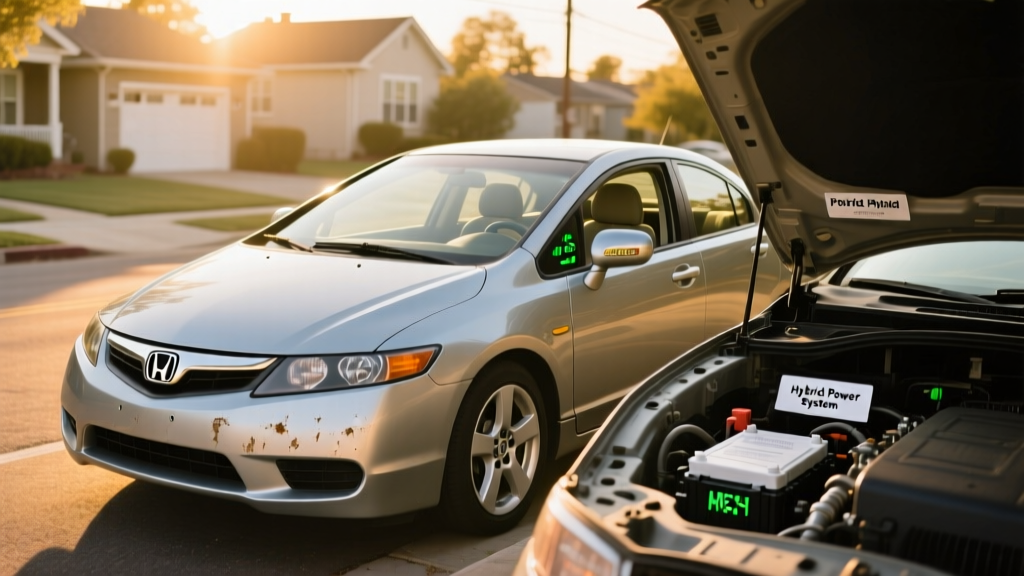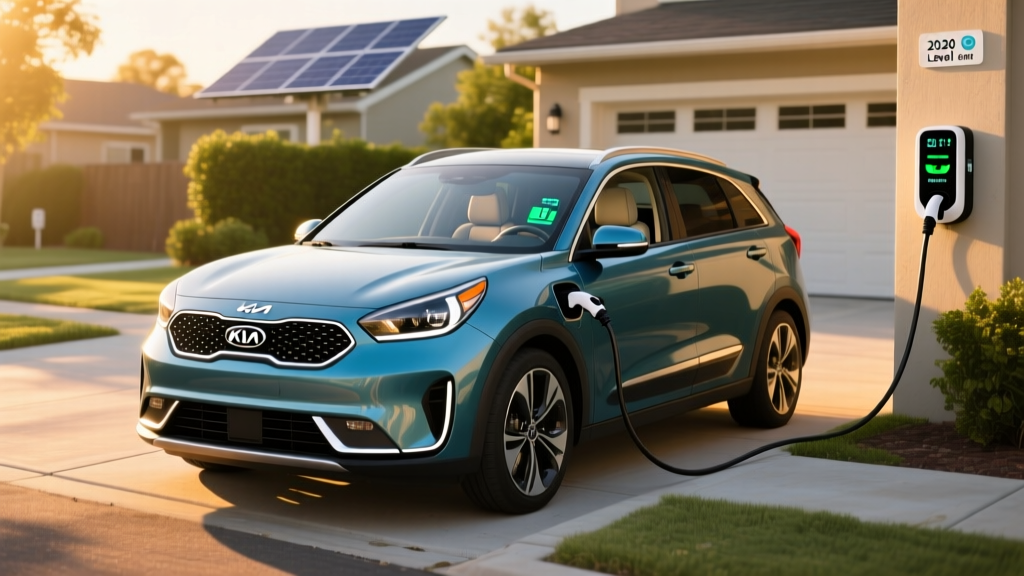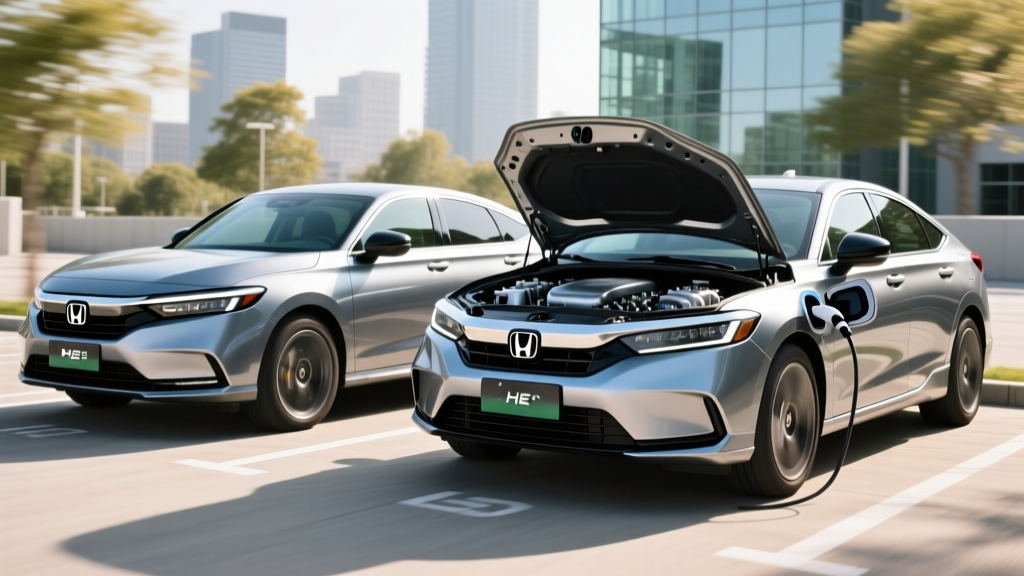
If you've ever watched the energy-flow display on a Honda dashboard and wondered what all those arrows mean, you're not alone. Honda's hybrid lineup has expanded dramatically, and understanding how a Honda hybrid works — whether it's a conventional hybrid (HEV) or a plug-in hybrid (PHEV) — is the key to picking the right one for your commute, your budget, and your charging situation.
This guide walks through Honda's two hybrid architectures available in the 2026 model year, explains the mechanical differences, and gives you the exact numbers (MPG, kWh, horsepower, warranty) you need to decide.
HEV vs PHEV: Two Very Different Honda Hybrids
Before diving into components, the single most important distinction: Honda sells two fundamentally different types of hybrids, and confusing them is the most common mistake buyers make.
| Feature | Conventional Hybrid (HEV) | Plug-In Hybrid (PHEV) |
|---|---|---|
| Plug in to charge? | No — refuels with gas only | Yes — plug in for electric-only miles |
| Battery size | ~1.1 kWh (small buffer) | ~17 kWh usable (Clarity successor / CR-V e:PHEV) |
| Electric-only driving | Very short, low-speed only | 30–47 miles EPA depending on model |
| Primary fuel | Gasoline | Electricity + gasoline |
| DC fast charging | N/A | No (Level 2 AC only) |
| Federal tax credit | None | Up to $7,500 (subject to §30D rules) |
Conventional Honda hybrids like the Accord Hybrid, CR-V Hybrid, and Civic Hybrid never need a plug. They generate all their electricity internally. Plug-in hybrids, which Honda has offered in the CR-V e:PHEV in select markets, add a larger battery and the ability to drive meaningful distances on electricity alone before the gas engine takes over.
The Heart of the System: Honda's e:HEV Powertrain
Honda's conventional hybrid system, branded e:HEV, is fundamentally different from the hybrid system in a Toyota Prius. Rather than blending engine and motor power through a planetary gearset, Honda uses a series-dominant hybrid architecture. Here's how it works in practice:
Three Driving Modes
- EV Drive — The battery powers the electric motor alone. The engine stays off. This happens at low speeds, during gentle acceleration, and when coasting. On a conventional HEV, EV Drive lasts only a mile or two before the engine restarts.
- Hybrid Drive — The gasoline engine fires up, but not to turn the wheels. Instead, it spins a generator that produces electricity, which then feeds the drive motor. The car is still being propelled entirely by the electric motor. This is where Honda's system feels smooth and EV-like — there are no gear shifts because there's no traditional transmission in the loop.
- Engine Drive — At steady highway speeds (roughly 45+ mph), a lockup clutch engages and the gasoline engine directly drives the wheels through a single fixed gear ratio. This is more efficient at sustained cruising than running the engine as a generator.
The result is a driving experience that feels more like an electric car than most hybrids — responsive torque from the motor, minimal engine drone, and seamless transitions between modes that you mostly won't notice unless you're watching the energy-flow display.
| Model | Engine | Combined HP | Combined Torque (lb-ft) | Drivetrain |
|---|---|---|---|---|
| Accord Hybrid | 2.0L 4-cyl + 2 motors | 204 hp | 247 | FWD |
| CR-V Hybrid | 2.0L 4-cyl + 2 motors | 204 hp | 247 | FWD or AWD |
| Civic Hybrid | 2.0L 4-cyl + 2 motors | 200 hp | 232 | FWD |
All three use Honda's fourth-generation two-motor hybrid system with a 2.0-liter Atkinson-cycle four-cylinder engine. The two-motor setup includes one motor that acts primarily as a generator and one that drives the wheels. Combined system output hovers around 200 horsepower across the lineup, which is plenty for confident highway merging and passing.
Fuel Economy: EPA Numbers vs Real-World MPG
Honda hybrids consistently deliver strong EPA ratings, and because of their series-dominant architecture, they tend to exceed their EPA city estimates in real-world stop-and-go driving — the exact opposite of most gas cars.
| Model | City MPG | Highway MPG | Combined MPG | Real-World Expectation |
|---|---|---|---|---|
| Accord Hybrid | 51 | 44 | 48 | 44–52 combined (city-heavy routes can exceed EPA) |
| CR-V Hybrid (AWD) | 40 | 34 | 37 | 33–39 combined (AWD penalty on highway) |
| CR-V Hybrid (FWD) | 43 | 36 | 40 | 36–42 combined |
| Civic Hybrid | 50 | 47 | 49 | 46–53 combined (light weight helps city efficiency) |
Why city MPG is higher than highway: In city driving, the engine runs only as a generator at its most efficient RPM, and regenerative braking recaptures energy at every stop. On the highway, the engine drives the wheels directly through a fixed ratio, which is efficient but doesn't benefit from regen. Cold weather typically reduces hybrid MPG by 5–10% as the engine runs more often to provide cabin heat.
For context, a comparable non-hybrid 2026 CR-V with the 1.5L turbo gets 28/34/30 MPG (city/highway/combined) per fueleconomy.gov. The hybrid's 37–40 combined MPG represents roughly a 23–33% improvement — meaningful fuel savings over a 10-year ownership period.
Battery Technology, Warranty, and Replacement Costs
Hybrid battery longevity remains the top concern for buyers switching from a conventional gas car. Here's what Honda's battery system actually looks like and what protections exist.
Honda Hybrid Battery Warranty
Coverage: 8 years / 100,000 miles (10 years / 150,000 miles in CARB states including CA, NY, MA, and others)
What's covered: Battery capacity loss below functional threshold, cell defects, hybrid system components
Chemistry: Lithium-ion (NMC-type cells optimized for power delivery and charge/discharge cycling, not energy density)
The hybrid battery pack in a conventional Honda HEV is small — roughly 1.1 kWh of total capacity — because it doesn't need to store energy for long-distance electric driving. It only needs to buffer energy between the generator, the regenerative braking system, and the drive motor. This small size is actually an advantage for longevity: the battery never undergoes the deep discharge cycles that stress larger EV and PHEV packs.
Honda's hybrid batteries are designed to last the life of the vehicle under normal use. Real-world data from earlier-generation Honda hybrids (Insight, older Accord Hybrids) shows most original batteries still functioning beyond 150,000 miles. When replacement is eventually needed, a refurbished Honda hybrid battery typically costs between $2,000 and $4,000 including labor, while a new OEM unit runs closer to $4,000–$6,000. For most owners, this is a once-in-ownership expense that may never materialize.
Plug-In Hybrids: Honda's PHEV Option
If you want electric-only commuting without committing to a full battery electric vehicle, Honda has offered plug-in hybrid variants — most notably the CR-V e:PHEV in select markets. Here's how the PHEV differs mechanically from the conventional HEV:
- Larger battery: ~17 kWh usable capacity (compared to ~1.1 kWh in the HEV)
- Electric-only range: Approximately 37–47 miles EPA, enough for most daily commutes without using gasoline
- Level 2 AC charging: A full charge takes roughly 2.5–3 hours on a 240V Level 2 home charger. Honda PHEVs do not support DC fast charging.
- Total combined range: 400+ miles when combining a full battery charge with a full gas tank
- ChargeDepleting → ChargeSustaining: Once the battery is depleted, the PHEV operates exactly like a conventional HEV, using the same e:HEV series-hybrid logic
The PHEV makes sense if you have reliable access to Level 2 charging at home or work and a commute under 40 miles round-trip. You'll drive most days on electricity (paying the equivalent of roughly $1.00–$1.50 per gallon in electricity costs) while retaining the gas engine for road trips. If you can't charge regularly, the PHEV's extra battery weight becomes dead weight, and a conventional HEV is the smarter choice.
Pricing and Tax Credit Eligibility
Here's where the math gets interesting — and where Honda's conventional hybrids stand apart from their PHEV counterparts.
| Model | Starting MSRP | Hybrid Premium vs Gas | Federal Tax Credit |
|---|---|---|---|
| Civic Hybrid (Sport) | ~$29,995 | +$1,000–$1,500 | None (HEV) |
| Accord Hybrid (Sport) | ~$33,650 | +$1,500 | None (HEV) |
| CR-V Hybrid (Sport AWD) | ~$37,695 | +$1,500 | None (HEV) |
| CR-V e:PHEV (if available) | ~$42,000 est. | +$5,000+ | Up to $7,500 (subject to §30D) |
Conventional Honda hybrids (HEVs) do not qualify for the federal §30D tax credit. That credit applies only to plug-in vehicles with a minimum battery capacity and that meet critical-mineral sourcing and battery-component requirements under current IRS rules. However, the hybrid premium on Honda's HEVs is typically just $1,000–$1,500 over the gas equivalent, and the fuel savings usually pay that back within 18–30 months at current gas prices.
For the PHEV variant, eligibility for the full $7,500 credit depends on your income (AGI caps: $150K single / $300K joint), the vehicle's MSRP (must be under $80,000 for SUVs), and whether the battery meets critical-mineral and component sourcing thresholds. The credit can now be transferred to the dealer at the point of sale, reducing your purchase price directly. Always verify current-year eligibility with a tax professional before relying on the credit in your purchase decision.
Who Should Choose a Honda Hybrid vs a Full EV or Gas Car?
The right choice depends on three factors: your charging access, your daily mileage, and your willingness to adapt your fueling habits.
Choose a Honda HEV If:
- You can't charge at home (apartment, street parking, no garage)
- You want 40–50 MPG without changing any habits
- You regularly take road trips and don't want to plan around chargers
- You want a modest price premium ($1,000–$1,500) with fast payback
- You live in a cold climate where EV range loss is a concern
Choose a Honda PHEV If:
- You have Level 2 charging at home or work
- Your round-trip commute is under 40 miles
- You want EV-like daily driving with gas-car road-trip freedom
- You can capture the federal tax credit to offset the higher MSRP
- You want to reduce your gasoline consumption by 70%+ on most days
And Choose a Full EV (like a Honda Prologue) If:
- You have reliable home charging and your daily driving is under 250 miles
- You want zero tailpipe emissions and minimal maintenance (no oil changes, no engine)
- You qualify for the full $7,500 federal credit and any state incentives
- You're comfortable with public DC fast charging for road trips
For the majority of buyers who lack home charging or who regularly drive long distances, Honda's conventional HEV lineup offers the best balance of efficiency, simplicity, and value. The e:HEV system is proven, the fuel savings are real, and the driving experience is noticeably smoother than a conventional gas powertrain.
Reliability: What the Data Shows
Honda's hybrid powertrains have built a strong reliability record over multiple generations. The e:HEV system has fewer wear components than a traditional automatic transmission — there's no multi-speed gearbox, no torque converter, and no traditional starter motor (the generator motor handles engine starts). The electric motors themselves are essentially maintenance-free.
Key reliability considerations:
- Brake wear is reduced: Regenerative braking handles most deceleration, so friction brake pads often last 80,000+ miles.
- No transmission fluid changes: The e-CVT uses a simple clutch mechanism rather than a complex planetary gearset or belt system.
- Engine runs less: Less engine runtime means less oil contamination and potentially longer intervals between oil changes, though Honda still recommends following the maintenance minder system.
- IIHS safety: Current Honda hybrid models consistently earn Top Safety Pick or Top Safety Pick+ ratings from IIHS, with the hybrid powertrain having no negative impact on crash performance.
The hybrid system adds complexity compared to a pure EV (which has no engine), but far less complexity than a conventional gas car with a multi-speed automatic transmission. For most owners, the hybrid system is effectively invisible — it just works and delivers better fuel economy without any behavioral change.
Frequently Asked Questions
How many MPG does a Honda hybrid get?
The 2026 Civic Hybrid achieves 50 city / 47 highway / 49 combined MPG. The Accord Hybrid gets 51/44/48 MPG. The CR-V Hybrid (AWD) achieves 40/34/37 MPG. Real-world city driving often exceeds EPA estimates by 2–4 MPG thanks to frequent regenerative braking. Highway efficiency may fall 3–5 MPG below the EPA sticker, especially at speeds above 70 mph or in cold weather.
Do I need to plug in a Honda hybrid?
No — not the conventional hybrid (HEV) models like the Accord Hybrid, CR-V Hybrid, and Civic Hybrid. These charge their small battery entirely through the gasoline engine and regenerative braking. Only the plug-in hybrid (PHEV) variant requires plugging in to access its electric-only range.
How long will the Honda hybrid battery last?
Honda warranties the hybrid battery for 8 years/100,000 miles (10 years/150,000 miles in CARB states). In practice, Honda's lithium-ion hybrid batteries are designed to last the life of the vehicle. The small pack size (~1.1 kWh in HEVs) means shallow charge cycles that cause minimal degradation. Most original batteries in earlier-generation Honda hybrids have exceeded 150,000 miles without requiring replacement.
What does a Honda hybrid battery replacement cost?
A new OEM Honda hybrid battery replacement typically costs $4,000–$6,000 including labor. Refurbished or reconditioned units are available for $2,000–$4,000. Given the battery's longevity record, most original owners will never face this expense.
Does the Honda hybrid qualify for a federal tax credit?
Conventional Honda hybrids (HEVs) do not qualify for the federal §30D clean vehicle tax credit, which is reserved for plug-in electric vehicles meeting battery sourcing and buyer income requirements. Honda PHEV models may qualify for up to $7,500, subject to MSRP caps, AGI limits, and critical-mineral sourcing rules. Check current eligibility at irs.gov or consult a tax professional before purchasing.
Is a Honda hybrid better than a full EV?
It depends on your situation. A Honda HEV is better if you can't charge at home, take frequent long road trips, or want maximum simplicity with no charging infrastructure dependence. A full EV (like the Honda Prologue) is better if you have home charging, want zero tailpipe emissions, and drive under 250 miles daily. The hybrid offers a middle ground — significantly better fuel economy than gas, with zero lifestyle changes required.
How does regenerative braking work in a Honda hybrid?
When you lift off the accelerator or press the brake pedal, the drive motor reverses its function and becomes a generator, converting the car's kinetic energy into electricity that recharges the hybrid battery. This slows the car without using the friction brakes. Honda's system provides moderate regen — it won't enable true one-pedal driving like many full EVs, but it noticeably reduces brake wear and recaptures energy in stop-and-go traffic.
Honda's hybrid technology has matured into one of the most efficient and driver-friendly systems on the market. The e:HEV architecture's series-dominant design delivers a smooth, EV-like feel while requiring nothing more from you than filling up with gas. Whether you choose the Civic Hybrid for 49 MPG in a compact package, the Accord Hybrid for a midsize sedan with 48 combined, or the CR-V Hybrid for SUV practicality at 37–40 MPG, the underlying technology is proven, well-warranted, and delivers real fuel savings from day one.