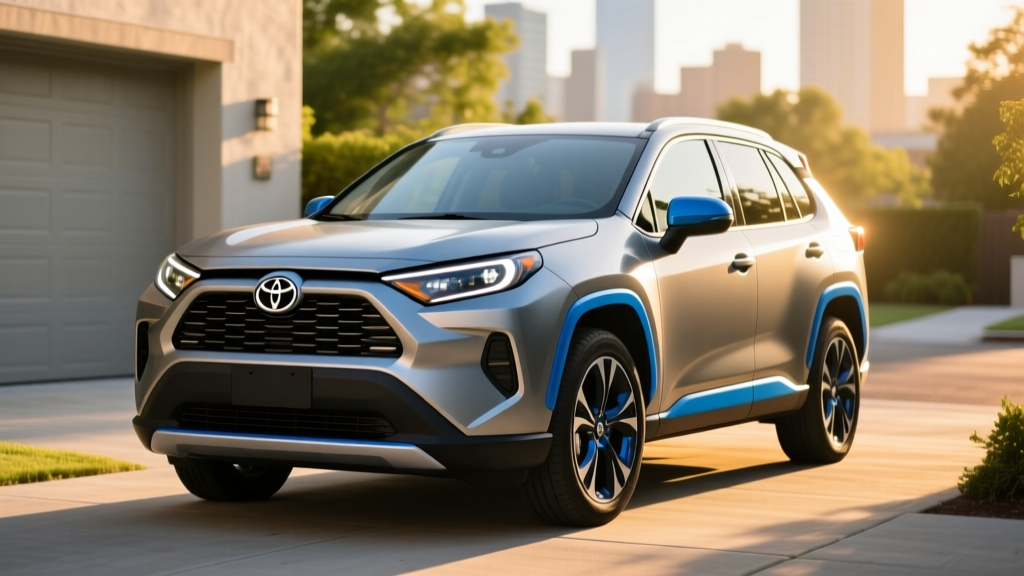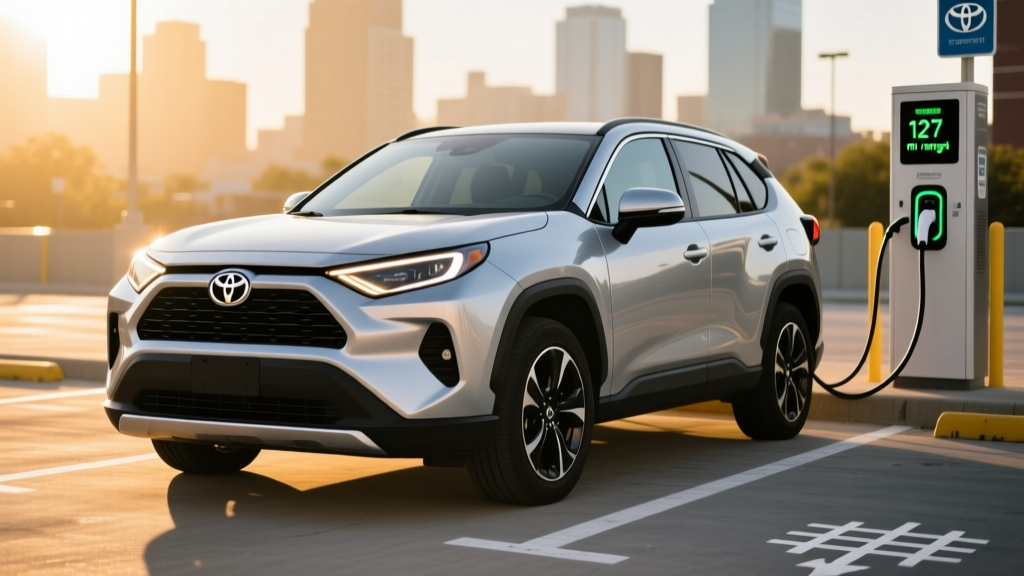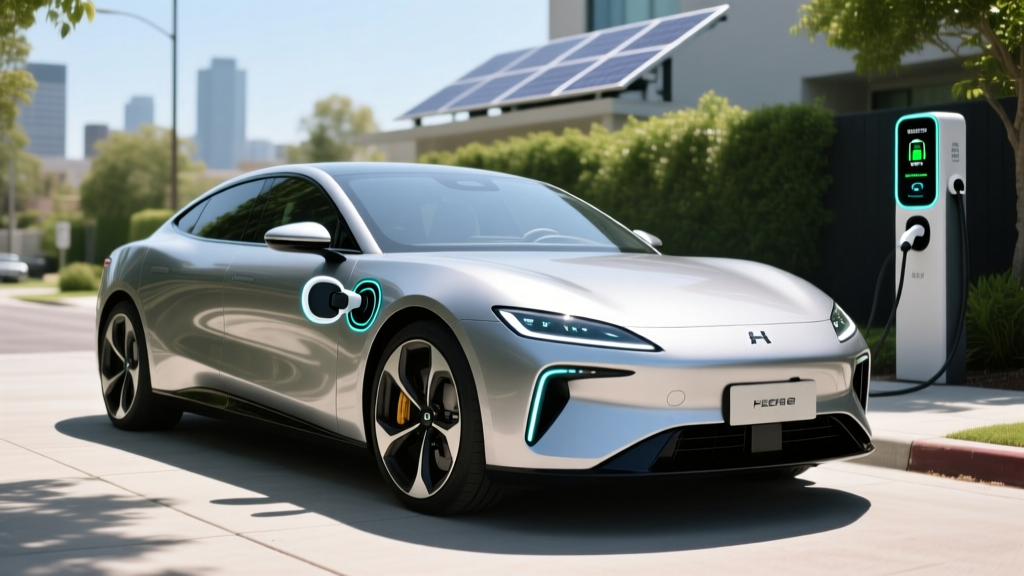
If you've been researching electrified vehicles, you've likely encountered the term "plug-in hybrid" and wondered how it differs from a conventional hybrid or a full battery-electric vehicle. The answer matters enormously for your fuel budget, your commute, and whether you need to install a home charger. This guide explains exactly how plug-in hybrid electric vehicles (PHEVs) work, what they deliver in real-world driving, and how to decide if one is the right fit for your garage in 2026.
The Basics: How a Plug-In Hybrid Powertrain Actually Works
A plug-in hybrid pairs two power sources — a gasoline engine and an electric motor fed by a rechargeable battery — but with a critical twist that separates it from a conventional hybrid. The battery in a PHEV is substantially larger (typically 10 to 25 kWh usable) and can be recharged from an external power source: a standard 120V wall outlet, a 240V Level 2 home charger, or, on some models, a public DC fast charger.
Here's the operating sequence most PHEVs follow:
- Electric-first mode: When you start driving with a charged battery, the vehicle runs purely on electricity. The gasoline engine stays off. This gives you 20 to 45+ miles of zero-tailpipe-emission driving, depending on the model.
- Blended mode: Under heavy acceleration or at higher speeds, some PHEVs briefly engage the gas engine to supplement electric power, even before the battery is depleted.
- Charge-depleted (hybrid) mode: Once the battery reaches its minimum state of charge (SoC), the gasoline engine takes over as the primary power source. From this point, the vehicle operates like a conventional hybrid — using regenerative braking and engine-generated electricity to maintain a small buffer.
The key mechanical components include:
- Lithium-ion battery pack (10–25 kWh usable, typically NMC chemistry)
- Electric motor (70–200+ hp, depending on model)
- Gasoline engine (usually a 1.5L to 2.5L four-cylinder, Atkinson-cycle for efficiency)
- Power control unit / inverter managing energy flow between battery, motor, and engine
- Onboard charger (3.3 kW to 7.2 kW AC, converting grid power to DC for the battery)
Unlike a full battery-electric vehicle (BEV), a PHEV never leaves you dependent on charging infrastructure. When the battery depletes, you simply keep driving on gasoline — with fuel economy often comparable to or slightly below a conventional hybrid.
HEV vs. PHEV: The Critical Differences Buyers Must Know
This is the most common point of confusion among electrified-vehicle shoppers, so let's make it unambiguous.
| Feature | Conventional Hybrid (HEV) | Plug-In Hybrid (PHEV) |
|---|---|---|
| Battery size | 0.5–2 kWh | 10–25 kWh |
| Plug-in charging? | No — never plugs in | Yes — Level 1, Level 2, some DC |
| Electric-only range | ~1 mile or less at low speed | 20–45+ miles |
| Gas engine role | Primary power, supplemented by motor | Backup after electric range depletes |
| Federal tax credit | None | Up to $7,500 (§30D, with restrictions) |
| Typical price premium | $1,000–$3,000 over gas model | $4,000–$8,000 over gas model |
A conventional hybrid like the Toyota Prius recharges its small battery exclusively through regenerative braking and the gasoline engine. You never plug it in. A PHEV like the Toyota RAV4 Prime or Chrysler Pacifica Hybrid gives you meaningful electric-only driving — but only if you plug it in regularly. Buy a PHEV and never charge it, and you're simply carrying around several hundred pounds of dead battery weight, getting worse fuel economy than a lighter HEV.
Electric-Only Range and Total Range: What PHEVs Deliver in 2026
Electric-only range is the single most important PHEV specification because it determines how much of your daily driving can be done without burning a drop of gasoline. The EPA tests each PHEV for its all-electric range, and for the 2025–2026 model year, the landscape looks like this:
| 2026 PHEV Model | Battery (kWh) | EV Range (mi) | Combined MPG (after depletion) |
Total Range (mi) | Combined HP |
|---|---|---|---|---|---|
| Toyota RAV4 Prime | 18.1 | 42 | 38 | ~600 | 302 |
| Toyota Prius Prime | 13.6 | 44 | 48 | ~510 | 220 |
| Hyundai Tucson PHEV | 13.8 | 33 | 35 | ~440 | 261 |
| Jeep Wrangler 4xe | 17.3 | 22 | 20 | ~370 | 375 |
| Chrysler Pacifica Hybrid | 16.0 | 32 | 30 | ~460 | 260 |
| Ford Escape PHEV | 14.4 | 37 | 40 | ~480 | 210 |
Real-world caveat: EPA electric-range figures assume moderate temperatures and mixed driving. In cold weather (below 35°F), expect a 15–25% reduction in electric-only range due to battery chemistry limitations and cabin heating demands. Highway-speed driving at 75+ mph also reduces electric range because aerodynamic drag increases exponentially. A RAV4 Prime rated at 42 miles electric may deliver 32–35 miles on a 30°F winter morning with the heater running.
Source: fueleconomy.gov — EPA's official PHEV testing database.
Charging a PHEV: Speeds, Times, and What You Need at Home
One of the biggest practical questions PHEV buyers face is how to charge at home. The good news: PHEV batteries are small enough that even a standard household outlet works — though slowly.
| Charging Level | Power (kW) | Time to Full (14 kWh battery) |
Equipment Needed | Estimated Cost |
|---|---|---|---|---|
| Level 1 (120V household) | 1.2–1.4 kW | 10–12 hours | Included cord, standard outlet | $0 (included) |
| Level 2 (240V home charger) | 3.3–7.2 kW | 2–4.5 hours | 240V outlet or hardwired EVSE | $500–$1,500 install |
| DC Fast Charge | 50 kW (select models) | ~25 min (10–80%) | Public CCS/NACS station | Per-session fee |
Key detail most buyers miss: Not all PHEVs support DC fast charging. The Toyota RAV4 Prime and Prius Prime, for example, charge only on AC power (Level 1 and Level 2). The Mitsubishi Outlander PHEV is one of the few that supports CHAdeMO DC fast charging. Most newer PHEVs with DC capability use the CCS1 connector, and as the industry transitions to NACS, some 2026 models are beginning to adopt that standard.
For most PHEV owners, overnight Level 1 charging is sufficient. If your daily commute is 30 miles round-trip and your PHEV offers 35+ miles of electric range, plugging into a standard 120V outlet when you get home will fully replenish the battery by morning. A Level 2 charger becomes worthwhile if you need midday top-ups or have a larger battery (18+ kWh).
Level 2 home installation costs vary widely. Expect $500–$800 if you already have a 240V outlet (like a dryer outlet) near your parking spot. If you need a new circuit run from your electrical panel, budget $1,000–$2,000. A panel upgrade (from 100A to 200A service) can add $1,500–$3,000 — consult a licensed electrician for your specific situation.
Fuel Economy Breakdown: EPA MPG and Real-World Results
PHEVs report fuel economy in two ways, and understanding both is essential for comparing them fairly:
- MPGe (miles per gallon equivalent): Measures efficiency during electric-only operation, converting kWh consumption into a gasoline-equivalent number. This number is high (90–120+ MPGe) but only applies while running on battery.
- Combined MPG (gasoline): Once the battery is depleted, this is the fuel economy the vehicle achieves operating as a conventional hybrid. This is the number that matters for road trips or days you forget to charge.
| 2026 PHEV Model | MPGe (Electric Mode) |
City MPG (Gas Mode) |
Highway MPG (Gas Mode) |
Combined MPG (Gas Mode) |
|---|---|---|---|---|
| Toyota Prius Prime | 127 MPGe | 50 | 47 | 48 |
| Toyota RAV4 Prime | 94 MPGe | 40 | 36 | 38 |
| Ford Escape PHEV | 105 MPGe | 42 | 38 | 40 |
| Hyundai Tucson PHEV | 80 MPGe | 36 | 33 | 35 |
| Jeep Wrangler 4xe | 49 MPGe | 20 | 20 | 20 |
Real-world MPG reality check: Hybrids and PHEVs in charge-depleted mode often exceed their EPA city ratings in real-world stop-and-go traffic because regenerative braking recovers more energy at lower speeds. Conversely, sustained highway driving at 75+ mph typically produces 3–5 MPG below the EPA highway figure. A Prius Prime rated at 50 city / 47 highway may deliver 52–54 MPG in urban driving but drop to 42–44 MPG on a 700-mile interstate trip.
If you charge nightly and drive fewer miles than your PHEV's electric range, you may go months without visiting a gas station. Owners of the RAV4 Prime with sub-40-mile commutes commonly report using under 100 gallons of gasoline per year.
Pricing and Federal Tax Credit Eligibility for PHEVs
PHEVs carry a price premium over their gasoline-only counterparts, typically $4,000 to $8,000, driven by the larger battery pack, electric motor, and onboard charger. Here's where the 2026 lineup stands on base MSRP:
- Toyota Prius Prime: from ~$33,445
- Toyota RAV4 Prime: from ~$44,500
- Ford Escape PHEV: from ~$39,500
- Hyundai Tucson PHEV: from ~$39,750
- Jeep Wrangler 4xe: from ~$51,500
- Chrysler Pacifica Hybrid: from ~$51,000
Does a PHEV qualify for the federal tax credit?
Yes — but with significant restrictions under IRS §30D rules. A qualifying PHEV can receive up to $7,500 in federal tax credits, but eligibility depends on:
- Battery capacity: Must be at least 7 kWh (all current PHEVs meet this).
- MSRP caps: Vans, SUVs, and pickups must be under $80,000; sedans under $55,000.
- Buyer income limits: Modified AGI must not exceed $150,000 (single), $225,000 (head of household), or $300,000 (joint filing).
- Battery sourcing and critical minerals: Increasingly strict requirements on where battery components and minerals are sourced. As of 2026, vehicles with battery components from a "foreign entity of concern" (FEOC) are disqualified.
- Point-of-sale transfer: You can now transfer the credit to the dealer at purchase, reducing your out-of-pocket cost immediately rather than waiting until tax filing.
Critical caveat: Battery sourcing rules have disqualified several PHEVs that previously qualified. Always verify current eligibility on the fueleconomy.gov tax credit page before purchasing. State incentives (like California's CVRP, Colorado's innovative motor vehicle credit, or New York's Drive Clean Rebate) may stack on top — check your state's energy office for current programs.
Battery Longevity, Warranty, and Replacement Costs
PHEV Battery Warranty (Federal Minimum): 8 years / 100,000 miles for emissions-related components including the hybrid battery. In California Air Resources Board (CARB) states, this extends to 10 years / 150,000 miles.
Most manufacturers warrant the battery to retain at least 60–70% of original capacity over the warranty period. If degradation exceeds this threshold, the manufacturer replaces or reconditions the battery at no cost.
Is a PHEV battery reliable long-term?
Real-world data from millions of Toyota, Hyundai, and Ford hybrid vehicles on the road shows that PHEV batteries generally outlast their warranty periods with manageable degradation. A 2024 study by Consumer Reports found that hybrid battery failure rates remain under 5% through year 10 of ownership for major manufacturers.
Typical degradation patterns for PHEV batteries:
- Years 1–3: 2–5% capacity loss
- Years 4–6: 5–10% total loss
- Years 7–10: 10–18% total loss
Because PHEV batteries are smaller than BEV batteries (14 kWh vs. 75+ kWh), a 15% degradation means losing roughly 5–6 miles of electric range — noticeable but not debilitating.
What does PHEV battery replacement cost?
If your battery fails outside the warranty period, replacement costs in 2026 range from approximately:
- $2,500–$4,000 for a Prius Prime or Escape PHEV (smaller 13–14 kWh pack)
- $4,000–$6,500 for a RAV4 Prime or Pacifica Hybrid (larger 16–18 kWh pack)
- $6,000–$9,000 for a Wrangler 4xe (ruggedized pack)
Aftermarket reconditioned and refurbished PHEV batteries are increasingly available at 30–50% below OEM pricing, offering a viable option for older vehicles.
Hybrid vs. PHEV vs. Full EV: Which Is Right for You?
This is the decision that trips up most electrified-vehicle shoppers. Here's a practical framework:
Choose a Conventional Hybrid (HEV) If:
- You cannot charge at home (apartment, street parking, no garage access)
- You want better MPG with zero behavioral change
- Your budget is tight and you don't want the PHEV price premium
- You drive a lot of highway miles where electric range offers less benefit
Choose a Plug-In Hybrid (PHEV) If:
- You can charge at home (even a standard 120V outlet works)
- Your daily round-trip commute is under 35–40 miles
- You take occasional long road trips and don't want charging-infrastructure dependence
- You want EV-like daily driving with gasoline backup for flexibility
- Your household has one vehicle that needs to serve all purposes
Choose a Full Battery Electric Vehicle (BEV) If:
- You have reliable home Level 2 charging
- Your daily driving is predictable and within the vehicle's range
- You want the lowest per-mile fuel cost and minimal maintenance
- You're ready to plan around DC fast charging on road trips
- You want maximum federal and state incentives
The PHEV occupies a specific and valuable niche: it's the one-vehicle solution for households that want electric commuting but aren't ready to commit fully to a BEV. If you have a 25-mile commute, a RAV4 Prime lets you drive it entirely on electricity Monday through Friday, then take a 600-mile road trip on Saturday without a single charging stop.
Pros and Cons of Owning a Plug-In Hybrid
Pros
- 20–45 miles of electric-only commuting — zero gas for short trips
- No range anxiety — gas engine provides 350–600+ total miles
- Eligible for up to $7,500 federal tax credit (with restrictions)
- Lower maintenance than gas cars (regen braking saves brake pads)
- Strong combined horsepower from dual powertrains (220–375 hp)
- Home charging on standard 120V outlet — no expensive install required
- Proven reliability from established manufacturers
Cons
- $4,000–$8,000 price premium over gas-only equivalents
- Must plug in regularly to realize fuel savings — forget to charge and you get worse MPG than an HEV
- Heavier than gas or HEV vehicles (battery weight: 300–500 lbs)
- Less cargo space in some models (battery placement under rear seat or floor)
- Complex powertrain — two systems to potentially maintain long-term
- Electric range drops 15–25% in cold weather
- DC fast charging unavailable on most PHEV models
Frequently Asked Questions
How many MPG does a plug-in hybrid get?
It depends on whether you're running on electricity or gasoline. In electric mode, PHEVs achieve 80–127 MPGe. After the battery depletes, fuel economy ranges from 20 MPG combined (Jeep Wrangler 4xe) to 48 MPG combined (Toyota Prius Prime). If you charge nightly and drive under 35 miles daily, your effective "fuel economy" may be measured in gallons per month rather than miles per gallon.
How far can a PHEV go on electric power alone?
Current 2026 PHEVs offer between 22 miles (Wrangler 4xe) and 44 miles (Prius Prime) of EPA-rated electric-only range. The Toyota RAV4 Prime delivers 42 miles, the Ford Escape PHEV offers 37 miles, and the Hyundai Tucson PHEV provides 33 miles. In cold weather or at sustained highway speeds, expect 15–25% less than the EPA sticker figure.
Do I have to plug in a plug-in hybrid?
You don't have to — but you absolutely should. A PHEV that's never plugged in operates as a heavier, less efficient conventional hybrid. The entire economic case for a PHEV depends on using its electric range daily. If you cannot plug in at home or work, a conventional hybrid (HEV) is a better choice.
Is a PHEV reliable, and what is the battery replacement cost?
PHEVs from Toyota, Hyundai, and Ford have strong reliability records, with hybrid battery failure rates under 5% through 10 years of ownership. The federal warranty mandates 8 years/100,000 miles of battery coverage (10 years/150,000 miles in CARB states). Out-of-warranty battery replacement costs $2,500 to $6,500 depending on the model.
Does a plug-in hybrid qualify for the $7,500 federal tax credit?
Many do, but not all. Under IRS §30D, a PHEV must have a battery of at least 7 kWh, meet MSRP caps ($55,000 for sedans, $80,000 for SUVs/vans/trucks), and satisfy battery-sourcing and critical-minerals requirements. Buyer income caps also apply ($150K single / $300K joint). Always verify eligibility on fueleconomy.gov and consult a tax professional before relying on the credit.
Can a PHEV charge at a DC fast charger?
Most cannot. The majority of current PHEVs — including the RAV4 Prime, Prius Prime, and Escape PHEV — accept only AC charging (Level 1 and Level 2). A few models like the Mitsubishi Outlander PHEV support DC fast charging via CHAdeMO. This is because PHEV batteries are small enough that Level 2 charging fully replenishes them in 2–4 hours, making DC infrastructure less critical.
What happens if the PHEV battery completely dies while driving?
The vehicle seamlessly switches to hybrid mode using the gasoline engine. You'll never be stranded — the gas engine provides full propulsion, and regenerative braking maintains a small battery buffer for acceleration assist. The transition is imperceptible in most modern PHEVs.
Sources: fueleconomy.gov (EPA), IRS §30D Clean Vehicle Credits, manufacturer spec sheets. Pricing and incentive data reflects 2025–2026 model year. Verify current eligibility with official sources before purchasing.