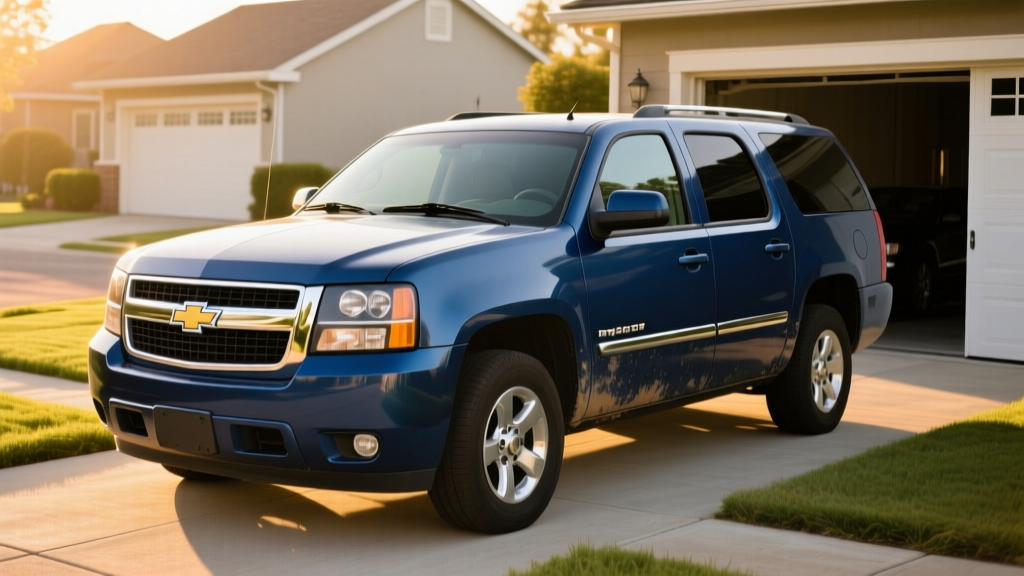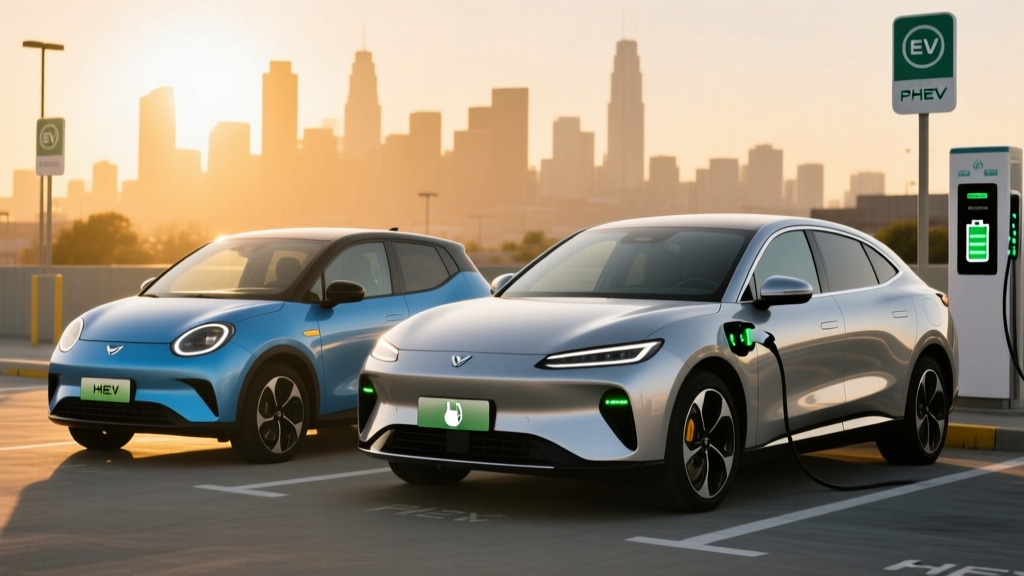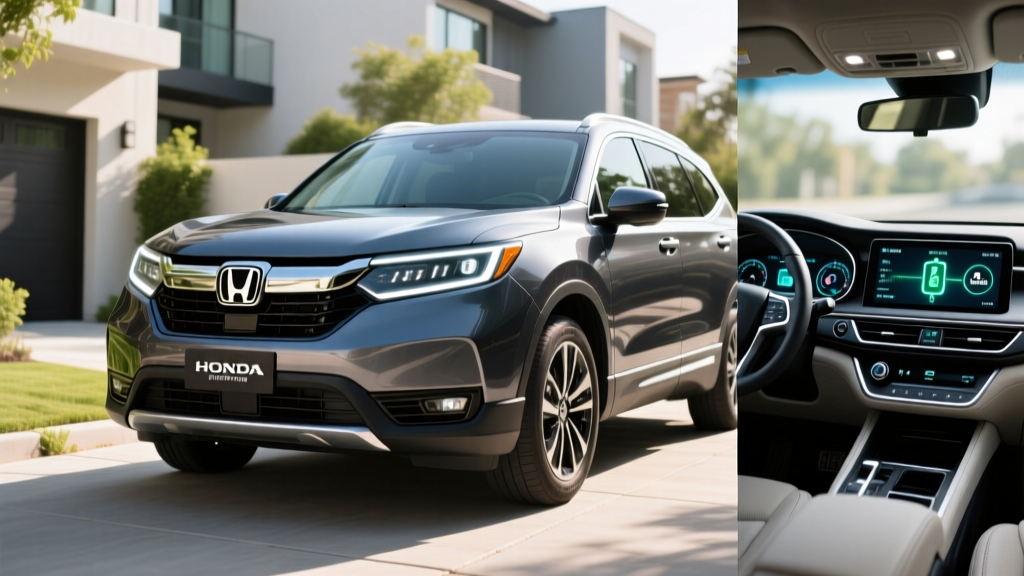
If you've been searching for a three-row family SUV that sips fuel without sacrificing cargo space or towing capability, you've likely asked: does the Honda Pilot have a hybrid? The short answer for the 2026 model year is no — the Pilot is still sold exclusively with a conventional 3.5-liter V6 gasoline engine. But the longer answer involves Honda's broader hybrid strategy, the competing three-row hybrids that do exist, and whether a Pilot hybrid (or PHEV) could be on the horizon. Here's the full picture, with exact specs and real-world ownership data.
The 2026 Honda Pilot Powertrain: Gas-Only for Now
The current-generation Honda Pilot (redesigned for 2023, refreshed for 2025) carries over into 2026 with a single powertrain option across all trims: a 3.5-liter naturally aspirated V6 paired with a 10-speed automatic transmission. There is no hybrid (HEV) variant and no plug-in hybrid (PHEV) variant in the lineup.
| Spec | Value |
|---|---|
| Engine | 3.5L V6, naturally aspirated |
| Horsepower | 285 hp @ 6,000 rpm |
| Torque | 262 lb-ft @ 5,000 rpm |
| Transmission | 10-speed automatic |
| Drivetrain | FWD standard; i-VTM4 AWD available |
| Towing Capacity | Up to 5,000 lbs (AWD, with cooler) |
| 0–60 mph | ~6.6 seconds |
| Base MSRP (LX FWD) | ~$39,590 |
| Top Trim MSRP (Elite AWD) | ~$55,290 |
That 285-hp V6 is smooth and adequate for highway merging and trailer pulls, but fuel economy is where the gas-only Pilot falls behind its hybridized rivals.
How Many MPG Does the 2026 Honda Pilot Get?
According to fueleconomy.gov, the EPA-rated fuel economy for the 2026 Pilot breaks down as follows:
| Drivetrain | City | Highway | Combined |
|---|---|---|---|
| FWD | 19 mpg | 27 mpg | 22 mpg |
| AWD (i-VTM4) | 18 mpg | 25 mpg | 21 mpg |
| TrailSport (AWD) | 18 mpg | 24 mpg | 20 mpg |
Real-World MPG vs. EPA Sticker
In mixed suburban and highway driving, most owners report real-world combined figures within 1–2 mpg of the EPA sticker — typically 20–22 mpg for AWD models. Highway-only trips at 70–75 mph can push 26–27 mpg in FWD trims thanks to the 10-speed's tall overdrive gears. However, heavy city stop-and-go traffic or mountain driving can drop AWD models into the mid-teens. This is where a hybrid system would offer the biggest improvement: conventional hybrids routinely exceed their EPA city rating in real-world stop-and-go driving because regenerative braking recovers energy the Pilot's gas engine simply wastes as heat.
Honda's Hybrid Strategy: Where the Pilot Fits
Honda has committed to expanding its hybrid lineup. As of 2026, the brand offers a two-motor hybrid system in the CR-V Hybrid, Accord Hybrid, and Civic Hybrid. The CR-V Hybrid, for example, achieves an EPA-estimated 40 mpg city / 34 mpg highway / 37 mpg combined with a 2.0L four-cylinder plus dual-motor system producing 204 combined horsepower.
However, Honda has not announced a hybrid Pilot for the 2026 or 2027 model year. Industry speculation points to a possible Pilot hybrid using a turbocharged V6 paired with Honda's next-generation two-motor hybrid system — potentially arriving with the next full redesign, likely around 2028 or 2029. Until then, the Pilot remains a V6-only proposition.
HEV vs. PHEV: What's the Difference?
If Honda does introduce a Pilot hybrid, buyers will need to understand the two main types:
| Feature | Conventional Hybrid (HEV) | Plug-in Hybrid (PHEV) |
|---|---|---|
| Battery Size | ~1–2 kWh | ~15–25 kWh |
| Needs Plug-In? | No — self-charges via regen & engine | Yes — plug in for electric-only miles |
| Electric-Only Range | None (motor assists engine only) | Typically 25–45 miles |
| Charging Hardware | None needed | Level 1 (120V) or Level 2 (240V) |
| DC Fast Charge? | N/A | Rarely — most PHEVs are AC-only |
| Federal Tax Credit | Not eligible (§30D requires plug-in) | Up to $7,500 if sourcing/income rules met |
| Best For | Drivers without home charging access | Drivers with home charging + short commutes |
Three-Row Hybrid SUVs That Exist Today
If hybrid fuel economy in a three-row SUV is a dealbreaker, several competitors already offer what Honda doesn't:
| Model | Type | Combined HP | EPA Combined | Starting MSRP |
|---|---|---|---|---|
| Toyota Grand Highlander Hybrid | HEV | 245 hp (362 hp Hybrid MAX) | 36 mpg (FWD) | ~$47,170 |
| Kia Sorento Hybrid | HEV | 227 hp | 34 mpg | ~$40,090 |
| Hyundai Santa Fe Hybrid | HEV | 232 hp | 34 mpg | ~$42,400 |
| Toyota Highlander Hybrid | HEV | 243 hp | 35 mpg | ~$45,220 |
| Mazda CX-90 PHEV | PHEV | 323 hp | 25 mpg + 26 mi EV | ~$51,400 |
The Toyota Grand Highlander Hybrid is the standout comparison: it seats up to eight, delivers 36 mpg combined (FWD), and offers over 97 cubic feet of cargo space with both rear rows folded — a direct threat to Pilot buyers who want hybrid efficiency. The Mazda CX-90 PHEV is notable as the only plug-in option in this segment, offering 26 miles of electric-only range on a ~17.8 kWh battery (Level 2 charging in approximately 2.5 hours; no DC fast charging).
Does the Honda Pilot Qualify for Any Tax Credit?
No. Because the 2026 Honda Pilot has no plug-in hybrid or electric variant, it does not qualify for the IRS §30D Clean Vehicle Tax Credit. That credit — up to $7,500 — is exclusively available to battery electric vehicles (BEVs) and plug-in hybrids (PHEVs) that meet battery-sourcing, critical-mineral, MSRP cap ($80,000 for SUVs), and buyer income-limit requirements. Conventional hybrids (HEVs) like the CR-V Hybrid are also ineligible.
Some states offer separate incentives for conventional hybrids, but these are increasingly rare as state programs shift focus to BEVs and PHEVs. Check your state's energy or DMV website for current programs.
Reliability, Battery Warranty, and Replacement Cost
Even though the current Pilot has no hybrid battery, it's worth addressing this for buyers considering a future Pilot hybrid or cross-shopping a competitor's hybrid today.
Hybrid Battery Longevity: What to Expect
- Warranty: Federal law mandates that hybrid and EV battery packs carry a minimum warranty of 8 years / 100,000 miles (10 years / 150,000 miles in CARB states like California, New York, and others). Honda, Toyota, and Hyundai all meet or exceed this standard.
- Real-World Lifespan: Modern nickel-metal-hydride (NiMH) and lithium-ion hybrid batteries routinely last 150,000–200,000+ miles before significant degradation. Toyota's hybrid taxis and fleet vehicles have demonstrated 300,000+ miles on original batteries.
- Replacement Cost: If a hybrid battery does fail out of warranty, replacement typically costs $2,000–$4,000 for conventional HEV packs (smaller batteries = lower cost). PHEV packs, being larger, can cost $5,000–$9,000+. Refurbished or individual-cell replacement can reduce this substantially.
- Failure Rate: Hybrid battery failure within the first 10 years is statistically uncommon. Most failures occur in high-mileage vehicles (200,000+ miles) in extreme-heat climates.
The gas-only Pilot's V6 and 10-speed automatic have proven reliable since the 2023 redesign, with NHTSA safety ratings and no widespread powertrain recalls as of early 2026.
Hybrid vs. PHEV vs. Full EV: Which Fits Your Family?
Choosing between a gas Pilot, a rival hybrid, or a full-electric three-row SUV depends on your driving patterns, charging access, and budget.
Choose a Conventional Hybrid (HEV) If:
- You want 34–36 mpg without changing your fueling habits
- You don't have access to home or workplace charging
- You frequently tow (hybrid towing is generally comparable to gas)
- You want lower fuel cost with zero behavior change
Choose a Plug-in Hybrid (PHEV) If:
- You can install a Level 2 charger at home (240V)
- Your daily commute is under 30 miles (covers most EV-only range)
- You want electric driving for school runs + gas for road trips
- You want to potentially qualify for the $7,500 federal tax credit
Choose a Full EV (BEV) Three-Row SUV If:
- You have reliable home Level 2 charging
- Your typical trips are under 250 miles, or you're willing to plan DC fast-charge stops
- You want the lowest per-mile fuel cost (~$0.04–$0.06/mile on home electricity vs. ~$0.15–$0.18/mile for gas)
- Models like the Kia EV9 (300+ mi range, ~$54,900) or Rivian R1S fit your budget
The Bottom Line: Should You Wait for a Hybrid Pilot?
If you're set on the Honda Pilot specifically — for its interior space, i-VTM4 AWD system, or Honda brand loyalty — you'll need to accept 20–22 mpg combined for the foreseeable future. There is no announced hybrid Pilot for 2026 or 2027. If fuel economy is a priority, the Toyota Grand Highlander Hybrid (36 mpg combined, similar cargo space, competitive pricing) is the most direct alternative worth cross-shopping.
For buyers who can charge at home and want to maximize electric driving while keeping a gas backup, the Mazda CX-90 PHEV or the upcoming three-row PHEVs from Hyundai/Kia offer compelling stopgap options. And if you're ready to go fully electric, the Kia EV9 and Tesla Model X both seat six or seven with 300+ miles of range.
Frequently Asked Questions
Does the 2026 Honda Pilot have a hybrid option?
No. The 2026 Honda Pilot is available only with a 3.5L V6 gasoline engine. There is no hybrid (HEV) or plug-in hybrid (PHEV) variant. Honda has not announced a hybrid Pilot for the current generation.
How many MPG does the 2026 Honda Pilot get?
The FWD Pilot achieves 19 city / 27 highway / 22 combined mpg. The AWD model gets 18 / 25 / 21 mpg. The TrailSport trim drops slightly to 18 / 24 / 20 mpg. Real-world figures generally track within 1–2 mpg of these EPA estimates.
Will Honda make a hybrid Pilot in the future?
Honda has not confirmed a hybrid Pilot, but the brand is expanding its hybrid lineup across models. Industry analysts expect a hybrid Pilot could arrive with the next-generation redesign, potentially around 2028–2029, possibly using a turbocharged V6 hybrid system.
What three-row hybrid SUV should I consider instead?
The Toyota Grand Highlander Hybrid (36 mpg combined, ~$47,170) is the strongest competitor, offering similar passenger and cargo space with significantly better fuel economy. The Kia Sorento Hybrid (~$40,090, 34 mpg) is a more affordable option with slightly less third-row space. For a PHEV, the Mazda CX-90 PHEV offers 26 miles of electric-only range.
Does a hybrid SUV qualify for a federal tax credit?
Only plug-in hybrids (PHEVs) can qualify for the IRS §30D Clean Vehicle Credit, which provides up to $7,500 — subject to MSRP caps ($80,000 for SUVs), buyer income limits, and battery-sourcing requirements. Conventional hybrids (HEVs) like the Toyota Grand Highlander Hybrid do not qualify. Always verify eligibility on irs.gov and consult a tax professional.
Are hybrid SUV batteries expensive to replace?
Hybrid battery replacement for a conventional HEV typically costs $2,000–$4,000 out of warranty. PHEV battery packs are larger and cost $5,000–$9,000+. However, most hybrid batteries last 150,000–200,000+ miles, and federal law requires a minimum 8-year/100,000-mile hybrid battery warranty. Premature failure is uncommon.
Is a hybrid better than a full EV for a family SUV?
It depends on your charging access and driving patterns. A hybrid (HEV) is better if you can't charge at home, tow frequently, or take long road trips without wanting to plan charging stops. A full EV is better if you have home charging, mostly drive under 250 miles, and want the lowest per-mile fuel cost. A PHEV splits the difference — electric for daily commutes, gas for longer trips.