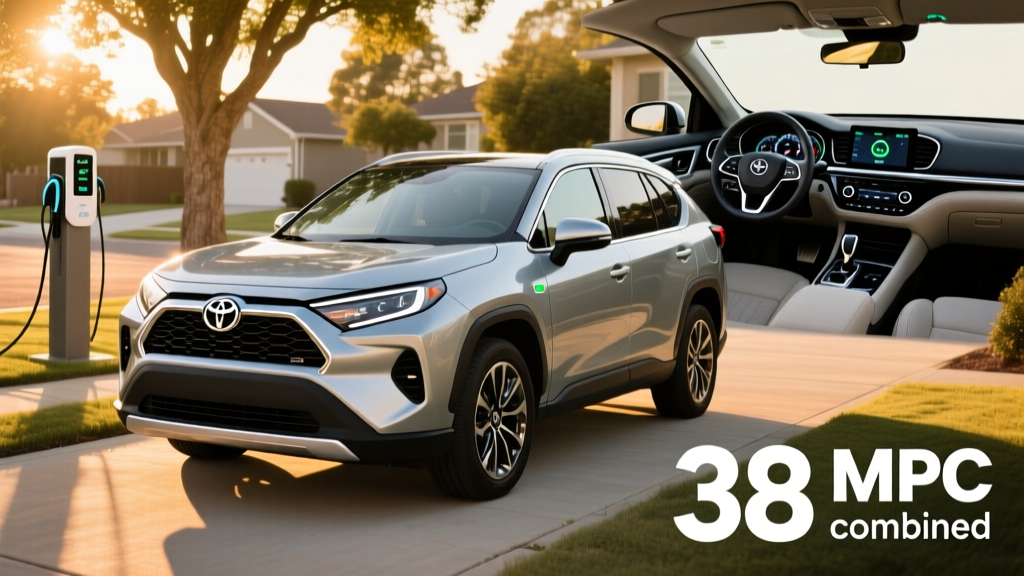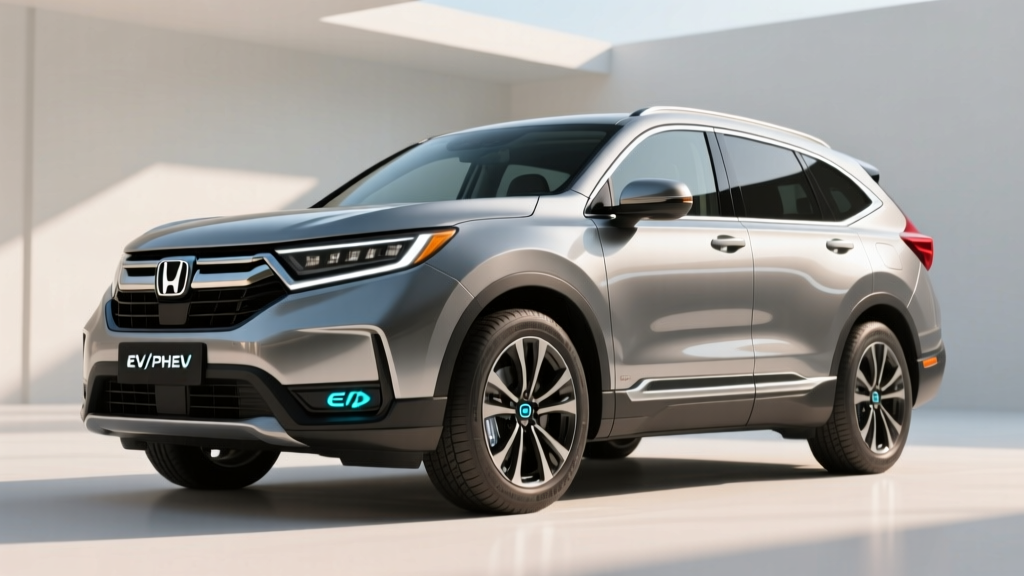
If you've been searching for a Honda Pilot hybrid 2024 model, you're not alone — thousands of three-row SUV shoppers want the Pilot's spacious cabin and reputation for reliability paired with better fuel economy. But here's the critical fact every buyer needs to know upfront: Honda does not currently offer the Pilot with a hybrid or plug-in hybrid powertrain. As of the 2024 and 2025 model years, the Pilot is sold exclusively with a 3.5-liter V6 gasoline engine.
That doesn't mean Honda has abandoned hybrid family haulers. The automaker offers a compelling hybrid alternative in the Honda CR-V Hybrid, and competitors like Toyota have gone all-in on hybrid three-row SUVs. This guide breaks down exactly what Honda offers, what the MPG numbers look like, how conventional hybrids (HEVs) differ from plug-in hybrids (PHEVs), and which electrified SUV actually fits your family's needs in 2026.
Honda Pilot 2024: The Gas-Only Reality
The 2024 Honda Pilot is powered by a 3.5-liter V6 engine producing 285 horsepower and 262 lb-ft of torque, paired with a 10-speed automatic transmission. It's available in front-wheel drive or Honda's i-VTM4 all-wheel-drive system across trims from LX to Elite and the rugged TrailSport.
| Drivetrain | City MPG | Highway MPG | Combined MPG |
|---|---|---|---|
| FWD | 19 | 27 | 22 |
| AWD | 18 | 25 | 21 |
Source: fueleconomy.gov
At 21–22 MPG combined, the Pilot sits in the middle of the gas-powered three-row SUV segment. For a family driving 15,000 miles per year, that translates to roughly $2,800–$3,100 in annual fuel costs (assuming $3.50/gallon regular unleaded). If Honda were to introduce a hybrid Pilot, we'd expect combined MPG in the 28–34 range based on competitor benchmarks — a significant improvement that would save owners $800–$1,200 annually at the pump.
HEV vs PHEV: Understanding Your Hybrid Options
When shoppers search for a "Honda Pilot hybrid," they may not realize there are two fundamentally different hybrid architectures. Understanding this distinction is essential before comparing any SUV.
Conventional Hybrid (HEV)
- No plug required. The battery recharges through regenerative braking and the gasoline engine.
- Battery size: Typically 1.0–2.0 kWh — small, lightweight, and designed for assist rather than standalone propulsion.
- Electric-only driving: Very limited, usually under 1 mile at low speeds.
- Fuel economy benefit: 25–40% improvement over gas-only equivalents, especially in city driving.
- Example: Toyota Highlander Hybrid (35 MPG combined), Honda CR-V Hybrid.
Plug-In Hybrid (PHEV)
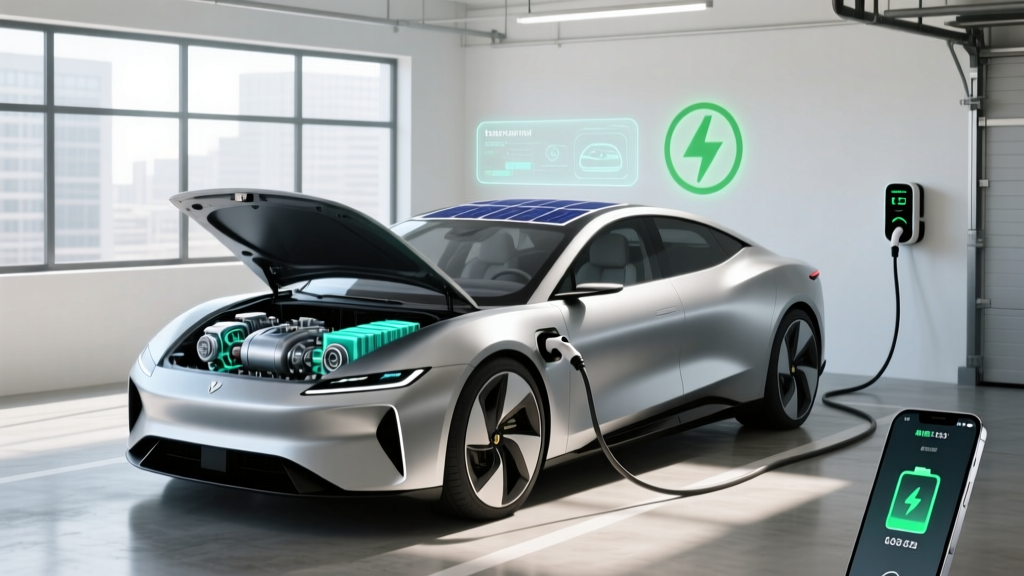
- Plugs in to charge. Larger battery provides meaningful electric-only range before the gas engine engages.
- Battery size: Typically 12–25 kWh — substantial enough for 25–50 miles of electric driving.
- Electric-only driving: Full highway-capable driving for 25–50 miles on a charge.
- Fuel economy benefit: Near-zero fuel use on short commutes; operates as a conventional hybrid once the battery depletes.
- Example: Toyota RAV4 Prime (42 miles electric), Kia Sorento PHEV (32 miles electric).
The key takeaway: HEVs are simpler and cheaper — you just drive them like a normal car and enjoy better MPG. PHEVs reward plug-in access — if you can charge at home, you may burn almost no gasoline on daily commutes under 35 miles.
Honda CR-V Hybrid: The Closest Electrified Honda SUV
Since the Honda Pilot hybrid 2024 doesn't exist, the 2024 Honda CR-V Hybrid is Honda's most capable electrified family SUV. It uses Honda's fourth-generation two-motor hybrid system — a 2.0-liter Atkinson-cycle four-cylinder engine paired with two electric motors for a combined system output of 204 horsepower and 247 lb-ft of torque.
| Drivetrain | City MPG | Highway MPG | Combined MPG |
|---|---|---|---|
| FWD (Sport trim) | 43 | 36 | 40 |
| AWD (Sport Touring) | 40 | 34 | 37 |
Source: fueleconomy.gov
Real-World MPG vs. EPA: Honda's two-motor hybrid system excels in city driving, where the electric motors handle most low-speed propulsion. Owners frequently report exceeding the EPA city estimate by 2–4 MPG in stop-and-go traffic. However, highway fuel economy tends to run 1–3 MPG below the sticker at sustained 75+ mph speeds, especially with roof cargo boxes or in cold weather. Expect a real-world combined average of 35–39 MPG for AWD models across mixed driving conditions.
The CR-V Hybrid starts at approximately $34,050 MSRP (Sport FWD) and tops out around $40,850 (Sport Touring AWD). It seats five, not seven or eight like the Pilot — which is the key trade-off.
Competitor Three-Row Hybrids: What the Pilot Is Up Against
If you need three rows and hybrid efficiency, Toyota dominates this space. Here's how the leading hybrid three-row SUVs compare:
| Model | Powertrain | Combined HP | EPA Combined MPG | Seats | Starting MSRP |
|---|---|---|---|---|---|
| Toyota Highlander Hybrid | HEV (2.5L + motors) | 243 | 35 | 7–8 | $40,220 |
| Toyota Grand Highlander Hybrid | HEV (2.5L + motors) | 245 | 34 | 7–8 | $44,405 |
| Kia Sorento Hybrid | HEV (1.6T + motor) | 227 | 34 | 6–7 | $38,390 |
| Mazda CX-90 PHEV | PHEV (2.5L + motor) | 323 | 56 MPGe / 25 gas | 6–7 | $49,945 |
| Honda Pilot (gas) | Gas (3.5L V6) | 285 | 21–22 | 7–8 | $38,485 |
The Toyota Grand Highlander Hybrid offers the best balance of three-row space and hybrid efficiency. At 34 MPG combined, it uses roughly 37% less fuel than the gas-only Pilot. For the Mazda CX-90 PHEV, its 26-mile electric-only range means many commuters can drive all week without visiting a gas station — provided they charge at home nightly.
Battery Warranty, Lifespan, and Replacement Costs
Hybrid Battery Warranty — What Honda Covers
Honda backs the CR-V Hybrid's lithium-ion battery pack with a 8-year / 100,000-mile warranty (10 years / 150,000 miles in California Air Resources Board states including CA, CT, ME, MA, NJ, NY, OR, RI, VT, and WA). This warranty covers defects and capacity loss below a functional threshold.
Expected lifespan: Modern Honda hybrid batteries are engineered to last 150,000–200,000+ miles with normal use. Honda's two-motor system is less thermally stressed than older hybrid designs, as the battery is relatively small and rarely subjected to deep discharge cycles.
Replacement cost (out of warranty): $2,500–$4,500 for the CR-V Hybrid battery pack, including labor. This is significantly less than full EV battery replacements ($8,000–$20,000+) because hybrid batteries are much smaller (1–2 kWh vs. 60–100 kWh).
For context, Toyota's hybrid battery warranty mirrors Honda's at 8 years / 100,000 miles (10/150k in CARB states). Real-world data from Toyota's Prius fleet shows that most hybrid batteries outlast 180,000 miles before meaningful degradation. Hybrid battery failure before 100,000 miles is uncommon in current-generation systems.
Tax Credits: What Hybrids and PHEVs Qualify For
Federal tax credit eligibility under IRS §30D is one of the most misunderstood topics in electrified vehicle shopping. Here's how it breaks down:
- Conventional hybrids (HEVs): Do NOT qualify for the federal §30D clean vehicle credit. The credit applies only to plug-in vehicles (PHEVs and BEVs) with battery capacity ≥7 kWh.
- Plug-in hybrids (PHEVs): May qualify for up to $7,500, but eligibility depends on battery sourcing, critical mineral requirements, MSRP caps ($80,000 for SUVs), and buyer income limits ($300,000 joint / $150,000 single). As of 2026, the point-of-sale transfer option lets buyers apply the credit directly at the dealership.
- Honda CR-V Hybrid (HEV): Not eligible for the federal credit. Check your state — some states like Colorado and California offer separate hybrid incentives.
For detailed and current eligibility rules, always consult the IRS Clean Vehicle Credits page or speak with a tax professional before relying on credit assumptions in your purchase budget.
Hybrid vs PHEV vs EV: Which SUV Fits Your Family?
Choose a conventional hybrid (HEV) if:
- You can't charge at home (apartment, street parking, no garage outlet).
- You want a simple ownership experience — no plugs, no apps, no charging planning.
- You drive a mix of city and highway and want 30–40% better fuel economy.
- Examples: Honda CR-V Hybrid, Toyota Highlander Hybrid.
Choose a plug-in hybrid (PHEV) if:
- You can charge at home (Level 1/120V is sufficient for overnight PHEV charging).
- Your daily commute is under 30–40 miles round-trip (you'll rarely use gas).
- You still want gas-engine range for road trips without charging-planning anxiety.
- Examples: Mazda CX-90 PHEV (26 mi electric), Toyota RAV4 Prime (42 mi electric).
Choose a full electric vehicle (BEV) if:
- You have reliable home Level 2 charging (240V).
- Your daily driving is under 250 miles and you're comfortable with public DC fast charging for road trips.
- You want the lowest per-mile fuel cost and zero tailpipe emissions.
- Examples: Kia EV9 (300 mi range, 3-row), Tesla Model X (335 mi range, 3-row).
Will Honda Ever Build a Pilot Hybrid?
Honda has committed to expanding its electrified lineup, but as of early 2026, the company has not announced a hybrid or PHEV Pilot variant. Honda's strategy has focused the CR-V Hybrid as its volume hybrid SUV while reserving the Pilot for buyers who prioritize maximum cargo space, towing capacity (5,000 lbs), and V6 power over fuel economy.
If Honda does introduce a Pilot Hybrid in future model years, the most likely powertrain would be a version of the two-motor system from the CR-V Hybrid, scaled up with a larger engine — similar to how Toyota adapted its hybrid system from the RAV4 to the Highlander. We'd estimate a hybrid Pilot could achieve 28–32 MPG combined, a meaningful jump from the current 21–22 MPG.
Frequently Asked Questions
How many MPG does the 2024 Honda Pilot get?
The 2024 Honda Pilot with FWD achieves 19 city / 27 highway / 22 combined MPG. AWD models are rated at 18 city / 25 highway / 21 combined. There is no hybrid version of the Pilot available.
Does a Honda Pilot hybrid exist?
No. As of the 2024 and 2025 model years, Honda sells the Pilot exclusively with a 3.5L V6 gasoline engine. Honda has not announced a hybrid or PHEV Pilot variant. The closest Honda hybrid SUV is the CR-V Hybrid (37–40 MPG combined).
Is the Honda CR-V Hybrid reliable?
Honda's fourth-generation two-motor hybrid system has proven reliable in real-world use. The hybrid battery carries an 8-year/100,000-mile warranty (10 years/150,000 miles in CARB states). Hybrid battery replacement costs $2,500–$4,500 if needed out of warranty, though most batteries last 150,000+ miles.
Does the Honda CR-V Hybrid qualify for a tax credit?
No. The CR-V Hybrid is a conventional hybrid (HEV), not a plug-in vehicle. The federal §30D clean vehicle credit applies only to PHEVs and BEVs with battery capacity of at least 7 kWh. Some state-level incentives may apply — check your state's energy office or DMV website.
What three-row hybrid SUV should I buy instead of the Pilot?
The Toyota Grand Highlander Hybrid (34 MPG combined, 7–8 seats, ~$44,405 starting) is the top pick for three-row hybrid efficiency. The Kia Sorento Hybrid (34 MPG, 6–7 seats, ~$38,390) is a strong value alternative. If you want a PHEV with three rows, the Mazda CX-90 PHEV offers 26 miles of electric-only range starting around $49,945.
Can I convert my Honda Pilot to a hybrid?
No. There is no aftermarket hybrid conversion kit for the Pilot. Hybrid powertrains require integrated engine-motor-transmission engineering, high-voltage battery systems, and specialized software calibration that cannot be retrofitted. Your best options are trading into a hybrid three-row SUV or waiting to see if Honda introduces a Pilot Hybrid in a future model year.
If Honda Offered a Pilot Hybrid — Pros
- 28–32 MPG combined (est.) would cut fuel costs ~35%
- Smoother low-speed driving with electric motor assist
- Would retain 7–8 seat capacity and 5,000-lb towing
- Strong resale value (hybrid SUVs hold value well)
Current Pilot Gas Model — Considerations
- 21–22 MPG combined is below hybrid competitors
- Higher annual fuel cost ($2,800–$3,100/yr at 15k mi)
- No federal or state hybrid incentive eligibility
- V6 is proven reliable but increasingly outdated vs. turbo/hybrid rivals