Is There a Hybrid Honda Passport for 2026?
If you've been searching for a hybrid Passport, you're not alone. The Honda Passport has long been a favorite midsize two-row SUV for buyers who want rugged capability without the bulk of a three-row hauler. But as of the 2026 model year, Honda has not released a dedicated hybrid variant of the Passport. The current-generation Passport (redesigned for 2026 with a boxier, more off-road-oriented design) continues with a conventional 3.5-liter V6 gasoline engine.
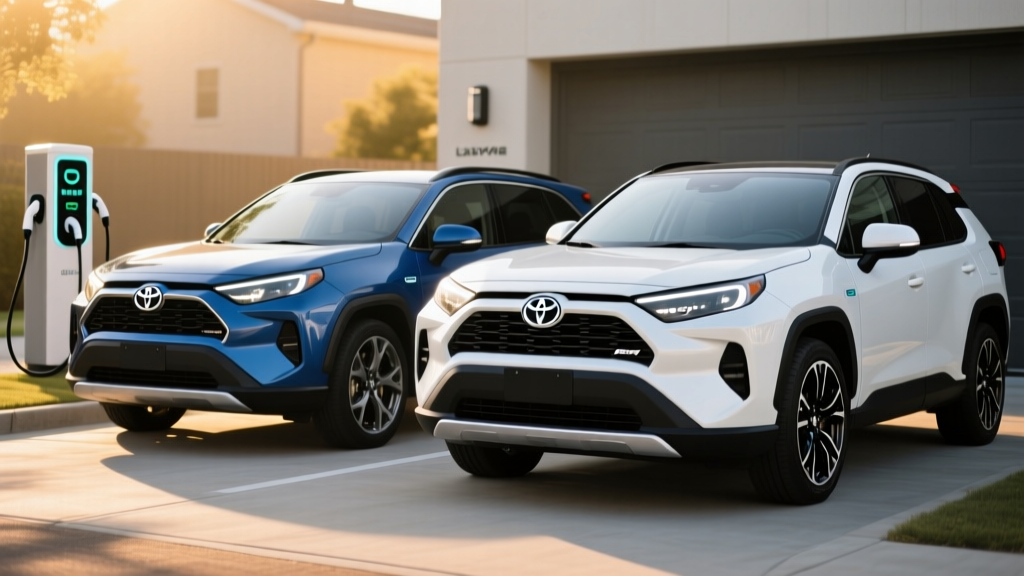
That said, the hybrid midsize SUV segment is booming — and Honda itself offers hybrid powertrains in the CR-V and Accord. So what does the landscape look like for buyers who want Passport-sized utility with hybrid efficiency? This guide breaks down the HEV vs. PHEV distinction, the closest hybrid alternatives, real-world MPG data, and what to expect if Honda eventually electrifies the Passport nameplate.
HEV vs. PHEV: What's the Difference?
| Feature | Conventional Hybrid (HEV) | Plug-In Hybrid (PHEV) |
|---|---|---|
| Plugs in to charge? | No — self-charging via regenerative braking and engine | Yes — has a larger battery you charge at home or public stations |
| Electric-only range | None (electric motor assists engine only) | Typically 20–45 miles on battery alone |
| Battery size | Small (~1–2 kWh) | Larger (~13–25 kWh usable) |
| Fuel economy | High MPG in all conditions | High MPGe on electric; moderate MPG once battery depletes |
| Federal tax credit | Not eligible under §30D | May qualify for up to $7,500 (income, MSRP, and sourcing rules apply) |
| Best for | Drivers who want better MPG without changing habits | Drivers with home charging and short commutes who want EV-like daily driving |
2026 Honda Passport: Current Powertrain & MPG
Before we explore hybrid alternatives, here's what the 2026 Honda Passport actually offers under the hood. The redesigned 2026 Passport uses a 3.5-liter V6 paired with a 10-speed automatic transmission and standard all-wheel drive (AWD).
| Spec | 2026 Honda Passport (Gas) |
|---|---|
| Engine | 3.5L V6 |
| Horsepower | 285 hp |
| Torque | 262 lb-ft |
| Transmission | 10-speed automatic |
| Drivetrain | AWD (standard) |
| EPA MPG (city / hwy / combined) | 19 / 25 / 21 |
| Towing capacity | 5,000 lbs |
| Cargo volume (behind 2nd row) | ~41 cu ft |
| Starting MSRP | ~$46,550 |
At 21 MPG combined, the gas Passport is thirstier than many competitors — especially those offering hybrid powertrains. That's precisely why the "hybrid Passport" search volume keeps climbing: buyers want this SUV's utility with better fuel economy.
Best Hybrid Alternatives to the Passport in 2026
If hybrid efficiency is a priority, several midsize SUVs deliver Passport-rivaling space with significantly better fuel economy. Here's how the top contenders stack up, with data sourced from fueleconomy.gov.
| Model | Type | EPA City | EPA Hwy | EPA Combined | Electric-Only Range | Starting MSRP |
|---|---|---|---|---|---|---|
| Toyota Highlander Hybrid | HEV | 35 | 35 | 35 | N/A | ~$42,320 |
| Hyundai Santa Fe Hybrid | HEV | 36 | 31 | 34 | N/A | ~$40,500 |
| Kia Sorento Hybrid | HEV | 34 | 31 | 32 | N/A | ~$39,090 |
| Toyota RAV4 Prime | PHEV | 40 (gas) | 36 (gas) | 38 (gas) / 94 MPGe | 42 mi | ~$44,500 |
| Hyundai Santa Fe PHEV | PHEV | 33 (gas) | 30 (gas) | 31 (gas) / 79 MPGe | 31 mi | ~$47,500 |
| Mitsubishi Outlander PHEV | PHEV | 26 (gas) | 26 (gas) | 26 (gas) / 64 MPGe | 38 mi | ~$41,400 |
| Honda Passport (2026) | Gas | 19 | 25 | 21 | N/A | ~$46,550 |
Real-world MPG note: Conventional hybrids (HEVs) often exceed their EPA city estimates in real-world driving because stop-and-go traffic maximizes regenerative braking. The Toyota Highlander Hybrid, for example, routinely returns 36–38 MPG in city driving based on owner-reported data. Highway driving is where hybrids lose their advantage somewhat, since the engine runs more consistently at steady speeds.
Will Honda Release a Hybrid Passport?
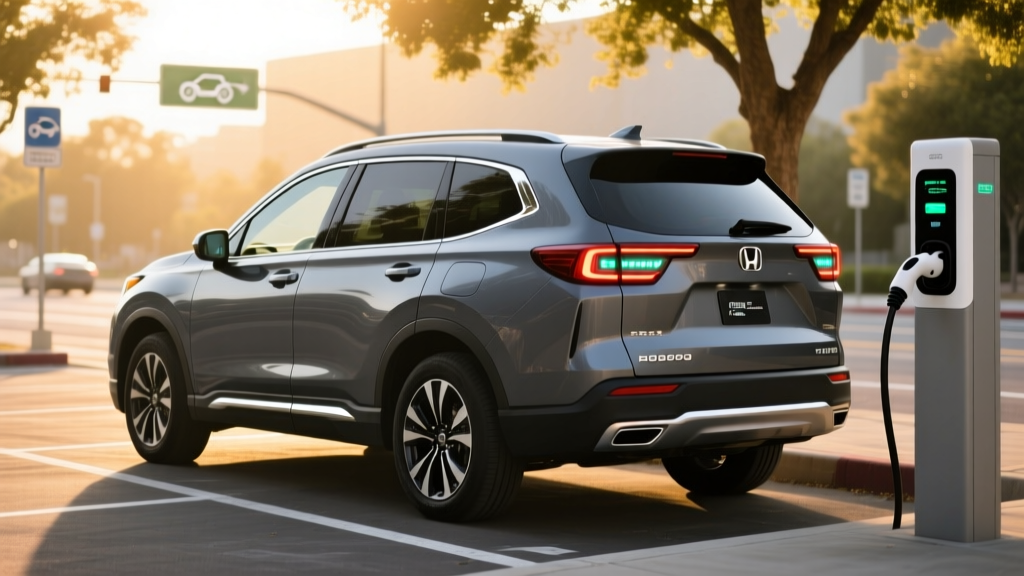
Honda has not announced a hybrid or PHEV version of the 2026 Passport. However, the brand's hybrid strategy is expanding aggressively. The CR-V Hybrid now accounts for roughly half of all CR-V sales, and the Accord offers a hybrid powertrain across most trims. Honda's two-motor hybrid system is proven and well-regarded for smoothness and efficiency.
A Passport Hybrid would likely use a larger version of Honda's two-motor hybrid architecture, potentially pairing the 3.5L V6 with electric motors for a combined output near 300+ hp and EPA combined MPG in the high 20s. While this remains speculative, industry watchers expect Honda to electrify more of its SUV lineup before 2028.
If Honda does introduce a Passport PHEV, expect a battery in the 15–20 kWh range, offering roughly 25–35 miles of electric-only range and eligibility for a partial or full federal tax credit under IRS §30D rules.
PHEV Deep Dive: Battery, Charging & Electric Range
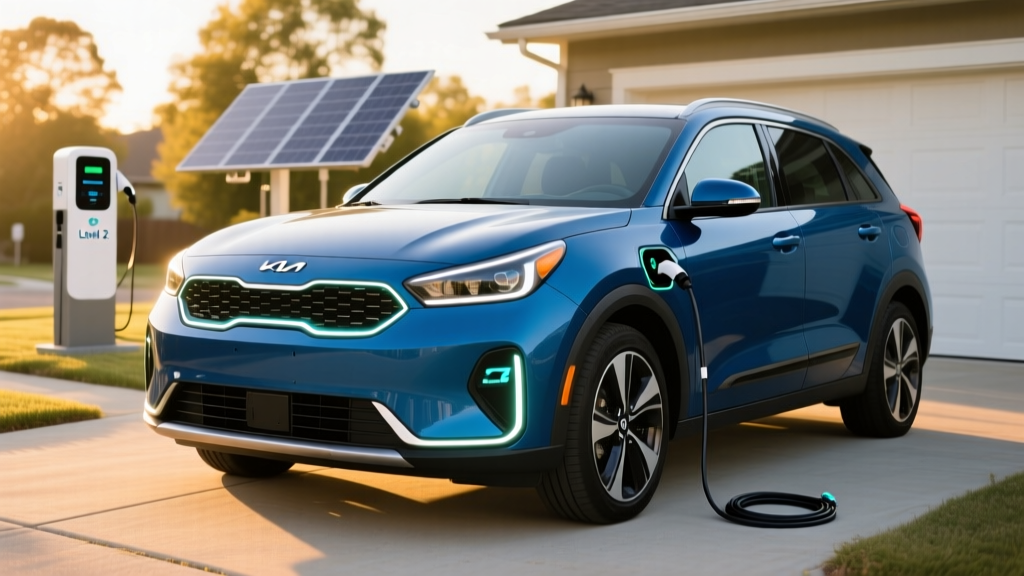
For buyers considering a PHEV alternative to the Passport, understanding battery and charging specs is critical. Unlike conventional hybrids, PHEVs have a meaningful battery you charge externally — and the charging experience varies widely by model.
| PHEV Model | Battery (kWh usable) | Electric Range | Level 2 Charge Time | DC Fast Charge? | Combined HP |
|---|---|---|---|---|---|
| Toyota RAV4 Prime | 14.9 kWh | 42 mi | ~2.5 hours | No | 302 hp |
| Hyundai Santa Fe PHEV | 13.8 kWh | 31 mi | ~3.5 hours | No | 261 hp |
| Mitsubishi Outlander PHEV | 17.9 kWh | 38 mi | ~4 hours | Yes (CHAdeMO) | 248 hp |
| Jeep Grand Cherokee 4xe | 14.5 kWh | 26 mi | ~2 hours | No | 375 hp |
Key charging insight: Most PHEVs do not support DC fast charging. You'll charge at home on a Level 2 (240V) outlet or a standard 120V wall plug (Level 1), which adds roughly 4–6 miles of range per hour. For a 30-mile electric-range PHEV, overnight charging on Level 1 is usually sufficient. The Mitsubishi Outlander PHEV is a rare exception with CHAdeMO DC fast-charge capability, though the CHAdeMO network is shrinking in the U.S.
kW vs. kWh reminder: kW (kilowatts) measures power — how fast energy flows into the battery. kWh (kilowatt-hours) measures energy capacity — how much the battery holds. A PHEV with a 15 kWh battery charging at 3.3 kW will take roughly 4.5 hours from empty to full.
Tax Credits: Does a Hybrid SUV Qualify?
This is where the HEV vs. PHEV distinction matters enormously for your wallet.
- Conventional hybrids (HEVs): Do NOT qualify for the federal §30D clean vehicle credit. The Toyota Highlander Hybrid, Honda CR-V Hybrid, and Hyundai Santa Fe Hybrid are ineligible.
- Plug-in hybrids (PHEVs): MAY qualify for up to $7,500 under §30D, but eligibility depends on multiple factors:
- Battery capacity: Must be at least 7 kWh (most PHEVs meet this)
- MSRP cap: SUVs must be under $80,000 MSRP
- Income cap: Buyer AGI must be under $150,000 (single) / $300,000 (joint)
- Final assembly: Must occur in North America
- Critical minerals & battery components: Sourcing requirements phase in progressively through 2026, potentially reducing the credit to $3,750 for some models
- Point-of-sale transfer: As of 2024+, you can transfer the credit to the dealer for an immediate price reduction
Check the latest eligibility on the fueleconomy.gov tax credit page before purchasing, as battery-sourcing rules change frequently and can disqualify a previously eligible model mid-year. Consult a tax professional for your specific situation.
Hybrid Battery Reliability & Replacement Costs
Hybrid battery longevity remains one of the top concerns for buyers. Here's the data-driven reality:
Hybrid Battery Warranty Standards
Under federal emissions warranty requirements, hybrid batteries must be covered for at least 8 years / 100,000 miles (10 years / 150,000 miles in CARB states including California, New York, and others). Many manufacturers exceed this baseline:
- Toyota: 10 years / 150,000 miles on hybrid battery (all 50 states since 2020)
- Hyundai / Kia: 10 years / 100,000 miles
- Honda: 8 years / 100,000 miles (10 years / 150,000 in CARB states)
- Mitsubishi: 10 years / 100,000 miles
Replacement cost reality: If a hybrid battery fails outside warranty, replacement typically costs between $2,000 and $6,000 depending on the model, including labor. PHEV batteries tend to be more expensive ($5,000–$8,000) due to larger capacity. However, real-world data from fleet operators and high-mileage owners shows that modern hybrid batteries routinely last 150,000–200,000+ miles before significant degradation. Toyota's hybrid system, in particular, has a proven track record — many Prius and Camry Hybrid examples exceed 200,000 miles on the original battery.
Degradation in a PHEV is more noticeable because you're relying on a smaller battery for daily electric range. Expect 10–15% range loss over 8–10 years of normal use. This means a PHEV rated for 35 miles of electric range when new may deliver 28–31 miles after a decade.
Hybrid vs. PHEV vs. Full EV: Which Is Right for You?
Choose a Conventional Hybrid (HEV) If:
- You don't have access to home or workplace charging
- You want better MPG without changing any habits
- You drive a mix of city and highway with no predictable short commute
- You want the lowest upfront cost among electrified options
- Example: Toyota Highlander Hybrid at 35 MPG combined
Choose a Plug-In Hybrid (PHEV) If:
- You can charge at home (even a standard 120V outlet works overnight)
- Your daily commute is under 30–40 miles round-trip
- You want EV-like daily driving with gas-engine flexibility for road trips
- You want potential access to the $3,750–$7,500 federal tax credit
- Example: Toyota RAV4 Prime with 42 miles electric range
Choose a Full EV (BEV) If:
- You have reliable home Level 2 charging
- Your daily driving is under 250 miles and you road-trip infrequently
- You want zero tailpipe emissions and the lowest per-mile fuel cost
- You're willing to plan around charging infrastructure on long trips
- Example: Hyundai Ioniq 5 with 303 miles EPA range
Pros and Cons: The Hybrid Midsize SUV Case
Pros of Choosing a Hybrid SUV Over the Gas Passport
- 35–40% better fuel economy (saving ~$800–$1,200/year in fuel at 15,000 miles)
- Smoother low-speed driving with electric motor assist
- Lower brake wear thanks to regenerative braking
- Better resale value — hybrid SUVs command premiums in the used market
- Reduced emissions without range anxiety or charging dependency
Cons to Consider
- Higher upfront purchase price ($2,000–$5,000 premium over gas equivalents)
- Conventional hybrids don't qualify for federal EV tax credits
- Some hybrid SUVs sacrifice towing capacity vs. gas V6 models
- Hybrid battery replacement cost (rare but real after warranty)
- Waiting lists on popular hybrid trims (RAV4 Prime, Highlander Hybrid)
Real-World MPG: What Hybrid Owners Actually Report
EPA estimates are a starting point, but hybrid SUVs behave differently in real-world conditions compared to gas-only vehicles. Here's what to expect:
- City driving: Hybrids shine here. Expect to meet or exceed EPA city estimates. The Toyota Highlander Hybrid's 35 MPG city rating often translates to 36–38 MPG in stop-and-go traffic because regenerative braking recharges the battery constantly.
- Highway driving: Hybrids lose their advantage at sustained speeds. Expect 2–4 MPG below the EPA highway estimate. The Highlander Hybrid may return 31–33 MPG at 75 mph on the interstate.
- Cold weather: Hybrid fuel economy drops 10–15% in freezing temperatures. The engine runs more frequently to maintain cabin heat, reducing electric-motor assist. A 35 MPG hybrid may average 29–31 MPG in January in Minnesota.
- Towing and heavy loads: If you tow near capacity, expect hybrid MPG to drop significantly — closer to gas-engine figures. Hybrid advantages diminish under heavy, sustained loads.
For PHEVs, the real-world picture is even more variable. If you charge daily and commute 25 miles, you might use almost zero gasoline for months. But if you never charge, a PHEV operates as a heavier, less efficient hybrid — the Mitsubishi Outlander PHEV returns only 26 MPG combined on gas alone, which is worse than many conventional hybrids.
Frequently Asked Questions
Does the 2026 Honda Passport come in a hybrid version?
No. As of the 2026 model year, the Honda Passport is offered only with a 3.5L V6 gasoline engine rated at 19 city / 25 highway / 21 combined MPG. Honda has not announced a hybrid or PHEV Passport, though the brand's expanding hybrid lineup makes a future variant plausible.
What's the best hybrid alternative to the Honda Passport?
The Toyota Highlander Hybrid (35 MPG combined, ~$42,320) is the most fuel-efficient midsize hybrid SUV. For a more Passport-like two-row experience, the Hyundai Santa Fe Hybrid (34 MPG combined) offers strong value and modern styling. If you want plug-in capability, the Toyota RAV4 Prime (42 miles electric range, 302 hp) is the segment benchmark, though it's a compact SUV.
Do hybrid SUVs qualify for the federal tax credit?
Conventional hybrids (HEVs) do not qualify for the §30D federal clean vehicle credit. Only plug-in hybrids (PHEVs) and full EVs are eligible, and PHEV eligibility depends on battery capacity (≥7 kWh), North American assembly, MSRP caps ($80,000 for SUVs), buyer income limits, and battery component/critical mineral sourcing requirements. Check IRS.gov for current rules.
How long do hybrid SUV batteries last?
Modern hybrid batteries are designed to last the life of the vehicle. Real-world data shows most last 150,000–200,000+ miles. Federal law mandates a minimum 8-year/100,000-mile hybrid battery warranty (10 years/150,000 miles in CARB states). Toyota covers its hybrid batteries for 10 years/150,000 miles nationwide. If replacement is needed out of warranty, expect $2,000–$6,000.
Is a PHEV worth it if I can only charge on a standard 120V outlet?
Yes — if your daily driving is under the vehicle's electric range. A standard 120V outlet adds roughly 4–6 miles of range per hour. Over a 10-hour overnight charge, that's 40–60 miles — enough to fully replenish most PHEV batteries. You don't need a Level 2 charger to benefit from a PHEV, though Level 2 (240V) cuts charge time to 2–4 hours.
How much money does a hybrid SUV save vs. the gas Passport?
At 15,000 miles per year and $3.50/gallon gas, the 21 MPG Passport costs roughly $2,500/year in fuel. A 35 MPG hybrid SUV costs about $1,500/year — a savings of ~$1,000 annually. Over a 5-year ownership period, that's ~$5,000 in fuel savings, which typically offsets the hybrid's higher purchase price. PHEV owners who charge daily can save even more, since electricity costs roughly $0.04–$0.06 per mile vs. $0.17 per mile for the gas Passport.