The Honda Insight's Place in the Hybrid Lineup
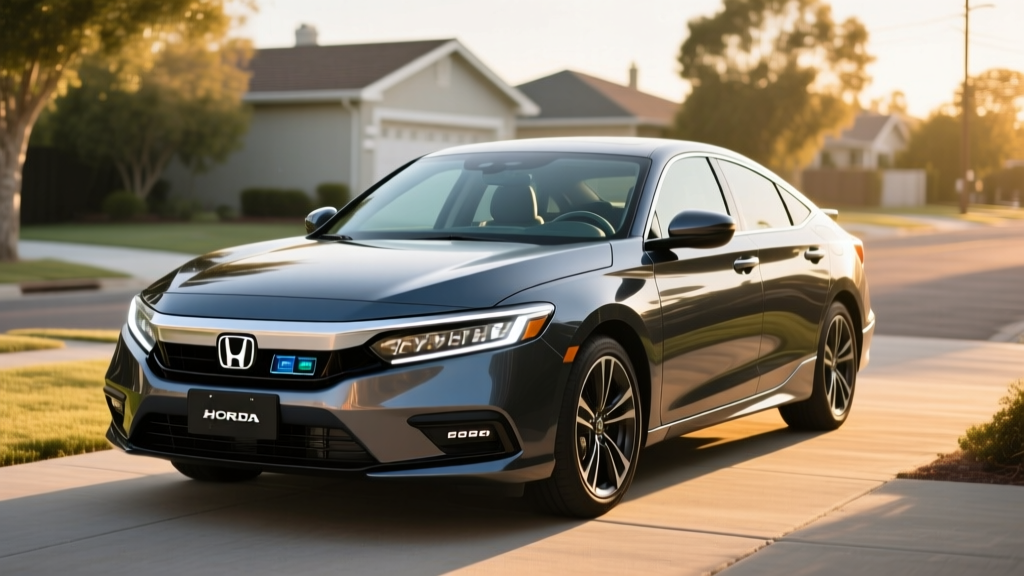
The Honda Insight hybrid car occupies a specific and increasingly rare niche: a dedicated hybrid sedan that prioritized fuel economy without looking like a science experiment. Discontinued after the 2022 model year to make room for the Civic Hybrid, the Insight remains one of the most efficient non-plug-in sedans on the used market in 2026 — and its third-generation powertrain still holds up against newer competitors.
If you're researching the Insight today, you're almost certainly shopping used. That shifts the calculus entirely: there's no federal §30D tax credit for a used Insight (the used-EV credit under IRS §25E applies only to battery-electric and plug-in hybrid vehicles under $25,000, and the Insight is a conventional hybrid), battery health becomes a real concern, and pricing depends heavily on mileage and condition. This guide covers what you need to know before buying one in 2026.
HEV vs PHEV: Where the Insight Fits
The Honda Insight is a conventional hybrid (HEV). It does not plug in. It has no electric-only driving range. It recharges its small lithium-ion battery through regenerative braking and the gasoline engine. You fuel it at a gas station like any other car — the hybrid system simply makes that fuel go much further.
This is a critical distinction. Plug-in hybrids (PHEVs) like the Toyota Prius Prime or Chrysler Pacifica Hybrid carry larger batteries (typically 10–20 kWh), offer 25–45 miles of electric-only driving, and require access to a Level 1 or Level 2 charger to realize their efficiency advantage. The Insight asks nothing of you except occasional visits to a gas pump.
| Specification | Value |
|---|---|
| Powertrain | 1.5L Atkinson-cycle 4-cyl + two-motor hybrid system |
| Combined Horsepower | 151 hp |
| Engine Output | 107 hp @ 6,000 rpm / 97 lb-ft torque |
| Electric Motor Output | 129 hp / 194 lb-ft torque |
| Transmission | e-CVT (no traditional gears) |
| Hybrid Battery | ~1.2 kWh lithium-ion (nominal, non-plug-in) |
| Drivetrain | Front-wheel drive |
| 0–60 mph | ~7.7 seconds |
| Cargo Volume | 15.1 cu ft (trunk) |
| Curb Weight | ~3,078 lbs (Touring) |
Fuel Economy: EPA Ratings and Real-World MPG
The Insight's headline number is its EPA-estimated fuel economy. For the most common trims (EX and Touring), the figures are:
| Trim | City MPG | Highway MPG | Combined MPG |
|---|---|---|---|
| LX (base, lighter) | 55 | 49 | 52 |
| EX | 55 | 49 | 52 |
| Touring (heavier, larger wheels) | 51 | 45 | 48 |
Source: EPA / fueleconomy.gov
Real-world MPG vs. EPA sticker: The Insight's two-motor hybrid system excels in stop-and-go city driving, where regenerative braking recaptures energy constantly. Many owners report 54–58 MPG in city-heavy commutes, exceeding the EPA city estimate. Highway driving is the opposite story: at sustained 70–80 mph speeds, the gasoline engine does most of the work alone, and real-world highway fuel economy typically falls to 42–46 MPG for EX/Touring trims. In cold weather (below 35°F), expect a 5–10% drop across the board as the engine runs more frequently for cabin heat and battery warmup.
The LX and EX trims share the 52 MPG combined rating because they use lighter 16-inch wheels. The Touring's 17-inch wheels, additional sound insulation, and standard Honda Sensing suite with heavier hardware drop it to 48 combined — still exceptional, but a measurable penalty for the top trim.
Powertrain Deep Dive: Honda's Two-Motor i-MMD System
The Insight uses Honda's Intelligent Multi-Mode Drive (i-MMD) hybrid system, which operates differently from Toyota's planetary-gear Hybrid Synergy Drive. Understanding this matters for how the car actually feels to drive.
In most driving scenarios (city speeds, light acceleration), the gasoline engine acts as a generator only — it spins to produce electricity that feeds the drive motor. The wheels are turned exclusively by the 129-hp electric motor. This gives the Insight the smooth, linear acceleration feel of an EV at low and moderate speeds.
At highway cruising speeds (roughly 50+ mph under light load), a lock-up clutch mechanically connects the engine directly to the front wheels for maximum efficiency, bypassing the electrical conversion step. Under hard acceleration at any speed, both the engine and motor contribute to the combined 151 hp output.
The result is a car that feels more responsive than its 7.7-second 0–60 time suggests, because electric-motor torque (194 lb-ft) is available from zero RPM. The e-CVT produces no shift shock or rubber-band sensation. It's one of the most refined hybrid powertrains Honda has built.
Battery Health, Warranty, and Replacement Cost
Original Hybrid Battery Warranty: Honda covered the Insight's lithium-ion hybrid battery for 8 years / 100,000 miles (extended to 10 years / 150,000 miles in California and states that follow CARB emissions standards).
What this means in 2026: A 2019 Insight (the first year of the third generation) is now 7 years old. If originally purchased in a CARB state, its battery warranty extends through 2029 or 150,000 miles — still active. In non-CARB states, the 8-year/100k warranty on a 2019 model expires in 2027. A 2022 model (final year) retains full warranty coverage through 2030 / 100,000 miles (or 2032 / 150,000 in CARB states).
The Insight's ~1.2 kWh hybrid battery is small and operates within a conservative state-of-charge window (roughly 30–70% SoC), which is ideal for lithium-ion longevity. Honda's hybrid batteries have a strong track record: widespread failures before 150,000 miles are uncommon. Degradation manifests as slightly reduced fuel economy and more frequent engine engagement, not sudden failure.
Replacement cost: A new OEM hybrid battery from Honda runs approximately $2,500–$3,500 including labor at a dealership. Independent hybrid specialists can often source refurbished or reconditioned packs for $1,200–$2,000 installed. Given the conservative charge window and the battery's small size, most Insight owners will never face this expense.
For battery warranty details, see Honda's official warranty page.
Pricing and Tax Credit Reality for Used Buyers
The Honda Insight was discontinued after 2022. There is no new 2026 model. Used-market pricing in early 2026 typically falls in these ranges:
- 2019–2020 Insight EX (40k–70k miles): $17,000–$21,000
- 2021–2022 Insight EX (15k–40k miles): $21,000–$25,000
- 2021–2022 Insight Touring (15k–40k miles): $23,000–$27,000
Federal tax credit eligibility: None. The Insight is a conventional hybrid (HEV), not a plug-in vehicle. It does not qualify for the IRS §30D Clean Vehicle Credit ($7,500 for new EVs/PHEVs) or the §25E used clean vehicle credit (up to $4,000 for used EVs/PHEVs under $25,000). These credits are reserved for battery-electric and plug-in hybrid vehicles with sufficient battery capacity. The Insight's ~1.2 kWh pack doesn't meet the threshold.
Some states previously offered hybrid purchase rebates, but most have been discontinued or redirected toward BEVs and PHEVs. Check your state's current energy or environmental agency website for any remaining incentives — but plan your budget assuming no credit.
Who Should Buy the Insight — and Who Shouldn't
Pros
- 52 MPG combined (EX) — among the highest of any non-plug-in sedan
- No plug-in charging required; works for apartment dwellers and street parkers
- Refined two-motor i-MMD system with EV-like low-speed feel
- Honda Sensing ADAS standard on all trims (adaptive cruise, lane keeping, AEB)
- Strong reliability record; conservative battery management
- Comfortable ride, quiet cabin for a compact hybrid
- 15.1 cu ft trunk — competitive with non-hybrid sedans
Cons
- Discontinued — only available used, with dwindling dealer inventory
- No federal or state purchase incentives (conventional hybrid)
- Touring trim drops to 48 MPG combined
- Modest 151 hp; adequate but not quick for highway merging
- Infotainment lacks wireless CarPlay/Android Auto on most trims
- Highway MPG falls short of EPA in real-world testing at 75+ mph
- Ground clearance is low — not ideal for snow-belt driveways
Choose the Honda Insight if:
- You want 50+ MPG without changing your fueling habits
- You can't charge at home (apartment, street parking, no garage)
- You drive a city-heavy commute where regen braking maximizes efficiency
- You want a proven Honda powertrain with remaining factory warranty
- Your budget is $18,000–$26,000 for a reliable, efficient daily driver
Look elsewhere if:
- You want electric-only driving and can install a Level 2 home charger → consider a used Toyota Prius Prime (PHEV, ~25 mi EV range) or a used Chevrolet Volt
- You want a new vehicle with a full warranty → the 2026 Honda Civic Hybrid (50 MPG combined) is the Insight's direct successor
- You want maximum acceleration → the Insight prioritizes efficiency over performance
- You need AWD → the Insight is FWD only; look at the Toyota Prius AWD or a PHEV SUV
Insight vs. the Alternatives: A Quick Comparison
The Insight doesn't exist in a vacuum. Here's how it stacks up against the hybrid sedans you're likely cross-shopping:
| Model | Type | EPA Combined MPG | EV-Only Range | Approx. Used Price (2021–2022) |
|---|---|---|---|---|
| Honda Insight EX | HEV | 52 MPG | N/A | $21,000–$25,000 |
| Toyota Prius LE | HEV | 57 MPG | N/A | $22,000–$26,000 |
| Toyota Prius Prime | PHEV | 54 MPG + 133 MPGe | 25 mi (2022) | $25,000–$30,000 |
| Hyundai Ioniq Hybrid | HEV | 58 MPG | N/A | $18,000–$22,000 |
| Honda Civic Hybrid (2025+) | HEV | 50 MPG | N/A | $28,000+ (new) |
The 2019–2022 Toyota Prius delivers slightly higher MPG but with a less refined ride and more polarizing styling. The Hyundai Ioniq Hybrid (discontinued after 2022) actually beats the Insight on EPA combined MPG at 58, but it's harder to find and has a firmer ride. The Prius Prime offers genuine EV-only commuting if you can charge at home — but commands a used-market premium. The current Civic Hybrid is the Insight's spiritual successor, offering similar efficiency in a more modern package at new-car prices.
Frequently Asked Questions
How many MPG does the Honda Insight hybrid car get?
The EPA rates the Insight EX and LX at 55 city / 49 highway / 52 combined MPG. The heavier Touring trim is rated 51 city / 45 highway / 48 combined. In real-world driving, city MPG often exceeds the EPA estimate (54–58 MPG), while sustained highway driving at 70+ mph typically yields 42–46 MPG.
Does the Honda Insight need to be plugged in?
No. The Insight is a conventional hybrid (HEV). It charges its small lithium-ion battery through regenerative braking and the gasoline engine. You never plug it in. If you want plug-in capability with electric-only range, you're looking for a PHEV like the Prius Prime.
How far can the Insight drive on electric power alone?
The Insight cannot drive on electric power alone for any meaningful distance. Its battery is too small (~1.2 kWh) and the system is designed to blend engine and motor power continuously. At very low speeds with a full battery, you may travel a few hundred feet in EV mode, but this is not a usable electric range. For 25+ miles of EV-only driving, a PHEV is required.
Is the Honda Insight reliable, and what does a battery replacement cost?
The Insight has a strong reliability record. Honda's i-MMD hybrid system is well-proven, and the conservative charge window (30–70% SoC) preserves battery health. Hybrid battery failures before 150,000 miles are rare. If replacement is needed, expect $2,500–$3,500 for a new OEM pack at a dealer, or $1,200–$2,000 for a refurbished unit from an independent hybrid specialist.
Does the Honda Insight qualify for any tax credit?
No. The Insight is a conventional hybrid, not a plug-in vehicle. It does not qualify for the federal §30D new clean vehicle credit or the §25E used clean vehicle credit. Those credits require a vehicle with a significantly larger battery capable of plug-in charging. Some states may have offered hybrid incentives in the past, but most have been phased out in favor of BEV and PHEV programs.
What's the difference between the Insight and the Civic Hybrid?
Honda discontinued the Insight after 2022 and introduced the Civic Hybrid for 2025. The Civic Hybrid uses an updated version of the same two-motor i-MMD system, delivers approximately 50 MPG combined, and offers modern infotainment with wireless smartphone integration. If you want a new Honda hybrid sedan with a full warranty, the Civic Hybrid is the direct replacement. The Insight remains a strong used value at lower prices.
Is the Insight a good car for cold climates?
The Insight performs adequately in cold weather, but expect a 5–10% fuel economy drop as the engine runs more frequently for cabin heat. It is front-wheel drive only — no AWD option is available. If you need all-wheel drive in a hybrid, the Toyota Prius (AWD-e available) is a better fit. Ground clearance is modest at 5.3 inches, which can be a concern on unplowed driveways.