Quick Verdict: The PHEV That Started It All for Toyota
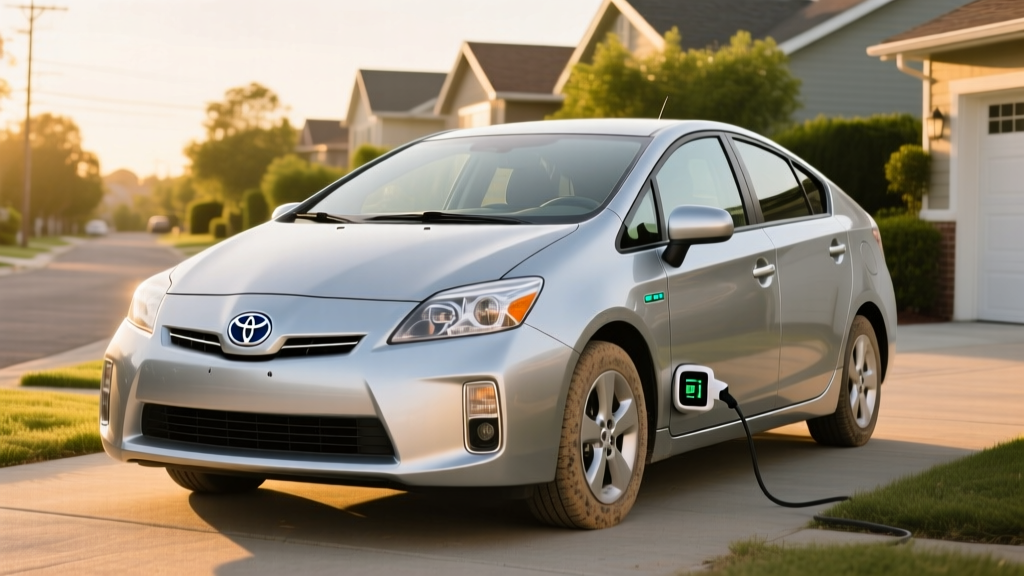
The 2012 Toyota Prius Plug-In Hybrid was Toyota's first mass-market plug-in, a bridge between the standard Prius HEV and the all-electric future. Sold only in select states initially, this PHEV paired a 4.4 kWh lithium-ion battery with the proven third-generation Prius powertrain to deliver 11 miles of electric-only driving and 95 MPGe combined. In 2026, it survives exclusively on the used market — and for budget-minded commuters with short drives and home charging access, it remains a compelling, ultra-reliable option.
But with a tiny battery by modern standards and no DC fast-charging capability, buyers need realistic expectations. This guide breaks down every spec, real-world efficiency number, battery longevity concern, and used-market price you need before purchasing a 2012 Prius Plug-In.
HEV vs PHEV: What Made the Plug-In Prius Different
The third-generation Prius (2010–2015) came in two electrified flavors. Understanding the distinction is essential before shopping the used market.
| Feature | 2012 Prius (Standard HEV) | 2012 Prius Plug-In Hybrid (PHEV) |
|---|---|---|
| Battery Type | 1.3 kWh NiMH | 4.4 kWh Lithium-Ion |
| Plug-In Charging | No — self-charging only | Yes — Level 1 (120V) or Level 2 (240V) |
| EV-Only Range | ~0.5 miles at very low speed | 11 miles EPA (up to ~53 mph) |
| EPA Combined MPG (gas mode) | 50 MPG | 50 MPG (hybrid mode after EV depleted) |
| MPGe (EV + gas combined) | N/A | 95 MPGe |
| DC Fast Charge | No | No |
| EV Mode Top Speed | ~25 mph briefly | 53 mph sustained |
The conventional Prius HEV never plugs in — its small nickel-metal hydride battery recovers energy solely through regenerative braking and the gasoline engine. The Plug-In model added a larger lithium-ion pack, a charge port (J1772 connector), and a genuine EV mode capable of highway-adjacent speeds. Once the 11 EV miles were depleted, the car seamlessly reverted to standard Prius hybrid operation at 50 MPG combined.
Range, MPG, and Efficiency: Real-World Numbers
The EPA rated the 2012 Prius Plug-In Hybrid at 11 miles of electric-only range and 95 MPGe when blending EV and gas driving. Once the battery depleted to its hybrid-mode floor, the car returned the same 50 MPG combined as the standard Prius.
| Mode | City | Highway | Combined |
|---|---|---|---|
| EV-Only (first 11 mi) | 95 MPGe combined (EPA) | ||
| Hybrid (gas engine, battery depleted) | 51 MPG | 49 MPG | 50 MPG |
| Total Combined Range | ~540 miles (11 EV + ~529 gas) | ||
For context, the 2012 Prius Plug-In's 11-mile EV range is modest by 2026 standards — the current Toyota RAV4 Prime delivers 42 miles of EV range. But for a used car often priced between $5,000 and $9,000, even 8–10 real-world electric miles can cover a short commute entirely on electricity.
Battery, Charging, and Powertrain Specs
| Specification | 2012 Toyota Prius Plug-In Hybrid |
|---|---|
| Battery Capacity | 4.4 kWh (lithium-ion) |
| Usable Battery Capacity | ~3.2 kWh (Toyota buffers top and bottom) |
| EV-Only Range (EPA) | 11 miles |
| EV-Only Top Speed | 53 mph |
| Level 1 Charge Time (120V/12A) | ~3 hours (0–100%) |
| Level 2 Charge Time (240V/15A) | ~1.5 hours (0–100%) |
| DC Fast Charging | Not supported |
| Charge Port | J1772 |
| Engine | 1.8L 4-cylinder Atkinson cycle (98 hp) |
| Electric Motor | 60 kW (80 hp) |
| Combined Net Horsepower | 134 hp |
| Transmission | eCVT (planetary gearset) |
| 0–60 mph | ~9.8 seconds |
| Curb Weight | 3,165 lbs |
| Cargo Volume | 21.6 cu ft (rear seats up) |
The 4.4 kWh lithium-ion pack was a significant upgrade over the standard Prius's 1.3 kWh NiMH battery, but it's tiny compared to even the smallest modern PHEV batteries. Toyota's conservative battery management system (BMS) buffers roughly 1.2 kWh at the top and bottom of the pack, using only about 3.2 kWh for actual driving. This large buffer strategy is a key reason these batteries have aged well — deep discharge stress is minimized.
Charging is limited to AC only. A standard 120V household outlet (Level 1) replenishes the pack in about 3 hours using the included charge cord. A 240V Level 2 station cuts that to roughly 1.5 hours. There is no DC fast-charging hardware — and given the small battery, there didn't need to be. A full charge on Level 1 overnight is sufficient for most daily commutes within the 11-mile EV envelope.
Used Market Pricing and Tax Credit Eligibility
The 2012 Prius Plug-In Hybrid originally started at approximately $32,850 MSRP (before the $7,500 federal tax credit available at the time). In the 2026 used market, examples typically sell between $5,000 and $9,500, depending on mileage, condition, and — critically — battery state of health.
- The §30D New Clean Vehicle Credit does NOT apply — this vehicle is no longer manufactured or sold new.
- The §25E Used Clean Vehicle Credit (up to $4,000 or 30% of sale price, whichever is less) MAY apply if purchased from a licensed dealer for $25,000 or less.
- Used credit requirements: buyer income ≤ $75,000 (single) / $150,000 (joint), vehicle must be at least 2 model years old, purchased from a dealer (not private party).
- However, the 2012 Prius Plug-In's battery sourcing and original MSRP cap compliance should be verified at irs.gov before relying on this credit.
- State incentives vary by jurisdiction — check your state's energy office or DMV for current programs.
At a typical used price of $7,000, the §25E credit could yield up to $2,100 back (30% of $7,000) for qualifying buyers purchasing through a licensed dealer. This effectively brings acquisition cost down to roughly $4,900 — extraordinary value for a plug-in vehicle with 50 MPG fallback.
Battery Longevity, Warranty, and Replacement Cost
Battery degradation is the primary concern for any 12+ year old PHEV. Based on owner reports and third-party testing data, the 2012 Prius Plug-In's lithium-ion pack has held up better than many early PHEV batteries, largely due to Toyota's conservative buffer strategy and liquid-free air cooling system that avoids thermal cycling extremes.
Expected degradation at 12–14 years: Most well-maintained examples retain 65–80% of original battery capacity, translating to roughly 7–9 miles of real-world EV range instead of the original 11. Some high-mileage examples in hot climates (Arizona, Texas) show greater degradation, dropping to 5–6 miles of EV range.
Battery replacement cost (2026):
- Toyota dealership OEM pack: $2,200–$3,000 (parts + labor)
- Refurbished/reconditioned pack: $1,000–$1,800 from independent hybrid specialists
- Individual cell module replacement: $300–$600 if only specific modules have failed (a common repair for this generation)
Before purchasing, request a hybrid battery health check from a Toyota dealer or hybrid specialist. Using an OBD-II scanner with Toyota-specific software (such as Techstream or the aftermarket Dr. Prius app), you can read individual cell voltages and identify weak modules. A pack with cell voltage variance under 0.2V is generally healthy; variance above 0.3V signals impending failure.
According to reliability data aggregated by NHTSA and owner forums, the third-generation Prius powertrain (including the Plug-In variant) is among the most dependable vehicles Toyota has ever built. The 1.8L 2ZR-FXE engine and eCVT planetary gearset routinely exceed 250,000 miles with basic maintenance. The primary mechanical concern is the EGR (exhaust gas recirculation) valve and cooler, which can clog around 100,000–150,000 miles and cost $400–$800 to service.
Who Should Buy This PHEV — And Who Shouldn't
Pros
- 50 MPG in hybrid mode — excellent even by 2026 standards
- Ultra-reliable Toyota Gen 3 powertrain with massive community support
- Low used acquisition cost ($5,000–$9,500)
- Can still cover short commutes on electricity (8–10 real-world EV miles)
- No range anxiety — 540-mile total range with any gas station
- Potential §25E used EV credit of up to $2,100
- Cheap to maintain; parts widely available
Cons
- Only 11 miles EPA EV range (8–10 real-world) — far below modern PHEVs
- No DC fast charging
- Original battery warranty expired; replacement may be needed
- Slow 0–60 time (~9.8 seconds); highway merging requires planning
- Dated interior technology (no Apple CarPlay/Android Auto, small display)
- Limited cargo space vs modern crossovers (21.6 cu ft)
- Availability limited to original launch states (primarily CA, OR, WA, NY, CT, MA, HI, MD, NJ, RI)
Decision Framework
Choose the 2012 Prius Plug-In if: Your one-way commute is under 10 miles, you can charge at home (even a standard 120V outlet works), you want maximum fuel economy on a tight budget, and you value proven reliability over modern tech features.
Choose a modern PHEV (e.g., 2025 RAV4 Prime or Prius Prime) if: You need 30+ miles of EV range, want current safety tech (automatic emergency braking, lane centering), need AWD or cargo space, and can budget $35,000+.
Choose a full BEV if: Your daily driving is under 200 miles, you have reliable home Level 2 charging, you want zero gasoline maintenance, and you can invest $25,000+ in a used EV like a Chevrolet Bolt or Nissan Leaf.
Hybrid vs PHEV vs EV: Which Fits Your Situation?
The 2012 Prius Plug-In occupies a specific niche: it's a conventional hybrid with a small electric bonus. Here's how it compares to the broader options in 2026:
| Factor | Conventional HEV (e.g., standard Prius) | PHEV (e.g., 2012 Prius Plug-In) | Full BEV (e.g., used Bolt EV) |
|---|---|---|---|
| Plugs In? | No | Yes | Yes |
| EV-Only Range | Negligible | 8–11 miles | 150–259 miles |
| Gasoline Required? | Yes | Yes (after EV depleted) | No |
| Home Charging Needed? | No | Recommended (optional) | Essential |
| Used Price (2026) | $4,000–$8,000 | $5,000–$9,500 | $10,000–$18,000 |
| Best For | No charging access, long drives | Short commute + home outlet, budget | Daily driving <200 mi, home L2 |
The 2012 Prius Plug-In makes the most sense when you can plug in but don't have to. If you forget to charge, it's still a 50 MPG Prius. If you do charge nightly, your first 8–10 miles cost roughly $0.12–$0.18 per mile equivalent (depending on local electricity rates), compared to $0.10–$0.14 per mile on gasoline at 50 MPG and $3.20/gallon. The electric savings are modest given the short EV range, but the environmental benefit of displacing gasoline on your commute is real.
Frequently Asked Questions
How many MPG does the 2012 Toyota Prius Plug-In Hybrid get?
The EPA rates it at 51 city / 49 highway / 50 combined MPG in hybrid mode (after the EV battery is depleted). When factoring in the first 11 miles of electric driving, the combined rating is 95 MPGe. In real-world city driving, many owners report 52–55 MPG thanks to strong regenerative braking in stop-and-go traffic. Highway driving at 70–75 mph typically yields 44–47 MPG.
How far can it go on electric only?
The EPA rates the 2012 Prius Plug-In at 11 miles of electric-only range. In real-world conditions, expect 8–10 miles in moderate temperatures and 6–8 miles in cold weather (below 40°F) or with aggressive acceleration. The EV mode functions up to 53 mph, so it's usable on surface streets and slower highways — not just parking lots.
Is the 2012 Prius Plug-In reliable, and what does battery replacement cost?
The third-generation Prius platform is widely regarded as one of Toyota's most reliable. The 1.8L engine and eCVT transmission routinely reach 250,000+ miles. The 4.4 kWh lithium-ion hybrid battery was conservatively managed with large top/bottom buffers, and most surviving examples retain 65–80% capacity. A dealer OEM replacement costs $2,200–$3,000; refurbished packs run $1,000–$1,800; individual cell module repairs cost $300–$600. The primary non-battery concern is the EGR valve/cooler assembly ($400–$800 service).
Does it qualify for any tax credit in 2026?
The §30D new vehicle credit no longer applies. However, the §25E Used Clean Vehicle Credit may provide up to $4,000 (or 30% of the sale price, whichever is less) if you buy from a licensed dealer, your income is under $75,000 (single) or $150,000 (joint), and the sale price is $25,000 or less. At a typical used price of $7,000, that could mean roughly $2,100 back. Verify current eligibility rules at irs.gov and consult a tax professional for your specific situation.
Can I charge it at a public DC fast charger?
No. The 2012 Prius Plug-In Hybrid only supports AC charging via its J1772 port — Level 1 (120V, ~3 hours) or Level 2 (240V, ~1.5 hours). It has no DC fast-charge hardware. Given the small 4.4 kWh battery, this isn't a practical limitation; overnight home charging is all most owners need.
Should I get the Plug-In or the standard 2012 Prius?
If you can charge at home (even a 120V outlet) and your daily driving includes a short commute under 10 miles, the Plug-In's ability to cover those miles on electricity makes it the better choice — and the price gap on the used market has narrowed to just $500–$1,500. If you have no charging access or regularly drive 100+ miles per day, the standard Prius HEV offers identical 50 MPG hybrid operation without the complexity (and potential degradation cost) of a larger battery pack.
What should I check before buying a used 2012 Prius Plug-In?
Prioritize these inspections: (1) Hybrid battery health check via OBD-II — look for cell voltage variance under 0.2V. (2) EGR valve and cooler condition — ask if it has been cleaned or replaced. (3) Brake actuator recall status — check NHTSA recalls using the VIN. (4) Inverter coolant pump operation. (5) General maintenance records, especially transaxle fluid and engine oil change history. A pre-purchase inspection by a hybrid-experienced mechanic is strongly recommended.