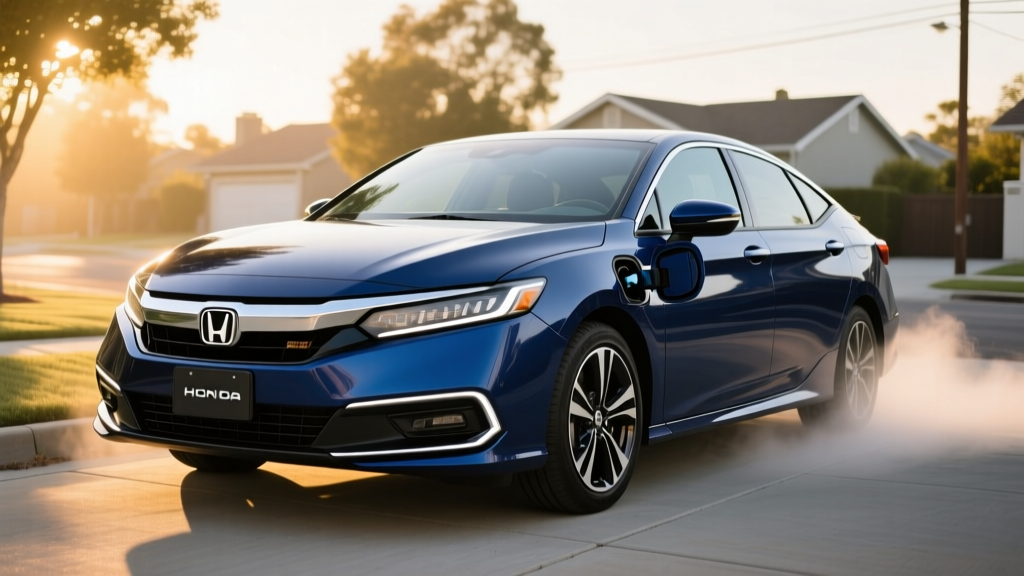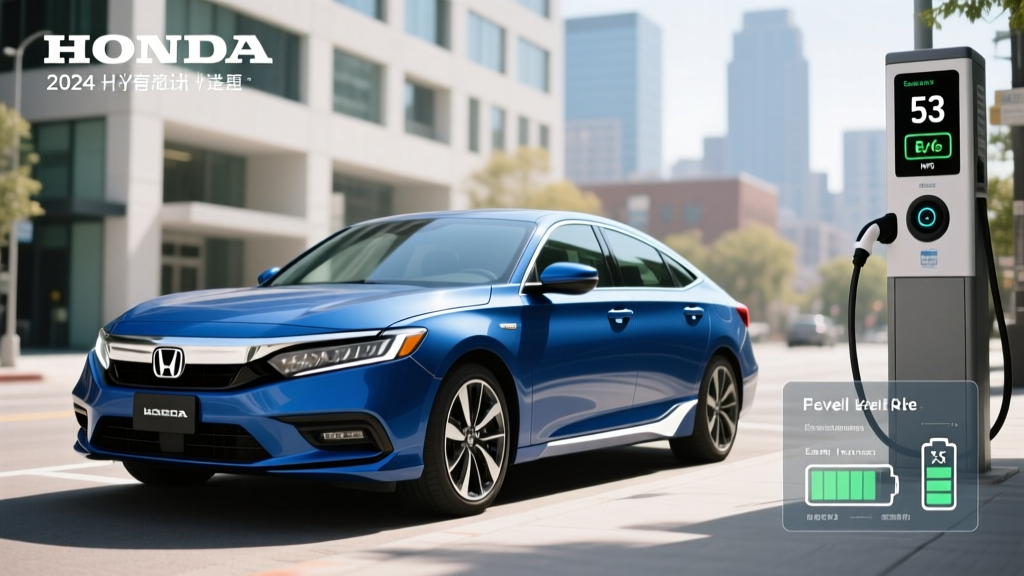
The Honda Insight hybrid occupies a specific niche in the electrified-vehicle landscape: it's a conventional hybrid electric vehicle (HEV) that prioritizes fuel efficiency without requiring any change in driver behavior. You never plug it in. You never hunt for a charger. You simply fill up at a gas station less often. For buyers researching the Insight hybrid — whether on the used market or comparing it against current Honda offerings — understanding its real-world fuel economy, battery longevity, and total cost of ownership is essential before writing a check.
This guide covers every number that matters: EPA and real-world MPG, the powertrain specs, battery warranty and replacement costs, and how the Insight stacks up against plug-in hybrids and full battery-electric vehicles in 2026.
What Is the Honda Insight Hybrid?
The Honda Insight is a conventional hybrid (HEV), not a plug-in hybrid (PHEV). This distinction matters because it defines everything about ownership. The Insight uses Honda's two-motor hybrid system to supplement a gasoline engine, capturing energy through regenerative braking and engine operation to charge a small lithium-ion battery pack. That battery is never charged from an external source.
HEV vs. PHEV — Where the Insight Fits
Conventional Hybrid (HEV) — Honda Insight: Small battery (~1.2 kWh usable), charged only by the engine and regen braking. No plug. Electric-only driving limited to brief, low-speed bursts. Fuel economy gains come from engine optimization and stop-start efficiency.
Plug-in Hybrid (PHEV) — e.g., Toyota Prius Prime: Larger battery (13.6 kWh), charges via plug (Level 1 or Level 2). Offers 25-44 miles of pure electric range before the gas engine engages. Qualifies for partial or full federal tax credits under certain conditions.
Key takeaway: The Insight hybrid does not plug in and does not qualify for the federal §30D new-vehicle EV tax credit. It is designed for drivers who want better MPG with zero infrastructure changes.
Fuel Economy: EPA Ratings vs. Real-World MPG
The Insight's headline number is its EPA-estimated fuel economy, which varies by trim. The lighter LX and EX trims achieve the best numbers, while the heavier Touring trim sacrifices a few MPG for additional equipment.
| Trim | City MPG | Highway MPG | Combined MPG |
|---|---|---|---|
| LX / EX | 55 | 49 | 52 |
| Touring | 51 | 45 | 48 |
Source: U.S. EPA / fueleconomy.gov
Real-World MPG: What Owners Actually See
Hybrids like the Insight tend to meet or exceed their EPA city estimates because urban driving maximizes regenerative braking and electric-motor assist. On aggregated owner-reported data from sources like Fuelly, the Insight averages between 48 and 54 MPG in mixed driving.
However, two scenarios reduce efficiency noticeably:
- Sustained highway driving above 70 mph: The aerodynamic drag penalty hits hybrids harder than many buyers expect. Expect 42-46 MPG on long interstate trips at 75+ mph.
- Cold weather (below 35°F): The gasoline engine runs more frequently to provide cabin heat and maintain battery temperature, dropping observed economy by roughly 5-8 MPG in winter conditions.
In temperate city driving, many Insight owners report touching 56-58 MPG — genuinely beating the EPA sticker. This is one area where conventional hybrids outperform their EPA numbers more consistently than most EVs match theirs.
Powertrain and Performance Specs
| Specification | Detail |
|---|---|
| Gasoline Engine | 1.5L Atkinson-cycle inline-4 |
| Engine Output | 107 hp / 97 lb-ft torque |
| Electric Motor Output | 129 hp / 195 lb-ft torque |
| Combined System Horsepower | 151 hp |
| Hybrid Battery | Lithium-ion, ~1.2 kWh usable |
| Transmission | e-CVT (no fixed gears) |
| 0-60 mph | ~7.7 seconds |
| Drivetrain | Front-wheel drive |
| Fuel Tank | 10.6 gallons |
Honda's hybrid system operates primarily in electric-drive mode at low and moderate speeds, with the gasoline engine acting as a generator. At highway speeds, a lock-up clutch connects the engine directly to the wheels for efficiency. This architecture gives the Insight the feel of an EV around town — smooth, immediate torque from the 195 lb-ft electric motor — while the gasoline engine handles sustained cruising.
Reliability and Hybrid Battery Longevity
Hybrid battery lifespan is the single most common concern among used-hybrid buyers. Here's the data:
Honda Insight Hybrid Battery Warranty
Original warranty: 8 years / 100,000 miles (10 years / 150,000 miles in CARB states including California, New York, Massachusetts, and others that follow California emissions standards).
Warranty coverage threshold: Honda warrants the hybrid battery against failure and excessive capacity loss. If the battery drops below approximately 60-70% of original capacity within the warranty period, Honda will repair or replace it at no cost.
Real-world battery longevity: Honda's lithium-ion hybrid batteries in the Insight have demonstrated strong durability. High-mileage owner reports and fleet data suggest most Insight hybrid batteries last 150,000-200,000+ miles before requiring replacement — well beyond the warranty period in typical ownership.
Hybrid Battery Replacement Cost
If the battery does eventually need replacement outside warranty:
- New OEM battery (Honda dealer): $2,500 - $4,000 including labor
- Refurbished/remanufactured battery: $1,200 - $2,200 including labor
- Individual cell replacement (specialist shops): $500 - $1,200 if only specific cells have degraded
Compared to the $10,000-$20,000 replacement cost for a full EV traction battery (60-100 kWh), the Insight's small hybrid battery is relatively inexpensive to replace. This is a direct function of its smaller capacity — roughly 1.2 kWh versus an EV's 60-100 kWh.
Overall Reliability
The Insight shares its core hybrid powertrain architecture with the Honda Accord Hybrid and CR-V Hybrid, both of which have strong reliability track records. Honda's two-motor hybrid system has no traditional transmission — the e-CVT is a direct-drive system with fewer moving parts than a conventional automatic. This reduces a common failure point in gas-only vehicles.
According to owner surveys and reliability aggregators, the Insight's most commonly reported issues are minor: 12V auxiliary battery drain (common in all hybrids if the car sits unused for weeks), infotainment software glitches, and occasional brake actuator noise. None are systemic or prohibitively expensive.
Pricing and Tax Credit Eligibility
Honda discontinued the Insight after the 2022 model year, replacing it with the Civic Hybrid for 2023 onward. This means the Insight is available exclusively on the used market as of 2026.
| Model Year / Trim | Original MSRP | Est. Used Price (2026) |
|---|---|---|
| 2019-2022 LX | $23,750 - $24,200 | $17,000 - $21,000 |
| 2019-2022 EX | $25,750 - $26,200 | $19,000 - $23,500 |
| 2019-2022 Touring | $28,950 - $29,790 | $21,000 - $26,000 |
Federal Tax Credit: Does the Insight Qualify?
No — not as a new vehicle. The Honda Insight was never eligible for the federal §30D new clean vehicle tax credit because it is a conventional hybrid (HEV), not a plug-in vehicle. The §30D credit requires a minimum battery capacity of 7 kWh and plug-in capability, which the Insight's ~1.2 kWh non-plug-in battery does not meet. Current IRS rules are detailed at irs.gov.
Used-vehicle credit (§25E): If you purchase a qualifying used Insight from a dealer for $25,000 or less, you may be eligible for the federal used clean vehicle credit — up to $4,000 or 30% of the sale price (whichever is less). However, this credit requires the vehicle to be a "previously owned clean vehicle" as defined by the IRS, and conventional hybrids have not consistently qualified. Consult a tax professional and verify current IRS guidance before counting on this credit.
Insight Hybrid vs. PHEV vs. Full EV: Which Fits You?
Choose the Honda Insight Hybrid (HEV) If:
- You cannot install a home charger (apartment, street parking, no garage)
- Your budget is under $26,000 and you want maximum MPG for the dollar
- You drive 10,000-15,000 miles/year in mixed city/highway conditions
- You want zero behavior change — no plugging in, no range planning
- You prioritize low maintenance costs and proven reliability
Choose a Plug-in Hybrid (PHEV) If:
- You have home charging access (Level 1 outlet is sufficient for most PHEVs)
- Your daily commute is under 30-40 miles round-trip (covers most PHEV electric-only range)
- You want to drive mostly on electricity but need gas flexibility for road trips
- You want to capture some tax credit benefits (eligibility varies by model — see fueleconomy.gov tax center)
Choose a Full Battery Electric Vehicle (BEV) If:
- You have reliable home Level 2 charging
- Your daily driving is predictable and within the vehicle's range
- You want to eliminate gasoline purchases entirely
- You qualify for the full $7,500 §30D federal credit and any state incentives
- You want the lowest per-mile fuel cost (electricity at $0.13/kWh averages ~$0.04/mile vs. the Insight's ~$0.06/mile at 52 MPG and $3.20/gallon)
Pros and Cons of the Honda Insight Hybrid
✓ Pros
- 52 MPG combined (LX/EX) — among the highest of any non-plug-in vehicle
- No plug-in required; zero infrastructure dependency
- Smooth, EV-like driving feel around town from electric motor torque
- Strong reliability record with proven Honda hybrid architecture
- Low battery replacement cost ($2,500-$4,000) vs. full EVs
- Competitive used-market pricing ($17K-$26K depending on trim/year)
- Comfortable ride quality and competitive interior space for the class
✗ Cons
- Discontinued after 2022 — no new models available
- Highway MPG drops at sustained speeds above 70 mph
- Cold-weather fuel economy loss of 5-8 MPG in winter
- No federal tax credit eligibility as a conventional hybrid
- Modest 151 hp — adequate but not quick for highway merging
- Engine drone under hard acceleration (e-CVT characteristic)
- No all-wheel-drive option
Frequently Asked Questions
How many MPG does the Honda Insight hybrid get?
The EPA rates the Insight LX and EX trims at 55 city / 49 highway / 52 combined MPG. The Touring trim is rated at 51 city / 45 highway / 48 combined. In real-world driving, most owners report 48-54 MPG in mixed conditions, with city driving often exceeding the EPA estimate and sustained highway driving falling slightly below it.
Does the Honda Insight plug in?
No. The Insight is a conventional hybrid (HEV). Its small lithium-ion battery charges exclusively through regenerative braking and the gasoline engine. There is no charging port and no plug-in capability. If you want plug-in electric range, you need a PHEV like the Toyota Prius Prime or a full EV.
How far can the Insight drive on electric only?
The Insight can operate on electric power alone only at very low speeds (typically under 25 mph) for very short distances — roughly half a mile or less in stop-and-go traffic. It is not designed for meaningful electric-only driving. The electric motor assists the gasoline engine continuously rather than replacing it for extended distances.
Is the Honda Insight hybrid reliable?
Yes. The Insight's two-motor hybrid system shares architecture with the Accord Hybrid and CR-V Hybrid, both of which have strong long-term reliability records. The hybrid battery is warrantied for 8 years/100,000 miles (10 years/150,000 miles in CARB states), and real-world data shows most batteries lasting 150,000-200,000+ miles. The e-CVT has fewer moving parts than a conventional automatic transmission.
What does a Honda Insight hybrid battery replacement cost?
A new OEM hybrid battery replacement at a Honda dealer costs approximately $2,500-$4,000 including labor. Refurbished batteries are available for $1,200-$2,200. This is significantly less than full EV battery replacements, which can cost $10,000-$20,000+ due to their much larger capacity.
Does the Honda Insight qualify for any tax credit?
The Insight does not qualify for the federal §30D new clean vehicle tax credit because it is a conventional hybrid without plug-in capability. The used-vehicle credit (§25E) may apply in limited cases if purchased from a dealer for under $25,000, but conventional hybrids have inconsistent eligibility under this program. Consult a tax professional for your specific situation.
What replaced the Honda Insight?
Honda replaced the Insight with the Civic Hybrid starting in the 2023 model year. The Civic Hybrid uses a similar two-motor hybrid system and achieves comparable fuel economy (approximately 50 MPG combined). If you want a new Honda hybrid sedan, the Civic Hybrid is the current equivalent.
Is the Insight better than a Prius?
The Toyota Prius (especially the 2023+ redesign) edges ahead on combined MPG (up to 57 MPG) and offers an all-wheel-drive option the Insight lacks. The Insight counters with a more refined ride, slightly more rear-seat space, and a more conventional sedan aesthetic. Both are excellent choices on the used market; the Prius has broader availability and a longer production run.
For the latest EPA fuel economy data, visit fueleconomy.gov. For current federal tax credit rules, consult the IRS clean vehicle credit page.