Why the 2007 Honda Insight Still Matters in the Hybrid Conversation
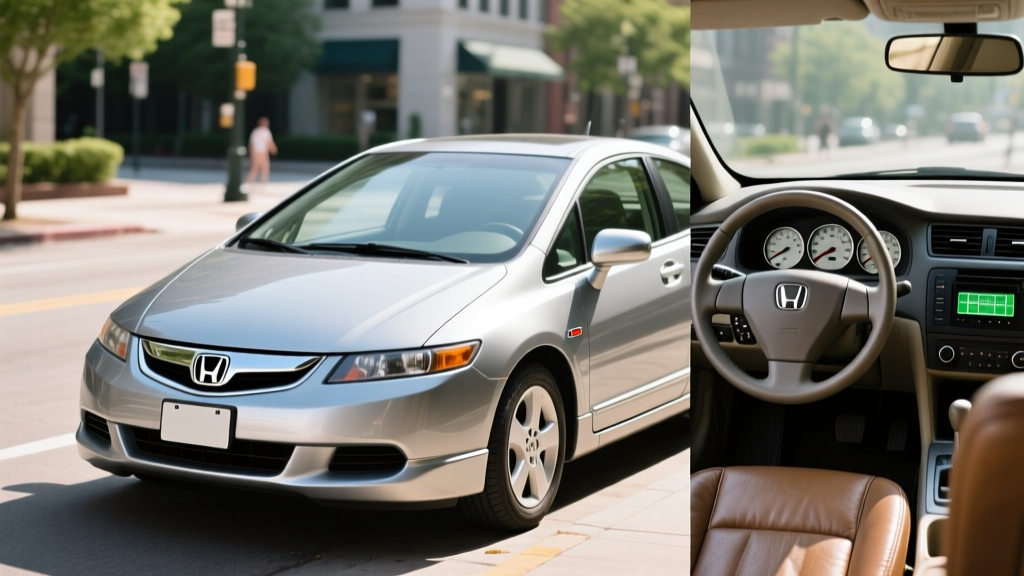
The 2007 Honda Insight hybrid occupies a unique place in electrified vehicle history. As one of the earliest mass-market hybrid electric vehicles (HEVs) sold in the United States, this first-generation Insight pioneered the lean, efficiency-first philosophy that Honda's Integrated Motor Assist (IMA) system embodied. If you're researching the honda insight hybrid 2007 model year today, you're likely evaluating it as an ultra-low-cost used hybrid — a commuter car that sips fuel and costs very little to acquire on the secondhand market.
This guide breaks down everything a prospective buyer or current owner needs to know: EPA fuel economy versus real-world MPG, the IMA battery's expected lifespan and replacement cost, powertrain specifications, and how this early HEV stacks up against modern hybrids, plug-in hybrids (PHEVs), and full battery-electric vehicles (BEVs) available in 2026.
2007 Honda Insight Hybrid Fuel Economy: EPA Ratings and Real-World MPG
Fuel economy is the single reason buyers seek out the 2007 Insight. Honda designed this car around maximum miles per gallon, and the numbers still impress nearly two decades later.
| Metric | Manual Transmission (5MT) | CVT Automatic |
|---|---|---|
| City MPG | 57 | 57 |
| Highway MPG | 56 | 56 |
| Combined MPG | 56 | 56 |
| Fuel Tank | 10.6 gallons | |
| Total Range | ~594 miles | |
Source: EPA / fueleconomy.gov
Note that these are the original EPA ratings. When the EPA revised its testing methodology in 2008 to better reflect real-world driving (adding air conditioning load, colder temperatures, and higher speeds), the retroactively adjusted numbers for the 2007 Insight dropped to approximately 49 city / 51 highway / 50 combined under the newer, more realistic cycle. Most used-car listing sites and the current fueleconomy.gov database display these revised figures.
Real-World MPG: What Owners Actually Report
Owner-reported data on Fuelly and hybrid forums consistently shows the 2007 Insight averaging between 45 and 52 MPG combined in daily driving. Several factors influence where you land in that range:
- City driving favors the Insight. Like all parallel hybrids, regenerative braking recaptures energy in stop-and-go traffic. Expect 50+ MPG in urban commutes under 45 mph.
- Highway driving above 65 mph drops efficiency. The 1.0-liter three-cylinder engine works harder at sustained high speeds, and the car's ultra-light weight (about 1,850 lbs) and narrow low-rolling-resistance tires provide less stability. Expect 42–48 MPG at 70–75 mph.
- Cold weather reduces MPG by 8–15%. The IMA battery operates less efficiently below 40°F, and the engine runs richer during warm-up. Winter commuters in northern states commonly see 40–44 MPG.
- A/C usage costs 2–4 MPG in summer, as the compressor is engine-driven, not electric.
Powertrain and Specifications: How the IMA System Works
The 2007 Insight uses Honda's first-generation Integrated Motor Assist (IMA) — a parallel hybrid system where a thin electric motor sandwiched between the engine and transmission assists the gasoline engine but cannot propel the car on electricity alone (unlike Toyota's Hybrid Synergy Drive in the Prius, which can operate in EV mode at low speeds).
| Component | Specification |
|---|---|
| Gasoline Engine | 1.0L 3-cylinder, 12-valve SOHC VTEC |
| Engine Power | 67 hp @ 5,700 rpm |
| IMA Electric Motor | 10 kW (13 hp) permanent-magnet |
| Combined System Output | 73 hp @ 5,700 rpm / 92 lb-ft torque @ 1,500 rpm |
| Hybrid Battery | 6.5 Ah NiMH (nickel-metal hydride), ~0.5 kWh usable |
| Transmission | 5-speed manual or CVT automatic |
| Curb Weight | ~1,850 lbs (one of the lightest production cars of its era) |
| 0–60 mph | ~11.0 seconds (CVT) |
| Drivetrain | Front-wheel drive |
The Insight achieves its extraordinary fuel economy through a combination of factors beyond the hybrid system: aluminum body construction, an extremely aerodynamic teardrop shape (drag coefficient of 0.25), and lightweight low-rolling-resistance tires. The trade-off is a car that feels underpowered on highway on-ramps and offers minimal crash protection by 2026 standards.
IMA Battery Lifespan, Degradation, and Replacement Cost
The most critical ownership question for any used hybrid is battery health. The 2007 Insight's 6.5 Ah NiMH pack is small by modern standards — roughly 0.5 kWh of usable capacity, compared to 1.3 kWh in a current Toyota Prius hybrid or 13.6 kWh in a Prius Prime PHEV. Because the pack is small and works hard, it has a well-documented aging pattern.
Expected Battery Life
Based on owner reports and hybrid specialist data:
- Original NiMH pack lifespan: 8–12 years or 100,000–150,000 miles before significant degradation (recalibration warnings, reduced assist, lower MPG).
- Symptoms of a failing IMA battery: The IMA warning light illuminates on the dash, the battery gauge fluctuates erratically, regenerative braking weakens, and fuel economy drops by 5–10 MPG. The car may also trigger an "IMA" code (P1447 or P1600).
- The car still drives with a degraded battery — unlike a full EV, the 1.0L engine can power the car alone, just with noticeably reduced performance and efficiency.
Replacement Options and Costs (2026 Estimates)
| Option | Estimated Cost | Notes |
|---|---|---|
| OEM New (Honda dealer) | $2,500–$3,500 | Availability increasingly limited; Honda has reduced production of first-gen Insight packs |
| Remanufactured NiMH pack | $1,000–$1,800 | Most popular option; sourced from hybrid specialists like BumbleBee Batteries or GreenTec Auto |
| Individual cell replacement (DIY) | $200–$500 | Requires technical skill; replaces only failed D-cell sub-modules within the pack |
| Used/salvage pack | $300–$700 | Risky — unknown remaining life; may last 2 years or 8 years |
For most used buyers, a remanufactured pack installed by a hybrid specialist represents the best value, typically bringing total cost (parts + labor) to $1,400–$2,200. Given that a clean 2007 Insight trades for $3,000–$6,000 on the used market, a battery replacement can represent 25–50% of the car's value — a critical factor in your purchase decision.
Reliability, Safety, and Ownership Costs
The 2007 Insight's mechanical simplicity works in its favor for long-term reliability. The 1.0L three-cylinder engine is under-stressed, the manual transmission is bulletproof, and the CVT (while not as robust as the manual) has proven adequate when maintained. The primary reliability concern remains the IMA battery, discussed above.
Other known issues to inspect on a used example:
- 12V auxiliary battery drain: If the car sits for extended periods, the 12V battery can die, which prevents the IMA system from booting. A jump-start or trickle charger resolves this, but repeated deep discharges shorten the 12V battery's life.
- A/C compressor failure: The engine-driven compressor can fail on high-mileage examples. Replacement runs $800–$1,200.
- Rust: The aluminum body panels don't rust, but the steel subframe and suspension components can corrode in salt-belt states. Inspect the rear trailing arms and subframe mounting points.
- Lean burn mode hesitation: The Insight's lean-burn engine operation can cause a slight hesitation or stumble at light throttle. This is normal behavior, not a defect, but surprises drivers unfamiliar with the car.
From a safety standpoint, the 2007 Insight is a product of its era. It earned acceptable ratings in its time, but its 1,850-pound curb weight and minimal crumple structure make it significantly less protective than any 2026 vehicle. The NHTSA did not crash-test the first-generation Insight under its current 5-star protocol. If safety is a primary concern — especially for families or highway-heavy commutes — a modern hybrid like the Toyota Prius or Honda Accord Hybrid is a substantially safer choice.
Does the 2007 Honda Insight Qualify for Any Tax Credits?
No. The 2007 Honda Insight does not qualify for any federal tax credit. Here's why:
- The IRS §30D Clean Vehicle Credit applies only to new qualifying vehicles purchased new, and the Insight was discontinued after 2006 (first generation) and again after 2014 (second generation). It is not a new vehicle.
- The Used Clean Vehicle Credit (§25E), which offers up to $4,000 or 30% of the sale price (whichever is less) for qualifying pre-owned EVs and PHEVs, requires the vehicle to be a plug-in electric vehicle or fuel cell vehicle. The 2007 Insight is a conventional HEV — it has no plug, no electric-only range, and therefore does not meet the statutory definition of a qualifying used clean vehicle.
- Some state and local incentive programs offer rebates for used hybrids, but these are jurisdiction-specific and change frequently. Check your state's energy office or Alternative Fuels Data Center for current programs.
Bottom line: budget for the full purchase price with no credit offset. On the positive side, a $3,000–$6,000 purchase price and 50 MPG combined means your fuel savings versus a conventional car (at $3.50/gallon, 30 MPG average) recover the purchase price within 2–3 years of average driving.
2007 Honda Insight vs. Modern Alternatives: HEV, PHEV, and EV
If you're considering the 2007 Insight, you're likely cross-shopping it against other used hybrids or weighing whether to spend more for a newer vehicle. Here's how the Insight compares to the main alternatives available in 2026:
| Vehicle | Type | Combined MPG / MPGe | Used Price (2026) | EV-Only Range |
|---|---|---|---|---|
| 2007 Honda Insight | HEV | 50 MPG | $3,000–$6,000 | 0 mi |
| 2018–2020 Toyota Prius | HEV | 52–56 MPG | $14,000–$20,000 | 0 mi |
| 2021–2023 Toyota Prius Prime | PHEV | 54 MPG + 133 MPGe | $22,000–$30,000 | 25 mi |
| 2022–2024 Chevrolet Bolt EV | BEV | 120 MPGe | $16,000–$24,000 | 259 mi |
| 2026 Toyota Prius (new) | HEV | 57 MPG | $29,445 MSRP | 0 mi |
Pros: 2007 Honda Insight
- Best-in-class fuel economy for its era (50+ MPG combined real-world)
- Extremely low purchase price ($3K–$6K)
- Lightweight, fun for hypermilers and efficiency enthusiasts
- Simple mechanicals — easy to work on
- Manual transmission available (rare for hybrids)
- Nearly 600-mile total range on one tank
Cons: 2007 Honda Insight
- Very slow (11+ second 0–60, 73 hp combined)
- Only 2 seats — no rear passenger capability
- Minimal cargo space (hatch area is small)
- Outdated safety — no airbags beyond front dual-stage, no ESC
- IMA battery replacement likely needed; $1,400–$2,200
- No tax credit eligibility
- Loud cabin, firm ride, limited highway comfort
- No modern infotainment, Bluetooth, or driver-assist features
Who Should Buy the 2007 Honda Insight — And Who Shouldn't
Choose the 2007 Insight if:
- You need the absolute cheapest possible transportation with maximum MPG
- Your commute is primarily urban or suburban, under 45 mph
- You're a single driver or couple who never carries rear passengers
- You enjoy hypermiling and efficiency optimization as a hobby
- You have access to a hybrid specialist for IMA battery service
- You understand this is a 19-year-old car with 19-year-old safety technology
Look elsewhere if:
- You need rear seats for children or passengers
- Safety is a top priority (choose a 2018+ Prius or any modern hybrid)
- You drive primarily on highways above 65 mph
- You want electric-only driving capability (consider a used Prius Prime PHEV or Bolt EV)
- You want a vehicle that qualifies for the used EV tax credit (must be a PHEV or BEV)
- You're uncomfortable budgeting $1,500+ for a potential battery replacement
Frequently Asked Questions
How many MPG does the 2007 Honda Insight hybrid get?
The original EPA rating was 57 city / 56 highway / 56 combined. Under the revised EPA methodology used today, the rating is approximately 49 city / 51 highway / 50 combined. Real-world owners report 45–52 MPG combined depending on driving conditions, with city driving yielding the best results.
Is the 2007 Honda Insight a plug-in hybrid?
No. The 2007 Insight is a conventional hybrid (HEV). It has no plug, no charging port, and no electric-only driving range. The small NiMH battery recharges exclusively through regenerative braking and the gasoline engine. You never plug it in — just fill it with gasoline like any other car.
How much does it cost to replace the IMA battery in a 2007 Insight?
A remanufactured NiMH IMA battery pack, including installation by a hybrid specialist, typically costs $1,400–$2,200 in 2026. OEM new packs from Honda are increasingly scarce and cost $2,500–$3,500 if available. DIY cell-level repair can be done for $200–$500 but requires electrical knowledge.
Is the 2007 Honda Insight reliable?
Mechanically, yes — the 1.0L engine and manual transmission are durable and simple. The CVT automatic is adequate but not as robust. The primary reliability concern is the IMA hybrid battery, which typically lasts 8–12 years or 100K–150K miles before requiring replacement or refurbishment. Budget for this expense when purchasing.
Does the 2007 Honda Insight qualify for any federal tax credit?
No. The federal §30D credit applies only to new qualifying plug-in vehicles. The §25E Used Clean Vehicle Credit (up to $4,000) requires the vehicle to be a plug-in electric vehicle or fuel cell vehicle. The Insight is a conventional HEV with no plug, so it does not qualify for either credit.
Hybrid vs. PHEV vs. EV — which should I choose?
A conventional hybrid (HEV) like the Insight is ideal if you want maximum MPG with zero lifestyle change — no charging, no range planning, just fill up with gas. A plug-in hybrid (PHEV) like the Prius Prime gives you 25–45 miles of electric-only range for daily commuting plus a gas engine for longer trips — best if you can charge at home. A full EV (BEV) like the Chevy Bolt eliminates gasoline entirely with 250+ miles of range and lower operating costs, but requires reliable access to charging (home or public). For a budget buyer wanting the simplest, cheapest option, the HEV wins. For lower total cost of ownership with home charging access, a used PHEV or BEV often makes more financial sense.
For official fuel economy data, visit fueleconomy.gov. For federal tax credit rules, consult IRS.gov §30D and §25E guidelines.