The State of Honda's Plug-In Hybrid Lineup in 2026
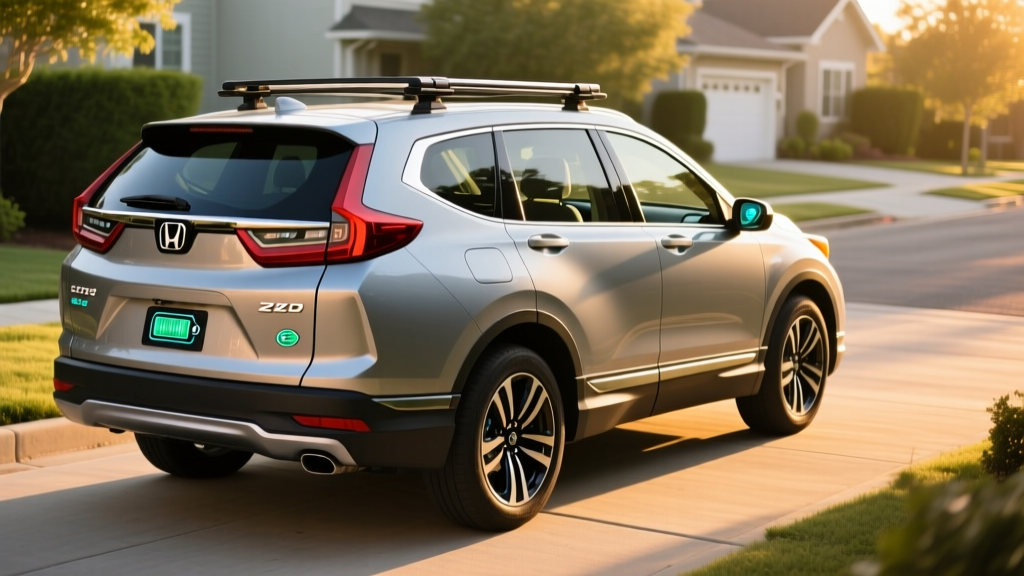
If you've been searching for a Honda hybrid plug-in, you've likely hit a wall of outdated forum posts and discontinued model references. Here's the honest reality for 2026: Honda currently does not sell a new plug-in hybrid (PHEV) in the United States. The Honda Clarity Plug-In Hybrid, which was the brand's only PHEV offering, ended production after the 2022 model year. For the 2025 and 2026 model years, Honda's electrified strategy in the US has pivoted entirely to conventional hybrids (HEVs) — vehicles that generate their own electricity and never need to be plugged in.
That doesn't mean Honda has abandoned electrification. The 2026 Honda Accord Hybrid, CR-V Hybrid, and Civic Hybrid all deliver impressive efficiency without a charging cable. But if you specifically want a Honda you can plug in to drive on pure electric power, your only path is the used market or waiting for Honda's next move. This guide breaks down exactly what's available, what's not, and how Honda's current hybrids compare to PHEVs and full EVs from rival brands.
HEV vs PHEV: What Honda Buyers Need to Understand
Before diving into specific models, it's critical to distinguish between the two hybrid types, because the ownership experience is fundamentally different.
| Feature | HEV (e.g., 2026 CR-V Hybrid) | PHEV (e.g., used Clarity PHEV) |
|---|---|---|
| Plug in to charge? | No — self-charging via regenerative braking and engine | Yes — plug in for electric-only driving |
| Electric-only range | None (motor assists engine at low speeds) | Typically 20–47 miles on battery alone |
| Battery size | ~1.0–1.8 kWh | ~17 kWh (Clarity PHEV) |
| Fuel economy | Consistent MPG in all conditions | MPGe on electric; MPG after battery depletes |
| Tax credit (new) | Not eligible for §30D federal credit | Was eligible when new; no longer sold new |
| Home charging needed? | No | Yes, for full benefit (Level 1 or 2) |
The key takeaway: Honda's current 2026 hybrids are HEVs. You fuel them with gasoline, and the hybrid system optimizes efficiency automatically. There is no plug, no electric-only commute, and no range anxiety about finding a charger. If your goal is a plug-in vehicle with 30+ miles of electric driving before the engine kicks in, you'll need to look at competitors like the Toyota RAV4 Prime, Jeep Wrangler 4xe, or Hyundai Tucson PHEV — or consider a used Honda Clarity PHEV.
2026 Honda Hybrid Lineup: MPG, Pricing, and Specs
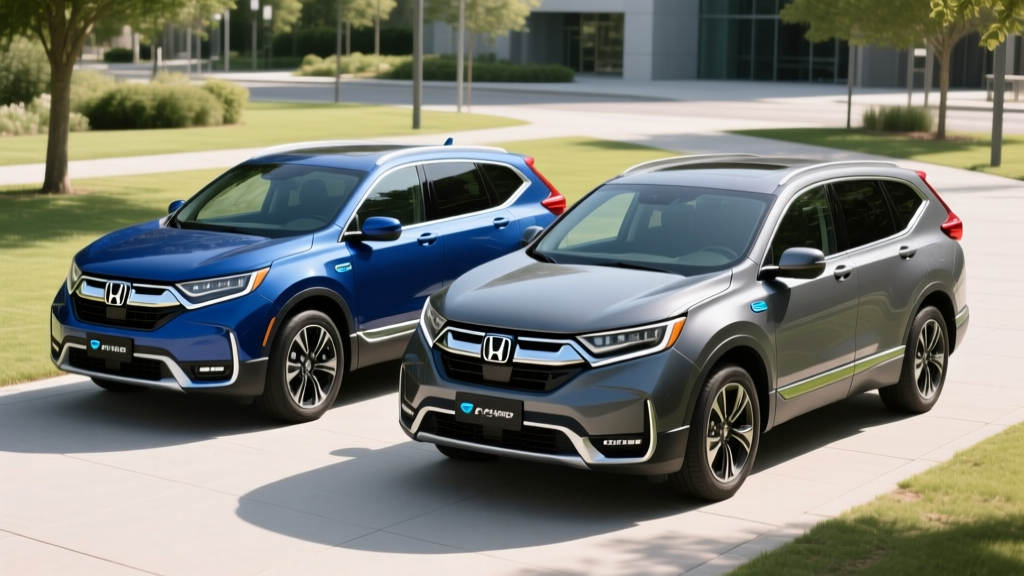
Honda's 2026 hybrid portfolio covers three core models. All use Honda's two-motor hybrid system paired with a 2.0-liter Atkinson-cycle four-cylinder engine. None require plug-in charging.
| Model | Combined HP | EPA City | EPA Hwy | EPA Combined | Battery | Base MSRP |
|---|---|---|---|---|---|---|
| 2026 Accord Hybrid | 204 hp | 51 MPG | 44 MPG | 48 MPG | ~1.3 kWh lithium-ion | $34,750 |
| 2026 CR-V Hybrid | 204 hp | 43 MPG | 36 MPG | 40 MPG | ~1.3 kWh lithium-ion | $36,350 |
| 2026 Civic Hybrid | 200 hp | 50 MPG | 47 MPG | 49 MPG | ~1.1 kWh lithium-ion | $29,845 |
Source: fueleconomy.gov and Honda Newsroom. MSRP reflects base Sport/LX Hybrid trims; destination charges additional.
Real-World MPG: What Owners Actually See
One of the most pleasant surprises with Honda's two-motor hybrid system is that real-world city driving often exceeds EPA estimates. The system operates primarily in electric-drive mode at low and moderate speeds, with the engine acting as a generator. In stop-and-go urban traffic, owners of the Accord Hybrid routinely report 52–55 MPG. Highway driving is the opposite story: at sustained 75+ mph, the engine drives the wheels directly, and aerodynamic drag reduces efficiency. Expect 38–42 MPG on the highway in the Accord Hybrid, slightly below the EPA sticker.
For the CR-V Hybrid, the boxier SUV profile means a more noticeable highway penalty. Real-world highway figures cluster around 33–35 MPG, while city driving can push past 44 MPG. Cold weather (below 35°F) typically reduces hybrid efficiency by 5–10% across all models due to increased engine runtime for cabin heat and reduced battery efficiency.
The Used Honda Clarity Plug-In Hybrid: Still Worth It?
If you're determined to get a Honda hybrid plug-in, the 2017–2022 Honda Clarity Plug-In Hybrid is your only option. It remains one of the most efficient PHEVs Honda ever built, and used examples are available in the $18,000–$28,000 range depending on mileage and condition.
| Specification | Value |
|---|---|
| Electric-only range (EPA) | 47 miles |
| Total combined range | 340 miles |
| Battery capacity | 17.0 kWh lithium-ion |
| Combined system power | 212 hp |
| MPGe (electric + gas) | 110 MPGe |
| Gas-only MPG (after battery depletes) | 42 MPG combined |
| Level 1 charging (120V) | ~12 hours (full) |
| Level 2 charging (240V, 32A) | ~2.5 hours (full) |
| DC fast charging | Not supported |
| Original MSRP | $33,400–$37,400 |
Source: fueleconomy.gov — 2022 Honda Clarity PHEV
The Clarity PHEV's 47-mile electric range was class-leading when new and still holds up well against current PHEVs. A 17 kWh battery charged on a standard Level 2 home charger refills in about 2.5 hours. The critical limitation: no DC fast charging. You cannot use public rapid chargers. For most PHEV buyers who charge overnight at home, this is a minor inconvenience. For apartment dwellers without home charging access, it's a dealbreaker.
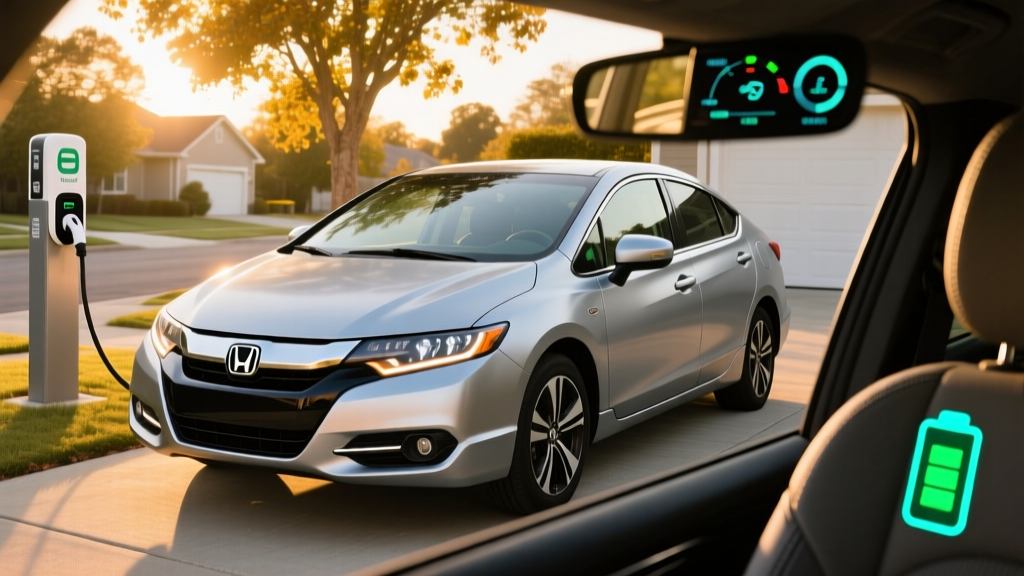
Charging the Clarity PHEV at Home
Because the battery is 17 kWh, home charging is straightforward. A standard 120V outlet (Level 1) adds roughly 4–5 miles of range per hour — sufficient only if you drive less than 20 miles daily and can leave it plugged in overnight. A 240V Level 2 home charger at 32 amps (7.7 kW) replenishes the full battery in approximately 2.5 hours, easily fitting within any overnight window. Installation of a Level 2 charger typically costs $500–$2,000 depending on your electrical panel's capacity and the run distance from panel to garage.
Hybrid vs PHEV vs EV: Which Honda Buyer Are You?
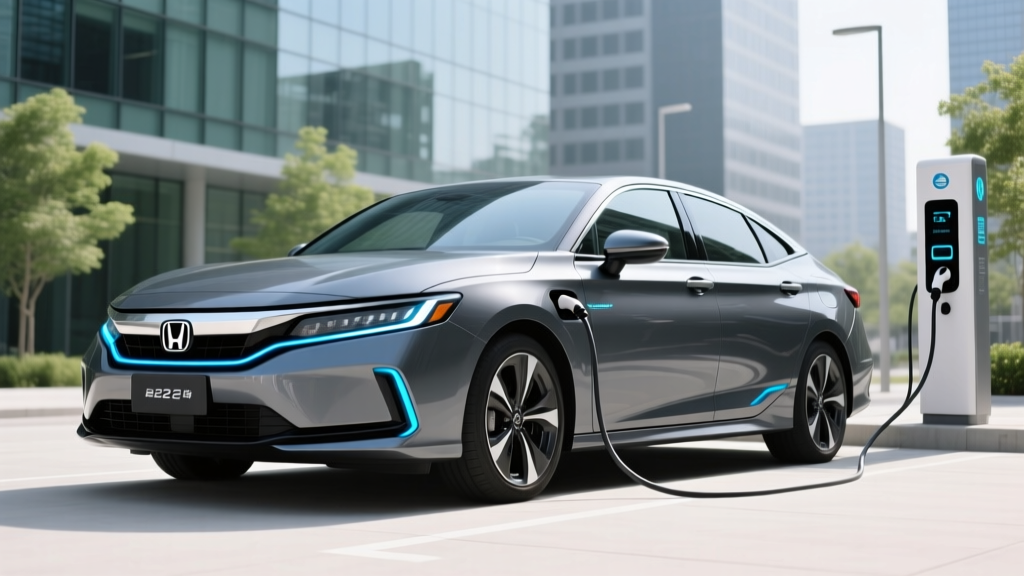
Choosing between a conventional hybrid, a plug-in hybrid from another brand, or a full battery-electric vehicle depends on your daily routine, charging access, and budget. Here's a practical decision framework:
Choose a 2026 Honda Hybrid (HEV) if:
- You cannot charge at home or work (apartment, street parking, no outlet access)
- You want zero behavior change — just buy gas and drive
- Your commute is long and mixed (city + highway) and you want consistent efficiency
- You want Honda's reliability record and dealer network for long-term ownership
- Budget is $30,000–$40,000 and you don't want to pay the PHEV/EV premium
Choose a PHEV (from Toyota, Hyundai, etc.) if:
- You have reliable Level 2 home charging and a commute under 35 miles
- You want electric-only daily driving but gas flexibility for road trips
- You can benefit from any remaining state incentives for PHEV purchases
- You're willing to pay $40,000–$50,000+ for the PHEV powertrain premium
Choose a full EV (BEV) if:
- You have home charging and your daily driving is under 250 miles
- You want the lowest per-mile fuel cost and minimal maintenance
- You qualify for the full §30D federal tax credit (up to $7,500) on eligible models
- You're ready to plan around public DC fast charging for road trips
Tax Credits and Incentives: What Applies to Honda Hybrids?
This is where Honda's current lineup faces a disadvantage. Under current IRS §30D rules, conventional hybrids (HEVs) do not qualify for the federal EV tax credit. The credit applies only to plug-in vehicles — battery-electric vehicles (BEVs) and plug-in hybrids (PHEVs) that meet battery capacity, critical mineral sourcing, and MSRP thresholds.
- §30D credit for new PHEVs/BEVs: Up to $7,500, subject to battery sourcing and critical mineral requirements (IRS current rules)
- MSRP cap: Vans/SUVs/pickups ≤ $80,000; sedans/other ≤ $55,000
- Buyer income cap: AGI ≤ $150,000 (single) / $300,000 (joint)
- Honda HEVs (Accord, CR-V, Civic Hybrid): Not eligible — no plug, no credit
- Used Clarity PHEV: May qualify for up to $4,000 under the used clean vehicle credit (§25E) if the sale price is ≤ $25,000 and buyer income is within limits
The used Clarity PHEV's potential eligibility for the §25E used-EV credit (up to $4,000 or 30% of sale price, whichever is less) is a genuine financial advantage. If you find a qualifying Clarity PHEV at a dealer for $24,000 and your income is under $75,000 (single) or $150,000 (joint), the effective price could drop to $20,000. Always verify eligibility with a tax professional before relying on this credit.
Battery Reliability, Warranty, and Replacement Costs
Hybrid battery longevity is the top concern for buyers considering any electrified Honda. Here's what the data shows:
2026 Honda Hybrid Battery Warranty:
- Hybrid battery: 8 years / 100,000 miles (10 years / 150,000 miles in CARB states including CA, NY, MA, and others)
- Hybrid system components (inverter, motor): 8 years / 100,000 miles
- Conventional powertrain: 5 years / 60,000 miles
Honda's hybrid batteries are relatively small (~1.1–1.3 kWh for HEVs) and are managed conservatively — the system never fully charges or fully depletes the pack, keeping the battery in its optimal state-of-charge window. This dramatically extends cycle life. Real-world data from earlier Honda hybrids (Insight, Accord Hybrid prior generations) shows batteries routinely lasting 150,000–200,000+ miles before significant degradation.
If replacement is needed out of warranty, a new Honda hybrid battery pack for the Accord or CR-V Hybrid typically costs $2,000–$4,000 including labor. This is far less than a full EV battery replacement because the pack is small. For the Clarity PHEV with its larger 17 kWh pack, replacement cost is higher — typically $5,000–$8,000 — though failures have been rare in the field.
Honda's hybrid system has proven to be one of the most reliable in the industry. The two-motor setup has fewer moving parts than traditional planetary-gear hybrid systems, and there is no conventional transmission to fail. Long-term reliability data from Consumer Reports and owner surveys consistently ranks Honda hybrids above average.
Pros and Cons of Honda's Electrified Options
2026 Honda Hybrids (HEV) — Pros
- Excellent real-world MPG, often exceeding EPA city estimates
- No charging infrastructure needed — gas and go
- Strong reliability record and extensive dealer network
- Competitive pricing starting under $30,000 (Civic Hybrid)
- Smooth, quiet two-motor hybrid operation
- 8-year/100,000-mile hybrid battery warranty
2026 Honda Hybrids (HEV) — Cons
- No plug-in option available in current new-vehicle lineup
- No federal tax credit eligibility for HEVs
- No electric-only driving mode for zero-emission commutes
- Highway MPG drops noticeably at sustained high speeds
- Cannot access HOV/carpool lanes in most states (unlike PHEVs/EVs)
Used Clarity PHEV — Pros
- Class-leading 47-mile electric-only range
- Potential §25E used-EV tax credit up to $4,000
- Comfortable, spacious midsize sedan with premium feel
- 42 MPG combined even after battery depletes
Used Clarity PHEV — Cons
- Discontinued — no new models available
- No DC fast charging capability
- Limited remaining factory warranty on older examples
- Declining parts availability as the model ages
- Only available in select states when new (CA, OR, NY, and other ZEV states)
Frequently Asked Questions
How many MPG does a Honda hybrid get?
The 2026 Honda Accord Hybrid achieves an EPA-rated 48 MPG combined (51 city / 44 highway). The Civic Hybrid reaches 49 MPG combined (50 city / 47 highway). The CR-V Hybrid delivers 40 MPG combined (43 city / 36 highway). In real-world city driving, owners frequently exceed EPA city estimates by 2–4 MPG due to the two-motor system's efficiency at low speeds.
How far can the Honda Clarity go on electric only?
The 2022 Honda Clarity Plug-In Hybrid (the final model year) has an EPA-rated 47 miles of electric-only range. Real-world results vary: gentle city driving in mild weather can yield 50+ miles, while highway driving or cold temperatures may reduce this to 35–40 miles. After the battery depletes, the 1.5-liter engine takes over and delivers 42 MPG combined.
Hybrid vs PHEV vs EV — which fits me?
If you lack home charging, a Honda HEV is the pragmatic choice — zero lifestyle change, excellent MPG. If you have home charging and a sub-35-mile commute, a PHEV (from Toyota, Hyundai, or a used Clarity) gives you electric daily driving with gas backup. If you have home charging, drive under 250 miles daily, and want the lowest operating cost, a full EV with federal tax credit eligibility makes the strongest financial case.
Is the Honda hybrid system reliable, and what does battery replacement cost?
Honda's two-motor hybrid system has demonstrated strong reliability over multiple generations. The hybrid battery is warrantied for 8 years/100,000 miles (10 years/150,000 miles in CARB states). Out-of-warranty replacement for a 2026 HEV battery runs $2,000–$4,000. The Clarity PHEV's larger battery costs $5,000–$8,000 to replace. Most Honda hybrid batteries last well beyond the warranty period.
Does any Honda hybrid qualify for a tax credit?
No current new Honda hybrid (HEV) qualifies for the §30D federal EV tax credit — the credit requires plug-in capability. However, a used Honda Clarity PHEV may qualify for the §25E used clean vehicle credit of up to $4,000 if the sale price is $25,000 or less and the buyer meets income requirements. Always consult a tax professional and check IRS guidelines before claiming any credit.
Will Honda release a new plug-in hybrid?
As of early 2026, Honda has not announced a new PHEV for the US market. The company's stated electrification strategy focuses on conventional hybrids for the near term and full battery-electric vehicles (the Honda Prologue and upcoming models) for the long term. If a plug-in commute is a priority, consider competitors like the Toyota RAV4 Prime (42 miles electric range) or the Hyundai Tucson PHEV (33 miles electric range).