The Honda CR-Z Hybrid: A 2026 Used-Market Profile
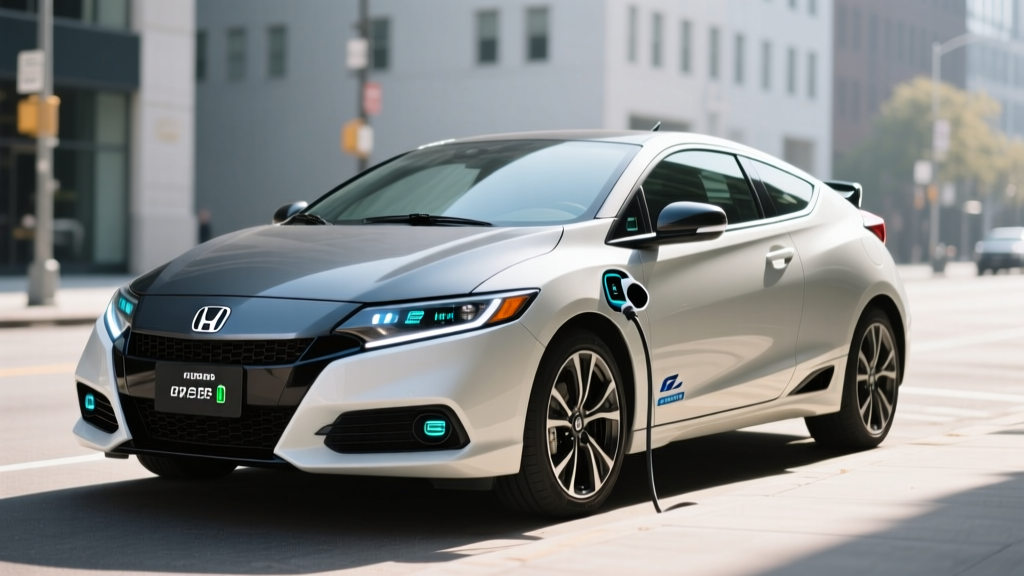
The Honda CR-Z hybrid occupies a unique space in the used-car market. Produced from 2011 through 2016, it was Honda's attempt at a sporty, two-seat hybrid coupe — a spiritual successor to the original CRX, but with Honda's Integrated Motor Assist (IMA) mild-hybrid system under the hood. In 2026, the CR-Z is firmly a used-vehicle proposition, with examples typically ranging from $5,000 to $12,000 depending on mileage, condition, and model year.
For buyers researching the Honda CR-Z hybrid today, the key questions revolve around real-world fuel economy, IMA battery longevity, and whether this aging hybrid still delivers meaningful efficiency gains over a modern conventional car. This guide covers every spec, cost, and ownership factor you need to evaluate one as a daily driver or weekend commuter.
| Spec | Value |
|---|---|
| Powertrain | 1.5L i-VTEC 4-cylinder + IMA electric motor |
| Combined Horsepower | 130 hp (127 hp with CVT) |
| Combined Torque | 140 lb-ft (manual) / 127 lb-ft (CVT) |
| Transmission | 6-speed manual or CVT |
| EPA MPG (City / Hwy / Combined) | 36 / 39 / 37 (CVT) — 31 / 38 / 34 (6MT) |
| Hybrid System | IMA mild-hybrid (conventional HEV, no plug) |
| IMA Battery | 0.5 kWh nickel-metal hydride (NiMH) |
| 0-60 mph | ~8.8 seconds (CVT) |
| Cargo Volume | 25.1 cu ft (rear seats folded, 2+2 config) |
| Drivetrain | Front-wheel drive |
| Curb Weight | ~2,778 lbs |
HEV vs PHEV: Where the CR-Z Fits
The Honda CR-Z is a conventional hybrid electric vehicle (HEV). It does not plug in. Its small 0.5 kWh NiMH battery recharges exclusively through regenerative braking and the gasoline engine. The electric motor assists the 1.5L engine during acceleration and enables idle stop-start — it cannot propel the car on electric power alone for any meaningful distance.
This is fundamentally different from a plug-in hybrid (PHEV) like the Toyota Prius Prime or Chrysler Pacifica Hybrid, which carries a larger battery (typically 12-20 kWh), can be plugged into a wall outlet or Level 2 charger, and offers 20-45 miles of electric-only driving before the gas engine engages.
| Feature | Honda CR-Z (HEV) | Typical PHEV (e.g., Prius Prime) | Full BEV (e.g., Tesla Model 3) |
|---|---|---|---|
| Plug-in Charging | No | Yes (Level 1/2) | Yes (Level 1/2/DC) |
| Electric-Only Range | None (motor-assist only) | 25-45 miles | 250-360 miles |
| Battery Size | 0.5 kWh (NiMH) | 13.6 kWh (Li-ion) | 60-82 kWh (NMC/LFP) |
| Gas Engine | Yes (primary power) | Yes (backup + highway) | None |
| Federal Tax Credit (§30D) | Not eligible | Up to $7,500 (new, if eligible) | Up to $7,500 (new, if eligible) |
| Used EV Credit (§25E) | Not eligible (HEV) | Up to $4,000 (if eligible) | Up to $4,000 (if eligible) |
Fuel Economy: EPA Ratings and Real-World MPG
The EPA rated the 2016 Honda CR-Z with CVT at 36 city / 39 highway / 37 combined MPG. The 6-speed manual version was rated lower at 31 city / 38 highway / 34 combined MPG — an unusual split where highway efficiency exceeds city, partly because the manual lacks the CVT's optimized ratio mapping for stop-and-go efficiency.
According to fueleconomy.gov, real-world CR-Z owners report a wide spread, with many achieving 38-42 MPG in mixed driving and some hypermilers exceeding 45 MPG on flat commuter routes. However, aggressive driving, cold weather, and highway speeds above 70 mph can drop observed fuel economy to the low 30s.
| Year | Transmission | City MPG | Highway MPG | Combined MPG |
|---|---|---|---|---|
| 2011-2012 | CVT | 35 | 38 | 36 |
| 2011-2012 | 6MT | 31 | 37 | 33 |
| 2013-2016 | CVT | 36 | 39 | 37 |
| 2013-2016 | 6MT | 31 | 38 | 34 |
Real-world expectation: Plan on 34-38 MPG combined in everyday driving. The CR-Z's hybrid system provides modest gains over a comparable non-hybrid Honda Civic of the same era (roughly 28-30 MPG combined), but it falls well short of the Toyota Prius (50+ MPG combined) or modern hybrids like the Hyundai Ioniq Hybrid (55-59 MPG combined).
IMA Powertrain and Battery: What You're Getting
Honda's Integrated Motor Assist (IMA) system pairs a 1.5-liter i-VTEC inline-four engine with a thin electric motor sandwiched between the engine and transmission. The electric motor adds roughly 13 hp and 58 lb-ft of torque, primarily filling in the torque gap at low RPM where the small 1.5L engine is weakest. Combined output is 130 hp — adequate for merging and passing, but not quick by 2026 standards.
The IMA battery pack is a compact 0.5 kWh nickel-metal hydride (NiMH) unit mounted behind the rear seats. Unlike modern lithium-ion packs, NiMH is heavier per unit of energy but is known for predictable degradation characteristics. The battery does not provide meaningful electric-only propulsion; its role is assist and regen capture.
Hybrid Battery Warranty and Replacement Cost
Original warranty: Honda covered the IMA battery for 8 years / 100,000 miles (10 years / 150,000 miles in CARB states including California, New York, Massachusetts, and others that adopted California emissions standards).
Current status for used buyers: For a 2011-2016 CR-Z purchased in 2026, the original factory battery warranty has expired or is expiring imminently. Budget for potential replacement.
Replacement cost: A new OEM IMA battery from Honda runs approximately $2,000-$2,800 including labor at a dealership. Independent hybrid-battery specialists and refurbished NiMH packs can reduce this to $800-$1,500. Individual cell replacement (for those with DIY skills) can cost as little as $200-$400 in cells, though this requires technical knowledge of NiMH pack balancing.
Lifespan data: Most CR-Z IMA batteries last 120,000-180,000 miles before significant capacity loss triggers an IMA warning light. Climate matters: hot-climate cars (Arizona, Texas) tend to see earlier degradation than mild-climate examples.
Driving Experience: The Sport Hybrid That Wasn't Quite Sporty
The CR-Z's 8.8-second 0-60 mph time (CVT) was slow even at launch, and it feels leisurely against modern EVs and turbocharged compacts. The manual transmission version is the enthusiast pick — the 6-speed is precise and engaging, and the lightweight 2,778-lb curb weight makes the car feel nimble on back roads even without much power.
The three-mode drive system (Sport, Normal, Econ) adjusts throttle response, steering weight, and A/C usage. Sport mode sharpens the IMA assist and throttle mapping noticeably. The idle stop-start system shuts the engine at red lights and restarts seamlessly — a feature that felt novel in 2011 and is now standard across most new vehicles.
Regenerative braking is mild compared to modern EVs. There is no one-pedal driving capability. The brake feel is typical of early-2010s hybrids: slightly wooden at the pedal top as the system blends regen and friction braking.
Ownership Costs and Tax Credit Eligibility
As a conventional hybrid (HEV), the Honda CR-Z does not qualify for the federal §30D new clean vehicle tax credit or the §25E used clean vehicle credit. Both credits are restricted to plug-in vehicles — PHEVs and BEVs with sufficient battery capacity. The CR-Z's 0.5 kWh NiMH pack falls well below the minimum threshold.
Some states historically offered hybrid-specific rebates (California's Clean Vehicle Rebate Project once included certain HEVs), but most state incentive programs have shifted exclusively to plug-in vehicles. Check your state's current energy office or DMV site for any residual HEV incentives, but do not count on them.
Annual fuel cost estimate: At 37 MPG combined and $3.20/gallon gasoline (a reasonable 2026 national average), driving 12,000 miles per year costs approximately $1,040 in fuel. Compare this to a 25 MPG conventional compact at roughly $1,536/year — a savings of about $496 annually. Against a modern BEV charging at home at $0.14/kWh and 3.5 miles/kWh, the EV's annual fuel cost is roughly $480, saving over $560/year versus the CR-Z.
Insurance: CR-Z insurance rates are moderate, typically $1,100-$1,500/year for a clean-record driver, as the car's low power and lightweight keep collision repair costs and liability exposure manageable.
Pros and Cons of Buying a Used Honda CR-Z Hybrid
Pros
- Lightweight, nimble handling with available 6-speed manual
- 37 MPG combined (CVT) with no plug-in requirement
- Low purchase price ($5K-$12K used in 2026)
- Honda reliability and parts availability
- Distinctive two-door coupe styling that stands out
- IMA system is simple and proven — fewer failure points than complex PHEV drivetrains
Cons
- Slow acceleration (8.8s 0-60) — underwhelming even for the era
- Tiny rear seats are essentially cargo shelves, not usable for adults
- IMA battery replacement risk as all examples age past warranty
- No electric-only driving, no plug-in capability
- Outdated infotainment — no Apple CarPlay, Android Auto, or modern safety tech
- MPG advantage over modern non-hybrids has shrunk significantly
- No eligibility for federal or most state tax credits
Who Should Buy the Honda CR-Z Hybrid in 2026?
The CR-Z makes sense for a narrow buyer profile:
- Budget-conscious commuters who want 35+ MPG without plugging in, don't need rear seats, and want something more interesting than a Prius or Corolla Hybrid.
- Manual-transmission enthusiasts who value the rarity of a stick-shift hybrid coupe — the 6MT CR-Z is one of very few manual hybrids ever sold in the US.
- Apartment dwellers without charging access who can't plug in a PHEV or BEV and need a self-charging hybrid for efficiency.
The CR-Z is not the right pick if you want brisk acceleration, modern tech features, back-seat usability, or meaningful electric-only range. Buyers in those categories should look at a used Toyota Prius (for MPG), a used PHEV like the Chevrolet Volt or Prius Prime (for plug-in electric range), or a used BEV like the Chevrolet Bolt EV (for full electric at a similar price point).
Decision Framework: CR-Z vs Alternatives
- Choose the CR-Z if: You want a sub-$10K sporty coupe with 37 MPG, a manual gearbox, no charging hassle, and you drive solo or with one passenger.
- Choose a used Prius instead if: Maximum MPG (50+) and four-door practicality matter more than sporty looks.
- Choose a used PHEV (Volt, Prius Prime) if: You have home charging access and want 20-50 miles of electric-only commuting with gas backup.
- Choose a used BEV (Bolt EV, Leaf) if: You want zero gas, lower per-mile fuel cost, and have reliable home or workplace charging.
Frequently Asked Questions
How many MPG does the Honda CR-Z hybrid get?
The EPA rated the 2013-2016 CR-Z with CVT at 36 city / 39 highway / 37 combined MPG. The 6-speed manual is rated at 31 city / 38 highway / 34 combined. Real-world owners commonly report 34-42 MPG combined depending on driving style and climate. Source: fueleconomy.gov.
Does the Honda CR-Z plug in or have electric-only range?
No. The CR-Z is a conventional hybrid (HEV). It cannot plug in and has no electric-only driving range. The IMA electric motor only assists the gas engine during acceleration and captures energy during braking. If you want plug-in electric range, look at a PHEV like the Toyota Prius Prime (25-45 miles electric) or a full BEV.
Is the Honda CR-Z hybrid reliable?
Yes, with a caveat. The 1.5L engine and manual/CVT transmissions are proven Honda components with strong longevity records. The IMA system is simpler than full-hybrid or PHEV drivetrains, with fewer failure points. The main reliability concern is the aging NiMH IMA battery, which may require replacement ($800-$2,800) if the car has exceeded 150,000 miles or has been in hot climates. Honda's hybrid components are well-supported by dealerships and independent shops.
What does a Honda CR-Z IMA battery replacement cost?
A new OEM IMA battery installed at a Honda dealership typically costs $2,000-$2,800. Refurbished or aftermarket NiMH packs from hybrid specialists run $800-$1,500 installed. DIY cell-level replacement is possible for $200-$400 in parts but requires NiMH pack balancing knowledge. Most original IMA batteries last 120,000-180,000 miles.
Does the Honda CR-Z qualify for any tax credit?
No. The CR-Z is a conventional hybrid (HEV) with a 0.5 kWh battery, which does not meet the minimum requirements for the federal §30D new vehicle credit or the §25E used vehicle credit. Both credits require plug-in capability and larger battery packs (typically 7+ kWh for §30D). No current federal incentive applies to HEV purchases. Verify current rules at IRS.gov.
How does the CR-Z compare to a modern hybrid in 2026?
Modern hybrids have moved significantly past the CR-Z's efficiency. The 2026 Toyota Prius achieves 57 MPG combined, the Hyundai Ioniq Hybrid gets 55-59 MPG, and the Toyota Corolla Hybrid delivers 50+ MPG — all with four doors, modern safety tech, and current infotainment. The CR-Z's advantage is its low used price, sporty styling, and manual transmission option, not its absolute efficiency.
Hybrid vs PHEV vs EV — which should I choose?
If you cannot charge at home or work, a conventional hybrid like the CR-Z is your best electrified option — it requires no lifestyle change. If you have Level 1 or Level 2 home charging and a commute under 40 miles, a PHEV lets you drive electric daily while keeping gas for road trips. If you have reliable charging access and want the lowest per-mile cost and zero tailpipe emissions, a BEV is the strongest long-term choice. Your charging access is the single biggest factor in this decision.