Quick Verdict: A Sport Hybrid Ahead of Its Time
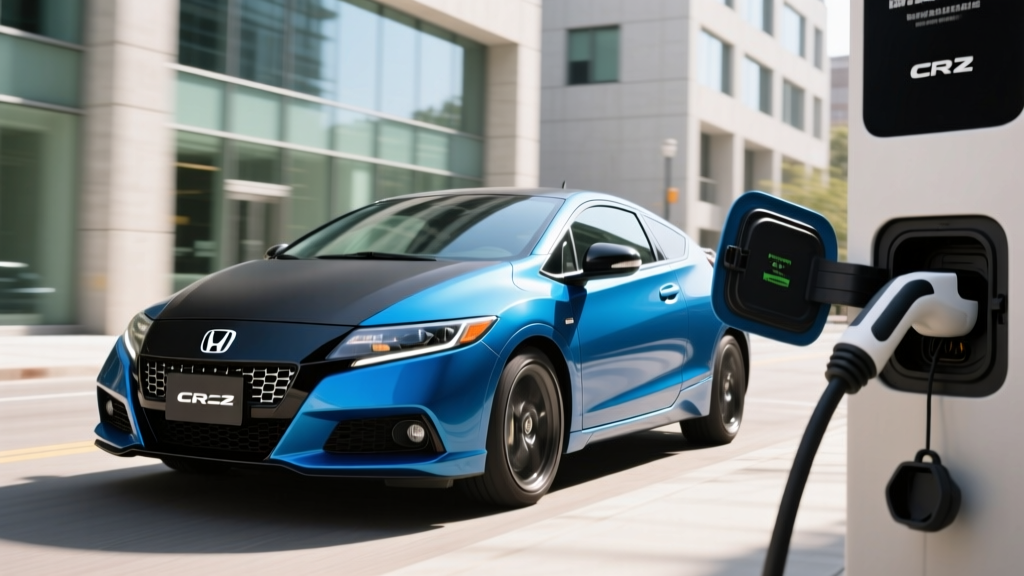
The Honda CR-Z hybrid occupies a unique space in the used-hybrid market: a two-seat, manual-transmission-capable sport coupe that prioritized driving engagement over maximum efficiency. Discontinued after the 2016 model year, the CR-Z remains the only hybrid ever offered with a 6-speed manual gearbox. For 2026 buyers scouting the used market, it delivers a respectable 39 MPG combined (EPA) with a lightweight, tossable chassis — but it sacrifices cargo space, rear seats, and the electric-only driving capability of modern plug-in hybrids.
This guide covers everything you need to evaluate a used Honda CR-Z hybrid: real-world fuel economy, the Integrated Motor Assist (IMA) powertrain, battery longevity and replacement costs, and how it stacks up against today's hybrid and EV alternatives.
| Spec | Value |
|---|---|
| Powertrain | 1.5L i-VTEC inline-4 + IMA electric motor |
| Combined Horsepower | 130 hp @ 6,000 rpm |
| Combined Torque | 140 lb-ft (CVT) / 127 lb-ft (6MT) |
| Transmission | 6-speed manual or CVT |
| EPA MPG (6MT) | 34 city / 38 hwy / 36 combined |
| EPA MPG (CVT) | 36 city / 39 hwy / 39 combined (with Eco mode) |
| Battery Type | Nickel-metal hydride (NiMH), 0.6 kWh |
| 0-60 mph | ~9.7 seconds (6MT) |
| Curb Weight | ~2,828 lbs |
| Cargo Volume | 25.1 cu ft (rear seats folded) |
| Original MSRP (2016 base) | ~$20,295 |
| Used Price Range (2026) | $8,000 – $16,000 depending on mileage/condition |
Fuel Economy: EPA Ratings vs. Real-World MPG
The CR-Z's EPA fuel economy varies by transmission and driving mode. Honda's three-mode drive system (Sport, Normal, Econ) alters throttle response, A/C operation, and IMA assist levels, meaning your actual mileage depends heavily on how you drive.
| Configuration | City MPG | Highway MPG | Combined MPG |
|---|---|---|---|
| 6-Speed Manual | 34 | 38 | 36 |
| CVT (Normal mode) | 35 | 38 | 36 |
| CVT (Econ mode active) | 36 | 39 | 39 |
Real-world MPG reality check: Owners who drive the CR-Z in Econ mode with conservative habits routinely report 40-44 MPG in mixed suburban driving, thanks to the IMA system's regenerative braking and auto idle-stop. However, aggressive driving in Sport mode — the mode that makes the CR-Z genuinely fun — drops real-world figures to 30-33 MPG. Cold-weather operation further reduces efficiency by 8-12%, as the gasoline engine runs more frequently to maintain cabin heat and battery temperature. According to fueleconomy.gov, owner-reported averages for the CVT model cluster around 37-38 MPG combined, closely tracking EPA estimates.
The IMA Powertrain: How Honda's Mild Hybrid System Works
The CR-Z uses Honda's Integrated Motor Assist (IMA) system, which is a mild hybrid — not a full hybrid like the Toyota Prius, and certainly not a plug-in hybrid (PHEV). Understanding this distinction is critical for setting expectations.
| Type | Plug Required? | Electric-Only Driving? | Example |
|---|---|---|---|
| Mild Hybrid (MHEV) | No | No (motor assists engine only) | Honda CR-Z |
| Full Hybrid (HEV) | No | Limited (low-speed, short distance) | Toyota Prius, Honda Accord Hybrid |
| Plug-in Hybrid (PHEV) | Yes | Yes (20-50 mi typical) | Toyota RAV4 Prime, Jeep Wrangler 4xe |
| Battery Electric (BEV) | Yes | Yes (all driving) | Tesla Model 3, Hyundai Ioniq 5 |
The CR-Z's IMA system sandwiches a thin electric motor between the 1.5L gasoline engine and the transmission. This 10-kW (13-hp) motor cannot propel the car on its own — it assists the engine during acceleration, enables regenerative braking, and powers the auto idle-stop system. The 0.6 kWh NiMH battery pack is small by modern standards, storing roughly 1/100th the energy of a typical EV battery. You never plug the CR-Z in; it recovers energy exclusively through braking and engine-driven charging.
The result is a car that feels like a peppy gasoline hatchback with slightly better fuel economy and seamless stop-start — not an electrified driving experience in the way a PHEV or BEV delivers. The Sport mode sharpens throttle mapping and increases IMA assist, making the combined 130 hp feel more responsive than the number suggests, especially in a 2,828-lb chassis.
Battery Longevity, Warranty, and Replacement Cost
For any used hybrid buyer, the traction battery is the single biggest financial risk. Here's what CR-Z owners face.
Original Honda IMA Battery Warranty
- Coverage: 8 years / 80,000 miles (10 years / 150,000 miles in CARB states including CA, NY, MA, and others)
- What's covered: Battery capacity loss below functional threshold, cell failures
- Current status for 2026 buyers: All CR-Z models (2011-2016) are now outside original warranty coverage unless a certified replacement battery was installed recently
Battery lifespan data: The CR-Z's NiMH battery is inherently more durable than early lithium-ion packs. NiMH chemistry degrades more slowly and tolerates temperature extremes better. Most CR-Z IMA batteries last 120,000-160,000 miles before noticeable capacity loss reduces fuel economy by 2-4 MPG and weakens IMA assist. Some high-mileage examples have exceeded 200,000 miles on the original pack, though with diminished electric assist.
Replacement cost breakdown:
- OEM Honda replacement battery: $2,000 – $3,000 (parts + dealer labor)
- Aftermarket refurbished NiMH pack: $1,200 – $1,800 installed at an independent hybrid specialist
- DIY reconditioning kits: $400 – $800 (for experienced enthusiasts willing to balance individual NiMH cells)
Warning signs of a degrading IMA battery include: frequent recalibration cycles (the IMA light flashes and the car runs the engine at high RPM while parked), reduced regenerative braking, lower-than-expected MPG, and the IMA system disabling entirely. A diagnostic scan tool can read individual cell voltages to assess pack health before purchase.
Driving Dynamics: Where the CR-Z Still Shines
No discussion of the CR-Z is complete without addressing why it exists at all. Honda engineered this car as a spiritual successor to the original CRX — a lightweight, driver-focused coupe that happened to be a hybrid. The 6-speed manual transmission is the headline: it remains the only hybrid ever sold in the U.S. with a proper manual gearbox, giving enthusiasts direct control over the IMA system's torque delivery.
The chassis uses a front MacPherson strut and rear torsion beam setup, tuned for responsiveness rather than outright grip. At 2,828 lbs, the CR-Z is over 700 lbs lighter than a current Toyota Prius, and that mass advantage shows in corner transitions and braking feel. The steering is electrically assisted but communicative by 2010s standards. The Sport mode adds a satisfying throttle blip and makes the 130 combined hp feel adequate for back-road driving, even if the 9.7-second 0-60 time is decidedly unhurried.
Practical compromises are significant: the rear "seats" (really a padded shelf) accommodate only small cargo, the 25.1 cu ft cargo area requires folding those rear seatbacks, and visibility is hampered by the split rear window. This is strictly a two-person car.
Tax Credits and Incentives: What Applies in 2026
Because the Honda CR-Z is a mild hybrid — not a plug-in hybrid or battery electric vehicle — it does not qualify for the federal §30D Clean Vehicle Credit, which requires a minimum 7 kWh battery capacity and plug-in capability. When new, the CR-Z was never eligible for the $7,500 federal tax credit that applied to vehicles like the Chevrolet Volt or Nissan Leaf.
For 2026 used buyers, here's what to know:
- Federal used-EV credit (§25E): Does not apply — the CR-Z is not a qualified plug-in vehicle
- State incentives: A handful of states offered hybrid rebates when the CR-Z was new (e.g., California's now-expired CVRP), but no current state incentive programs cover non-plug-in mild hybrids
- Insurance: The CR-Z typically insures at standard compact-coupe rates; hybrid status does not meaningfully affect premiums. Average annual cost: $1,100 – $1,500 depending on driver profile
The absence of tax incentives means the CR-Z's value proposition rests entirely on its purchase price, fuel savings, and driving character. At $8,000 – $16,000 on the used market, the fuel savings over a comparable non-hybrid coupe are modest — roughly $300-$500 per year at 12,000 miles driven and $3.50/gallon fuel, based on EPA data from fueleconomy.gov.
CR-Z Hybrid vs. Modern Alternatives: Which Should You Choose?
Honda CR-Z Hybrid — Pros
- Only hybrid available with a 6-speed manual transmission
- Lightweight (2,828 lbs) and genuinely engaging to drive
- Strong used-market value retention among enthusiasts
- Reliable NiMH battery with low replacement cost
- Distinctive styling that still turns heads
Honda CR-Z Hybrid — Cons
- No electric-only driving capability (mild hybrid only)
- Modest 39 MPG combined — beaten by current Prius (57 MPG)
- No federal or state tax credit eligibility
- Impractical rear seats and limited cargo space
- Outdated infotainment; no Apple CarPlay/Android Auto
- Safety tech (AEB, lane-keep) entirely absent
Choose the CR-Z if: You want an affordable, lightweight, manual-transmission hybrid coupe for fun weekend driving and daily commuting, and you don't need rear seats, modern safety tech, or plug-in capability. It's a niche enthusiast pick, not a maximum-efficiency play.
Choose a modern HEV (e.g., Toyota Prius, Honda Accord Hybrid) if: Maximum fuel economy (50+ MPG) and daily practicality are your priorities. Current full hybrids deliver dramatically better efficiency, modern ADAS safety features, and full warranty coverage.
Choose a PHEV (e.g., Toyota Prius Prime, Hyundai Tucson PHEV) if: You have home charging access and want 25-45 miles of electric-only commuting with a gasoline engine for longer trips. PHEVs in 2026 may qualify for the §30D federal tax credit up to $7,500 depending on MSRP caps, buyer income limits, and battery-sourcing requirements — consult IRS.gov for current eligibility rules.
Choose a BEV (e.g., Chevrolet Equinox EV, Tesla Model 3) if: You want zero tailpipe emissions, minimal maintenance, access to HOV lanes, and have reliable charging at home or work. Battery electric vehicles eliminate oil changes, transmission fluid, and exhaust-system maintenance entirely.
Frequently Asked Questions
How many MPG does the Honda CR-Z hybrid get?
The EPA rates the CVT-equipped CR-Z at 36 city / 39 highway / 39 combined MPG in Econ mode. The 6-speed manual version rates 34 city / 38 highway / 36 combined. Real-world reports from owners average 37-38 MPG combined for the CVT, with Econ-mode hypermilers achieving 42-44 MPG in suburban driving. Sport mode driving typically drops real-world figures to 30-33 MPG.
Can the Honda CR-Z drive on electric power alone?
No. The CR-Z is a mild hybrid using Honda's IMA system. The electric motor assists the gasoline engine but cannot propel the car independently. It has no electric-only range. If electric-only driving is a priority, you need a PHEV (25-50 miles electric range) or a BEV (250+ miles electric range).
Is the Honda CR-Z hybrid reliable, and what does battery replacement cost?
The CR-Z's powertrain is generally reliable, with the 1.5L engine and IMA system proving durable past 150,000 miles with regular maintenance. The NiMH battery typically lasts 120,000-160,000 miles. An OEM replacement battery costs $2,000-$3,000 installed; aftermarket refurbished packs run $1,200-$1,800. All CR-Z models are now outside the original 8-year/80,000-mile battery warranty.
Does the Honda CR-Z qualify for any tax credit in 2026?
No. The CR-Z is a mild hybrid with a 0.6 kWh battery and no plug-in capability. The federal §30D Clean Vehicle Credit requires plug-in vehicles with at least 7 kWh of battery capacity. No current federal or state incentive programs cover the CR-Z. For vehicles that do qualify, review current rules at IRS.gov, as income limits, MSRP caps, and battery-sourcing requirements apply.
Should I buy a used CR-Z or a new hybrid in 2026?
It depends on your priorities. The CR-Z makes sense as a $10,000-$15,000 enthusiast coupe that happens to be a hybrid — it's fun, lightweight, and unique. But if your goal is maximum fuel savings, safety, and modern technology, a new Toyota Prius (57 MPG combined, ~$28,000, full warranty) or a PHEV with tax-credit eligibility offers far more practical value. The CR-Z is a driver's car first and an efficiency play second.
What should I check before buying a used Honda CR-Z?
Prioritize: (1) IMA battery health — have a hybrid specialist scan individual cell voltages and check for recent recalibration events. (2) Maintenance records — verify regular oil changes and IMA system service. (3) Air conditioning — the A/C compressor is electrically driven and costly to replace. (4) Rust — inspect the undercarriage if the car was driven in snow-belt states. (5) Transmission — the 6-speed manual clutch should engage smoothly; CVT models should shift without shuddering.