Quick Verdict: The 2026 Honda CR-V Hybrid at a Glance
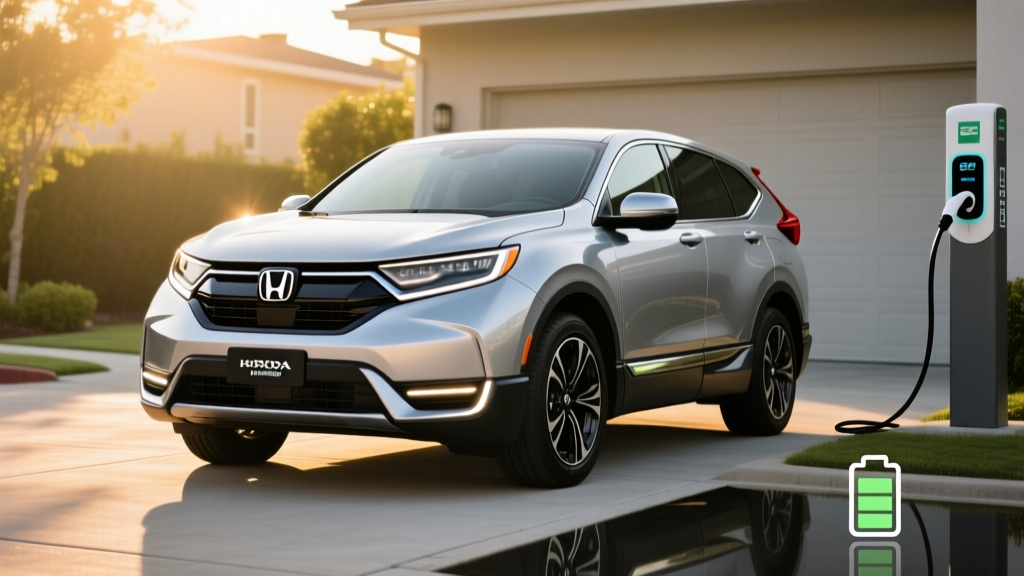
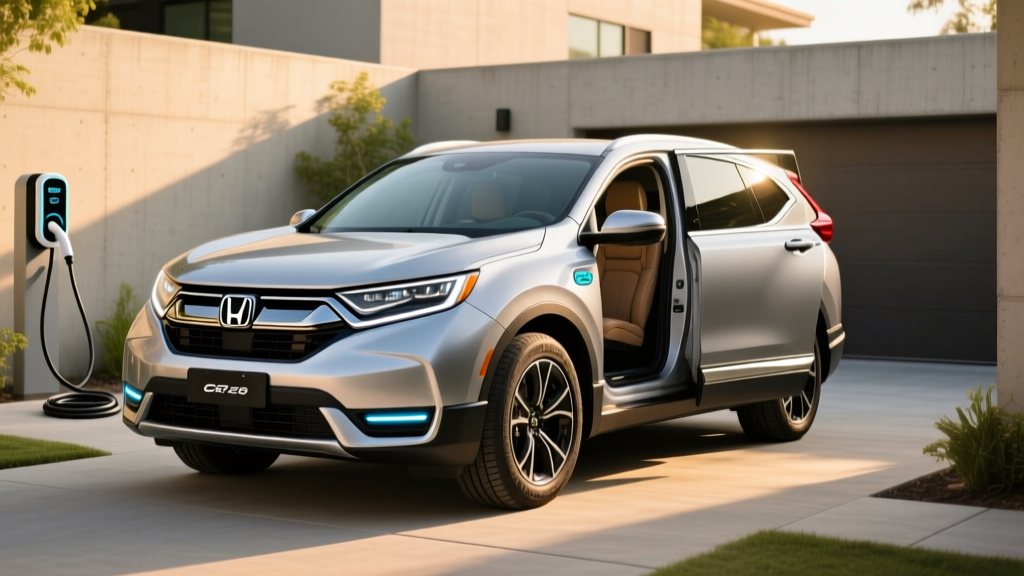
The 2026 Honda CR-V Hybrid continues as one of the most practical compact SUVs for buyers who want meaningful fuel savings without changing their driving or fueling habits. It is a conventional hybrid electric vehicle (HEV) — meaning it charges its own battery through regenerative braking and the gasoline engine. You never plug it in. With an EPA-estimated 43 MPG city and 40 MPG combined on front-wheel-drive trims, it delivers roughly 35–40% better fuel economy than a comparable gas-only compact SUV, while adding only a modest price premium.
For 2026, Honda carries forward the proven two-motor hybrid system introduced with this generation, paired with a 2.0-liter Atkinson-cycle four-cylinder engine. The result is 204 combined horsepower, smooth low-speed electric propulsion, and a combined range exceeding 520 miles per tank. If you're cross-shopping the RAV4 Hybrid, Tucson Hybrid, or Forester Hybrid, the CR-V Hybrid's refinement, cargo space, and Honda Sensing safety suite keep it near the top of the segment.
| Spec | Value |
|---|---|
| Powertrain | 2.0L Atkinson I-4 + two-motor hybrid system |
| Combined Horsepower | 204 hp |
| Combined Torque | 247 lb-ft (electric motor) |
| Transmission | e-CVT (direct-drive with lock-up clutch) |
| Drivetrain | FWD standard; AWD available |
| EPA MPG (FWD) | 43 city / 36 highway / 40 combined |
| EPA MPG (AWD) | 40 city / 34 highway / 37 combined |
| Fuel Tank | 15.3 gallons |
| Total Range (FWD est.) | ~612 miles |
| 0–60 mph | ~7.6 seconds |
| Cargo Volume (rear seats up) | 36.3 cu ft |
| Cargo Volume (rear seats folded) | 76.5 cu ft |
| Towing Capacity | 1,000 lbs |
| Hybrid Battery Warranty | 8 years / 100,000 miles |
| Starting MSRP (Sport FWD) | $36,395 |
| Starting MSRP (Sport Touring AWD) | $42,695 |
How Many MPG Does the 2026 Honda CR-V Hybrid Get?
The EPA rates the front-wheel-drive 2026 CR-V Hybrid at 43 MPG city, 36 MPG highway, and 40 MPG combined. Adding all-wheel drive drops those figures to 40/34/37 MPG — a reasonable trade for year-round traction.
| Drivetrain | City | Highway | Combined |
|---|---|---|---|
| FWD | 43 MPG | 36 MPG | 40 MPG |
| AWD | 40 MPG | 34 MPG | 37 MPG |
Source: fueleconomy.gov (EPA estimates; your mileage will vary with driving style, climate, and terrain).
Real-World MPG: What Owners Actually See
Hybrids typically outperform their EPA city rating in stop-and-go traffic because regenerative braking recovers energy that a gas car wastes as heat. In mixed suburban driving, many CR-V Hybrid owners report 41–45 MPG in warm weather. Highway cruising at 75+ mph is where the advantage narrows — expect 33–36 MPG on FWD trims, since the electric motor contributes less at sustained high speed and the engine carries the load.
In cold weather (below 30°F), expect a 5–10% fuel-economy reduction. The engine runs more frequently to provide cabin heat and maintain operating temperature, reducing the time spent in EV-only mode. This is normal hybrid behavior, not a defect.
HEV vs PHEV vs EV: Which Powertrain Fits You?
The 2026 CR-V Hybrid is a conventional hybrid (HEV). Honda does not currently offer a plug-in hybrid (PHEV) version of the CR-V in the United States. Understanding the difference matters before you shop:
| Feature | HEV (CR-V Hybrid) | PHEV (e.g., RAV4 Prime) | BEV (e.g., Ioniq 5) |
|---|---|---|---|
| Plug-in charging? | No — self-charging | Yes — plug in for EV range | Yes — plug in to charge fully |
| Electric-only range | ~1 mile at low speed | 25–42 miles typical | 250–350+ miles |
| Gas engine? | Yes | Yes | No |
| Total range | 520–612 miles | 400–500+ miles | 250–350 miles (battery only) |
| Home charging needed? | No | Recommended (Level 2) | Essential (Level 2) |
| Federal tax credit (§30D) | No | Up to $7,500 (if eligible) | Up to $7,500 (if eligible) |
| Upfront price premium vs gas | +$1,000–$2,500 | +$5,000–$10,000 | +$5,000–$15,000+ |
Choose the CR-V Hybrid (HEV) If:
- You don't have access to home or workplace charging.
- You want fuel savings without changing your refueling routine.
- Your budget is under $45,000 and you want AWD, cargo space, and strong safety ratings.
- You drive 12,000–15,000 miles per year and want to save ~$500–$800/year in fuel vs a gas CR-V.
Consider a PHEV Instead If:
- You can install a Level 2 charger at home and your commute is under 35 miles round-trip.
- You want to drive mostly on electricity during the week and take gas-powered road trips on weekends.
- You qualify for the federal §30D clean vehicle credit, which can offset the higher PHEV purchase price.
Consider a Full EV (BEV) Instead If:
- You have reliable home Level 2 charging and your daily driving is under 250 miles.
- You want zero tailpipe emissions and minimal maintenance (no oil changes, no spark plugs).
- You're ready to plan around DC fast charging on road trips.
Powertrain Deep Dive: How the CR-V Hybrid System Works
Honda's two-motor hybrid system operates differently from a traditional planetary-gear hybrid (like Toyota's). At low speeds and in stop-and-go traffic, the CR-V Hybrid drives primarily using its electric traction motor, with the gasoline engine acting as a generator to feed electricity to that motor or charge the battery. This gives it the smooth, responsive feel of an EV around town.
At highway cruising speeds, a lock-up clutch engages to create a direct mechanical connection between the engine and the front wheels — more efficient than converting mechanical energy to electrical and back again. The system seamlessly transitions between EV drive, hybrid drive, and engine-direct drive without driver input.
| Component | Specification |
|---|---|
| Engine | 2.0L DOHC Atkinson-cycle I-4 |
| Engine Power | 146 hp @ 6,100 rpm |
| Drive Motor | 181 hp / 247 lb-ft |
| Generator Motor | Starter-generator (charges battery, cranks engine) |
| Combined System Output | 204 hp |
| Hybrid Battery | ~1.06 kWh lithium-ion (nominal) |
| Battery Location | Under rear cargo floor |
The hybrid battery pack is small — roughly 1 kWh — because it doesn't need to store energy for plug-in driving. It buffers energy from regenerative braking and the generator, then deploys it for electric assist and low-speed EV creep. This small size keeps weight down, preserves cargo space, and reduces replacement cost compared to a PHEV or BEV battery.
Pricing, Trims & Tax Credit Eligibility
The 2026 Honda CR-V Hybrid is available in three trims, all offering the same powertrain. Pricing starts at $36,395 including destination:
| Trim | FWD MSRP | AWD MSRP |
|---|---|---|
| Sport | $36,395 | $37,895 |
| Sport-L | $38,695 | $40,195 |
| Sport Touring | $41,195 | $42,695 |
Does the CR-V Hybrid Qualify for a Federal Tax Credit?
No. The federal §30D Clean Vehicle Credit applies only to plug-in electric vehicles (PHEVs and BEVs) with a minimum battery capacity of 7 kWh and the ability to recharge from an external power source. Because the CR-V Hybrid is a conventional HEV with a ~1 kWh battery and no plug, it does not qualify for the federal credit — regardless of your income or where the vehicle was assembled.
Some states and local utilities offer rebates or incentives for conventional hybrids, but these vary widely by jurisdiction. Check your state energy office or utility provider for current programs. For federal rules, consult the IRS §30D guidance page or a qualified tax professional.
Battery Warranty, Reliability & Replacement Cost
Hybrid battery longevity is the number-one concern for first-time hybrid buyers. Here's what the data shows:
2026 Honda CR-V Hybrid — Battery & Powertrain Warranty
- Hybrid Battery: 8 years / 100,000 miles (10 years / 150,000 miles in CARB states including CA, NY, MA, and others)
- Powertrain: 5 years / 60,000 miles
- Bumper-to-Bumper: 3 years / 36,000 miles
Real-World Hybrid Battery Lifespan
Honda's hybrid system has been in production since the early 2000s (Insight, Civic Hybrid, Accord Hybrid). The current two-motor system, used in the Accord Hybrid and CR-V Hybrid, has a strong reliability record. The small battery pack experiences shallow charge/discharge cycles — it rarely drops below 40% or charges above 80% state of charge — which significantly reduces degradation compared to a BEV battery that cycles through a wider range.
Based on industry data and owner reports, Honda hybrid batteries typically last 12–15 years or 150,000–200,000 miles before capacity loss becomes noticeable. Many outlast the vehicle itself. If replacement is needed out of warranty, expect a cost of approximately $2,000–$4,000 for the hybrid battery pack — far less than the $10,000–$20,000+ a BEV traction battery can cost.
Overall Reliability
Honda as a brand scores above average in long-term reliability surveys. The CR-V Hybrid's e-CVT has no traditional gears, belts, or friction clutches to wear out — it's essentially two electric motors and a clutch, making it mechanically simpler than a conventional automatic transmission. The IIHS has historically rated the CR-V as a Top Safety Pick, and Honda Sensing (adaptive cruise, lane-keeping, automatic emergency braking) comes standard on every trim.
Pros, Cons & the Bottom Line
Pros
- 40 MPG combined (FWD) with no plug-in required
- 204 hp provides confident highway merging
- 36.3 cu ft cargo space — best-in-class among hybrid compact SUVs
- Standard Honda Sensing ADAS suite on all trims
- 8-year / 100,000-mile hybrid battery warranty
- Modest price premium over gas CR-V (~$1,500)
Cons
- AWD drops fuel economy to 37 combined MPG
- No PHEV option for buyers wanting electric-only commuting
- 1,000-lb towing capacity — less than some rivals
- Road noise noticeable at highway speed
- No federal tax credit eligibility
Frequently Asked Questions
Do I need to plug in the 2026 Honda CR-V Hybrid?
No. The CR-V Hybrid is a conventional hybrid (HEV). It charges its own battery through regenerative braking and the gasoline engine. You fuel it like any other car — just fill up at the gas station. If you want a Honda you can plug in, you'd need to look at Honda's EV offerings or wait for a potential future CR-V PHEV.
How far can the CR-V Hybrid drive on electric power alone?
Only about 1 mile at very low speeds (under 25 mph) in ideal conditions. The hybrid battery is too small (~1 kWh) for meaningful electric-only range. The system uses electric drive primarily for low-speed efficiency and smooth acceleration assist, not for plug-in-style EV commuting. For 25–40 miles of electric-only driving, you'd need a PHEV like the Toyota RAV4 Prime.
Is the CR-V Hybrid more reliable than the gas CR-V?
Historically, yes — Honda's hybrid powertrains have matched or exceeded the reliability of their conventional counterparts. The e-CVT eliminates traditional transmission wear items, and the Atkinson-cycle engine operates under lower thermal stress. The hybrid battery is warrantied for 8–10 years depending on your state, and real-world data shows most packs last well beyond the warranty period.
How much will I save on fuel vs the gas CR-V?
The gas-only 2026 CR-V AWD is EPA-rated at 29 MPG combined. The CR-V Hybrid AWD gets 37 MPG combined — a 28% improvement. At 15,000 miles per year and $3.50/gallon gas, that translates to roughly $550 in annual fuel savings with AWD, or ~$700 with FWD (40 vs 30 MPG combined). Over a 5-year ownership period, that's $2,750–$3,500 in fuel savings — enough to offset the hybrid's modest price premium.
Does the CR-V Hybrid qualify for any incentives?
Not at the federal level. The §30D Clean Vehicle Credit requires a plug-in vehicle with at least 7 kWh of battery capacity. The CR-V Hybrid has roughly 1 kWh and no plug. Some states, municipalities, or utilities may offer small hybrid rebates, but these are location-specific. Check fueleconomy.gov and your state energy office for current programs.
CR-V Hybrid vs RAV4 Hybrid — which is better?
The Toyota RAV4 Hybrid (AWD standard, 41 MPG combined, 219 hp, ~$34,995 starting) is the closest rival. The RAV4 Hybrid has a slight edge in horsepower and includes AWD on every trim. The CR-V Hybrid counters with more cargo space (36.3 vs 33.5 cu ft), a more refined ride, and a more intuitive infotainment interface. Both are excellent — test-drive both and let the dealer pricing and available inventory decide.