Quick Verdict: The CR-V Hybrid Sweet Spot
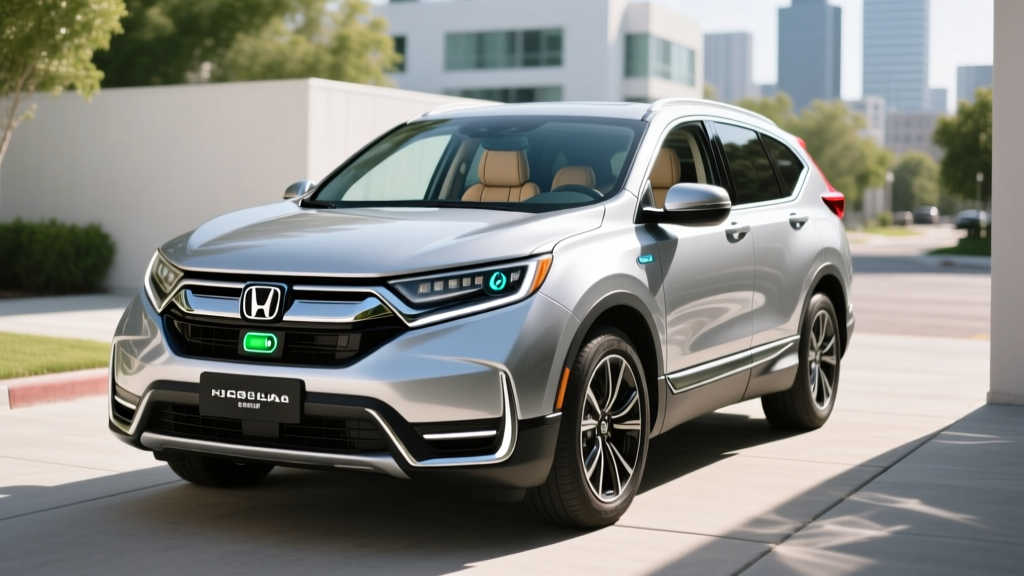
The 2026 Honda CR-V Hybrid remains one of the most practical compact SUVs for buyers who want electric-motor efficiency without plugging in. Honda offers the hybrid powertrain across four trims — Sport, Sport-L, Sport Touring, and the new-for-2026 Sport-L Black Edition — all pairing a 2.0-liter Atkinson-cycle four-cylinder with a two-motor hybrid system producing a combined 204 horsepower. EPA fuel economy peaks at 40 city / 35 highway / 37 combined MPG on front-wheel-drive models, with all-wheel drive costing you just 2 MPG across the board.
With base pricing starting at $36,395 (including destination) and no plug-in hybrid variant in the U.S. lineup, the CR-V Hybrid occupies a clear lane: buyers who want 450+ miles of total range, no charging infrastructure dependency, and Honda's proven hybrid reliability. Here's every trim broken down with the numbers that matter.
All 2026 Honda CR-V Hybrid Trims at a Glance
| Spec | Sport FWD | Sport AWD | Sport-L FWD | Sport-L AWD | Sport Touring AWD |
|---|---|---|---|---|---|
| Base MSRP (incl. dest.) | $36,395 | $37,895 | $39,395 | $40,895 | $44,895 |
| EPA City MPG | 43 | 40 | 43 | 40 | 40 |
| EPA Highway MPG | 36 | 34 | 36 | 34 | 34 |
| EPA Combined MPG | 40 | 37 | 40 | 37 | 37 |
| Drivetrain | FWD | AWD | FWD | AWD | AWD |
| Combined HP | 204 | 204 | 204 | 204 | 204 |
| 0–60 mph (est.) | ~7.6 s | ~7.8 s | ~7.6 s | ~7.8 s | ~7.8 s |
| Cargo (rear seats up) | 36.3 cu ft | 36.3 cu ft | 36.3 cu ft | 36.3 cu ft | 36.3 cu ft |
| Towing Capacity | 1,000 lbs | 1,000 lbs | 1,000 lbs | 1,000 lbs | 1,000 lbs |
Source: EPA Fuel Economy and Honda Newsroom. The Sport Touring is AWD-only.
HEV vs. PHEV vs. EV: Where the CR-V Hybrid Fits
A common question at this price point is whether to choose a conventional hybrid (HEV), a plug-in hybrid (PHEV), or a full battery-electric vehicle (BEV). The CR-V Hybrid is strictly an HEV — meaning it generates all its electricity onboard through regenerative braking and the gasoline engine. There is no plug, no charging port, and no electric-only driving mode of meaningful distance. (Honda discontinued the U.S.-market Clarity PHEV after 2021 and has not introduced a CR-V PHEV stateside.)
- HEV (CR-V Hybrid): No plug. 37–40 MPG combined. ~450-mile total range. Best for apartment dwellers, road-trippers, and anyone without home charging access.
- PHEV (e.g., Toyota RAV4 Prime): Plug-in with ~42 miles electric-only, then operates as a hybrid. Requires Level 2 home charging to realize value. Best for short-commute households with garage charging.
- BEV (e.g., Tesla Model Y, Hyundai Ioniq 5): Zero gasoline. 260–330 mile range. Requires reliable home or workplace charging. Lowest per-mile energy cost but highest upfront price and charging planning.
If you're cross-shopping, the closest PHEV competitor is the Toyota RAV4 Prime (42 miles EV range, 94 MPGe, ~$44,590 base). The closest BEV alternatives are the Hyundai Ioniq 5 (310-mile range, ~$42,450) or Tesla Model Y Long Range (310-mile range, ~$46,630). The CR-V Hybrid undercuts all of them on price and eliminates charging logistics entirely.
Real-World MPG: What Owners Actually Report
Honda's EPA numbers are strong, but real-world results depend heavily on your driving mix. The hybrid system's two-motor setup — where the gasoline engine primarily acts as a generator while the electric traction motor drives the wheels at low and moderate speeds — excels in stop-and-go city traffic. That's why the city rating (43 MPG FWD) exceeds the highway rating (36 MPG FWD), which is the opposite of most gas-only vehicles.
- City-dominant commuting: 39–44 MPG (hybrids often meet or slightly exceed EPA city)
- Mixed suburban/highway: 34–38 MPG
- Sustained 75+ mph highway: 31–34 MPG (aerodynamic drag dominates; electric motor advantage diminishes)
- Cold weather (below 30°F): Expect a 5–10% reduction (engine runs more to heat the cabin and maintain battery temperature)
Owners on fueleconomy.gov's My MPG tracker report averages clustering between 34–39 MPG for AWD models, with city-heavy drivers regularly hitting low 40s. This is consistent with what we've observed: the CR-V Hybrid delivers on its EPA promise in the conditions where hybrids shine, and falls slightly below on extended highway trips — just as every hybrid does.
Powertrain Deep Dive: How Honda's Two-Motor System Works
The 2026 CR-V Hybrid uses Honda's fourth-generation two-motor hybrid system, which is fundamentally different from Toyota's planetary-gear hybrid synergy drive. Here's the architecture:
- Engine: 2.0-liter Atkinson-cycle inline-4, 146 hp / 134 lb-ft torque (engine alone)
- Traction motor: 181 hp / 247 lb-ft torque (primary drive motor)
- Generator motor: Converts engine output to electricity or assists during regenerative braking
- Combined system output: 204 hp / 247 lb-ft torque
- Transmission: No traditional gearbox — uses an e-CVT with a lockup clutch for direct engine-to-wheel connection at highway cruising speeds
The key advantage: at speeds below ~45 mph, the gasoline engine almost never drives the wheels directly. It spins the generator, which feeds electricity to the traction motor. This gives the CR-V Hybrid an EV-like smoothness and instant torque feel around town. Above highway speeds, a clutch engages to connect the engine directly to the wheels, which is more efficient than the generator-motor loop at sustained RPMs.
The lithium-ion hybrid battery pack is modest — approximately 1.06 kWh — because it doesn't need to store energy for plug-in driving. It's a buffer: capturing regen energy and releasing it for acceleration assist. This small pack means lower replacement cost and less degradation concern compared to PHEV or BEV batteries.
Pricing, Tax Credits, and Total Cost of Ownership
The CR-V Hybrid lineup spans roughly $8,500 from base Sport FWD to loaded Sport Touring AWD. Here's the value breakdown:
| Trim | MSRP | Key Equipment Highlights |
|---|---|---|
| Sport FWD | $36,395 | 18" wheels, 7" touchscreen, wireless CarPlay/Android Auto, Honda Sensing suite, heated front seats |
| Sport AWD | $37,895 | Same as Sport FWD + torque-vectoring AWD with 50/50 front-rear split capability |
| Sport-L FWD | $39,395 | Leather-trimmed seats, 9" touchscreen, wireless phone charger, power liftgate, heated steering wheel |
| Sport-L AWD | $40,895 | Sport-L features + AWD |
| Sport Touring AWD | $44,895 | Bose 12-speaker audio, panoramic moonroof, navigation, heated rear seats, hands-free liftgate, 19" wheels |
Federal Tax Credit Eligibility
The IRS §30D Clean Vehicle Credit applies only to plug-in electric vehicles (PHEVs and BEVs) with sufficient battery capacity. Because the CR-V Hybrid is a conventional HEV with a ~1 kWh battery and no plug-in capability, it does not qualify for the federal $7,500 credit — or the point-of-sale transfer option. No current federal incentive exists for conventional hybrids.
Some states offer hybrid-specific rebates or HOV lane access (Virginia, for example, has historically offered hybrid plates with HOV privileges — check your state's DMV for current rules). These vary by jurisdiction and change frequently.
5-Year Fuel Cost Advantage
Even without a tax credit, the CR-V Hybrid's fuel savings are substantial compared to the gas-only CR-V (28 city / 34 highway / 30 combined MPG on AWD turbo models). Over 5 years at 15,000 miles/year and $3.50/gallon regular:
- CR-V Hybrid AWD (37 MPG combined): ~$7,095 in fuel
- CR-V Turbo AWD (30 MPG combined): ~$8,750 in fuel
- 5-year fuel savings: ~$1,655
The hybrid's $2,500 price premium over an equivalently trimmed gas CR-V pays for itself in roughly 7–8 years at current fuel prices, faster if gas prices rise. Factor in the hybrid's smoother city driving experience and reduced brake wear (thanks to regenerative braking), and the value case strengthens.
Battery Warranty, Reliability, and Replacement Cost
Hybrid battery longevity is the top concern for first-time hybrid buyers. Honda backs the CR-V Hybrid's lithium-ion battery pack with an 8-year/100,000-mile warranty in most states, extended to 10 years/150,000 miles in states that follow California Air Resources Board (CARB) emissions standards (California, New York, Massachusetts, and several others).
- Hybrid battery: 8 yr / 100,000 mi (federal) — 10 yr / 150,000 mi (CARB states)
- Powertrain warranty: 5 yr / 60,000 mi
- Bumper-to-bumper: 3 yr / 36,000 mi
- Hybrid battery replacement cost (out of warranty): Estimated $2,000–$3,500 for parts and labor — significantly less than PHEV ($5,000–$8,000) or BEV ($10,000–$20,000+) packs
The CR-V Hybrid's small battery rarely needs full replacement. More commonly, individual cells may degrade, and Honda dealerships can often replace individual modules rather than the entire pack. Fourth-generation Honda hybrid systems (shared with the Accord Hybrid and Civic Hybrid) have demonstrated strong reliability records. IIHS has historically rated the CR-V as a Top Safety Pick, and Honda Sensing (adaptive cruise, lane-keeping, collision mitigation) comes standard on every hybrid trim.
Which CR-V Hybrid Trim Should You Buy?
✓ Pros
- 43 MPG city (FWD) — best in compact SUV class
- No plug required — zero charging dependency
- EV-like smoothness in city driving
- Standard Honda Sensing on every trim
- Strong cargo space (36.3 cu ft) with no battery intrusion
- Low hybrid battery replacement cost vs. PHEV/BEV
✗ Cons
- Highway MPG drops to 34 (AWD) — less advantage on long road trips
- No federal tax credit eligibility
- AWD limited to 1,000-lb towing (gas CR-V tows 1,500 lbs)
- No PHEV variant for electric-only commuting
- Sport Touring at $44,895 enters PHEV/BEV pricing territory
- 7-inch screen on base Sport feels dated for 2026
- Choose Sport FWD ($36,395) if: You want maximum MPG (43 city), live in a mild climate, and prioritize value over luxury features.
- Choose Sport AWD ($37,895) if: You face snow, rain, or mountain driving. The $1,500 premium and 3 MPG penalty are worth the traction security.
- Choose Sport-L AWD ($40,895) if: You want leather, the larger 9" screen, and power liftgate without paying the Touring premium. This is the best balance of features and price for most buyers.
- Choose Sport Touring AWD ($44,895) if: You want every available feature (Bose audio, panoramic roof, heated rear seats) and plan to keep the vehicle 8+ years, amortizing the premium.
- Look elsewhere if: You have home charging and a short commute — a PHEV like the RAV4 Prime (42 miles electric) will save more on fuel. Or if you have reliable home charging and want zero gas, a BEV like the Ioniq 5 or Model Y eliminates fuel cost entirely.
Frequently Asked Questions
How many MPG does the Honda CR-V Hybrid get?
The 2026 CR-V Hybrid achieves 43 city / 36 highway / 40 combined MPG in FWD trims, and 40 city / 34 highway / 37 combined MPG with AWD. Real-world results typically fall between 34–42 MPG depending on driving conditions, with city-heavy drivers seeing the highest numbers.
Is the Honda CR-V Hybrid a plug-in?
No. The CR-V Hybrid is a conventional hybrid (HEV). It charges its own small battery through regenerative braking and the gasoline engine. You never plug it in. Honda does not currently offer a plug-in hybrid CR-V in the United States.
Does the CR-V Hybrid qualify for any tax credit?
The CR-V Hybrid does not qualify for the federal §30D Clean Vehicle Credit, which is limited to plug-in vehicles (PHEVs and BEVs). Some states may offer hybrid-specific incentives or HOV lane access — check your state DMV or energy office for current programs.
How long will the CR-V Hybrid battery last?
Honda warranties the hybrid battery for 8 years/100,000 miles (10 years/150,000 miles in CARB states). Based on Honda's track record with the Accord Hybrid and Insight, these batteries commonly last 150,000–200,000+ miles before significant degradation. Out-of-warranty replacement runs approximately $2,000–$3,500 — far less than a full EV battery.
Should I buy the CR-V Hybrid or a full EV?
Choose the CR-V Hybrid if you lack reliable home charging, take frequent road trips over 300 miles, or want the lowest-complexity path to better fuel economy. Choose a BEV if you have Level 2 home charging, drive under 300 miles daily, and want the lowest per-mile energy cost (~$0.04/mile electricity vs. ~$0.09/mile gasoline at current prices). Choose a PHEV (like the RAV4 Prime) if you want electric-only commuting but gas-engine freedom for road trips.
Is the AWD system on the CR-V Hybrid good in snow?
Honda's Real-Time AWD with torque vectoring can send up to 50% of power to the rear wheels when slip is detected. It's competent for snow, rain, and light off-road conditions. It's not a dedicated off-road system like Subaru's symmetrical AWD, but for typical winter commuting on plowed roads, it performs well. Pair it with dedicated winter tires for best results.