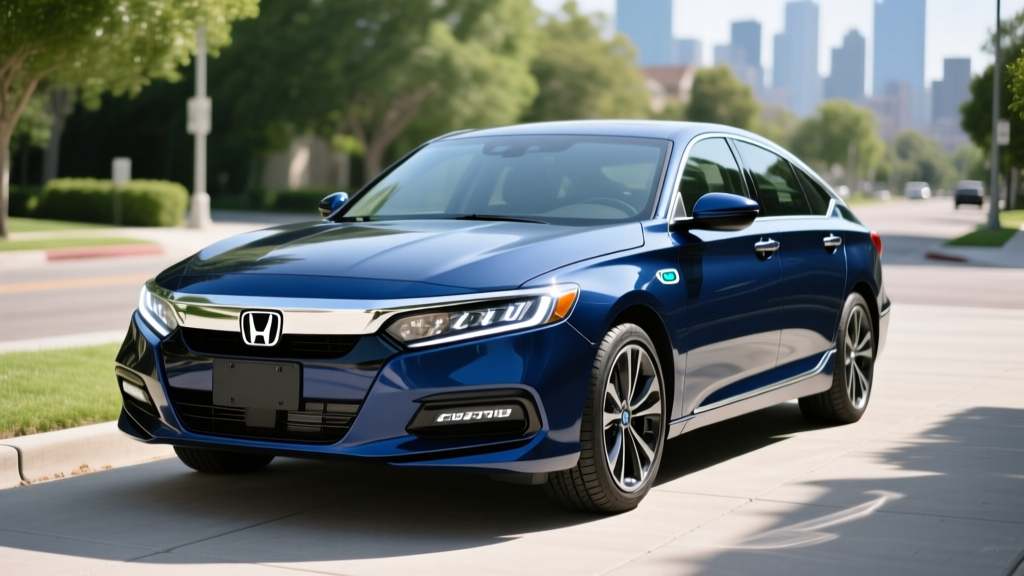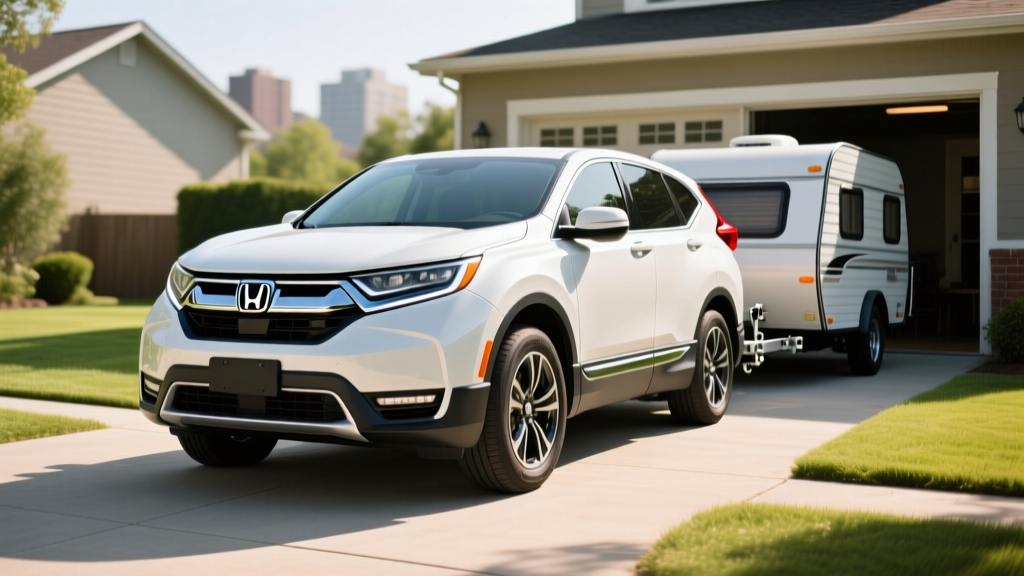
If you're shopping for a fuel-efficient compact SUV that can still handle a light utility trailer, small boat, or a pair of dirt bikes, the Honda CR-V Hybrid is likely on your shortlist. But before you hitch up, you need the exact numbers — not just the brochure highlight. The 2026 Honda CR-V Hybrid's towing capacity is rated at 1,000 pounds across all trims when properly equipped, according to Honda's official specifications. That's a hard ceiling, and understanding what fits within it — and what doesn't — is the difference between a confident haul and a stranded roadside call.
This guide covers everything a hybrid SUV buyer needs to know: the CR-V Hybrid's powertrain and efficiency data, how its towing rating compares to competitors, real-world MPG expectations, battery longevity, and whether a conventional hybrid (HEV), plug-in hybrid (PHEV), or full battery-electric vehicle (BEV) is the right fit for your driving and hauling needs.
2026 Honda CR-V Hybrid Towing Capacity: The Official Numbers
Honda rates the 2026 CR-V Hybrid at 1,000 lbs maximum towing capacity across all available trims (Sport, Sport-L, and Sport Touring). This rating applies when the vehicle is equipped with the factory-available towing package, which includes a hitch receiver and wiring harness.
For context, 1,000 lbs covers:
- A small utility trailer loaded with landscaping supplies (~600–800 lbs)
- A lightweight aluminum fishing boat on a single-axle trailer (~700–900 lbs)
- A motorcycle or ATV trailer with one bike (~800–1,000 lbs)
- A hitch-mounted bike rack with 2–4 bicycles (well under the limit at ~150–250 lbs)
What it does not cover:
- Most travel trailers or pop-up campers (typically 1,500–3,500+ lbs)
- A car-hauling trailer (2,000+ lbs unloaded)
- Large boat trailers for vessels over ~16 feet
- Horse trailers of any kind
Important: the 1,000-lb figure is the trailer weight rating. Your total payload — passengers, cargo inside the vehicle, and tongue weight — must also stay within the CR-V Hybrid's Gross Combined Weight Rating (GCWR). Honda recommends that tongue weight not exceed 10% of trailer weight, so you're looking at roughly 100 lbs on the hitch for a maxed-out trailer.
The non-hybrid, gasoline-only 2026 CR-V (with the 1.5L turbocharged engine) is rated for up to 1,500 lbs of towing capacity. If you regularly need to pull between 1,000 and 1,500 lbs, the gas model offers a 500-lb advantage. If your needs stay at or below 1,000 lbs, the hybrid's fuel savings become the deciding factor.
Powertrain Specs: What's Moving You (and Your Trailer)
The 2026 CR-V Hybrid uses Honda's two-motor hybrid system paired with a 2.0-liter Atkinson-cycle four-cylinder engine. Here's the full powertrain breakdown:
| Specification | Value |
|---|---|
| Engine | 2.0L DOHC Atkinson-cycle inline-4 |
| Engine Power | 146 hp @ 6,100 rpm |
| Electric Motors | Two-motor hybrid system (drive + generator) |
| Drive Motor Output | 181 hp / 247 lb-ft torque |
| Combined System Output | 204 hp / 247 lb-ft |
| Transmission | e-CVT (electric continuously variable) |
| Drivetrain | FWD standard; AWD available (Sport Touring standard) |
| Hybrid Battery | ~1.06 kWh lithium-ion (sealed, not plug-in) |
| Towing Capacity | 1,000 lbs (all trims) |
The two-motor system operates primarily in electric-drive mode at low and moderate speeds, with the gasoline engine acting as a generator. At highway speeds, a lock-up clutch connects the engine directly to the front wheels for efficient cruising. This architecture means the electric drive motor's 247 lb-ft of torque is available from near-zero rpm — useful for smooth, confident acceleration when pulling away from a stop with a trailer attached.
Fuel Economy: EPA Ratings and Real-World MPG
The CR-V Hybrid's efficiency advantage over the gas model is substantial, especially in city driving where the electric motors handle most of the propulsion load.
| Drivetrain | City | Highway | Combined |
|---|---|---|---|
| FWD (Sport, Sport-L) | 43 | 36 | 40 |
| AWD (Sport, Sport-L, Sport Touring) | 40 | 34 | 37 |
Source: EPA Fuel Economy
For comparison, the non-hybrid 2026 CR-V with AWD is rated at 27 city / 32 highway / 29 combined MPG. The hybrid's advantage in city driving is dramatic — 40 MPG vs. 27 MPG — because regenerative braking and electric-only propulsion eliminate the idling and low-speed fuel waste that plagues conventional engines in stop-and-go traffic.
Conventional hybrids like the CR-V Hybrid tend to exceed their EPA city rating in real-world suburban driving with frequent stops, because regenerative braking recaptures energy that a gas car wastes as heat. Many owners report 42–45 MPG in city and suburban conditions. Highway MPG, however, often falls slightly below the EPA sticker — expect 33–35 MPG with AWD at 70–75 mph. When towing near the 1,000-lb limit, anticipate a 20–35% reduction in fuel economy depending on trailer aerodynamics and terrain, bringing combined figures to roughly 26–30 MPG.
HEV vs. PHEV vs. EV: Which Powertrain Fits Your Needs?
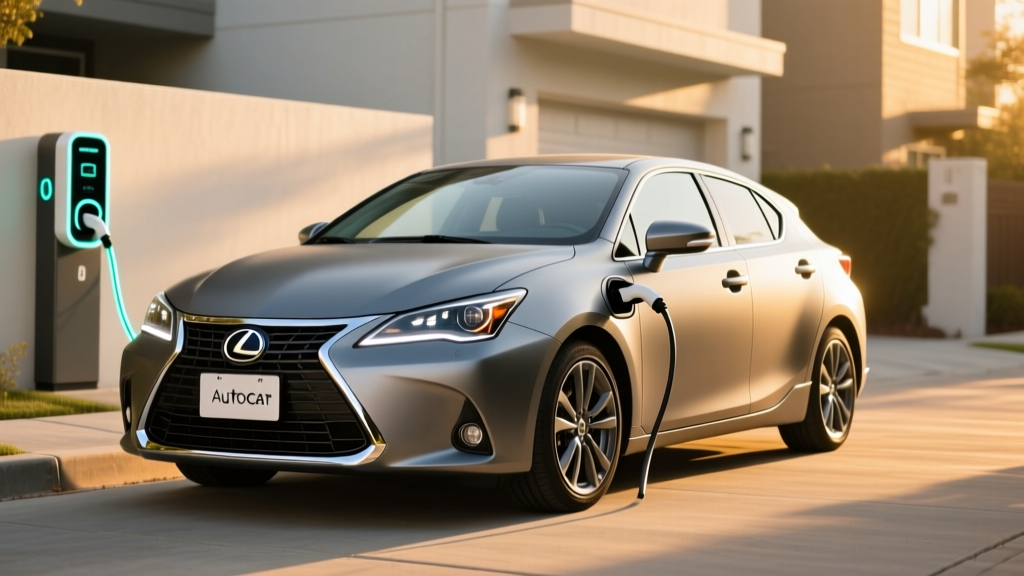
The CR-V Hybrid is a conventional hybrid (HEV) — it cannot be plugged in. Honda does not currently offer a plug-in hybrid (PHEV) version of the CR-V in the U.S. market for the 2026 model year. If you want a plug-in Honda SUV, you'd need to look at a different model or brand. Here's how the three electrified powertrain types compare for a compact SUV buyer:
| Factor | HEV (CR-V Hybrid) | PHEV (e.g., Toyota RAV4 Prime) | BEV (e.g., Hyundai Ioniq 5) |
|---|---|---|---|
| Plug-in Required? | No | Yes (optional) | Yes (required) |
| Electric-Only Range | ~1 mi (low-speed assist) | 30–42 mi | 250–350 mi |
| Battery Size | ~1 kWh | 14–18 kWh | 60–84 kWh |
| Home Charging Needed? | No | Recommended | Essential |
| Federal Tax Credit (§30D) | No | Up to $7,500* | Up to $7,500* |
| Typical Towing (Compact SUV) | 1,000–1,500 lbs | 1,500–2,500 lbs | 1,600–3,500 lbs |
| Best For | No plug access, want simplicity | Short EV commutes + road trips | Home charging, low running cost |
* Federal §30D tax credit eligibility depends on MSRP caps ($80,000 for SUVs), buyer income limits, battery component and critical mineral sourcing requirements, and point-of-sale transfer rules. Verify current-year eligibility at IRS.gov or consult a tax professional.
No. The CR-V Hybrid is a conventional hybrid (HEV), not a plug-in vehicle. It does not qualify for the federal §30D Clean Vehicle Credit, which applies only to battery-electric vehicles (BEVs) and plug-in hybrids (PHEVs) with a battery capacity of at least 7 kWh. Some states offer modest rebates for conventional hybrids, but these are rare and vary by jurisdiction. Check your state's energy office or AFDC state incentive database for local programs.
Battery Longevity, Warranty, and Replacement Costs
Hybrid battery anxiety is one of the most common concerns we hear from first-time hybrid buyers. Here's what the data actually shows:
Honda covers the CR-V Hybrid's high-voltage battery pack for 8 years or 100,000 miles (whichever comes first) under its hybrid system warranty. In states that follow California Air Resources Board (CARB) emissions standards — including California, New York, Massachusetts, and others — that coverage extends to 10 years or 150,000 miles. This warranty covers battery capacity loss below a defined threshold and defects in hybrid system components including the inverter and electric motors.
The CR-V Hybrid's battery pack is relatively small (~1.06 kWh) compared to a PHEV or BEV, which actually works in its favor for longevity. The battery operates within a narrow state-of-charge window — typically between 20% and 80% — managed by Honda's battery management system. This shallow cycling dramatically reduces degradation compared to a full EV battery that routinely cycles from 10% to 90%.
Real-world longevity data: Honda's two-motor hybrid system has been in production since 2014 (Accord Hybrid, then expanded to CR-V). Independent fleet data and owner reports consistently show hybrid battery packs lasting well beyond 150,000 miles with minimal capacity loss. The small battery in the CR-V Hybrid is under less stress than the larger packs in PHEVs or BEVs.
Replacement cost if out of warranty: A Honda CR-V Hybrid battery replacement typically runs between $2,000 and $4,000 including labor at a dealership, based on current parts pricing. Independent hybrid specialists may offer refurbished packs for $1,500–$2,500. For context, this is significantly less than BEV battery replacements ($7,000–$20,000+) because the pack is small and the chemistry is proven.
Pricing and Trim Breakdown (2026 Model Year)
The CR-V Hybrid is available in three trims for 2026. All share the same powertrain and 1,000-lb towing rating:
| Trim | Drivetrain | MSRP (est.) | Key Features |
|---|---|---|---|
| Sport | FWD or AWD | ~$36,000–$38,000 | 7" touchscreen, Honda Sensing, wireless CarPlay |
| Sport-L | FWD or AWD | ~$39,000–$41,000 | Leather seats, power liftgate, heated front seats |
| Sport Touring | AWD (standard) | ~$42,000–$44,000 | 9" touchscreen, Bose audio, wireless charging, nav |
Adding the dealer-installed towing package (hitch receiver + harness) typically costs $500–$800 installed. Honda does not offer a factory towing package on the CR-V Hybrid in the same way some competitors do, so confirm availability and compatibility with your dealer before purchase.
How the CR-V Hybrid's Towing Compares to Rivals
The compact hybrid SUV segment is competitive. Here's how the CR-V Hybrid's 1,000-lb rating stacks up against key alternatives for the 2026 model year:
| Vehicle | Type | Towing (lbs) | Combined MPG |
|---|---|---|---|
| Honda CR-V Hybrid AWD | HEV | 1,000 | 37 |
| Toyota RAV4 Hybrid AWD | HEV | 1,750 | 39 |
| Toyota RAV4 Prime AWD | PHEV | 1,500 | 94 MPGe / 38 MPG |
| Ford Escape Hybrid AWD | HEV | 1,500 | 39 |
| Hyundai Tucson Hybrid AWD | HEV | 2,000 | 38 |
| Hyundai Tucson PHEV AWD | PHEV | 2,000 | 80 MPGe / 35 MPG |
The CR-V Hybrid's 1,000-lb rating is the lowest in this group. The Toyota RAV4 Hybrid offers 75% more towing capacity (1,750 lbs) with slightly better combined fuel economy, and the Hyundai Tucson Hybrid doubles the CR-V's rating at 2,000 lbs. If towing is a priority, these competitors have a clear advantage. If you value Honda's driving refinement, interior quality, and IIHS Top Safety Pick credentials, and your towing needs stay light, the CR-V Hybrid remains compelling.
Who Should Choose the CR-V Hybrid — And Who Should Look Elsewhere
✓ Choose the CR-V Hybrid If:
- Your towing needs stay under 1,000 lbs (bike racks, small utility trailers)
- You want excellent city MPG without plugging in
- You don't have access to home or workplace charging
- You value Honda's safety suite and reliability reputation
- You drive primarily in urban/suburban conditions where hybrid efficiency shines
- You want a proven, low-maintenance hybrid system with a small, long-lasting battery
✗ Look Elsewhere If:
- You regularly tow over 1,000 lbs (consider RAV4 Hybrid, Tucson Hybrid, or a gas SUV)
- You want electric-only commuting range (consider a PHEV like the RAV4 Prime or Tucson PHEV)
- You have home charging and want the lowest possible per-mile cost (consider a BEV like the Ioniq 5 or Tesla Model Y)
- You need a federal tax credit to offset purchase price (HEVs don't qualify for §30D)
- You tow a camper, boat over 16 ft, or car trailer regularly
Frequently Asked Questions
Can the Honda CR-V Hybrid tow a small camper or travel trailer?
No. The CR-V Hybrid's 1,000-lb towing capacity is insufficient for virtually all travel trailers and campers, which typically start at 1,500 lbs dry weight and exceed 2,500 lbs when loaded. If camper towing is a requirement, consider the Toyota RAV4 Hybrid (1,750 lbs), a gas-powered midsize SUV, or a truck.
Does the CR-V Hybrid need to be plugged in to charge?
No. The CR-V Hybrid is a conventional hybrid (HEV), not a plug-in hybrid. Its small battery recharges through regenerative braking and the gasoline engine. You never plug it in — just fill up with gas as you would with any conventional vehicle.
How much does the CR-V Hybrid save in fuel costs vs. the gas CR-V?
Based on 15,000 miles/year, $3.50/gallon gas, and the combined MPG ratings (37 MPG AWD hybrid vs. 29 MPG AWD gas), the hybrid saves approximately $400–$450 per year in fuel costs. Over a 5-year ownership period, that's roughly $2,000–$2,250 in savings — enough to offset a portion of the hybrid's typical price premium over the gas model.
Is the CR-V Hybrid reliable? What about battery replacement?
Honda's two-motor hybrid system has a strong reliability track record since its 2014 introduction. The hybrid battery is covered for 8 years/100,000 miles (10 years/150,000 miles in CARB states). Out-of-warranty replacement costs approximately $2,000–$4,000, which is modest compared to BEV battery replacements. The small battery size and shallow cycling pattern contribute to extended longevity.
Does towing reduce the CR-V Hybrid's fuel economy significantly?
Yes. When towing near the 1,000-lb maximum, expect combined fuel economy to drop by 20–35%, depending on trailer shape, weight, and terrain. A flat, enclosed utility trailer creates more aerodynamic drag than an open platform. Plan for roughly 26–30 MPG combined when towing — still better than the gas CR-V achieves without a trailer.
Can I install an aftermarket hitch on the CR-V Hybrid?
Yes, aftermarket Class II hitch receivers are available from brands like Curt and Draw-Tite for the CR-V Hybrid. However, installing an aftermarket hitch does not increase the vehicle's 1,000-lb towing rating, and may affect your warranty if installation damages hybrid system components. Use a qualified installer and confirm compatibility with Honda's hybrid underbody layout.