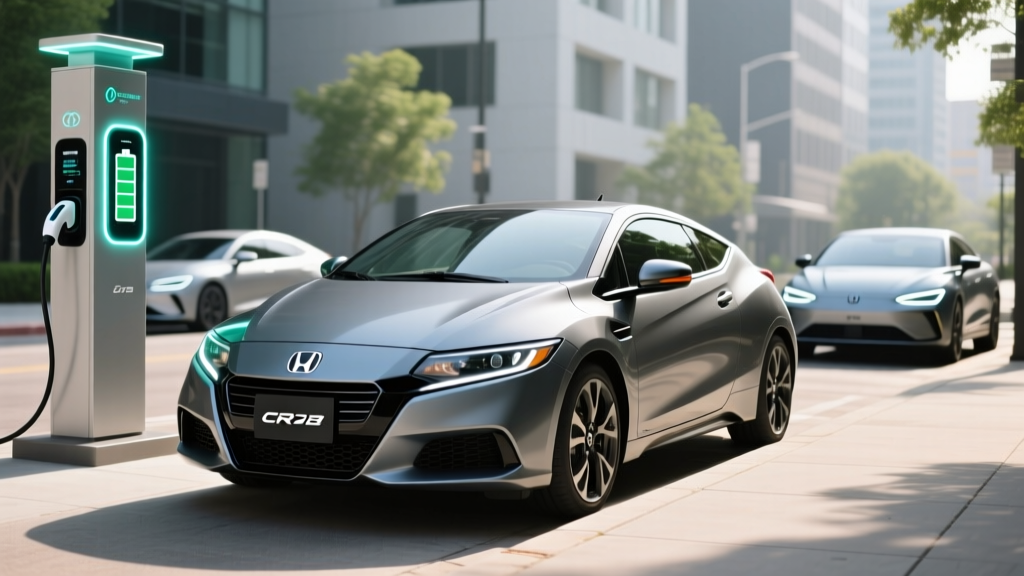
The Honda CR-Z holds a strange place in hybrid history. Sold from 2011 through 2016, it was Honda's attempt to build a sporty, two-seat hybrid coupe — something that looked like a spiritual successor to the original CRX but carried the company's Integrated Motor Assist (IMA) hybrid powertrain beneath its angular hatchback body. If you're researching the Honda hybrid CR-Z today, you're likely looking at the used market or trying to understand how this early hybrid stacks up against modern electrified options.
This guide breaks down the CR-Z's real-world fuel economy, its IMA hybrid system reliability, battery replacement economics, and — critically — which current Honda hybrids have eclipsed it. Let's get specific with the numbers.
Honda CR-Z Hybrid Powertrain: The IMA System Explained
The CR-Z uses Honda's Integrated Motor Assist (IMA) system — a mild parallel hybrid architecture, not the more advanced two-motor systems found in modern Honda hybrids. Here's exactly what's under the hood:
- Engine: 1.5-liter SOHC i-VTEC inline-4, 111 hp @ 6,000 rpm
- Electric motor: 10 kW (13 hp) IMA motor sandwiched between engine and transmission
- Combined output: 122 hp (123 hp with CVT) and 128 lb-ft torque
- Transmission: 6-speed manual (rare) or CVT automatic
- Hybrid battery: 0.67 kWh nominal (nickel-metal hydride, NiMH)
- Drive wheels: Front-wheel drive
The IMA system was controversial even when new. Unlike Toyota's Hybrid Synergy Drive (which can propel the car on electric power alone at low speeds), the IMA motor is permanently coupled to the crankshaft. The engine's cylinders must be deactivated via VTEC to achieve any electric-only coasting — and even then, it's minimal. The electric motor's primary job is torque fill during acceleration, not standalone propulsion.
Fuel Economy: EPA Ratings and Real-World MPG
The CR-Z's fuel economy varies by transmission and model year. Here are the official EPA figures from fueleconomy.gov:
| Configuration | City MPG | Highway MPG | Combined MPG |
|---|---|---|---|
| CVT (2011-2013) | 35 | 39 | 37 |
| CVT (2014-2016, revised) | 36 | 39 | 37 |
| 6-Speed Manual | 31 | 39 | 34 |
Real-world MPG reality check: Owner forums and aggregated fuel-tracking data (from sources like Fuelly) show that most CR-Z CVT drivers average between 34 and 38 MPG combined in mixed driving. The car's lightweight construction (roughly 2,850 lbs) helps it hit highway numbers close to EPA estimates, but city driving with aggressive throttle inputs — which the IMA system's "Sport" mode encourages — drops real-world economy to the low 30s. The manual transmission version typically underperforms its EPA rating by 2-3 MPG unless the driver is exceptionally disciplined about shift points and using the car's Eco mode.
For context, the 2026 Honda Accord Hybrid achieves an EPA-rated 48 MPG combined — a 30% improvement over the CR-Z while offering four full doors, a larger trunk, and 204 hp. Hybrid technology has moved decisively forward.
Battery Health, Warranty, and Replacement Costs
The CR-Z's NiMH hybrid battery is small (0.67 kWh), which paradoxically works in its favor for longevity — smaller batteries experience shallower charge/discharge cycles, reducing stress. However, these vehicles are now 10-15 years old, and NiMH chemistry degrades with both time and heat exposure regardless of mileage.
Honda covered the IMA battery for 8 years / 80,000 miles (10 years / 150,000 miles in CARB states including California, New York, Massachusetts, and others adopting California emissions standards). All original factory warranties on the CR-Z have now expired.
Replacement cost breakdown:
- OEM Honda IMA battery (dealer): $2,000–$2,800 installed
- Aftermarket refurbished NiMH pack: $1,000–$1,600 installed at an independent hybrid specialist
- DIY refurbished pack: $600–$900 for the cells, plus 2-3 hours of labor if you're mechanically inclined
Signs of IMA battery degradation in a used CR-Z:
- IMA system warning light or "IMA" indicator on the dash
- Noticeably reduced assist during acceleration (the car feels sluggish off the line)
- Frequent auto-stop failures (the engine won't shut off at red lights)
- Reduced regenerative braking strength (the charge gauge rarely climbs during deceleration)
- Diagnostic trouble codes P0A7F or P0A9C related to battery module deterioration
When evaluating a used CR-Z, request an OBD-II scan specifically checking IMA battery state of health (SoH). A pack showing below 70% capacity retention will trigger reduced performance and should factor into your purchase negotiation — budget $1,500 for a replacement if the battery hasn't been changed.
Reliability and Common Issues Beyond the Battery
The CR-Z benefits from Honda's generally strong reliability reputation, and the 1.5L L-series engine is a proven, simple design. That said, specific issues surface in high-mileage examples:
- 12V auxiliary battery: Like all hybrids, the CR-Z has a conventional 12V battery separate from the IMA pack. If the 12V dies, the car won't start even if the hybrid battery is healthy. Replacement is standard ($150-$220) but catch failures early.
- CVT transmission: The CVT is generally reliable but requires fluid changes every 30,000-60,000 miles. Neglected CVT fluid leads to shuddering and eventual failure ($3,500+ replacement).
- Air conditioning compressor: The electric A/C compressor can fail on higher-mileage units ($800-$1,200 repair).
- Door latch actuators: A known Honda issue of this era; doors may not latch or unlock properly ($150-$300 per door).
Overall, the CR-Z is a moderately reliable used hybrid — not quite at the bulletproof level of a contemporaneous Toyota Prius, but far from problematic. The IMA system is simpler than Toyota's full hybrid setup, meaning fewer components can fail, but the battery itself is the single largest financial risk in ownership.
Tax Credits and Incentives: What Applies Today
This is a critical point of confusion for used hybrid buyers. Under current IRS §25E rules for the used clean vehicle credit:
- The credit is up to $4,000 or 30% of the sale price (whichever is lower) for qualifying used EVs and plug-in hybrids.
- The vehicle must have a sale price of $25,000 or less, be at least two model years old, and be purchased from a dealer.
- Buyer income caps apply: $75,000 single / $112,500 head of household / $150,000 joint.
The CR-Z does NOT qualify for the used clean vehicle credit. It is a conventional hybrid (HEV), not a plug-in hybrid or battery electric vehicle. The §25E credit specifically requires the vehicle to be a qualified plug-in electric drive vehicle with a battery capacity of at least 7 kWh — the CR-Z's 0.67 kWh NiMH pack falls far short of this threshold.
No federal tax credit, new or used, applies to conventional hybrids like the CR-Z. Some states may offer minor registration incentives or HOV lane access (varies by jurisdiction and often sunsets), but these should be verified with your state DMV. Check current rules at irs.gov and your state energy office.
What Replaced the CR-Z? Honda's 2026 Hybrid Lineup
Honda discontinued the CR-Z after the 2016 model year without a direct successor. The two-seat sport hybrid coupe segment essentially died. However, Honda's current hybrid lineup uses its far superior two-motor hybrid system and delivers meaningfully better performance, efficiency, and practicality:
| 2026 Model | Combined HP | EPA Combined MPG | Starting MSRP | Hybrid Type |
|---|---|---|---|---|
| Accord Hybrid | 204 | 48 | ~$34,000 | HEV |
| CR-V Hybrid | 204 | 40 | ~$36,000 | HEV |
| Civic Hybrid | 200 | 49 | ~$30,000 | HEV |
| Clarity PHEV (if returning) | 212 | 42 (hybrid) / 47 mi EV | TBA | PHEV |
Honda's current two-motor hybrid system operates fundamentally differently from the CR-Z's IMA. The newer system uses one motor primarily as a generator and one as the drive motor, allowing true electric-only propulsion at low and moderate speeds — similar to Toyota's e-CVT approach but with Honda's engineering philosophy. The result is smoother power delivery, better city MPG (where electric drive dominates), and more total system horsepower.
If the CR-Z's appeal was sportiness plus hybrid efficiency, the closest modern Honda equivalent is the Civic Hybrid Sport Touring: 200 hp, 49 MPG combined EPA, and a starting price around $30,000. It's a four-door sedan rather than a coupe, but it delivers on both the fun-to-drive and fuel-savings promises the CR-Z only partially fulfilled.
Hybrid vs PHEV vs EV: Which Should You Actually Buy?
If you're cross-shopping a used CR-Z against modern electrified options, here's a decision framework grounded in real ownership patterns:
- You have no home charging access
- Your daily driving is unpredictable in distance
- You want zero behavior change from a gas car
- Budget is under $15K (used) or you want simplicity
- You can install Level 2 home charging
- Daily commute is under 40 miles (cover it on electric)
- You take regular road trips beyond EV range
- You want to reduce gas consumption 60-80%
- Home charging is available (Level 2 ideal)
- Daily driving is under 250 miles
- You want lowest cost per mile ($0.04-$0.06/mi vs $0.12-$0.15 for hybrid)
- You want minimal maintenance (no oil, no engine)
The CR-Z made sense in 2012 when EV charging infrastructure was sparse and EVs offered under 100 miles of range. In 2026, with most new EVs delivering 280-350 miles EPA and DC fast charging networks expanded substantially, the case for a mild hybrid like the CR-Z narrows to: budget under $10,000, no charging access, and a tolerance for older technology.
Used CR-Z Buying Verdict: Pros and Cons
Pros
- Lightweight, fun handling (2,850 lbs, low center of gravity)
- Unique styling — nothing else looks like it
- Manual transmission option (rare in hybrids)
- 37 MPG combined is still respectable for a sport coupe
- Low purchase price on used market ($6,000-$12,000)
- Simple IMA system = fewer hybrid components to fail
Cons
- Only two seats — severely limits practicality
- 122 hp combined is underwhelming; 0-60 in ~9.5 seconds
- IMA battery replacement risk ($1,000-$2,800)
- No electric-only driving; it's a gas car with minor electric assist
- No federal tax credit eligibility (conventional hybrid)
- Outdated hybrid tech — 30% worse MPG than modern Honda hybrids
- Tiny 0.67 kWh NiMH battery degrades with age regardless of miles
Frequently Asked Questions
How many MPG does the Honda CR-Z hybrid get?
The CVT-equipped CR-Z is EPA-rated at 36 city / 39 highway / 37 combined MPG. The 6-speed manual version rates lower at 31/39/34 MPG. Real-world owner averages cluster around 34-38 MPG combined, with highway-heavy driving achieving the best results and aggressive city driving dropping to the low 30s.
Can the Honda CR-Z drive on electric power alone?
No. The CR-Z is a conventional mild hybrid (HEV). Its 0.67 kWh NiMH battery and 13 hp electric motor cannot propel the car independently. The electric motor only assists the gasoline engine during acceleration and recovers energy during braking. There is no EV mode and no plug.
Is the Honda CR-Z hybrid reliable?
Moderately reliable. The 1.5L engine and transmission are proven Honda components. The primary risk is IMA battery degradation due to age (all CR-Zs are now 10+ years old). Budget $1,000-$2,800 for a potential battery replacement. Overall maintenance costs remain low compared to non-hybrid sport coupes of the same era.
What does it cost to replace the CR-Z hybrid battery?
An OEM Honda replacement IMA battery costs $2,000-$2,800 installed at a dealer. Aftermarket refurbished NiMH packs run $1,000-$1,600 installed at hybrid specialists, or $600-$900 for DIY installation. Given the vehicle's current market value of $6,000-$12,000, a battery replacement represents a significant percentage of the car's worth — factor this into any purchase decision.
Does the Honda CR-Z qualify for any tax credit?
No. The CR-Z is a conventional hybrid (HEV), not a plug-in hybrid or battery electric vehicle. It does not qualify for the federal §30D new vehicle credit, the §25E used clean vehicle credit, or any current federal incentive. Some states historically offered hybrid incentives, but most have expired or shifted to PHEV/BEV-only programs. Verify with your state energy office.
Should I buy a used CR-Z or a newer Honda hybrid?
If your budget is under $12,000 and you want a fun, efficient two-seater, the CR-Z is a reasonable choice — but inspect the IMA battery carefully. If you can spend $25,000+, a new or certified pre-owned Civic Hybrid or Accord Hybrid delivers dramatically better fuel economy (48-49 MPG combined), four doors, modern safety tech, a full factory warranty, and 80+ more horsepower. The technology gap is substantial.