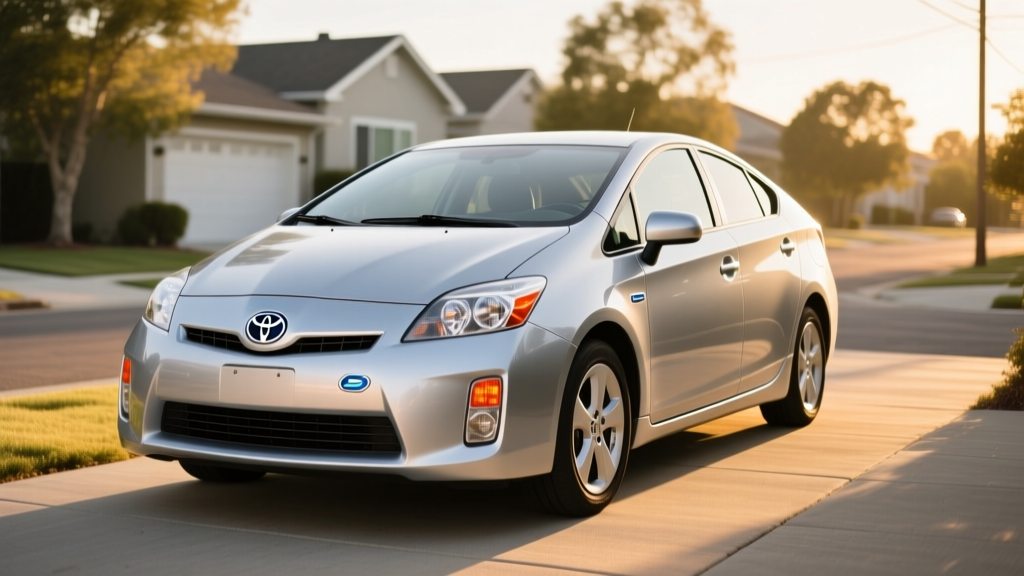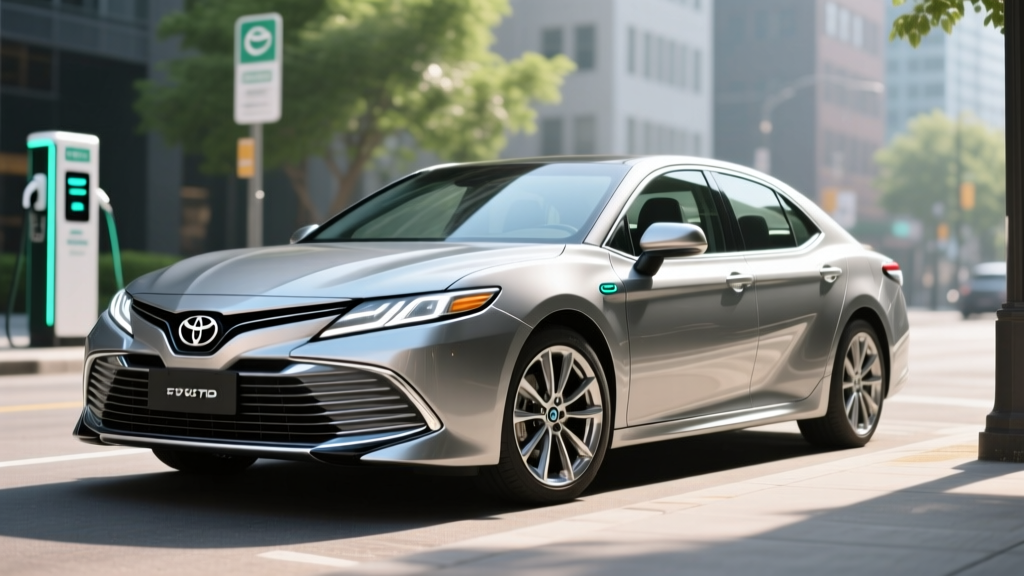
The 2020 Toyota Camry Hybrid remains one of the most efficient midsize sedans you can buy on the used market in 2026. With an EPA-estimated 52 MPG combined in the LE trim, a proven hybrid powertrain, and Toyota's reputation for longevity, it draws buyers who want serious fuel savings without plugging in. But how does it stack up against modern plug-in hybrids and full EVs six years after its release? This guide breaks down every number that matters.
2020 Camry Hybrid Fuel Economy: EPA vs Real World
The 2020 Camry Hybrid comes in three trims — LE, SE, and XLE — and fuel economy varies by trim due to wheel size, weight, and aerodynamic differences. The LE trim is the efficiency champion, while the sportier SE and more luxurious XLE sacrifice a few MPG for larger wheels and added equipment.
| Trim | City MPG | Highway MPG | Combined MPG |
|---|---|---|---|
| LE | 51 | 53 | 52 |
| SE | 44 | 47 | 46 |
| XLE | 44 | 47 | 46 |
Source: EPA Fuel Economy Guide
Hybrids often beat their EPA city estimates in stop-and-go traffic because regenerative braking recaptures energy that gas-only cars waste as heat. In our experience and aggregated owner reports, the Camry Hybrid LE regularly delivers 48–55 MPG in mixed driving. Highway-only trips at 75+ MPH tend to drop to 42–46 MPG since the electric motor assists less at sustained high speeds. In cold weather (below 30°F), expect a 5–10% efficiency dip as the engine runs more frequently to heat the cabin and warm the battery.
Powertrain and Performance Specs
The 2020 Camry Hybrid pairs a 2.5-liter four-cylinder Dynamic Force engine with an electric motor-generator through Toyota's Hybrid Synergy Drive system. The result is seamless power delivery with no traditional transmission — an eCVT (planetary gearset) handles ratio changes without the rubber-band feel of older belt-driven CVTs.
| Specification | Value |
|---|---|
| Engine | 2.5L inline-4 (176 hp, 163 lb-ft) |
| Electric Motor | 88 kW (118 hp, 149 lb-ft) |
| Net Combined Horsepower | 208 hp |
| Transmission | eCVT (planetary gearset) |
| Drivetrain | Front-wheel drive (AWD-e available on LE/SE) |
| 0–60 mph | ~7.5 seconds |
| Hybrid Battery | 1.6 kWh nickel-metal hydride (NiMH), sealed |
| Curb Weight | 3,472–3,572 lbs (trim-dependent) |
The AWD-e option (available on LE and SE trims) adds a separate rear-mounted electric motor that engages the rear wheels only when front-wheel slip is detected. It doesn't reduce fuel economy significantly — the LE AWD-e still achieves 51/53/52 MPG — and provides meaningful traction improvement in rain and light snow.
HEV vs PHEV vs EV: Where the Camry Hybrid Fits
The 2020 Camry Hybrid is a conventional hybrid electric vehicle (HEV). It does not plug in. It charges its small battery exclusively through regenerative braking and the gasoline engine. This is fundamentally different from a plug-in hybrid (PHEV) or a battery-electric vehicle (BEV).
| Feature | HEV (Camry Hybrid) | PHEV (e.g., RAV4 Prime) | BEV (e.g., Tesla Model 3) |
|---|---|---|---|
| Plugs in? | No | Yes | Yes |
| Electric-only range | ~1 mile (low-speed creep) | 25–42 miles typical | 250–360 miles |
| Total range | ~580 miles (13.2-gal tank) | ~400–500 miles combined | 250–360 miles |
| Home charging needed? | No | Recommended (Level 2) | Essential (Level 2) |
| Federal tax credit (new) | None | Up to $7,500 (§30D) | Up to $7,500 (§30D) |
| Used EV credit (§25E) | Not eligible | Up to $4,000 | Up to $4,000 |
| Maintenance | Oil changes, standard | Oil changes, standard | Minimal (no oil, fewer fluids) |
| Best for | No home charging access, long highway miles | Short daily commute + home charging | Home charging + mostly under 250 mi/day |
Who should choose the Camry Hybrid over a PHEV or EV? If you live in an apartment without charging access, regularly drive 400+ miles between fill-ups, or simply don't want to think about charging infrastructure, the HEV eliminates all of those concerns while still cutting fuel consumption by roughly 40–50% compared to a gas-only midsize sedan.
Hybrid Battery Warranty, Lifespan, and Replacement Cost
Battery longevity is the number-one concern for used hybrid buyers. Here's what you need to know about the 2020 Camry Hybrid's battery system.
- 2020 model year coverage: 10 years / 150,000 miles (whichever comes first) — Toyota extended this from the prior 8-year/100,000-mile standard starting with 2020 models in most states.
- California-emissions states: Same 10-year/150,000-mile coverage applies.
- Capacity threshold: Toyota warrants the battery against defects and abnormal capacity loss. There is no published minimum State of Health percentage — warranty claims are evaluated based on diagnostic testing.
Real-world battery lifespan: Toyota's NiMH hybrid batteries are among the most durable in the industry. Taxi fleets running Camry and Prius hybrids routinely exceed 250,000–300,000 miles on the original battery. The NiMH chemistry is less energy-dense than the lithium-ion packs in PHEVs and EVs, but it degrades more gracefully and tolerates the shallow charge-discharge cycles that hybrids use.
Replacement cost if out of warranty: A new OEM hybrid battery from Toyota runs approximately $2,500–$3,500 installed at a dealership. Refurbished or reconditioned batteries from third-party suppliers range from $1,200–$2,000 installed. Individual module replacement (only the failed cells) can drop the cost to $500–$1,000 at a hybrid-specialist shop. For context, by 2026, most 2020 Camry Hybrids are still within the 10-year/150,000-mile warranty window.
Used Pricing and Tax Credit Eligibility in 2026
As a used vehicle in 2026, the 2020 Camry Hybrid does not qualify for the federal §30D new clean vehicle credit — that credit applies only to new vehicle purchases. However, there are still financial considerations:
- Used Clean Vehicle Credit (§25E): The Camry Hybrid is not eligible for the up-to-$4,000 used EV credit. That credit applies only to plug-in vehicles (PHEVs and BEVs) with a minimum battery capacity of 7 kWh. The Camry Hybrid's 1.6 kWh NiMH pack does not qualify.
- State incentives: Some states offer rebates or HOV lane access for hybrids, but most have shifted incentives toward PHEVs and BEVs. Check your state's energy office or Alternative Fuels Data Center for current programs.
- Used market pricing (2026 estimates): Expect to pay $18,000–$26,000 depending on trim, mileage, and condition. The LE trim commands a slight premium for its superior fuel economy. AWD-e models tend to sit at the higher end of the range.
Reliability, Safety, and Ownership Costs
The 2020 Camry Hybrid benefits from Toyota's long-standing hybrid reliability record. The Hybrid Synergy Drive system has been refined over two decades, with fewer moving parts than a conventional automatic transmission (no torque converter, no clutch packs, no traditional gear shifting).
Safety ratings: The 2020 Camry earned the IIHS Top Safety Pick+ designation and a 5-star overall rating from NHTSA. Standard Toyota Safety Sense 2.0 includes automatic emergency braking, adaptive cruise control, lane-keeping assist, and road-sign recognition.
Five-year ownership cost estimate (buying used in 2026):
| Category | Estimated 5-Year Cost | Notes |
|---|---|---|
| Purchase price (avg) | $22,000 | LE trim, ~60k miles |
| Fuel (12,000 mi/yr at $3.40/gal) | $4,700 | Based on 52 MPG combined |
| Insurance | $7,500 | National avg, varies by state/driver |
| Maintenance | $3,000 | Oil, tires, brakes (regen extends pad life) |
| Depreciation (est. resale in 2031) | -$9,000 | Estimated resale ~$13,000 |
| Total 5-year cost | ~$28,200 | ~$5,640/year all-in |
Compare this to a gas-only 2020 Camry LE (32 MPG combined): fuel costs would jump to approximately $7,650 over five years — nearly $3,000 more. The hybrid premium pays for itself in fuel savings alone for most owners.
- 52 MPG combined (LE) — class-leading efficiency
- No plug-in charging required — works anywhere gas is sold
- 10-year/150,000-mile hybrid battery warranty (still active in 2026)
- Standard Toyota Safety Sense 2.0
- AWD-e option for inclement weather
- Strong resale value and proven reliability
- Regenerative braking extends brake pad life significantly
- No electric-only driving range (not a PHEV)
- No federal tax credit eligibility (new or used)
- SE and XLE trims drop to 46 MPG combined
- eCVT drone under hard acceleration
- Infotainment feels dated vs 2026 competitors
- No Apple CarPlay in base LE (added mid-year; verify by VIN)
Decision Framework: Is the 2020 Camry Hybrid Right for You?
- You lack access to home or workplace EV charging
- Your commute involves heavy stop-and-go traffic (where hybrids shine brightest)
- You want to minimize fuel costs without changing your refueling habits
- You drive 15,000+ miles per year and want proven 200,000+ mile durability
- You want AWD for snow/rain without the efficiency penalty of a gas AWD sedan
- You have Level 2 home charging and a commute under 30 miles (a PHEV could eliminate gas use entirely on weekdays)
- You want to access HOV lanes or state EV incentives
- You want to qualify for the up-to-$4,000 used clean vehicle credit (§25E)
- You want zero tailpipe emissions in daily driving
- You want the latest infotainment and driver-assist technology
Frequently Asked Questions
How many MPG does the 2020 Camry Hybrid actually get?
The EPA rates the LE trim at 51 city / 53 highway / 52 combined. The SE and XLE trims are rated at 44 city / 47 highway / 46 combined. In real-world mixed driving, owners regularly report 48–55 MPG in the LE, with city-heavy commutes often exceeding the EPA estimate thanks to regenerative braking.
Does the 2020 Camry Hybrid need to be plugged in?
No. The Camry Hybrid is a conventional hybrid (HEV). Its 1.6 kWh battery charges entirely through regenerative braking and the gasoline engine. You fuel it like any other car — there is no plug, no charging cable, and no electric-only driving range beyond very low-speed parking-lot creeping.
Is the 2020 Camry Hybrid reliable, and what does a battery replacement cost?
Toyota's hybrid system is among the most reliable in the industry, with many examples exceeding 250,000 miles on the original battery. The 2020 model carries a 10-year/150,000-mile hybrid battery warranty, meaning most examples in 2026 are still covered. Out-of-pocket replacement runs $2,500–$3,500 for a new OEM battery, or $1,200–$2,000 for a refurbished unit.
Does the 2020 Camry Hybrid qualify for any tax credit?
No. The Camry Hybrid does not qualify for the federal §30D new vehicle credit (it's a used car in 2026) or the §25E used clean vehicle credit (that credit requires a plug-in vehicle with at least 7 kWh of battery capacity; the Camry Hybrid has 1.6 kWh and doesn't plug in). Some states may offer modest hybrid incentives — check the Alternative Fuels Data Center for your state.
Camry Hybrid vs Camry gas: which saves more money?
At $3.40/gallon and 12,000 miles per year, the Camry Hybrid LE (52 MPG) costs roughly $785/year in fuel. A gas-only Camry LE (32 MPG combined) costs about $1,275/year — a $490 annual difference. Over five years, the hybrid saves approximately $2,450 in fuel, which typically exceeds any purchase-price premium on the used market.
Is the AWD-e system worth it on the Camry Hybrid?
If you regularly drive in rain, slush, or light snow, the AWD-e system provides meaningful traction improvement with virtually no fuel-economy penalty (the LE AWD-e still achieves 52 MPG combined). The rear motor activates only when slip is detected, so it doesn't add weight or drag during normal driving. For dry-climate drivers, FWD is sufficient and slightly lighter.