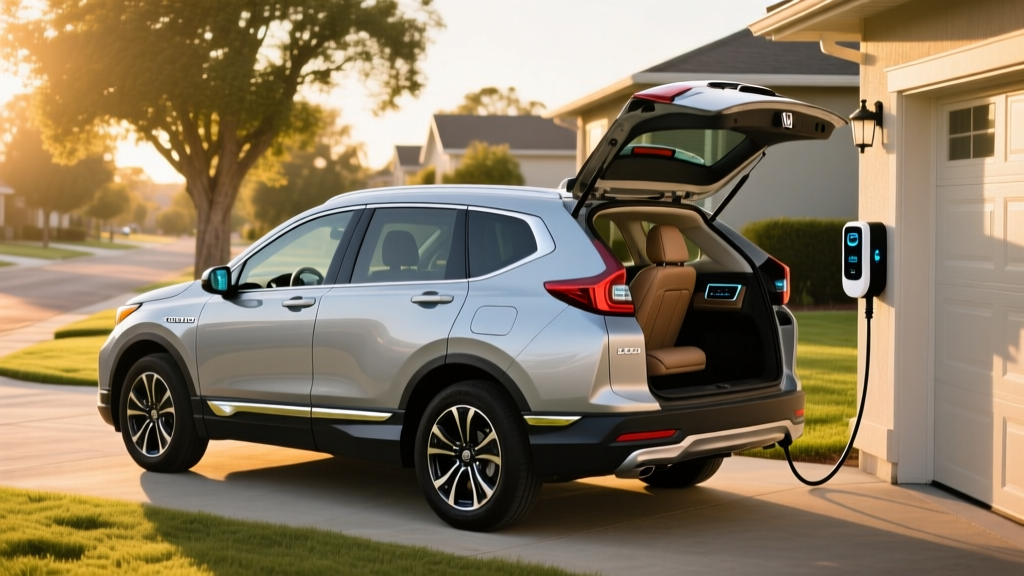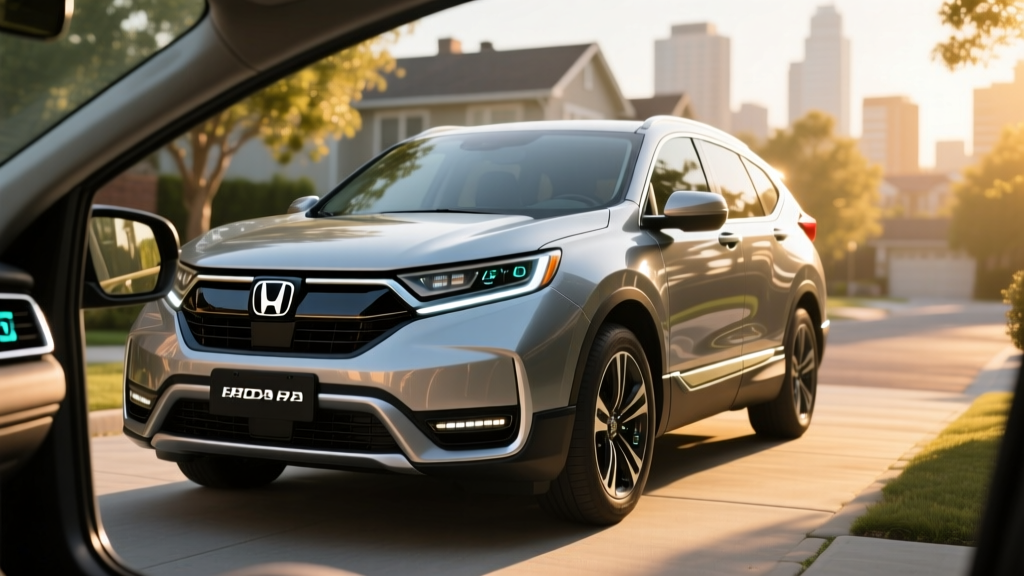
If you've been searching for honda cr v hybrid lease deals, you're looking at one of the most popular compact crossover hybrids in America — and for good reason. The Honda CR-V Hybrid pairs a proven two-motor system with strong fuel economy, practical cargo space, and a battery warranty that outlasts most lease terms. But lease offers vary wildly by region, dealer, and trim, and understanding the underlying numbers is the only way to know whether a deal is genuinely competitive.
This guide breaks down the 2026 Honda CR-V Hybrid's real-world efficiency, powertrain specs, pricing, and lease economics so you can walk into a dealership with data, not guesswork.
2026 Honda CR-V Hybrid at a Glance: Key Specs
| Specification | 2026 Honda CR-V Hybrid |
|---|---|
| Powertrain | 2.0L 4-cyl Atkinson-cycle + 2-motor hybrid system |
| Combined Horsepower | 204 hp / 247 lb-ft torque |
| Drivetrain | FWD standard; AWD available (Sport, Sport-L, Sport Touring) |
| EPA MPG (FWD) | 43 city / 36 highway / 40 combined |
| EPA MPG (AWD) | 40 city / 34 highway / 37 combined |
| Fuel Tank | 14.0 gallons |
| Total Range | ~518–560 miles (FWD/AWD) |
| Cargo Volume | 36.3 cu ft (rear seats up) / 76.5 cu ft (rear seats folded) |
| Towing Capacity | 1,000 lbs |
| 0–60 mph | ~7.8 seconds (AWD) |
| Hybrid Battery Warranty | 8 years / 100,000 miles (10 yr/150k mi in CARB states) |
| Base MSRP (Sport FWD) | $36,395 (including $1,395 destination) |
How Many MPG Does the CR-V Hybrid Actually Get?
The EPA rates the front-wheel-drive 2026 CR-V Hybrid at 43 city / 36 highway / 40 combined MPG. The AWD variants drop slightly to 40/34/37 MPG. According to fueleconomy.gov, these figures place the CR-V Hybrid near the top of the compact hybrid SUV segment, trailing the Toyota RAV4 Hybrid by only 1–2 MPG on the highway while matching or exceeding it in city driving.
| Trim / Drivetrain | City | Highway | Combined |
|---|---|---|---|
| Sport FWD | 43 MPG | 36 MPG | 40 MPG |
| Sport AWD | 40 MPG | 34 MPG | 37 MPG |
| Sport-L AWD | 40 MPG | 34 MPG | 37 MPG |
| Sport Touring AWD | 40 MPG | 34 MPG | 37 MPG |
Real-World MPG vs. EPA Estimates
Like most hybrids, the CR-V Hybrid tends to exceed its EPA city rating in stop-and-go traffic where regenerative braking and electric-motor assist do the heavy lifting. Owner-reported data on Fuelly and Edmunds forums frequently shows 42–45 MPG in urban commutes for FWD models. Highway driving is a different story: sustained 75+ mph speeds reduce the hybrid system's advantage, and real-world highway numbers often land closer to 33–35 MPG for AWD trims.
In cold weather (below 30°F), expect a 5–10% efficiency dip as the engine runs more frequently to generate cabin heat. This is common to all hybrids — the engine must stay on longer in winter, reducing electric-only operation.
HEV vs. PHEV: Why the CR-V Hybrid Is a Conventional Hybrid
A critical distinction for shoppers cross-referencing plug-in hybrids: the 2026 Honda CR-V Hybrid is a conventional hybrid (HEV), not a plug-in hybrid (PHEV). Honda does not currently offer a plug-in CR-V in the U.S. market.
| Feature | HEV (CR-V Hybrid) | PHEV (e.g., RAV4 Prime) | Full EV (e.g., Ioniq 5) |
|---|---|---|---|
| Plug-in Charging Required? | No — refuels with gas only | Yes — plugs in for EV range | Yes — plugs in exclusively |
| Electric-Only Range | None (EV assist only at low speeds) | ~42 miles (RAV4 Prime) | 250–320+ miles |
| Fuel/Energy | Gasoline | Gasoline + electricity | Electricity only |
| Federal Tax Credit (§30D) | Not eligible | Eligible (if sourcing/income rules met) | Eligible (if sourcing/income rules met) |
| Home Charger Needed? | No | Recommended (Level 2) | Essential (Level 2) |
| Best For | No home charging access; want simplicity | Short commutes + road-trip flexibility | Home charging + lower running costs |
Because the CR-V Hybrid is an HEV, it never needs to be plugged in. Its 1.34 kWh lithium-ion battery pack recharges through regenerative braking and the gasoline engine. You drive it exactly like a conventional car — fill up at the gas station and go.
Understanding Honda CR-V Hybrid Lease Deals in 2026
Lease pricing fluctuates by region, dealer inventory, and Honda's monthly incentive programs. Here's what to expect when evaluating 2026 Honda CR-V Hybrid lease deals:
Typical Lease Structure
Honda Financial Services commonly structures CR-V Hybrid leases as 36 months / 10,000–12,000 miles per year. Key variables include:
- Money factor (interest rate equivalent): Typically 0.00200–0.00280 for well-qualified buyers (Tier 1 credit), equating to roughly 4.8%–6.7% APR.
- Residual value: Honda CR-V Hybrids historically hold 55–62% residual at 36 months, which helps keep monthly payments competitive.
- Capitalized cost (negotiated price): This is where you save. A competitive lease starts with a negotiated selling price at or below MSRP — ideally $500–$1,500 under sticker on the Sport trim.
- Drive-off fees: Expect $2,500–$4,000 at signing (first month's payment, acquisition fee ~$595, registration, taxes on cap reduction).
Estimated Monthly Payments by Trim (36 mo / 12k mi / $3,000 Down)
| Trim | MSRP | Est. Monthly Payment |
|---|---|---|
| Sport FWD | $36,395 | $399–$449 |
| Sport AWD | $37,895 | $419–$469 |
| Sport-L AWD | $40,695 | $449–$509 |
| Sport Touring AWD | $43,295 | $489–$549 |
Note: These are estimates based on typical Honda Financial money factors and residuals for Tier 1 credit in early 2026. Actual payments depend on your credit tier, state taxes, dealer fees, and any active Honda incentives. Always request an itemized lease quote before signing.
Lease Negotiation Tips
- Negotiate the selling price first, then discuss lease terms. The monthly payment is a function of the cap cost — if the dealer won't budge on price, the lease won't improve.
- Check Honda's current lease offers on honda.com's "Current Offers" page. Honda occasionally offers $500–$1,000 lease cash on hybrid trims to move inventory.
- Avoid putting more than $3,000 down on a lease. If the car is totaled or stolen, that equity is lost (GAP insurance covers the remaining balance, not your down payment).
- Watch for dealer add-ons: VIN etching, fabric protection, and "protection packages" inflate the cap cost. Decline them or negotiate them out.
Hybrid Battery Warranty and Long-Term Reliability
2026 Honda CR-V Hybrid Battery Warranty:
- Federal emissions states: 8 years / 100,000 miles
- CARB states (CA, NY, MA, WA, CO, and others adopting California emissions standards): 10 years / 150,000 miles
- Coverage: Battery capacity below a defined threshold (typically ~60–70% of original capacity) or complete failure
What Happens If the Battery Fails?
Honda's two-motor hybrid system uses a relatively small 1.34 kWh lithium-ion pack — far smaller than a full EV battery. This means replacement costs are substantially lower. Based on current Honda parts pricing and independent hybrid repair shops:
- OEM battery replacement: $2,000–$3,500 (parts + labor at a Honda dealer)
- Refurbished/aftermarket pack: $1,200–$2,000
- Individual cell/module replacement: $500–$1,200 at a hybrid specialist
The good news: Honda's hybrid system is among the most proven in the industry. The two-motor architecture, carried over and refined from the Accord Hybrid and previous CR-V Hybrid generations, has demonstrated strong longevity. Owner reports of hybrid battery failure before 150,000 miles are rare on Honda's current-generation systems. For a 36-month lease, battery longevity is essentially a non-issue — you'll return the vehicle well within warranty coverage.
General Reliability
The 2026 CR-V Hybrid carries over Honda's reputation for powertrain durability. The 2.0L Atkinson-cycle engine is under-stressed (it doesn't produce peak power alone — the electric motors supplement it), which contributes to longevity. According to IIHS, the CR-V earns top safety ratings, and Consumer Reports historically rates the CR-V Hybrid above average for predicted reliability.
Does the CR-V Hybrid Qualify for a Tax Credit?
The short answer: No. The 2026 Honda CR-V Hybrid is a conventional hybrid (HEV), not a plug-in hybrid or battery electric vehicle. Under current IRS §30D rules, only plug-in electric vehicles (BEVs and PHEVs with at least 7 kWh of battery capacity and plug-in capability) are eligible for the federal clean vehicle credit of up to $7,500.
Federal tax credit eligibility requires:
- Plug-in vehicle (BEV or qualifying PHEV)
- Battery capacity ≥ 7 kWh
- MSRP caps: $55,000 for SUVs, $80,000 for vans/pickups
- Buyer income caps: $150K single / $300K joint (modified AGI)
- Critical mineral and battery component sourcing requirements
The CR-V Hybrid's 1.34 kWh battery and lack of plug-in capability disqualify it on multiple fronts. Some states may offer minor hybrid incentives (check your state's energy office), but no federal credit applies.
Hybrid vs. PHEV vs. EV: Which Powertrain Fits You?
Choose the CR-V Hybrid (HEV) if:
- You don't have access to home or workplace charging
- You want maximum simplicity — no plugs, no charging apps, no range planning
- Your commute is mixed city/highway and you want 40+ MPG without behavior change
- You frequently take road trips and don't want to plan around charging stations
- You're leasing for 2–3 years and want strong resale value without battery-aging concerns
Choose a PHEV (e.g., Toyota RAV4 Prime, Hyundai Tucson PHEV) if:
- You have home charging and a commute under 40 miles round-trip
- You want to drive mostly on electricity daily but keep gas for road trips
- You qualify for the §30D federal tax credit (offsets the PHEV's higher MSRP)
Choose a full EV (e.g., Hyundai Ioniq 5, Tesla Model Y) if:
- You have reliable Level 2 home charging
- You want the lowest per-mile fuel cost (~$0.04–$0.06/mile vs. ~$0.12–$0.15/mile for the CR-V Hybrid)
- You want to eliminate oil changes and reduce brake wear (regen braking)
- You qualify for federal and/or state EV incentives
Pros and Cons of Leasing the CR-V Hybrid
Pros
- 40 MPG combined (FWD) — top-tier for the segment
- No plug-in required; zero behavior change from a gas car
- Strong residual values keep lease payments competitive
- Spacious cargo area (36.3 cu ft) with no battery intrusion
- Hybrid battery warranty covers the full lease term and beyond
- Standard Honda Sensing suite (adaptive cruise, lane keeping, auto emergency braking)
- AWD available for snow-belt buyers
Cons
- No federal tax credit (HEV, not PHEV/BEV)
- AWD highway MPG drops to 34 — not exceptional for long commutes
- 1,000-lb towing capacity — not suitable for trailers or boats
- CVT-like driving feel under hard acceleration (e-CVT)
- Sport trim is the entry point — no cheaper LX hybrid option
- No DC fast charging (not applicable — no plug)
Frequently Asked Questions
What is a good lease price for the 2026 Honda CR-V Hybrid?
For a well-qualified buyer (Tier 1 credit), a competitive 36-month lease on the Sport FWD trim with $3,000 due at signing and 12,000 miles/year should land between $399–$449/month before state taxes. If a dealer quotes above $500/month on the Sport FWD with similar terms, push back on the capitalized cost or shop competing Honda dealers.
Does the Honda CR-V Hybrid need to be plugged in?
No. The CR-V Hybrid is a conventional hybrid (HEV). Its small lithium-ion battery recharges through regenerative braking and the gasoline engine. You refuel exclusively at gas stations, just like a standard car.
How long will the CR-V Hybrid battery last?
Honda warrants the hybrid battery for 8 years/100,000 miles (10 years/150,000 miles in CARB states). In practice, Honda's two-motor hybrid batteries have demonstrated strong longevity, with most lasting well beyond 150,000 miles based on historical data from the Accord Hybrid and prior CR-V Hybrid. If replacement is ever needed, expect $2,000–$3,500 at a dealer.
Is the CR-V Hybrid better than the RAV4 Hybrid?
They're closely matched. The RAV4 Hybrid offers slightly higher EPA MPG (41 combined AWD vs. 37 for the CR-V AWD) and a higher tow rating (1,750 lbs vs. 1,000 lbs). The CR-V Hybrid counters with more rear-seat legroom, a more refined interior, and often better lease incentives. Test-drive both and compare the actual lease quotes in your area — the better deal often comes down to which brand is offering stronger regional incentives that month.
Can I buy the CR-V Hybrid at the end of my lease?
Yes. Honda Financial Services sets a residual (purchase option) value at lease signing. If you decide to keep the vehicle, you can purchase it at that predetermined price plus any applicable fees and taxes. Given the CR-V's strong resale value, the residual is typically fair — but compare it to the used market before committing.
Is the CR-V Hybrid good in snow?
With available AWD, the CR-V Hybrid performs competently in moderate snow and icy conditions. The hybrid system's electric motor provides smooth, low-speed torque that helps with traction. Pair it with dedicated winter tires for the best cold-weather performance. Note that AWD reduces combined MPG to 37 — a modest trade-off for all-weather capability.
What's the cheapest CR-V Hybrid trim to lease?
The Sport FWD at $36,395 MSRP is the entry point for the CR-V Hybrid lineup. If you need AWD, the Sport AWD at $37,895 is the next step up. Honda does not offer a base LX hybrid trim — the Sport is the most affordable hybrid option.