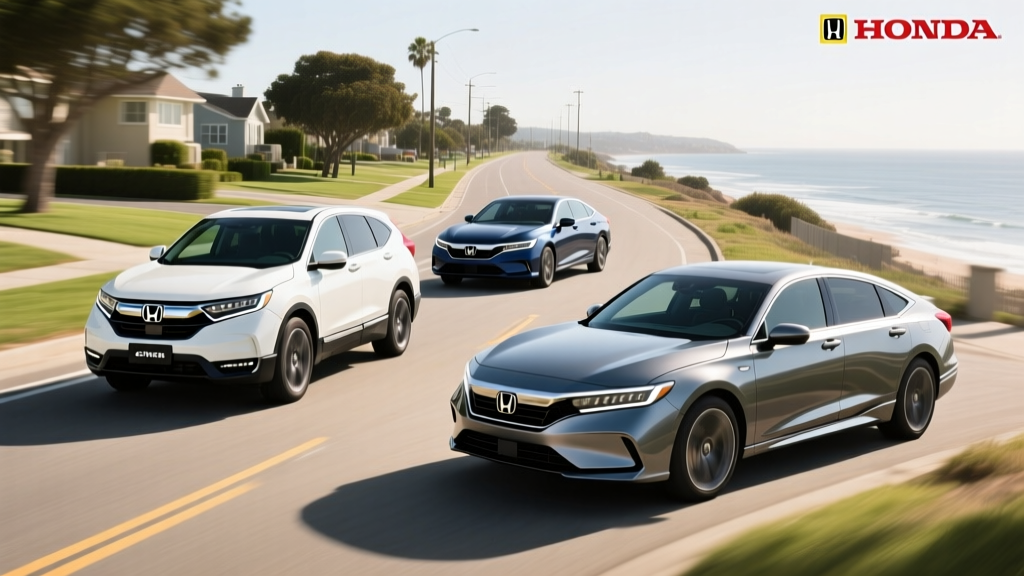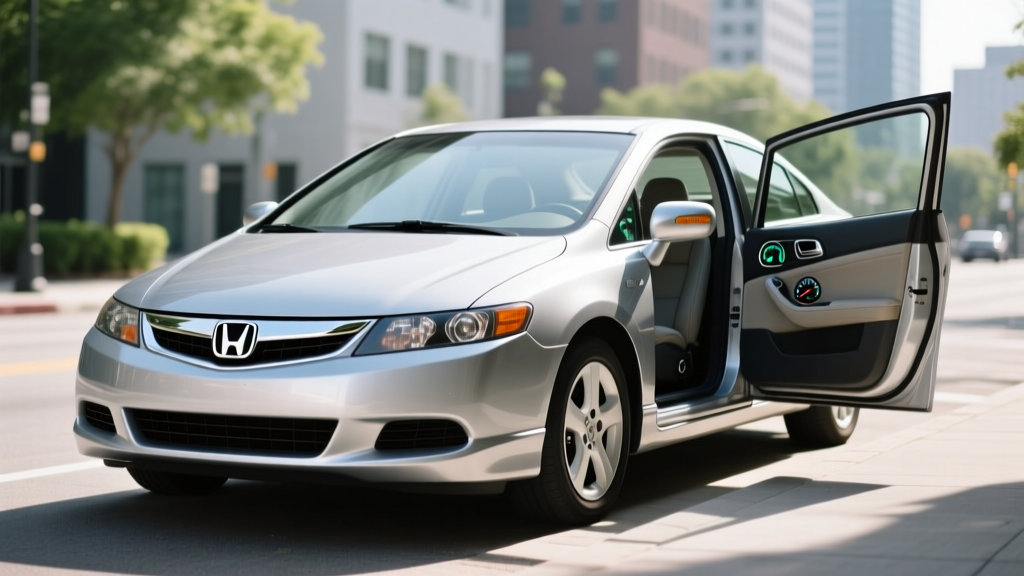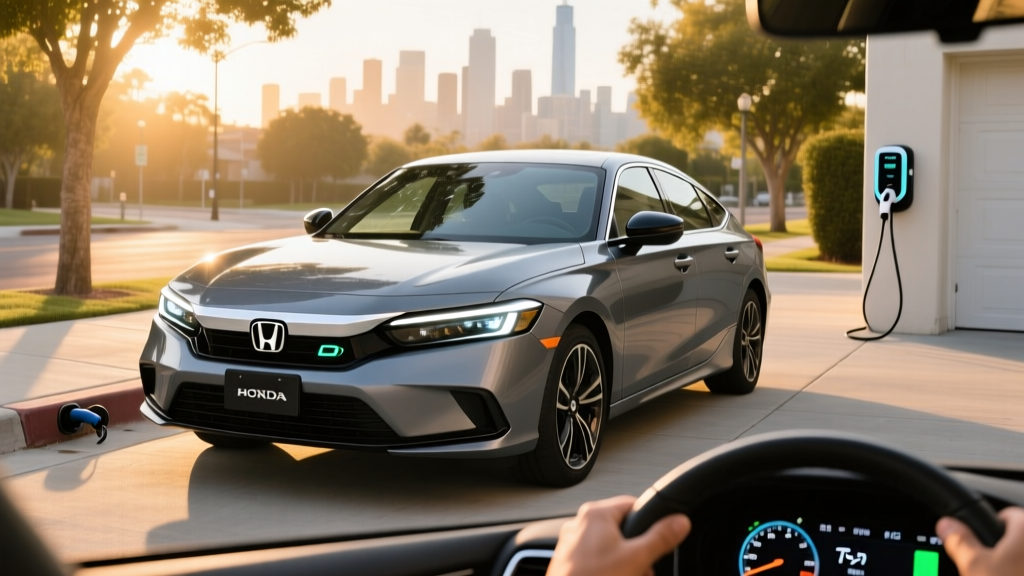
The Honda Civic Touring Hybrid sits at the top of Honda's compact hybrid lineup, blending a premium feature set with a two-motor hybrid system that delivers class-leading efficiency. For buyers weighing a compact sedan that sips fuel without requiring a plug, the Touring trim adds leather, a Bose audio system, a larger touchscreen, and Honda's full suite of driver-assistance technology — all while returning an EPA-estimated 49 MPG combined. This guide breaks down the Civic Touring Hybrid's real-world efficiency, powertrain details, battery longevity, pricing, and how it stacks up against plug-in hybrids and full EVs.
HEV vs PHEV: Where the Civic Touring Hybrid Fits
Before diving into specs, it's essential to distinguish what the Civic Touring Hybrid is — and what it isn't. The Civic Hybrid is a conventional hybrid electric vehicle (HEV), not a plug-in hybrid (PHEV). That means:
| Feature | Civic Hybrid (HEV) | Plug-In Hybrid (PHEV) Example | Battery Electric (BEV) |
|---|---|---|---|
| Plug-in charging required? | No — regenerative braking + engine charges battery | Yes — Level 1/2 home or public charging | Yes — Level 1/2/DC charging |
| Electric-only driving | Brief low-speed EV mode (<1 mile) | 20–50 miles typical | 200–400+ miles |
| Battery size | ~1.0 kWh (small, assists engine) | 10–20 kWh | 60–100+ kWh |
| Federal tax credit (§30D) | Not eligible | Up to $7,500 (if eligible) | Up to $7,500 (if eligible) |
| Range anxiety | None — 400+ mile total range on gas | Minimal — gas backup | Requires planning on long trips |
The Civic Touring Hybrid never needs to be plugged in. Its small lithium-ion battery recharges through regenerative braking and the gasoline engine. If you're looking for electric-only commuting range, you'll want to consider a PHEV like the Toyota Prius Prime or a full EV. But if your priority is maximum fuel savings with zero lifestyle change — no charging cable, no app, no route planning — the Civic HEV is purpose-built for that.
Fuel Economy: EPA Ratings and Real-World MPG
The headline number for the Civic Touring Hybrid is its EPA-estimated fuel economy. Honda's two-motor hybrid system is optimized for city driving, where electric motor assist is most effective.
| Driving Cycle | EPA Estimate | Real-World Expectation |
|---|---|---|
| City | 50 MPG | 50–55 MPG (hybrids often exceed EPA in stop-and-go) |
| Highway | 47 MPG | 43–47 MPG (sustained 70–80 mph reduces regen benefit) |
| Combined | 49 MPG | 46–52 MPG depending on driving mix |
Real-world note: Conventional hybrids like the Civic tend to beat their EPA city estimates in actual stop-and-go traffic because regenerative braking recovers energy that a gas car wastes as heat. On the highway, where the gasoline engine does most of the work and regenerative opportunities are limited, expect MPG to dip slightly below the EPA sticker, especially at speeds above 75 mph or in cold weather below 35°F.
With a 12.4-gallon fuel tank, the Civic Touring Hybrid delivers a total driving range of approximately 607 miles on a single fill-up at the combined EPA rate. That's Los Angeles to San Francisco and back on one tank, with fuel to spare.
For reference, the EPA's fueleconomy.gov listing confirms the Civic Hybrid's combined rating and provides annual fuel cost estimates based on regional gas prices.
Powertrain: Two-Motor Hybrid System Explained
The Civic Touring Hybrid uses Honda's fourth-generation two-motor hybrid system, pairing a 2.0-liter Atkinson-cycle four-cylinder engine with two electric motors and a lithium-ion battery pack.
| Specification | Detail |
|---|---|
| Engine | 2.0L DOHC Atkinson-cycle 4-cylinder |
| Combined system horsepower | 200 hp |
| Combined system torque | 232 lb-ft |
| Drive motor output | 181 hp / 232 lb-ft |
| Transmission | e-CVT (no traditional gearbox — motor-driven) |
| Drivetrain | Front-wheel drive |
| 0–60 mph (est.) | ~7.2 seconds |
| Hybrid battery | ~1.0 kWh lithium-ion |
| Fuel tank | 12.4 gallons |
Unlike some competitors that use a traditional planetary gearset (like Toyota's Hybrid Synergy Drive), Honda's system primarily drives the wheels via the electric motor. The gasoline engine acts as a generator at most speeds, only engaging a lock-up clutch to directly drive the wheels at steady highway cruising. The result is a smooth, EV-like acceleration feel around town with none of the "drone" associated with older CVTs.
The 200-hp combined output gives the Civic Touring Hybrid a meaningful power advantage over non-hybrid Civic trims (the 2.0L gas model produces 158 hp) and makes highway merging and passing effortless. Torque delivery is immediate, thanks to the electric motor's instant response.
Pricing, Trim Features & Tax Credit Eligibility
The Touring is the top-trim Civic Hybrid, and it comes loaded with features that justify its premium over the Sport Hybrid and Sport Touring Hybrid trims.
| Item | Detail |
|---|---|
| Base MSRP (Touring Hybrid) | ~$32,550 (including destination) |
| Key Touring features | Leather seats, Bose 12-speaker audio, 9" touchscreen, wireless CarPlay/Android Auto, heated rear seats, Honda Sensing suite |
| Federal §30D tax credit | Not eligible — HEVs do not qualify |
| State/local incentives | Varies by jurisdiction; some states offer rebates for any electrified vehicle, but most target PHEVs/BEVs |
§30D Federal Tax Credit: Why the Civic Hybrid Doesn't Qualify
The IRS §30D Clean Vehicle Credit applies only to plug-in electric vehicles — battery-electric (BEV) and plug-in hybrid (PHEV) models that meet battery capacity, critical mineral sourcing, MSRP cap, and buyer income requirements. Because the Civic Hybrid is a conventional HEV that cannot be plugged in, it does not qualify for the federal credit. Per IRS guidance on clean vehicle credits, only vehicles with a plug and a battery capacity of at least 7 kWh are eligible. Check with a tax professional for your specific situation.
While the lack of a federal tax credit is a disadvantage versus PHEVs on paper, the Civic Touring Hybrid's lower purchase price and zero charging infrastructure cost often result in a lower total cost of ownership than a more expensive PHEV — especially for buyers who cannot install a home charger.
Battery Longevity, Warranty & Replacement Cost
Hybrid battery reliability is consistently the top concern for first-time hybrid buyers. Here's what Honda covers and what the data shows.
| Coverage | Term |
|---|---|
| Hybrid battery warranty | 8 years / 100,000 miles (10 years / 150,000 miles in CARB states) |
| Hybrid system components | 8 years / 100,000 miles |
| Powertrain warranty | 5 years / 60,000 miles |
| Basic vehicle warranty | 3 years / 36,000 miles |
Honda's hybrid battery pack is a small (~1.0 kWh) lithium-ion unit that operates within a narrow state-of-charge window — typically between 20% and 80% SoC. This shallow cycling dramatically reduces degradation compared to a full EV battery that cycles from 0–100%. The battery management system (BMS) actively manages temperature and charge levels to maximize longevity.
Real-world lifespan data: Honda's hybrid systems, carried over from the Accord Hybrid and CR-V Hybrid, have demonstrated strong reliability. Independent data from Consumer Reports and owner forums suggest hybrid battery replacements before 150,000 miles are rare. When replacement is needed outside warranty, expect a cost in the range of $2,000–$4,000 for the battery pack, depending on the source (OEM vs. refurbished).
For comparison, the Civic Hybrid's small battery is far less expensive to replace than a full EV's 60–100 kWh pack, which can cost $10,000–$20,000+. The hybrid battery's smaller size and lower stress cycling make it one of the lowest-risk electrified components in the vehicle.
Who Should Choose the Civic Touring Hybrid vs. a PHEV or EV?
Decision Framework
Choose the Civic Touring Hybrid (HEV) if:
- You don't have access to home or workplace charging (apartment, street parking)
- You want maximum MPG with zero behavior change — no plugging in, no apps
- Your budget is under $35,000 and you want a premium-trim compact sedan
- You regularly take long road trips and don't want to plan around charging stops
- You live in a region with extreme cold that would significantly reduce EV range
Consider a PHEV (e.g., Toyota Prius Prime) if:
- You have home Level 2 charging and a commute under 40 miles round-trip
- You want electric-only daily driving but a gas engine for weekend road trips
- You qualify for the §30D federal tax credit (income and sourcing eligible)
Consider a full EV (e.g., Hyundai Ioniq 6, Tesla Model 3) if:
- You have reliable home charging and want zero tailpipe emissions
- Your daily driving is under 250 miles and you're comfortable with DC fast charging on road trips
- You want to eliminate gasoline costs entirely and qualify for federal/state incentives
The Civic Touring Hybrid occupies a specific niche: it's the efficiency-maximizing choice for drivers who cannot or will not plug in. If you can charge at home, a PHEV or EV will save more on fuel. But if charging access is a barrier, the Civic HEV delivers 49 MPG combined without asking anything of you except an occasional gas station stop — roughly once every 600 miles.
Pros and Cons at a Glance
Pros
- 49 MPG combined EPA; often exceeds city estimate in real-world driving
- 200 hp — significantly more powerful than the gas-only Civic
- 600+ mile total range on a single tank
- No plug-in charging required — zero infrastructure cost
- Touring trim is fully loaded: leather, Bose, wireless CarPlay, Honda Sensing
- 8-year/100,000-mile hybrid battery warranty (10/150k in CARB states)
- Smooth, EV-like acceleration feel from the two-motor system
Cons
- Not eligible for the §30D federal tax credit (HEV, not PHEV)
- No meaningful electric-only range — engine runs most of the time
- FWD only — no AWD option (unlike some hybrid SUVs)
- Touring trim price pushes near $33K — close to entry-level PHEV territory
- Highway MPG drops noticeably above 75 mph
- Small trunk battery packaging slightly reduces cargo vs. gas Civic
Frequently Asked Questions
How many MPG does the Honda Civic Touring Hybrid get?
The EPA rates the Civic Touring Hybrid at 50 MPG city, 47 MPG highway, and 49 MPG combined. In real-world driving, city MPG often exceeds 50 thanks to regenerative braking, while sustained highway driving above 75 mph may return 43–46 MPG. Cold weather below freezing can reduce efficiency by 5–10%.
Does the Honda Civic Hybrid need to be plugged in?
No. The Civic Hybrid is a conventional HEV, not a plug-in hybrid. Its battery recharges automatically through regenerative braking and the gasoline engine. You never plug it in — you just fill up at a gas station like any other car.
Is the Honda Civic Hybrid reliable, and what does battery replacement cost?
Honda's hybrid system has a strong reliability track record across the Accord, CR-V, and Civic lineups. The hybrid battery is warrantied for 8 years/100,000 miles (10 years/150,000 miles in CARB states like California, New York, and others). Out-of-warranty replacement costs typically range from $2,000 to $4,000 for the battery pack. Given the shallow charge cycling, most hybrid batteries outlast 150,000 miles without issue.
Does the Civic Touring Hybrid qualify for any tax credits?
The Civic Hybrid does not qualify for the federal §30D Clean Vehicle Credit, which is limited to plug-in vehicles (PHEVs and BEVs). Some states may offer minor incentives for hybrid purchases, but these vary by jurisdiction. Check your state's energy office or consult a tax professional for current local programs. See IRS §30D rules for federal eligibility details.
How does the Civic Hybrid compare to the Toyota Prius?
The Toyota Prius (conventional HEV) achieves a higher EPA combined rating of up to 57 MPG, but offers less power (196 hp combined) and a more polarizing design. The Civic Touring Hybrid trades a few MPG for a more refined interior, stronger acceleration, and a premium Touring trim with features the Prius doesn't offer (Bose audio, leather, heated rear seats). If maximum efficiency is your sole priority, the Prius wins on paper. If you want a more well-rounded premium compact with excellent efficiency, the Civic Touring Hybrid is the stronger choice.
Can the Civic Hybrid run on electric power alone?
Only in very limited circumstances — at low speeds (under ~25 mph) for brief distances (under a mile), typically in parking lots or heavy stop-and-go traffic. The battery is too small (~1.0 kWh) to sustain meaningful electric-only driving. The gasoline engine is the primary power source; the electric motor assists for acceleration and recovers energy during braking.
What is the total driving range of the Civic Touring Hybrid?
With a 12.4-gallon fuel tank and a 49 MPG combined EPA rating, the Civic Touring Hybrid delivers approximately 607 miles of total range. In real-world mixed driving, expect 570–630 miles between fill-ups depending on conditions, driving style, and climate.