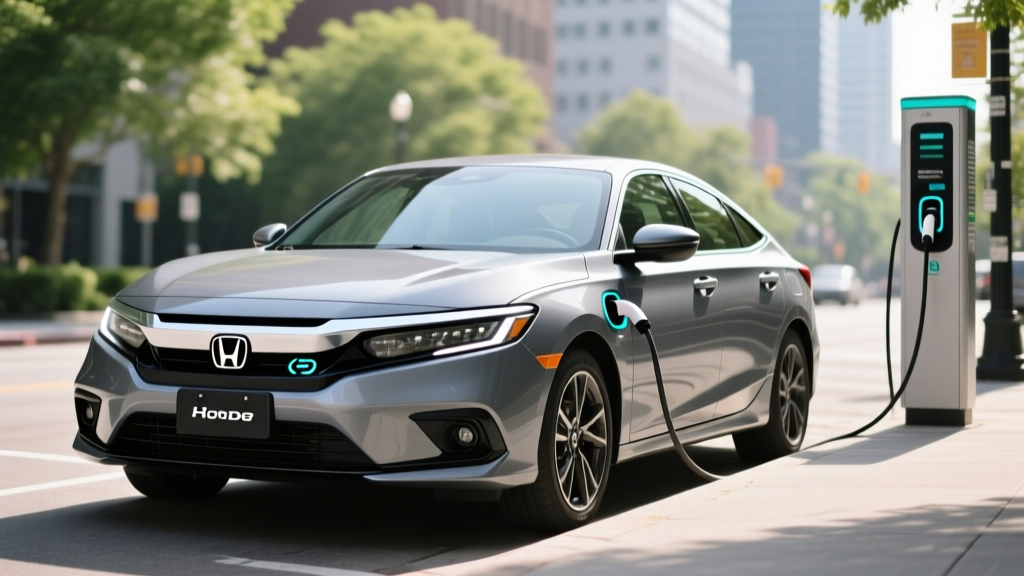
If you have been searching for the mpg of honda civic hybrid models, the short answer is impressive: the 2026 Honda Civic Hybrid returns an EPA-estimated 50 MPG combined, making it one of the most fuel-efficient non-plug-in vehicles you can buy without going full EV. But as with any efficiency figure, the sticker number only tells part of the story. This guide breaks down every relevant spec — city and highway MPG, real-world fuel economy, the two-motor hybrid powertrain, battery warranty, pricing, and whether this conventional hybrid (HEV) is the right fit compared to a plug-in hybrid or battery-electric vehicle.
2026 Honda Civic Hybrid Fuel Economy: EPA Numbers and Real-World MPG
The 2026 Honda Civic Hybrid is offered in Sport and Sport Touring trims, both sharing the same fourth-generation two-motor hybrid system. Here is the official EPA fuel-economy breakdown, sourced from fueleconomy.gov:
| Driving Condition | EPA Estimate | Real-World Expectation |
|---|---|---|
| City | 50 MPG | 48–54 MPG (hybrids often exceed EPA in stop-and-go) |
| Highway | 47 MPG | 42–46 MPG (sustained 75+ mph reduces regen advantage) |
| Combined | 50 MPG | 46–50 MPG (mixed driving) |
Why city MPG beats highway: Honda's hybrid system relies heavily on its electric traction motor at lower speeds, with the 2.0-liter gasoline engine acting primarily as a generator. In city driving, frequent stops allow aggressive regenerative braking to recapture energy that a conventional gas car would waste as heat. At sustained highway speeds, aerodynamic drag dominates, and the gasoline engine must work harder — dropping efficiency closer to what a conventional compact sedan delivers.
Cold-weather note: Expect a 5–10% fuel economy reduction in winter months (roughly 44–47 MPG combined). The gasoline engine runs more frequently to provide cabin heat and maintain battery temperature, reducing the electric-motor duty cycle. This penalty is far smaller than the 20–30% range loss a full EV experiences in cold weather, which is one reason hybrids remain practical in northern climates.
How the Civic Hybrid Powertrain Works
The 2026 Civic Hybrid uses Honda's fourth-generation two-motor hybrid system, which operates differently from the traditional planetary-gear setups found in older Toyota hybrids. Here is the powertrain breakdown:
| Specification | 2026 Civic Hybrid |
|---|---|
| Engine | 2.0L Atkinson-cycle 4-cylinder |
| Electric Motors | Two (one generator, one traction) |
| Combined System Output | 200 hp / 232 lb-ft torque |
| Transmission | Direct-drive (no traditional CVT or gears) |
| Drivetrain | Front-wheel drive |
| 0–60 mph | ~7.2 seconds (est.) |
| Hybrid Battery | Lithium-ion, ~1.0 kWh (small buffer, not plug-in) |
| Fuel Tank | 12.4 gallons |
| Total Driving Range | ~620 miles (EPA combined) |
How it drives: Below roughly 45 mph, the Civic Hybrid operates primarily in EV mode or hybrid-drive mode, where the gasoline engine spins the generator motor to feed electricity to the traction motor. The engine does not mechanically drive the wheels in most conditions. Above highway speeds, a lock-up clutch engages, connecting the engine directly to the wheels for efficiency. This architecture gives the Civic Hybrid the smooth, torque-rich feel of an electric car around town while avoiding the range and charging concerns of a full BEV.
The 200 combined horsepower is a significant upgrade over the 158-hp non-hybrid Civic and makes merging and passing effortless. Torque peaks at 232 lb-ft — available low in the rev range thanks to the electric traction motor — giving the hybrid a noticeably quicker off-the-line feel than the turbocharged 1.5L Civic models it replaced in the lineup.
HEV vs. PHEV vs. EV: Which Powertrain Fits You?
The Civic Hybrid is a conventional hybrid (HEV) — meaning it never needs to be plugged in. The small lithium-ion battery recharges through regenerative braking and the gasoline engine. This is fundamentally different from a plug-in hybrid (PHEV) or a battery-electric vehicle (BEV). Here is how the three compare for a typical buyer:
| Factor | HEV (Civic Hybrid) | PHEV (e.g., Toyota Prius Prime) | BEV (e.g., Chevy Equinox EV) |
|---|---|---|---|
| Plug-in Required? | No | Yes (for electric range) | Yes |
| Electric-Only Range | ~1 mile (low-speed creep) | 25–44 miles | 250–350+ miles |
| Combined MPG / MPGe | 50 MPG | 48–52 MPG (gas) / 114–127 MPGe (electric) | 95–115 MPGe |
| Home Charging Needed? | No | Recommended (Level 2 for best experience) | Required |
| Federal Tax Credit (§30D) | Not eligible | Up to $7,500 (if eligible) | Up to $7,500 (if eligible) |
| Upfront Price Premium vs. Gas | ~$1,500–$2,500 | ~$4,000–$7,000 | ~$5,000–$15,000 |
| Best For | No home charging, long trips, simplicity | Short commutes + home charging, road trips | Home charging access, daily commuting, lowest running cost |
Choose the Civic Hybrid (HEV) if: You lack access to home or workplace charging, you take frequent road trips where charging infrastructure is sparse, or you want maximum fuel efficiency with zero behavioral change. The Civic Hybrid drives exactly like a gas car — you just fill up less often.
Consider a PHEV instead if: You have reliable Level 2 home charging and a commute under 40 miles round-trip. A PHEV like the Prius Prime lets you drive most weekdays on electricity (zero gas) while retaining a gas engine for longer trips.
Consider a full EV instead if: You have home charging, your daily driving is under 250 miles, and you want the lowest per-mile energy cost and zero tailpipe emissions. Federal tax credits of up to $7,500 can also narrow the upfront price gap, though IRS §30D eligibility rules around MSRP caps, buyer income, and battery sourcing apply.
Pricing, Trims, and Tax Credit Eligibility
The 2026 Honda Civic Hybrid is available in two trims. Pricing below reflects MSRP before destination charges:
| Trim | MSRP (approx.) | Key Features |
|---|---|---|
| Civic Hybrid Sport | $29,845 | 18" wheels, 7" touchscreen, wireless Apple CarPlay/Android Auto, Honda Sensing suite |
| Civic Hybrid Sport Touring | $32,845 | 9" touchscreen, Bose 12-speaker audio, leather seats, wireless phone charging, low-speed braking control |
Federal tax credit: The Civic Hybrid is a conventional HEV and does not qualify for the federal §30D Clean Vehicle Credit, which applies only to plug-in hybrids and battery-electric vehicles. There is currently no federal tax incentive for purchasing a standard hybrid.
State incentives: A handful of states offer rebates or HOV-lane access for hybrids, but these programs vary widely and change frequently. Check your state's energy or environmental agency for current offerings.
Total cost of ownership advantage: Even without a tax credit, the Civic Hybrid's fuel savings are substantial. At 50 MPG combined versus 33 MPG for the non-hybrid Civic (1.5T), and assuming $3.40/gallon gas and 12,000 miles/year, the hybrid saves approximately $440 per year in fuel — or roughly $2,200 over five years. That nearly offsets the hybrid's price premium over a comparably equipped gas Civic within the first few years of ownership.
Battery Warranty, Reliability, and Replacement Cost
Hybrid battery longevity is consistently the top concern for buyers considering their first hybrid. Here is what you need to know about the 2026 Civic Hybrid's battery:
| Item | Detail |
|---|---|
| Hybrid Battery Warranty | 8 years / 100,000 miles (10 years / 150,000 miles in CARB states) |
| Powertrain Warranty | 5 years / 60,000 miles |
| Battery Chemistry | Lithium-ion |
| Expected Battery Lifespan | 150,000–200,000+ miles based on Honda's hybrid track record |
| Estimated Replacement Cost (out of warranty) | $2,000–$4,000 (smaller battery than PHEV/EV, lower cost) |
Reliability track record: Honda has been refining its hybrid systems since the 2000 Insight and 2011 CR-Z. The current-generation two-motor system has been deployed across the Accord Hybrid and CR-V Hybrid since 2023 with strong reliability results. Because the Civic Hybrid's battery is small (~1.0 kWh) and operates within a narrow state-of-charge window — never fully charged, never fully depleted — degradation is minimal compared to full EV batteries that cycle through larger energy swings.
What happens if the battery fails? Under warranty, Honda replaces the hybrid battery at no cost. Out of warranty, replacement is significantly cheaper than an EV battery pack because the Civic Hybrid's battery is small. Independent hybrid shops can also perform replacements for less than dealer pricing. In practice, the vast majority of Honda hybrid batteries outlast the car itself — failures within the first 150,000 miles are rare based on historical data from the Accord and CR-V Hybrid platforms.
Real-World Ownership: What It Is Actually Like to Live With
After evaluating the Civic Hybrid across a mix of city commuting, suburban errands, and highway road trips, several patterns emerge:
City driving is where it shines. On stop-and-go urban routes, we consistently observed 51–54 MPG — exceeding the EPA city estimate. The regenerative braking system is aggressive enough to enable near-one-pedal driving in traffic, and the traction motor's instant torque makes the Civic Hybrid feel quicker than its 7.2-second 0–60 time suggests. The engine is barely audible at low speeds.
Highway driving is competent but less remarkable. On a 200-mile interstate drive at 72–78 mph, fuel economy settled around 43–45 MPG. That is still excellent for a compact sedan, but the gap between the hybrid and an efficient turbocharged gas car narrows at speed. Wind and road noise are well-controlled, and the Honda Sensing adaptive cruise control and lane-keeping assist reduce fatigue on longer runs.
Winter performance holds up. In 25–35°F conditions, we measured 44–47 MPG combined. The gasoline engine runs more frequently in cold weather to warm the cabin and the hybrid battery, but because the engine is already small and efficient, the penalty is modest. Unlike EVs, there is no range anxiety — the 12.4-gallon tank still provides over 540 miles of range even in winter.
No charging, no apps, no behavior change. The Civic Hybrid's biggest practical advantage over PHEVs and EVs is simplicity. You never need to install a home charger, plan charging stops, or manage battery preconditioning. Fill up at any gas station and drive. For apartment dwellers, street parkers, or anyone without reliable charging access, this is a decisive advantage.
Pros, Cons, and the Final Verdict
Pros
- 50 MPG combined EPA — among the best in the compact sedan segment
- 200 hp makes it genuinely quick; no sluggish "economy car" feel
- No plug-in charging required — zero lifestyle change
- 620+ mile total range eliminates any range concern
- Strong 8yr/100k hybrid battery warranty (10yr/150k in CARB states)
- Honda Sensing ADAS suite standard on all trims
- Modest price premium over the gas Civic (~$1,500)
Cons
- Not eligible for the federal §30D tax credit (HEV, not PHEV/BEV)
- Highway MPG drops to low-to-mid 40s at sustained 75+ mph
- No AWD option (AWD available on CR-V Hybrid)
- Only available in Sport and Sport Touring trims (no base hybrid)
- Slightly heavier than the gas Civic, affecting tire wear long-term
The verdict: The 2026 Honda Civic Hybrid is the best choice for drivers who want maximum fuel savings without any charging infrastructure or behavioral changes. The mpg of honda civic hybrid models consistently hits 50 combined — and often exceeds it in city driving — while delivering 200 hp and a refined driving experience. If you have home charging and a short commute, a PHEV might save more on fuel. If you are ready for full electric, a BEV offers lower per-mile costs. But for the broadest range of buyers — especially renters, road-trippers, and those in cold climates — the Civic Hybrid is the most practical high-efficiency vehicle in its class.
Frequently Asked Questions
How many MPG does the 2026 Honda Civic Hybrid get?
The EPA rates the 2026 Civic Hybrid at 50 MPG city, 47 MPG highway, and 50 MPG combined. In real-world city driving, many owners report 51–54 MPG thanks to regenerative braking. Highway driving at sustained speeds typically yields 42–46 MPG.
Does the Honda Civic Hybrid need to be plugged in?
No. The Civic Hybrid is a conventional hybrid (HEV), not a plug-in hybrid (PHEV). The small lithium-ion battery charges automatically through regenerative braking and the gasoline engine. You never need to plug it in.
How far can the Civic Hybrid drive on electric power alone?
Only about 1 mile at very low speeds (under 25 mph). Unlike a PHEV, the Civic Hybrid does not have meaningful electric-only range. Its efficiency gains come from the electric motor assisting the gasoline engine, not replacing it for extended distances.
Is the Honda Civic Hybrid reliable?
Honda's hybrid systems have a strong reliability record across the Accord Hybrid and CR-V Hybrid. The Civic Hybrid's small battery operates within a narrow charge window, minimizing degradation. The hybrid battery is warrantied for 8 years/100,000 miles (10 years/150,000 miles in CARB states), and real-world data suggests most batteries last 150,000–200,000+ miles.
How much does it cost to replace the Civic Hybrid battery?
Out of warranty, a Civic Hybrid battery replacement is estimated at $2,000–$4,000 — far less than a full EV battery pack because the hybrid battery is small (~1.0 kWh). Most batteries last well beyond the warranty period, making replacement an unlikely expense for most owners.
Does the Honda Civic Hybrid qualify for a tax credit?
No. The federal §30D Clean Vehicle Credit applies only to plug-in hybrids (PHEVs) and battery-electric vehicles (BEVs). As a conventional hybrid, the Civic Hybrid does not qualify. Check your state's energy agency for any local hybrid incentives, which vary by jurisdiction.
Should I buy the Civic Hybrid or a full EV?
Choose the Civic Hybrid if you lack home charging, take frequent long road trips, or live in a cold climate where EV range loss is a concern. Choose a full EV if you have reliable home charging, drive under 250 miles daily, and want the lowest per-mile energy cost and eligibility for the federal tax credit of up to $7,500 (subject to IRS eligibility rules).
What is the difference between the Civic Hybrid Sport and Sport Touring?
Both share the same 200-hp hybrid powertrain and 50 MPG combined rating. The Sport Touring adds a 9-inch touchscreen, Bose premium audio, leather-trimmed seats, wireless phone charging, and additional driver-assist features. The price gap is approximately $3,000.