Quick Verdict: A Pioneer That Still Sips Fuel
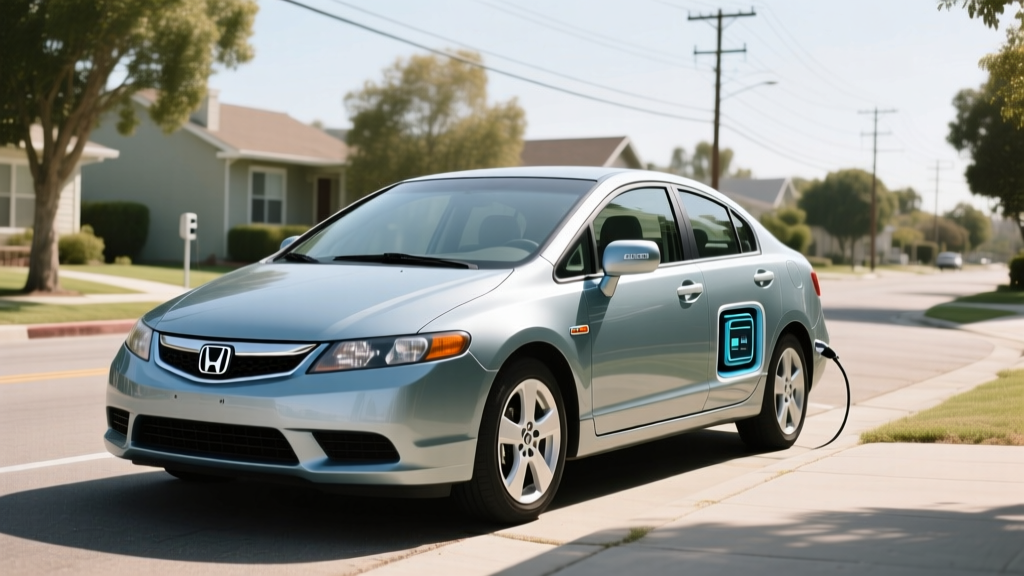
The Honda Civic Hybrid 2006 was one of the first mainstream hybrids to challenge the Toyota Prius, pairing a 1.3-liter i-VTEC engine with Honda's Integrated Motor Assist (IMA) system. Nearly two decades later, it remains a fixture on the used market for budget-minded commuters. The EPA rated it at 50 MPG combined (49 city / 51 highway), and real-world owners frequently report 42–48 MPG in mixed driving. But buying a 20-year-old hybrid in 2026 comes with critical battery questions that every shopper must answer before signing a bill of sale.
EPA Fuel Economy and Real-World MPG
| Metric | Value |
|---|---|
| EPA City MPG | 49 |
| EPA Highway MPG | 51 |
| EPA Combined MPG | 50 |
| Fuel Tank Capacity | 13.2 gallons |
| Total Range (EPA) | ~660 miles |
| Real-World Mixed MPG (owner-reported) | 42–48 |
| Real-World Highway MPG (70+ mph) | 38–43 |
Source: fueleconomy.gov
Honda's IMA system uses a thin electric motor sandwiched between the engine and transmission. Unlike Toyota's full-hybrid system, the IMA motor cannot propel the car on electricity alone — it only assists the gas engine during acceleration and enables idle stop-start. This means city MPG gains are real but less dramatic than a Prius. On the highway, the 2006 Civic Hybrid's aerodynamic sedan body and lean-burn capability help it actually exceed its city rating, an unusual trait among hybrids.
Real-world caveat: Expect 42–48 MPG in temperate climates with moderate traffic. In extreme cold (below 20°F), the engine runs more often to maintain cabin heat and battery temperature, dropping observed economy to 35–40 MPG. At sustained speeds above 75 mph, aerodynamic drag reduces efficiency to the high 30s.
Powertrain: How the IMA System Works
| Component | Specification |
|---|---|
| Gasoline Engine | 1.3L i-VTEC 4-cylinder |
| Engine Horsepower | 85 hp @ 6,000 rpm |
| IMA Electric Motor | 15 kW (20 hp) brushless DC |
| Combined System Output | 93 hp @ 6,000 rpm |
| Combined Torque | 123 lb-ft @ 1,000–2,500 rpm |
| Transmission | CVT (continuously variable) |
| Drivetrain | Front-wheel drive |
| 0–60 mph (estimated) | ~11.5 seconds |
| Hybrid Battery | NiMH, ~0.65 kWh (nominal) |
The 1.3-liter engine uses Honda's i-DSI lean-burn technology with two spark plugs per cylinder for efficient combustion. The IMA motor fills in the torque gap at low RPM, giving the car a surprisingly flat torque curve from idle through 2,500 rpm. The CVT keeps the engine in its most efficient band. Acceleration is adequate for city merging but sluggish by modern standards — this is a car designed for efficiency, not performance.
Hybrid Battery Lifespan, Warranty, and Replacement Cost
The 2006 Civic Hybrid's nickel-metal hydride (NiMH) battery pack is small — roughly 0.65 kWh — and was never designed for deep cycling like a modern EV or PHEV battery. Its job is to buffer regenerative energy and provide brief assist bursts. Typical degradation patterns:
- Years 1–6: Minimal capacity loss; most owners noticed no change in MPG.
- Years 7–12: Gradual IMA assist reduction; the battery gauge may recalibrate (visible as the charge bar dropping and refilling while driving).
- Years 12–20: Significant capacity loss is common. The IMA system may throw a P0A7F or similar degradation code, triggering the IMA warning light.
Replacement costs in 2026:
| Option | Cost Range | Notes |
|---|---|---|
| New OEM Honda IMA battery | $2,000–$3,000 | Limited availability; some dealers no longer stock |
| Refurbished/remanufactured pack | $800–$1,500 | Common choice; 1–3 year warranty typical |
| Used/salvage yard pack | $300–$600 | High risk — unknown remaining life |
| Aftermarket NiMH cell replacement (DIY) | $150–$400 (parts) | Requires technical skill; individual cell swap |
Many 2006 Civic Hybrids still on the road have had at least one IMA battery replacement. When shopping used, ask for documentation of any battery service. An active IMA warning light on the dash is a negotiating point worth $1,000–$2,000 off the asking price.
Used Market Pricing in 2026
The 2006 Civic Hybrid trades on the used market in a narrow band, reflecting its age and the looming battery question:
- High mileage (150,000+ miles), IMA issues: $1,500–$2,500
- Average condition (100,000–140,000 miles), IMA functional: $2,800–$4,000
- Low mileage, documented battery replacement: $4,000–$5,500
At these prices, the Civic Hybrid competes with newer non-hybrid compacts that get 30–35 MPG. The fuel savings math only works if you drive high annual miles (15,000+) and the IMA battery is in good health or recently replaced.
Does the 2006 Civic Hybrid Qualify for Any Tax Credit?
No. The federal hybrid tax credit under the Energy Policy Act of 2005 applied only to the original purchaser of a new qualifying hybrid and was subject to manufacturer phase-out caps. Honda's credit allotment was fully phased out by 2008. There is no federal tax credit, state rebate, or point-of-sale incentive available for purchasing a used 2006 Civic Hybrid in 2026. The IRS §30D Clean Vehicle Credit applies only to new plug-in electric vehicles meeting battery sourcing, MSRP, and income requirements — conventional hybrids have never qualified under current law.
Hybrid vs. PHEV vs. EV: Which Fits You in 2026?
If you're researching the 2006 Civic Hybrid, you're likely weighing older-hybrid efficiency against modern alternatives. Here's a decision framework:
- Your budget is under $5,000
- You have no access to home or workplace charging
- You drive 12,000–20,000 miles/year and want 45+ MPG without plugging in
- You're comfortable with the IMA battery replacement risk
- You can install a Level 2 charger at home
- Your daily commute is under 40 miles (coverable on electric-only)
- You want to qualify for the §30D federal tax credit (up to $7,500, subject to income/MSRP/sourcing rules)
- You want a new-vehicle warranty and modern safety tech
- You have reliable home Level 2 charging
- You want zero tailpipe emissions and minimal maintenance
- Your typical trips fall within a 250–300 mile range
- You want to eliminate gasoline costs entirely
Pros and Cons: 2006 Honda Civic Hybrid
- Proven 45–50 MPG real-world economy
- Very low purchase price ($2K–$5K)
- Simple, well-understood IMA system with abundant DIY repair info
- Honda reliability for engine, transmission, and chassis
- No plug-in infrastructure needed
- Lightweight, easy to park, tight turning radius
- IMA battery likely needs replacement (or already has) at this age
- No electric-only mode; always burns gas
- Sluggish acceleration (11.5 sec 0–60)
- Outdated safety tech — no ESC standard, basic airbags
- No tax credits or incentives available
- CVT can feel rubbery; road noise is prominent
- Parts availability declining for IMA-specific components
Frequently Asked Questions
How many MPG does the 2006 Honda Civic Hybrid actually get?
The EPA rated it at 49 city / 51 highway / 50 combined. Real-world owners typically see 42–48 MPG in mixed driving, with highway-only trips at 70+ mph yielding 38–43 MPG. Cold weather and aggressive driving can drop this to the mid-30s.
Can the 2006 Civic Hybrid drive on electric power alone?
No. The IMA system is a mild hybrid — the electric motor only assists the gasoline engine and cannot propel the vehicle independently. There is zero electric-only range. The car always runs on gasoline, though the engine does shut off at idle (stop-start) to save fuel.
How long does the IMA battery last, and what does replacement cost?
Original NiMH IMA batteries typically lasted 8–12 years before significant degradation. By 2026, most surviving examples have had at least one replacement. A refurbished pack costs $800–$1,500 installed; a new OEM pack (if available) runs $2,000–$3,000. The battery is not covered by any remaining warranty.
Is the 2006 Civic Hybrid reliable overall?
The gasoline engine, CVT, and chassis are known for Honda's typical longevity — 200,000+ miles is common with basic maintenance. The weak point is the IMA battery and its associated electronics. The 12V auxiliary battery can also drain if the IMA system faults. Overall reliability is good provided the hybrid system is addressed proactively.
Is it worth buying a 2006 Civic Hybrid in 2026 instead of a newer car?
It depends on your budget and mileage. At $3,000–$5,000, it's one of the cheapest ways to achieve 45+ MPG. But factor in a potential $1,000–$1,500 IMA battery replacement within the first year of ownership. If you drive 15,000+ miles annually, the fuel savings (roughly $600–$900/year vs. a 30 MPG compact at $3.50/gallon) can justify the purchase. For lower mileage, a newer non-hybrid Civic or Corolla may be more cost-effective with lower repair risk.
Does the 2006 Civic Hybrid qualify for the federal EV tax credit?
No. The IRS §30D Clean Vehicle Credit applies only to new plug-in electric vehicles (BEVs and PHEVs) meeting specific battery sourcing, MSRP caps, and buyer income limits. Conventional hybrids like the Civic Hybrid have never qualified. No state-level hybrid incentives remain for this model year either.