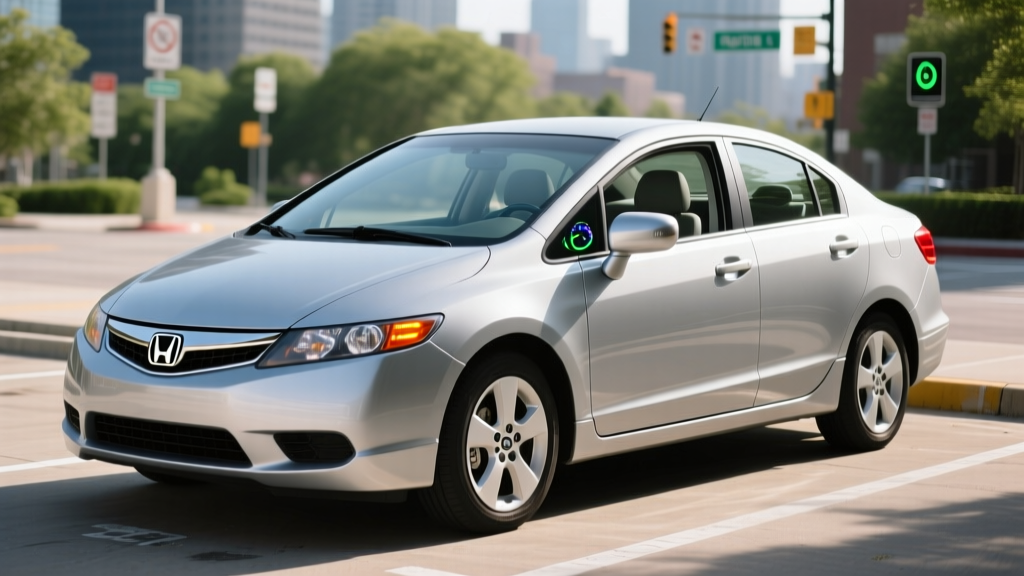
The Honda Civic Hatch Hybrid pairs one of the most practical compact hatchback bodies in America with a two-motor hybrid system that pushes fuel economy well past 50 MPG in city driving. For 2026, Honda continues to offer the Civic Hatch Hybrid in Sport and Sport Touring trims, giving buyers a compelling middle ground between a conventional gas Civic and a full battery-electric vehicle — without ever needing to plug in.
This guide breaks down the Civic Hatch Hybrid's EPA fuel economy, real-world MPG expectations, powertrain specs, battery warranty, pricing, and how it stacks up against plug-in hybrids and full EVs for different driving lifestyles.
EPA Fuel Economy and Real-World MPG
The 2026 Honda Civic Hatch Hybrid is rated by the EPA at 50 MPG city / 45 MPG highway / 48 MPG combined (Sport trim with 18-inch wheels). The Sport Touring trim, which adds weight and equipment, drops slightly to an estimated 48 city / 43 highway / 46 combined. These figures place the Civic Hatch Hybrid among the most fuel-efficient non-plug-in compact hatchbacks available.
| Trim | City MPG | Highway MPG | Combined MPG | Fuel Tank (gal) | Total Range (mi) |
|---|---|---|---|---|---|
| Sport | 50 | 45 | 48 | 10.6 | ~509 |
| Sport Touring | 48 | 43 | 46 | 10.6 | ~488 |
Source: fueleconomy.gov — EPA estimates. Your mileage will vary with driving conditions.
Real-World MPG: What to Actually Expect
Honda's two-motor hybrid system excels in stop-and-go city driving, where the electric motor handles most low-speed propulsion and the gasoline engine acts primarily as a generator. In real-world urban commuting, many Civic Hybrid owners report meeting or slightly exceeding the EPA city figure, hitting 50–53 MPG on mixed city routes.
Highway driving tells a different story. At sustained speeds above 70 mph, the gasoline engine drives the wheels directly through a lock-up clutch, and aerodynamic drag reduces efficiency. Expect 40–44 MPG on flat interstate runs at 75 mph. In cold weather (below 35°F), the engine runs more frequently to provide cabin heat and maintain operating temperature, which can drop city MPG into the low-to-mid 40s until the powertrain warms up.
HEV vs PHEV: Understanding the Civic Hatch Hybrid's Place
The Honda Civic Hatch Hybrid is a conventional hybrid electric vehicle (HEV), not a plug-in hybrid (PHEV). This distinction matters for buyers evaluating their options.
| Feature | HEV (Civic Hatch Hybrid) | PHEV (e.g., Toyota Prius Prime) | BEV (e.g., Chevy Equinox EV) |
|---|---|---|---|
| Plug in to charge? | No — self-charging via regen & engine | Yes — optional but recommended | Yes — required |
| Electric-only range | ~1 mile at low speed | 30–45 miles typical | 250–350+ miles |
| Battery size | ~1.1 kWh (small buffer) | 10–14 kWh usable | 60–100+ kWh |
| Fuel/energy cost per mile | ~$0.07–0.09 (gas) | ~$0.04 electric / $0.08 gas | ~$0.03–0.05 (electric) |
| Home charging needed? | No | Recommended (120V or 240V) | Yes (240V Level 2 ideal) |
| Federal tax credit (§30D)? | No — HEVs do not qualify | Up to $7,500 if eligible | Up to $7,500 if eligible |
The Civic Hatch Hybrid's advantage is simplicity: no charging infrastructure required, no range anxiety, no change to your fueling habits. You simply drive it like any other car and it delivers dramatically better fuel economy. The trade-off is that you cannot drive meaningful distances on electricity alone, and you remain dependent on gasoline.
Powertrain: Two-Motor Hybrid System Specs
Honda's fourth-generation two-motor hybrid system in the Civic Hatch Hybrid pairs a 2.0-liter Atkinson-cycle inline-4 engine with two electric motors — one functioning primarily as a generator and the other as the drive motor. Combined system output is 200 horsepower and 232 lb-ft of torque, all sent to the front wheels.
| Specification | Value |
|---|---|
| Engine | 2.0L Atkinson-cycle DOHC inline-4 |
| Combined system horsepower | 200 hp |
| Combined system torque | 232 lb-ft |
| Drive motor output | ~184 hp / 232 lb-ft |
| Transmission | Direct-drive (no traditional gearbox) |
| Drivetrain | Front-wheel drive |
| Hybrid battery | ~1.1 kWh lithium-ion |
| 0–60 mph (est.) | ~7.5 seconds |
The system operates in three modes seamlessly: EV Drive (electric motor only, for short low-speed bursts), Hybrid Drive (engine powers the generator, which feeds the drive motor), and Engine Drive (engine mechanically connects to the wheels at highway cruising speeds via a lock-up clutch). The transitions are nearly imperceptible from the driver's seat.
Compared to the non-hybrid Civic Hatchback's 1.5L turbo (180 hp), the hybrid delivers more torque, smoother acceleration from a stop, and substantially better fuel economy — at the cost of roughly 100–150 lbs of additional weight and a small reduction in cargo floor height to accommodate the battery pack beneath the rear seats.
Pricing, Trims, and Tax Credit Eligibility
The 2026 Honda Civic Hatch Hybrid is offered in two trims:
| Trim | MSRP (incl. destination) | Key Features |
|---|---|---|
| Sport | ~$30,750 | 18" wheels, 7" touchscreen, wireless CarPlay/Android Auto, Honda Sensing suite, heated front seats |
| Sport Touring | ~$34,350 | 9" touchscreen, Bose 12-speaker audio, wireless charging, leather-trimmed seats, navigation, low-speed braking control |
Does the Civic Hatch Hybrid Qualify for a Federal Tax Credit?
No. The Honda Civic Hatch Hybrid is a conventional HEV, not a plug-in vehicle. The federal IRS §30D Clean Vehicle Credit applies only to battery electric vehicles (BEVs) and plug-in hybrid electric vehicles (PHEVs) with a battery capacity of at least 7 kWh. Because the Civic Hatch Hybrid's battery is approximately 1.1 kWh and the vehicle cannot be plugged in, it does not qualify for any federal purchase credit.
Some states and utilities offer rebates or incentives for conventional hybrids, but these vary by jurisdiction and are generally smaller than EV incentives. Check your state energy office or utility provider for current programs. A tax professional can advise on any applicable local credits.
Battery Warranty, Reliability, and Replacement Cost
How Long Will the Hybrid Battery Last?
Honda's hybrid battery packs in the Civic are relatively small (~1.1 kWh) and operate within a narrow state-of-charge window — typically between 20% and 80% SoC. This shallow cycling significantly reduces stress on the cells compared to a full BEV battery that regularly cycles from 10% to 90%+. Based on data from Honda's hybrid lineup (Insight, Accord Hybrid, CR-V Hybrid), these packs routinely last 150,000–200,000+ miles before meaningful degradation occurs.
Should replacement be needed out of warranty, a Civic Hybrid battery pack replacement currently costs approximately $2,000–$3,500 including labor at a Honda dealer — far less than a BEV battery replacement, which can exceed $10,000–$20,000. Third-party hybrid battery refurbishers often offer replacements for $1,500–$2,500.
Overall Reliability
Honda's hybrid powertrain has a strong reliability track record. The two-motor system eliminates the traditional transmission entirely — there is no multi-speed gearbox, no torque converter, and no CVT belt to wear out. The engine runs less frequently and at lower loads than in a conventional gas car, which reduces wear on engine components. IIHS has historically rated the Civic lineup highly for safety, and the hybrid variant shares the same structural platform.
Who Should Choose the Civic Hatch Hybrid?
✓ Choose the Civic Hatch Hybrid If:
- You want 45–50+ MPG without changing your fueling routine
- You lack access to home or workplace charging (apartment, street parking)
- You take frequent road trips and don't want to plan around chargers
- You want hatchback cargo versatility (25.4 cu ft behind rear seats)
- You want a proven, low-risk hybrid system with strong resale value
- Your budget is $30,000–$36,000
✗ Look Elsewhere If:
- You want to drive on electricity alone for your commute (consider a PHEV or BEV)
- You have reliable home charging and want the lowest per-mile fuel cost
- You want to claim the $7,500 federal tax credit (HEVs don't qualify)
- You need AWD (the Civic Hatch Hybrid is FWD only — consider the Toyota Prius AWD or a BEV)
- You want the quiet, instant-torque feel of a full electric drivetrain
How It Compares: Civic Hatch Hybrid vs Key Rivals
| Spec | Honda Civic Hatch Hybrid | Toyota Prius (HEV) | Toyota Prius Prime (PHEV) |
|---|---|---|---|
| Combined MPG | 48 (Sport) | 57 (LE FWD) | 52 (hybrid mode) / 127 MPGe (EV) |
| Electric-only range | N/A (HEV) | N/A (HEV) | ~44 miles |
| Combined HP | 200 | 196 | 220 |
| Cargo (rear seats up) | 25.4 cu ft | 20.3 cu ft | 20.3 cu ft |
| Starting MSRP | ~$30,750 | ~$28,550 | ~$33,450 |
| Federal tax credit | None | None | Up to $7,500 (if eligible) |
| AWD available? | No | Yes | No |
The Civic Hatch Hybrid's standout advantage is cargo space: 25.4 cubic feet dwarfs the Prius's 20.3 cu ft. The Civic also feels more substantial on the highway and offers a more premium interior in Sport Touring trim. The Prius HEV wins on raw MPG (57 combined vs 48) and starts about $2,200 lower. The Prius Prime PHEV is the right choice for buyers who can charge at home and want electric-only commuting, plus it may qualify for the federal credit.
Frequently Asked Questions
How many MPG does the Honda Civic Hatch Hybrid get?
The 2026 Civic Hatch Hybrid Sport is EPA-rated at 50 city / 45 highway / 48 combined MPG. The Sport Touring trim is rated at 48/43/46. Real-world city driving often meets or exceeds the EPA city figure, while sustained highway driving at 75+ mph typically yields 40–44 MPG.
Can I plug in the Civic Hatch Hybrid to charge it?
No. The Civic Hatch Hybrid is a conventional HEV. Its small battery recharges through regenerative braking and the gasoline engine. There is no charging port and no electric-only driving mode for meaningful distances. If you want plug-in capability, consider a PHEV like the Toyota Prius Prime.
Is the Honda Civic Hatch Hybrid reliable?
Honda's two-motor hybrid system has demonstrated strong reliability across multiple model lines. The system eliminates the traditional transmission, reducing mechanical complexity. The hybrid battery is warranted for 8 years/100,000 miles (10 years/150,000 miles in CARB states), and replacement costs approximately $2,000–$3,500 if needed out of warranty.
Does the Civic Hatch Hybrid qualify for any tax credit?
The Civic Hatch Hybrid does not qualify for the federal §30D Clean Vehicle Credit, which is reserved for plug-in vehicles (BEVs and PHEVs). Some state or utility incentives may apply to conventional hybrids — check local programs. Consult a tax professional for guidance on your specific situation.
Hybrid vs PHEV vs EV — which should I choose?
Choose the Civic Hatch Hybrid (HEV) if you cannot charge at home, want maximum simplicity, and drive a mix of city and highway. Choose a PHEV if you can install a home charger and want 30–45 miles of electric commuting with a gas backup for longer trips. Choose a full EV (BEV) if you have reliable home charging, want the lowest per-mile energy cost, and are comfortable planning longer road trips around DC fast charging stops.
What is the total driving range on a full tank?
With its 10.6-gallon fuel tank and 48 MPG combined rating (Sport trim), the Civic Hatch Hybrid delivers approximately 509 miles of total range per fill-up. Real-world range typically falls between 430–470 miles depending on driving mix, weather, and terrain.
How does the Civic Hatch Hybrid perform in cold weather?
In temperatures below 35°F, the gasoline engine runs more frequently to generate cabin heat and maintain optimal operating temperature. Expect city MPG to drop to the low-to-mid 40s during cold-weather commutes, particularly on short trips where the engine doesn't fully warm up. Using the seat heaters (standard on both trims) and setting the cabin temperature a degree or two lower can help the system stay in electric mode longer.