Quick Verdict: A Proven Fuel-Sipper With One Expensive Caveat
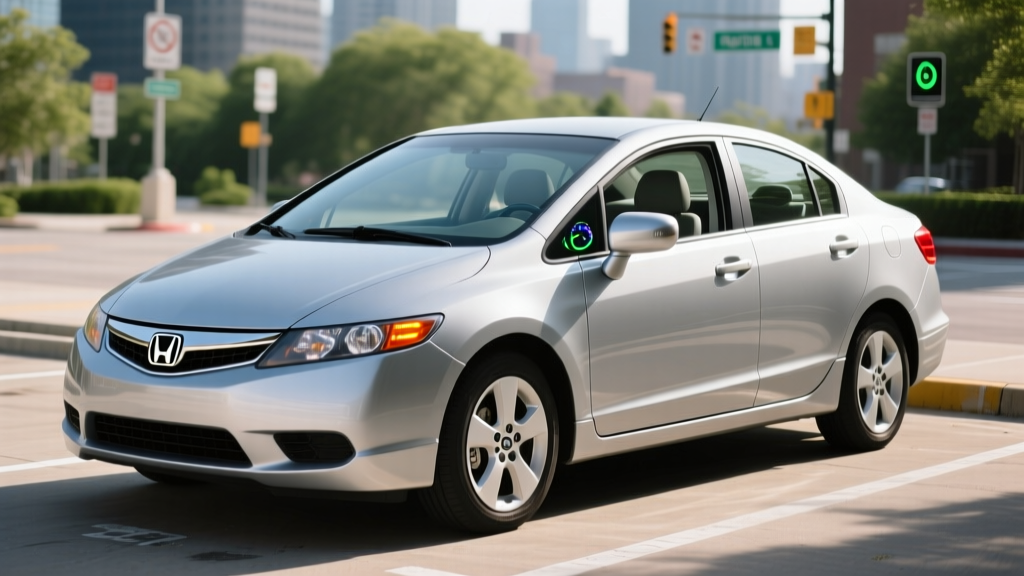
The 2010 Honda Civic Hybrid sedan was one of the most fuel-efficient mainstream compacts of its era, delivering an EPA-rated 40 city / 45 highway / 42 combined MPG through Honda's Integrated Motor Assist (IMA) mild-hybrid system. Sixteen years later, it remains a fixture on the used-car market — typically priced between $3,500 and $7,000 depending on mileage and condition. For budget-minded commuters who want hybrid efficiency without plug-in complexity, it's still a rational choice. But any prospective buyer in 2026 must understand one critical variable: the age of the nickel-metal hydride (NiMH) IMA battery pack, and what replacement actually costs.
This guide covers everything a used-car shopper needs to know — real-world MPG, powertrain specs, battery longevity data, ownership costs, and how the Civic Hybrid stacks up against modern hybrids, PHEVs, and full EVs available today.
HEV vs PHEV vs EV: Where the 2010 Civic Hybrid Fits
The 2010 Civic Hybrid is a conventional hybrid electric vehicle (HEV). It does not have a plug, cannot charge from a wall outlet, and has no electric-only driving range to speak of. Its small electric motor assists the gasoline engine during acceleration and captures energy during braking — but the 1.3L four-cylinder engine is always doing the heavy lifting.
| Feature | HEV (e.g., 2010 Civic Hybrid) | PHEV (e.g., 2026 Toyota RAV4 Prime) | BEV (e.g., 2026 Chevy Equinox EV) |
|---|---|---|---|
| Plugs in? | No | Yes | Yes |
| Electric-only range | None (motor assist only) | 20–45 mi typical | 250–400+ mi |
| Fuel source | Gasoline only | Gasoline + electricity | Electricity only |
| Home charging needed? | No | Recommended (Level 2) | Essential |
| Federal tax credit (§30D) | Not eligible (new); used credit possible | Up to $7,500 if eligible | Up to $7,500 if eligible |
| Typical fuel cost per mile | ~$0.09 (at $3.50/gal, 40 MPG) | ~$0.04–$0.08 (varies) | ~$0.04–$0.06 (varies) |
If you lack access to home or workplace charging, a conventional HEV like the 2010 Civic Hybrid remains the simplest path to better fuel economy. You never change your fueling habits — you just visit the gas station less often.
Fuel Economy: EPA Ratings vs Real-World MPG
The EPA rates the 2010 Honda Civic Hybrid at 40 MPG city, 45 MPG highway, and 42 MPG combined. These numbers were competitive in 2010 and remain respectable today — the 2026 Toyota Corolla Hybrid, for comparison, achieves 50/43/47 MPG city/highway/combined.
| Driving Cycle | EPA Rating | Real-World Expectation |
|---|---|---|
| City | 40 MPG | 38–44 MPG (hybrids often exceed EPA in stop-and-go) |
| Highway | 45 MPG | 38–43 MPG (sustained 70+ mph reduces regen benefit) |
| Combined | 42 MPG | 38–43 MPG |
Real-world nuance: Like most conventional hybrids, the Civic Hybrid tends to overperform its EPA city rating in genuine stop-and-go traffic, where regenerative braking and engine-off stops maximize the IMA system's benefit. Highway driving at sustained speeds is where it falls slightly short — the electric motor provides minimal assist at cruise, and the 1.3L engine works harder. Cold weather can knock 2–4 MPG off combined figures because the engine runs more frequently to maintain cabin heat and battery temperature.
With its 12.4-gallon fuel tank, expect a real-world range of roughly 470–530 miles per fill-up. That's solid for a compact sedan and eliminates any range concern.
Powertrain and Performance Specs
The 2010 Civic Hybrid uses Honda's fifth-generation Integrated Motor Assist (IMA) system — a parallel hybrid architecture where a thin electric motor is sandwiched between the engine and the continuously variable transmission (CVT).
| Specification | Value |
|---|---|
| Engine | 1.3L i-VTEC inline-4 (8-valve SOHC) |
| Engine horsepower | 95 hp @ 6,000 rpm |
| Engine torque | 89 lb-ft @ 4,800 rpm |
| Electric motor output | 20 hp (15 kW) / 58 lb-ft assist |
| Combined system output | 110 hp @ 6,000 rpm / 123 lb-ft @ 1,000–2,500 rpm |
| Transmission | CVT (continuously variable) |
| Drivetrain | Front-wheel drive |
| Hybrid battery | NiMH, ~0.6 kWh (nominal), 132V |
| 0–60 mph | ~10.5 seconds |
| Curb weight | ~2,850 lbs |
| Fuel tank | 12.4 gallons |
The IMA system's electric motor is best understood as an assist device, not a primary propulsion source. It adds torque during acceleration (filling in the low-end gap typical of small four-cylinders), enables idle stop at traffic lights, and provides regenerative braking. Unlike Toyota's Hybrid Synergy Drive in the Prius, the IMA system cannot propel the car on electric power alone at any meaningful speed.
Performance is adequate for commuting but unexciting. The 10.5-second 0–60 time and the CVT's characteristic drone under hard acceleration mean this is a car you drive efficiently, not enthusiastically.
IMA Battery: Lifespan, Degradation, and Replacement Cost
This is the single most important topic for anyone considering a 2010 Civic Hybrid in 2026. The NiMH IMA battery pack is now 15–16 years old, and age is as significant a degradation factor as mileage.
Original Battery Warranty
Honda warranted the IMA battery for 10 years / 150,000 miles in California Air Resources Board (CARB) states and 8 years / 80,000 miles in all other states. As of 2026, all 2010 Civic Hybrids are beyond original battery warranty coverage regardless of mileage.
Battery lifespan data: Real-world reports from owners and hybrid repair shops indicate the IMA battery typically lasts 120,000–180,000 miles or 10–15 years before capacity loss triggers an IMA warning light or noticeable fuel-economy decline. Many 2010 examples still on the road have had at least one battery replacement or reconditioning.
Replacement cost breakdown:
- OEM new battery (Honda dealer): $2,000–$3,500 installed
- Aftermarket refurbished/remanufactured battery: $1,000–$2,000 installed
- DIY reconditioned pack (hybrid specialist shops): $800–$1,500
- Individual cell replacement (advanced DIY): $200–$500 in parts, but requires technical skill
Warning signs of IMA battery degradation:
- IMA warning light illuminated on the dash
- Noticeable MPG decline (dropping below 35 combined)
- Battery charge indicator fluctuating rapidly
- Engine running more frequently at stops (reduced idle-stop function)
- Recalibration cycles happening often (the charge gauge dropping and resetting)
If you're evaluating a used 2010 Civic Hybrid, ask the seller directly whether the IMA battery has been replaced, and request documentation. A recently replaced OEM battery adds genuine value; an original 16-year-old pack is a liability you should price into your offer.
Reliability and Common Issues Beyond the Battery
The eighth-generation Civic platform (2006–2011) is broadly regarded as reliable. The 1.3L engine is simple and durable, and the CVT, while not beloved for its driving feel, has proven reasonably robust in this application. However, a few known issues deserve attention:
- IMA battery failure — as discussed above, this is the primary cost risk.
- Motor mount wear — the front and passenger-side motor mounts on this generation are known to deteriorate, causing vibration at idle. Replacement runs $300–$600.
- CVT shudder — some owners report a shudder or judder during low-speed acceleration. A CVT fluid drain-and-fill (using Honda HMMF fluid) often resolves this; neglect can lead to premature transmission wear.
- Cracked exhaust manifold — the integrated exhaust manifold on the 1.3L can crack, triggering a check-engine light. Repair: $400–$800.
- Clear coat peeling — Honda paint from this era is prone to clear coat failure, especially on dark colors. Cosmetic only, but affects resale.
The NHTSA lists several recalls for the 2010 Civic — check any specific VIN at nhtsa.gov/recalls before purchasing. The IIHS gave the 2010 Civic sedan a "Good" rating in the moderate overlap front test and "Good" for side impact, which was competitive for the era.
Pricing and Tax Credit Reality in 2026
The 2010 Civic Hybrid is available exclusively on the used market. Current pricing ranges:
- High-mileage (150,000+ mi), fair condition: $2,500–$4,000
- Average mileage (90,000–140,000 mi), good condition: $4,000–$5,500
- Lower mileage (<90,000 mi), excellent condition, new IMA battery: $5,500–$7,500
Tax credit eligibility: The 2010 Civic Hybrid does not qualify for the federal §30D new clean vehicle credit — that credit applies only to new EVs and PHEVs meeting current battery-sourcing and MSRP requirements. However, the used clean vehicle credit (§25E) may apply if the vehicle is purchased from a licensed dealer for $25,000 or less. This credit provides 30% of the sale price, up to $4,000, subject to buyer income limits ($75,000 single / $150,000 joint). Because the 2010 Civic Hybrid sells well under $25,000, a qualifying buyer purchasing from a dealer could potentially claim up to $1,200–$2,250 depending on the sale price. Always verify current eligibility rules at irs.gov and consult a tax professional.
Note: The §25E used vehicle credit requires the car to be a qualified plug-in EV or fuel cell vehicle. The 2010 Civic Hybrid, as a conventional HEV, does not qualify for §25E. No federal tax credit is available for purchasing a used conventional hybrid.
Should You Buy the 2010 Civic Hybrid, a Modern Hybrid, a PHEV, or a Full EV?
Pros
- 42 MPG combined — still competitive with many modern compacts
- No plug required — works with existing fueling habits
- Low purchase price ($3,500–$7,000 used)
- Proven Honda reliability for mechanical components
- Lightweight and easy to park
- Strong parts availability and aftermarket support
Cons
- IMA battery likely at or past end-of-life; replacement costs $1,000–$3,500
- Slow acceleration (10.5s 0–60) and droning CVT
- No modern safety tech (no AEB, lane-keep, blind-spot monitoring)
- Outdated infotainment (no Apple CarPlay/Android Auto)
- No federal tax credits available (not a PHEV or EV)
- 15+ year old vehicle — wear items (suspension, brakes, seals) add up
Decision Framework: What Should You Choose?
Choose the 2010 Civic Hybrid if: Your budget is under $7,000, you drive 10,000–15,000 miles per year in mixed city/highway commuting, you have no access to home charging, and you can verify a recently replaced IMA battery or budget for one.
Choose a newer used hybrid (e.g., 2018–2022 Toyota Prius or Honda Insight) if: Your budget allows $12,000–$20,000, you want modern safety features (AEB, lane-keep), better infotainment, and a battery with more remaining life.
Choose a PHEV (e.g., 2026 Toyota Prius Prime or RAV4 Prime) if: You have access to home Level 2 charging, your daily commute is under 40 miles (covering most trips on electric), and you want the flexibility of gasoline for longer road trips. You may also qualify for the §30D federal credit.
Choose a full EV (e.g., 2026 Chevy Equinox EV or Hyundai Ioniq 5) if: You can install a home Level 2 charger, your daily driving is under 250 miles, you want minimal maintenance, and you want to maximize fuel-cost savings and available tax credits.
Frequently Asked Questions
How many MPG does the 2010 Honda Civic Hybrid get?
The EPA rates it at 40 city / 45 highway / 42 combined MPG. In real-world driving, expect 38–44 MPG combined depending on driving style, terrain, and climate. City driving with frequent stops tends to yield the best results thanks to regenerative braking.
Does the 2010 Civic Hybrid need to be plugged in?
No. It is a conventional hybrid (HEV). The IMA battery charges solely through regenerative braking and the gasoline engine. There is no plug and no electric-only driving range.
Is the 2010 Honda Civic Hybrid reliable?
The mechanical components (engine, transmission, suspension) are generally reliable with proper maintenance. The primary reliability concern is the IMA NiMH battery, which typically lasts 120,000–180,000 miles or 10–15 years. At this point, most examples will need battery replacement or reconditioning at a cost of $1,000–$3,500.
What does it cost to replace the IMA battery?
An OEM replacement at a Honda dealer runs $2,000–$3,500 installed. Aftermarket refurbished batteries from hybrid specialists cost $1,000–$2,000 installed. DIY reconditioning is possible for $200–$500 in parts but requires technical expertise.
Does the 2010 Civic Hybrid qualify for any tax credit?
No. As a conventional hybrid (not a PHEV or EV), the 2010 Civic Hybrid does not qualify for the federal §30D new vehicle credit or the §25E used clean vehicle credit. Some states may offer minor incentives for high-efficiency used vehicles, but these are rare and jurisdiction-specific. Check your state's energy office for details.
How does the 2010 Civic Hybrid compare to a modern Prius?
The current Toyota Prius achieves 57 MPG combined — a significant 36% improvement over the Civic Hybrid's 42 MPG. The Prius also offers a more capable electric motor, better acceleration, modern safety features, and available AWD. However, a used 2018–2022 Prius typically costs $15,000–$25,000, making the Civic Hybrid a budget alternative if $7,000 is your ceiling.
Is it worth buying a 2010 Civic Hybrid in 2026?
It can be — if the price is right and the IMA battery has been addressed. At $4,000–$5,000 with a recently replaced battery, it's one of the most fuel-efficient vehicles available at that price point. Without a battery replacement, factor in $1,000–$2,000 for that work and evaluate whether a newer used hybrid might offer better long-term value.