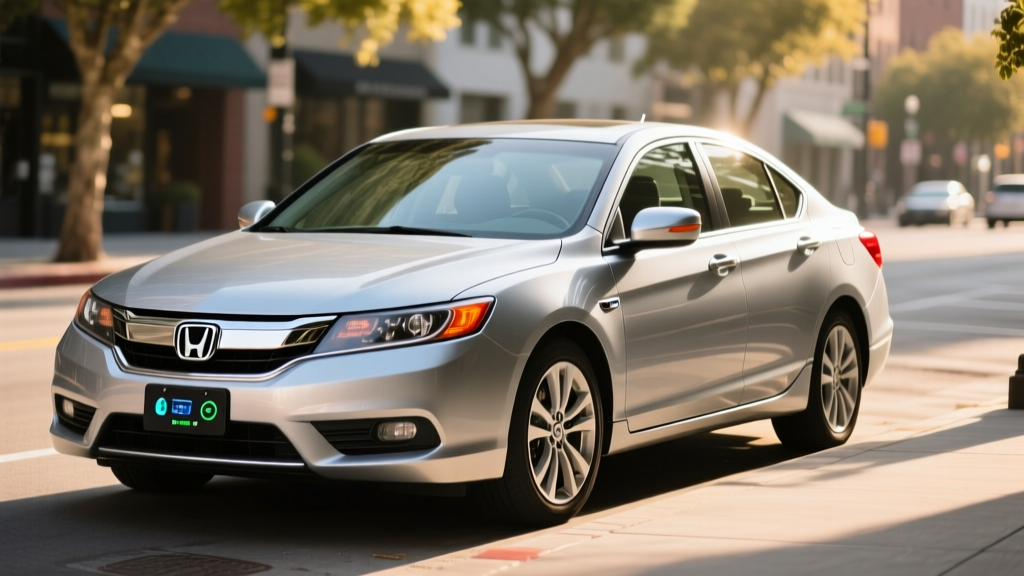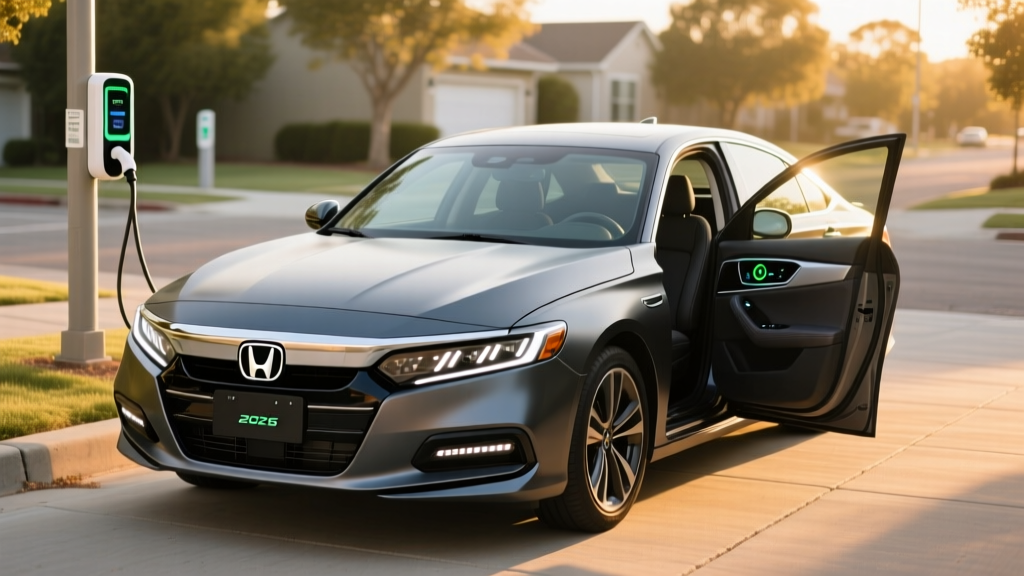
If you want sedan comfort without the range anxiety or charging logistics of a full EV, Honda Accord hybrid cars remain one of the most compelling options on the market. The current-generation Accord Hybrid pairs a 2.0-liter Atkinson-cycle four-cylinder with a two-motor hybrid system to deliver EPA-rated 48 MPG combined — enough to make it one of the most fuel-efficient midsize sedans you can buy without plugging in.
This guide breaks down the 2026 Accord Hybrid's powertrain specs, real-world fuel economy, pricing, battery longevity, and how it compares to plug-in hybrids and battery-electric vehicles for buyers weighing their options.
HEV vs PHEV vs EV: Where the Accord Hybrid Fits
Before diving into specs, it's critical to understand what the Accord Hybrid actually is — and what it isn't.
| Feature | Honda Accord Hybrid (HEV) | Plug-in Hybrid (PHEV) Example | Battery Electric (BEV) Example |
|---|---|---|---|
| Plugs in? | No — self-charging via regen & engine | Yes — Level 1/Level 2 | Yes — Level 1/2/DC fast |
| Electric-only range | ~1 mile at low speed (EV mode) | 25–45 miles typical | 250–350+ miles |
| Refueling | Gas station only | Gas station + charging | Charging only |
| Battery size | ~1.06 kWh (small buffer) | 13–20 kWh usable | 60–100 kWh usable |
| Federal tax credit (§30D) | Not eligible | Up to $7,500 (if eligible) | Up to $7,500 (if eligible) |
| Best for | No home charging, long commutes | Short commutes + road trips | Home charging access, daily driving |
The Accord Hybrid is a conventional hybrid (HEV). It never needs to be plugged in. The gasoline engine and regenerative braking recharge a small lithium-ion battery that assists acceleration and enables brief low-speed electric-only driving. This is fundamentally different from a plug-in hybrid (PHEV) like the Toyota RAV4 Prime or a full EV like the Hyundai Ioniq 6.
Honda discontinued the Accord PHEV in the U.S. market after the 2014 model year. If you see references to a "plug-in Accord," they apply only to that earlier generation or to China-market models not sold stateside.
2026 Honda Accord Hybrid: Powertrain and Performance Specs
| Specification | 2026 Honda Accord Hybrid |
|---|---|
| Powertrain | 2.0L DOHC Atkinson-cycle 4-cyl + two-motor hybrid system |
| Combined system horsepower | 204 hp |
| Combined system torque | 247 lb-ft (electric motor) |
| Transmission | e-CVT (no traditional gears — motor-driven) |
| Drivetrain | Front-wheel drive |
| 0–60 mph | ~7.0 seconds (est.) |
| Hybrid battery | ~1.06 kWh lithium-ion |
| Drive modes | Normal, ECON, Sport, EV (limited low-speed) |
| Fuel tank capacity | 12.4 gallons |
Honda's fourth-generation two-motor hybrid system is the core engineering story. In most driving conditions, the gasoline engine acts as a generator powering the electric drive motor — essentially a series-hybrid operation. Only at sustained highway speeds does a lock-up clutch engage, allowing the engine to directly drive the front wheels for efficiency. This design eliminates the rubber-band feel of older e-CVTs and delivers smooth, linear acceleration.
The 204 combined horsepower is adequate for daily driving and highway merging, though it trails the 252 hp turbocharged gas-only Accord 1.5T. The trade-off is worthwhile: you gain roughly 15–18 MPG combined over the gas model.
Fuel Economy: EPA Ratings and Real-World MPG
| Trim | EPA City | EPA Highway | EPA Combined |
|---|---|---|---|
| Sport Hybrid / Sport-L Hybrid | 46 MPG | 41 MPG | 44 MPG |
| EX-L Hybrid / Touring Hybrid | 51 MPG | 44 MPG | 48 MPG |
The split in EPA ratings comes down to wheel size and weight. Sport trims ride on 19-inch wheels with slightly stickier tires, adding rotational mass and rolling resistance. EX-L and Touring trims use 17-inch wheels optimized for efficiency. If MPG is your top priority, the EX-L or Touring is the play.
Real-World MPG: What to Actually Expect
According to fueleconomy.gov, Accord Hybrid owners report an average of 45.6 MPG combined in real-world driving. Hybrid systems excel in stop-and-go city traffic where regenerative braking recovers energy and the electric motor handles low-speed propulsion. Expect:
- City driving: 48–54 MPG (often exceeds EPA — hybrids thrive here)
- Highway cruising (70+ mph): 38–43 MPG (engine runs more, regen opportunity drops)
- Cold weather (below 32°F): 38–42 MPG combined (engine runs longer for cabin heat, battery efficiency drops)
- Mixed commute: 44–49 MPG combined
With a 12.4-gallon tank and 48 MPG combined, real-world total range sits between 530 and 590 miles per fill-up — comfortably over 500 miles in most conditions.
Pricing and Trim Breakdown
The 2026 Accord Hybrid is available across four trims, with hybrid powertrains comprising roughly 60% of Accord sales. Here's the MSRP structure:
| Trim | MSRP (est.) | Key Features |
|---|---|---|
| Sport Hybrid | ~$33,655 | 19" wheels, heated front seats, wireless CarPlay/Android Auto, Honda Sensing suite |
| Sport-L Hybrid | ~$35,250 | Leather-trimmed seats, power moonroof, heated rear seats, wireless charging |
| EX-L Hybrid | ~$36,655 | 17" efficiency wheels, leather, heated/ventilated front seats, 12-speaker audio |
| Touring Hybrid | ~$39,655 | All EX-L features + navigation, heated rear seats, premium audio, low-speed braking control |
All trims include the full Honda Sensing ADAS suite: adaptive cruise control with low-speed follow, lane-keeping assist, road-departure mitigation, and traffic-sign recognition. This is an SAE Level 2 driver-assist system — you must keep your hands on the wheel and eyes on the road at all times.
Tax Credit Eligibility
The Honda Accord Hybrid does NOT qualify for the federal §30D clean vehicle tax credit. Under current IRS rules, the §30D credit of up to $7,500 applies only to plug-in electric vehicles (BEVs and PHEVs) with sufficient battery capacity. Conventional hybrids like the Accord HEV are excluded.
Some states offer modest hybrid incentives, but these vary by jurisdiction and change frequently. Check your state's energy office or DMV for current programs. A tax professional can confirm eligibility for any local credits.
Battery Longevity, Warranty, and Replacement Cost
Hybrid battery lifespan is the single most common concern among first-time hybrid buyers. Here's what the data shows:
| Coverage | Terms |
|---|---|
| Hybrid battery warranty | 8 years / 100,000 miles (10 years / 150,000 miles in CARB states: CA, CT, ME, MA, NJ, NY, OR, RI, VT, WA, and others adopting CARB standards) |
| Hybrid system components | 8 years / 100,000 miles |
| Powertrain warranty (engine, transmission) | 5 years / 60,000 miles |
| New vehicle limited warranty | 3 years / 36,000 miles |
| Capacity retention threshold | Honda warrants the hybrid battery against failure and abnormal loss of capacity; exact SoH threshold not publicly specified but industry standard is below ~70% |
Real-World Battery Durability
Honda's hybrid battery is a ~1.06 kWh lithium-ion pack — far smaller than a BEV's 60–100 kWh pack. Because it operates within a narrow state-of-charge window (roughly 40–80% SoC), stress on the cells is minimal. The battery management system (BMS) prevents deep discharge and full charge, which are the primary degradation accelerants in lithium-ion chemistry.
Based on long-term fleet data and owner reports from the third-generation Accord Hybrid (introduced 2018) and similar Honda hybrid systems in the CR-V Hybrid and Civic Hybrid:
- Expected lifespan: 150,000–200,000+ miles with normal use before significant capacity loss
- Degradation impact: Minimal — a 10–15% capacity loss over 10 years would reduce MPG by only 1–2 MPG, since the engine compensates
- Replacement cost (out of warranty): $2,000–$4,000 for the hybrid battery pack, plus $500–$1,000 labor, based on current dealer and independent hybrid-shop pricing
Compared to a BEV battery replacement ($10,000–$20,000+), the Accord Hybrid's battery risk is substantially lower — both in probability and cost.
Who Should Choose the Accord Hybrid Over a PHEV or EV?
Choose the Honda Accord Hybrid if:
- You don't have reliable access to home or workplace charging (apartment, street parking, no garage outlet)
- Your commute mixes city and highway driving with no consistent pattern
- You regularly take 300+ mile road trips and don't want to plan around charging stops
- You want maximum MPG without any behavioral change — just drive and refuel at gas stations
- Upfront cost matters: the Accord Hybrid starts ~$10,000–$15,000 less than comparable BEVs
Choose a PHEV instead if:
- You have home Level 2 charging and a commute under 40 miles round-trip (you'd drive mostly electric)
- You want to reduce gasoline consumption by 60–80% while keeping a gas backup for road trips
- You qualify for the $7,500 federal tax credit on an eligible PHEV (check IRS §30D rules for income and sourcing requirements)
Choose a full BEV if:
- You have home charging (Level 2, 240V) and your daily driving is under 250 miles
- You want zero tailpipe emissions and the lowest per-mile fuel cost (~$0.04–$0.06/mile on electricity vs ~$0.10–$0.12/mile on gas at 48 MPG)
- You want to eliminate oil changes, spark plugs, and most powertrain maintenance
Total Cost of Ownership: Accord Hybrid vs Gas Accord
The hybrid carries a roughly $1,500–$2,000 premium over the gas-only Accord 1.5T at equivalent trims. At 15,000 miles per year and $3.50/gallon gas:
| Annual Cost | Accord 1.5T Gas (30 MPG combined) | Accord Hybrid (48 MPG combined) | Difference |
|---|---|---|---|
| Fuel cost/year | $1,750 | $1,094 | Hybrid saves $656/year |
| 5-year fuel cost | $8,750 | $5,469 | Hybrid saves $3,281 |
| Maintenance (est. 5-yr) | ~$2,800 | ~$2,500 (slightly less brake wear from regen) | Hybrid saves ~$300 |
The hybrid premium pays for itself in roughly 2.5–3 years of average driving. After that, the fuel savings are pure benefit — and resale values for Accord Hybrids tend to run stronger than gas trims.
Reliability and Safety Ratings
Honda's hybrid powertrain has built a strong reliability record. The two-motor system has fewer moving parts than a traditional automatic transmission — no torque converter, no gear shifts, no clutch packs wearing out. The e-CVT design is fundamentally simpler and more durable.
For the current-generation Accord:
- IIHS: Top Safety Pick+ (when equipped with specific headlights) — top ratings in all crashworthiness tests per IIHS
- NHTSA: 5-Star overall safety rating
- Honda Sensing: Standard on all trims — includes forward collision warning, automatic emergency braking, lane departure warning, lane keeping assist, and adaptive cruise control
One note for hybrid shoppers: the Accord Hybrid's regenerative braking system means brake pads often last 80,000–100,000+ miles, since the electric motor handles much of the deceleration. This is a meaningful long-term maintenance saving over the gas model.
Pros and Cons at a Glance
Pros
- 48 MPG combined (EX-L/Touring) — among the best in the midsize sedan class
- No plug-in required — zero lifestyle change vs a gas car
- 530+ miles of real-world range per tank
- Smooth, quiet electric-motor-dominant driving feel
- Strong safety ratings (IIHS TSP+, NHTSA 5-star)
- Hybrid battery warranty up to 10 years/150,000 miles in CARB states
- Lower brake wear from regenerative braking
- Spacious interior with 16.7 cu ft trunk (no battery intrusion)
Cons
- No federal tax credit eligibility (HEV, not PHEV/BEV)
- Sport trim drops to 44 MPG combined (19" wheels)
- 204 hp is adequate but not sporty — gas 1.5T feels punchier off the line
- No all-wheel-drive option (AWD available on Toyota Camry Hybrid)
- Highway MPG drops noticeably above 75 mph
- EV mode limited to ~1 mile at very low speeds — not a meaningful electric driving experience
- Road noise on coarse pavement remains a Honda weak point
Frequently Asked Questions
How many MPG does the Honda Accord Hybrid get?
The EPA rates the EX-L and Touring Hybrid trims at 51 city / 44 highway / 48 combined MPG. Sport and Sport-L trims, equipped with larger 19-inch wheels, rate at 46 city / 41 highway / 44 combined. In real-world driving, owners report averaging 45–46 MPG combined, with city driving often exceeding 50 MPG thanks to regenerative braking.
Does the Honda Accord Hybrid need to be plugged in?
No. The Accord Hybrid is a conventional hybrid (HEV). Its small lithium-ion battery charges through regenerative braking and the gasoline engine. You never plug it in — you simply refuel at gas stations like any other car.
Is the Honda Accord Hybrid reliable?
Yes. Honda's two-motor hybrid system has proven durable, with the e-CVT design eliminating many failure points found in traditional automatic transmissions. The hybrid battery is warranted for 8 years/100,000 miles (10 years/150,000 miles in CARB states). Real-world data from Honda hybrid owners suggests the battery typically lasts 150,000–200,000+ miles before needing replacement.
What does a Honda Accord Hybrid battery replacement cost?
Out of warranty, expect $2,000–$4,000 for the hybrid battery pack plus $500–$1,000 in labor, totaling roughly $2,500–$5,000. This is significantly less than a BEV battery replacement. Given the 8–10 year warranty and typical 150,000+ mile lifespan, most original owners will never face this cost.
Does the Honda Accord Hybrid qualify for any tax credit?
The Accord Hybrid does not qualify for the federal §30D clean vehicle credit, which is limited to plug-in vehicles (PHEVs and BEVs) meeting battery-sourcing and MSRP requirements. Some states may offer small hybrid incentives, but these vary by location and change frequently. Consult your state energy office or a tax professional for specifics.
How does the Accord Hybrid compare to the Toyota Camry Hybrid?
The Camry Hybrid (with available AWD) rates at up to 52 MPG combined and starts slightly lower in price. The Accord Hybrid offers more rear-seat legroom, a larger trunk, and a more refined interior at higher trims. If AWD is essential for your climate, the Camry Hybrid is the pick. For interior space and driving refinement, the Accord edges ahead.
Can the Accord Hybrid drive on electric power alone?
Only in very limited circumstances. EV mode allows roughly 1 mile of electric-only driving at speeds below 25 mph — useful for creeping through a parking garage or residential street. It is not designed for meaningful electric-only commuting. For that capability, you'd need a PHEV with 25–45 miles of electric range.