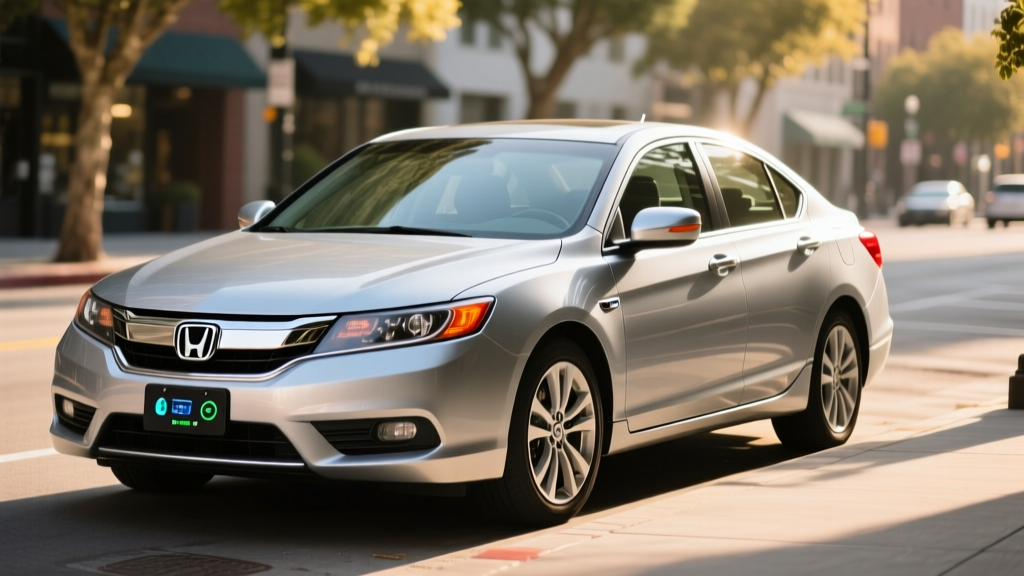
The 2013 Honda Accord Hybrid marked Honda's return to the midsize hybrid sedan segment after a brief hiatus, introducing the brand's first two-motor hybrid system. For used-car shoppers in 2026 evaluating this model, the Accord Hybrid remains a compelling proposition: genuine 50 MPG city efficiency, Honda's reputation for durability, and a price point that has depreciated into deep affordability. But with the original hybrid battery now entering its 12th or 13th year of service, prospective buyers need clear data on what they're actually getting — and what they might need to spend to keep it running.
This guide covers the exact specifications, real-world fuel economy expectations, battery longevity realities, and ownership economics of the 2013 Accord Hybrid, helping you decide whether this conventional hybrid (HEV) still earns a spot in your driveway versus a modern PHEV or full EV.
2013 Honda Accord Hybrid: Core Specifications
| Specification | Value |
|---|---|
| Powertrain Type | Conventional Hybrid (HEV) — no plug-in |
| Engine | 2.0L Atkinson-cycle 4-cylinder |
| Combined System Horsepower | 199 HP |
| Electric Motors | Two-motor system (drive motor + generator motor) |
| Transmission | Electronic CVT (no traditional gearbox) |
| EPA Fuel Economy (City / Highway / Combined) | 50 / 45 / 47 MPG |
| Hybrid Battery | 1.3 kWh lithium-ion (not plug-in capable) |
| 0-60 mph | ~7.1 seconds |
| Drivetrain | Front-wheel drive |
| Cargo Volume | 13.4 cu ft (trunk) |
| Original MSRP (Base) | $29,305 |
| Current Used Price Range (2026) | $6,000 – $11,000 depending on mileage/condition |
Fuel Economy: EPA Numbers vs. Real-World MPG
The 2013 Accord Hybrid carries one of the highest EPA city ratings of any midsize sedan from its era. Here's the official breakdown from fueleconomy.gov:
| Driving Condition | EPA Estimate | Real-World Expectation |
|---|---|---|
| City | 50 MPG | 46–52 MPG (hybrids often exceed EPA city) |
| Highway | 45 MPG | 40–44 MPG (sustained 70+ mph reduces regen benefit) |
| Combined | 47 MPG | 43–48 MPG (mixed driving) |
| Cold Weather (below 35°F) | N/A | 38–42 MPG (engine runs more for cabin heat) |
The Accord Hybrid's two-motor system excels in stop-and-go traffic, where the electric drive motor handles low-speed propulsion and regenerative braking recaptures energy at every stop. On the highway, the 2.0L Atkinson-cycle engine operates more directly, which is why highway MPG drops below the city figure — the opposite of a conventional gas car.
In real-world ownership, drivers who commute in urban or suburban traffic with frequent stops routinely report achieving or even exceeding the 50 MPG city estimate. Highway-heavy commuters should expect figures closer to 42 MPG. Cold weather significantly impacts efficiency because the gasoline engine must run continuously to provide cabin heat, eliminating the electric-only low-speed operation that drives the impressive city number.
How the Two-Motor Hybrid System Works (HEV vs. PHEV)
2013 Accord Hybrid (HEV)
- No plug required — charges via regenerative braking and the gas engine
- 1.3 kWh battery (very small, buffers energy only)
- Electric-only driving limited to brief low-speed bursts (~1-2 miles at under 25 mph)
- Always has gasoline available — no range anxiety
- Refuels at any gas station in 3 minutes
Modern PHEV (e.g., 2026 Accord PHEV — China/Europe)
- Plugs in to a wall outlet or Level 2 charger
- ~17 kWh battery (much larger)
- 40-50 miles of pure electric range before the engine starts
- Can operate as a full EV for daily commutes
- Gas engine extends total range to 400+ miles
The 2013 Accord Hybrid is a conventional hybrid (HEV), meaning it never plugs in. Its 1.3 kWh lithium-ion battery is recharged entirely through regenerative braking and the onboard gasoline engine. The electric drive motor assists during acceleration and can propel the car at very low speeds for short distances, but you cannot charge it from an external power source. This is fundamentally different from a plug-in hybrid (PHEV), which offers substantial electric-only range and requires charging infrastructure to realize its full efficiency benefit.
If you're comparing this car to a PHEV or full EV, the key trade-off is simplicity versus electric driving. The Accord HEV requires zero lifestyle change — you fuel it like any gas car and it delivers better mileage. A PHEV rewards you with electric-only commuting if you can charge at home, and a full EV eliminates gasoline entirely but requires reliable charging access.
Battery Longevity, Replacement Cost, and Reliability
The most critical question for any used hybrid buyer is battery health. The 2013 Accord Hybrid uses a 1.3 kWh lithium-ion pack — significantly smaller and less stressed than the large batteries in full EVs, which actually works in its favor for longevity.
Expected battery lifespan: Honda's lithium-ion hybrid batteries in this generation typically last 150,000 to 200,000 miles before capacity degradation becomes noticeable. However, age is also a factor. At 13 years old in 2026, even low-mileage examples may show reduced battery performance due to calendar aging of the cells.
Battery replacement cost: A new OEM hybrid battery from Honda runs approximately $2,000 – $3,500 including installation at a dealership. Third-party refurbished or reconditioned batteries are available for $1,000 – $2,000 installed. Some independent hybrid specialists offer cell-level repairs (replacing individual degraded cells rather than the entire pack) for $500 – $1,200.
Signs of hybrid battery degradation to watch for:
- Noticeable drop in fuel economy (falling below 40 MPG combined when it previously achieved 45+)
- The gasoline engine running more frequently at low speeds or stops
- Dashboard warning lights (check engine or IMA/hybrid system warning)
- Reduced regenerative braking feel
- Rapid state-of-charge fluctuations on the energy display
Overall reliability: The 2013 Accord Hybrid has a strong reliability record. The two-motor system has fewer mechanical wear components than a traditional transmission (no gear shifts, no torque converter), and Honda's build quality from this generation is well-regarded. The primary mechanical concern at this vehicle's age is standard wear items: suspension components, brakes, and the hybrid battery itself. According to NHTSA records, the 2013 Accord Hybrid has no major systemic recalls related to the hybrid powertrain.
Tax Credits and Ownership Economics in 2026
Federal tax credit: The 2013 Honda Accord Hybrid does not qualify for the current federal §30D clean vehicle tax credit. Under current IRS rules, the §30D credit applies only to new plug-in electric vehicles (BEVs and PHEVs) with qualifying battery sourcing and MSRP/income limits. Conventional hybrids (HEVs) that do not plug in have never qualified for this credit. There is no federal used-EV credit applicable to a conventional hybrid either — the §25E used clean vehicle credit applies only to used BEVs and PHEVs priced under $25,000.
State incentives: A handful of states offer minimal incentives for hybrid purchases, but most state-level EV incentives also target plug-in vehicles. Check your state's energy office or DMV for any current programs, but do not expect significant incentives for a used conventional hybrid purchase in 2026.
Total cost of ownership analysis (annual, estimated):
| Cost Category | 2013 Accord Hybrid (HEV) | Comparable Gas Sedan (2013 Accord 4-cyl) | 2026 EV (e.g., Tesla Model 3) |
|---|---|---|---|
| Fuel/Energy (12,000 mi/yr) | ~$770 (gas at $3.25/gal, 47 MPG) | ~$1,300 (gas at $3.25/gal, 28 MPG) | ~$540 (electric at $0.15/kWh) |
| Insurance (annual avg) | ~$1,100 | ~$1,000 | ~$1,600 |
| Maintenance (annual avg) | ~$400 | ~$500 | ~$250 |
| Purchase Price (2026) | $6,000–$11,000 | $5,000–$9,000 | $38,000+ new |
| Tax Credit | None | None | Up to $7,500 (§30D, if eligible) |
The Accord Hybrid's value proposition in 2026 is straightforward: you pay slightly more upfront than a gas-only 2013 Accord, but save approximately $500 per year in fuel costs. For a buyer who drives 12,000+ miles annually in city-heavy conditions, the fuel savings pay back the used-price premium within 2-4 years. The hybrid also produces fewer tailpipe emissions and requires less frequent brake service due to regenerative braking reducing pad wear.
Who Should Buy the 2013 Accord Hybrid vs. Alternatives
✓ Pros
- Excellent real-world city MPG (46-52)
- No charging infrastructure needed
- Strong reliability track record
- Comfortable, spacious midsize sedan
- Affordable used pricing ($6K-$11K)
- Low annual fuel cost (~$770/yr)
- Regenerative braking extends brake life
✗ Cons
- Hybrid battery likely out of warranty; replacement risk ($2K-$3.5K)
- No electric-only commuting capability
- No federal or state tax credits available
- Highway MPG (40-44) less impressive than city
- Cold weather significantly reduces efficiency
- Dated infotainment and safety tech by 2026 standards
- 13-year-old vehicle — general age-related wear expected
Decision Framework: Is the 2013 Accord Hybrid Right for You?
Choose the 2013 Accord Hybrid if:
- You drive mostly in city or suburban traffic (frequent stops = max hybrid benefit)
- You cannot install a home charger or lack access to public charging
- Your budget is under $12,000 and you want maximum fuel efficiency
- You want a proven, low-complexity hybrid with no plug-in requirements
- You drive 12,000+ miles per year (fuel savings justify the purchase)
Consider a PHEV or full EV instead if:
- You can install a Level 2 home charger and want electric-only commuting (look at a used Toyota Prius Prime, Hyundai Ioniq PHEV, or a new EV with §30D credit)
- You want the latest safety tech (AEB, lane-keeping, adaptive cruise) — the 2013 Accord lacks these
- Your driving is primarily highway — a modern diesel or efficient gas car may match the Accord Hybrid's highway MPG
- You want warranty coverage — any new PHEV or EV comes with an 8-10 year battery warranty
Pre-Purchase Inspection Checklist for Used 2013 Accord Hybrid Buyers
Before purchasing a 2013 Accord Hybrid in 2026, insist on a pre-purchase inspection that specifically addresses the hybrid system:
- Hybrid battery health check: Ask a Honda dealer or qualified hybrid technician to run a battery diagnostic and report the state of health (SoH). A battery below 70% capacity is a negotiation point or walk-away.
- Hybrid system error codes: Scan for stored or pending diagnostic trouble codes (DTCs) in the hybrid control module — even if no warning light is currently illuminated.
- Regenerative braking function: Test that regen braking feels consistent and that the energy flow display shows proper charge/discharge cycling.
- Engine start/stop transitions: The engine should start and stop smoothly when the car transitions between electric and hybrid modes. Rough or delayed transitions may indicate inverter or motor issues.
- Standard mechanical inspection: Suspension, brakes, tires, fluids, and A/C should be evaluated as with any 13-year-old vehicle.
- Service records: Ask whether the hybrid battery has ever been replaced or serviced. A documented battery replacement is a significant value-add.
Frequently Asked Questions
How many MPG does the 2013 Honda Accord Hybrid get?
The EPA rates the 2013 Accord Hybrid at 50 MPG city, 45 MPG highway, and 47 MPG combined. In real-world driving, city commuters often achieve or exceed 50 MPG, while highway-heavy drivers should expect 40-44 MPG. Cold weather can drop combined efficiency to the high 30s.
Does the 2013 Accord Hybrid need to be plugged in?
No. The 2013 Accord Hybrid is a conventional hybrid (HEV). It charges its small 1.3 kWh battery entirely through regenerative braking and the gasoline engine. There is no plug, no charging cable, and no need for any charging infrastructure. You refuel it at a gas station like any conventional car.
How long does the hybrid battery last and what does replacement cost?
Honda's lithium-ion hybrid batteries in this generation typically last 150,000-200,000 miles. At 13 years old, calendar aging is also a factor regardless of mileage. A new OEM replacement battery costs approximately $2,000-$3,500 installed. Refurbished options are available for $1,000-$2,000. The original 8-year/80,000-mile warranty (10 years/150,000 miles in CARB states) has expired on all 2013 models.
Does the 2013 Honda Accord Hybrid qualify for any tax credit?
No. The 2013 Accord Hybrid does not qualify for the federal §30D clean vehicle credit, which applies only to plug-in vehicles (BEVs and PHEVs). It also does not qualify for the §25E used clean vehicle credit. Conventional hybrids without plug-in capability are not eligible for federal purchase incentives. Some states may offer minimal hybrid incentives — check your state energy office for current programs.
Hybrid vs. PHEV vs. EV — which should I choose in 2026?
It depends on your charging access and driving pattern. Choose a conventional hybrid (HEV) like this Accord if you cannot charge at home and want maximum simplicity with strong city MPG. Choose a PHEV if you can install a home charger and want 30-50 miles of electric-only commuting with a gas engine backup for road trips. Choose a full EV (BEV) if you have reliable home charging, drive under 250 miles daily, and want the lowest operating cost plus federal tax credit eligibility (up to $7,500 for qualifying new EVs). For budget buyers under $12,000, a used HEV like the 2013 Accord Hybrid offers the best fuel economy without requiring any charging infrastructure investment.
Is the 2013 Accord Hybrid reliable?
Yes, the 2013 Accord Hybrid has a strong reliability record. The two-motor hybrid system is mechanically simpler than a conventional automatic transmission, and Honda's build quality from this generation is well-regarded. The primary long-term concern is hybrid battery degradation due to age. With proper maintenance and a healthy battery, these vehicles routinely exceed 200,000 miles.
How does the 2013 Accord Hybrid compare to the Toyota Camry Hybrid of the same era?
The 2013 Accord Hybrid (50/45/47 MPG, 199 HP) holds a slight city MPG advantage over the comparable 2013 Toyota Camry Hybrid (43/39/41 MPG, 200 HP). The Accord's two-motor system is more efficient in stop-and-go driving, while the Camry Hybrid offers a slightly more conventional driving feel. Both have strong reliability records. The Accord Hybrid is the better choice for city-heavy commuters; the Camry Hybrid is more balanced for mixed driving.