Quick Verdict: The Accord Hybrid Still Sets the Midsize Sedan Benchmark
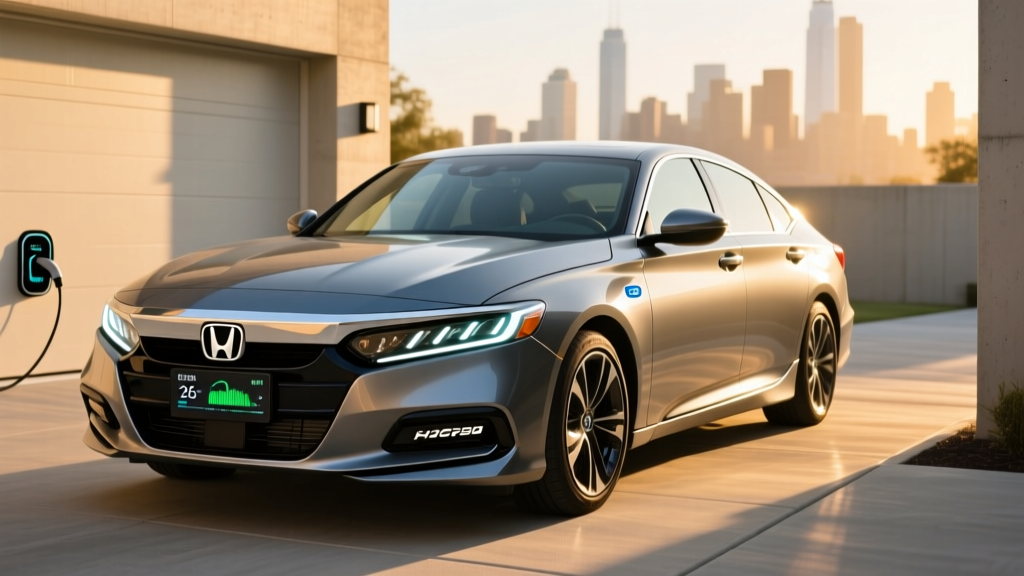
If you're researching Honda Accord Hybrid vehicles in 2026, you're looking at one of the most refined and fuel-efficient midsize sedans on the market — one that doesn't require a plug, a lifestyle change, or a second mortgage to operate. The current-generation Accord Hybrid pairs Honda's fourth-generation two-motor hybrid system with a 2.0-liter Atkinson-cycle four-cylinder engine to deliver an EPA-estimated 48 MPG combined, 204 combined horsepower, and a starting MSRP around $34,000.
Unlike a plug-in hybrid (PHEV) or a full battery-electric vehicle (BEV), the Accord Hybrid is a conventional hybrid electric vehicle (HEV). That means it generates its own electricity through regenerative braking and the gasoline engine — no charging cable required. For buyers who want dramatic fuel savings without range anxiety or home charging infrastructure, this is the pragmatic sweet spot.
Below, we break down every number that matters: EPA and real-world MPG, powertrain specs, battery longevity, warranty coverage, tax credit eligibility, and whether the Accord Hybrid is the right electrified choice for your next purchase.
HEV vs PHEV vs EV: Where the Accord Hybrid Fits
Before diving into specs, it's critical to understand what the Accord Hybrid is — and isn't. Honda does not currently offer a plug-in hybrid (PHEV) version of the Accord in the U.S. market. The Accord Hybrid is strictly a conventional HEV.
| Feature | HEV (Accord Hybrid) | PHEV (e.g., Toyota Prius Prime) | BEV (e.g., Tesla Model 3) |
|---|---|---|---|
| Plug-in charging? | No | Yes (Level 1/2) | Yes (Level 1/2/DC) |
| Electric-only range | ~1 mile at low speed | 25–44 miles | 250–360+ miles |
| Gasoline engine? | Yes | Yes | No |
| Total range | ~600+ miles | ~550+ miles | 250–360+ miles |
| Federal tax credit (§30D) | Not eligible | Up to $7,500* | Up to $7,500* |
| Home charger needed? | No | Recommended | Essential |
*§30D credit eligibility depends on MSRP caps, buyer income limits, and battery critical-mineral sourcing requirements. See IRS.gov for current rules.
The Accord Hybrid is the right call if you want maximum simplicity: fill up with gas, drive normally, and let the hybrid system handle the rest. If you have home charging access and a short commute, a PHEV might let you drive on electricity most weekdays. If you're ready to go fully electric, a BEV eliminates tailpipe emissions entirely — but requires reliable charging access.
Fuel Economy: EPA Ratings and Real-World MPG
The headline number for Honda Accord Hybrid vehicles is fuel efficiency. Here's the EPA-estimated breakdown by trim, based on data from fueleconomy.gov:
| Trim | City MPG | Highway MPG | Combined MPG | Fuel Tank (gal) | Total Range (mi) |
|---|---|---|---|---|---|
| Sport Hybrid | 46 | 41 | 44 | 12.8 | ~563 |
| Sport-L Hybrid | 46 | 41 | 44 | 12.8 | ~563 |
| EX-L Hybrid | 51 | 44 | 48 | 12.8 | ~614 |
| Touring Hybrid | 46 | 41 | 44 | 12.8 | ~563 |
Why the difference? The EX-L trim uses smaller 18-inch wheels and a slightly different final-drive ratio, which boosts its EPA rating to 51 city / 44 highway / 48 combined. The Sport, Sport-L, and Touring trims ride on 19-inch wheels, dropping the combined figure to 44 MPG.
Real-World MPG: What to Actually Expect
Honda's hybrid system excels in city driving, where the electric motor handles low-speed propulsion and regenerative braking recaptures energy at every stop. In real-world mixed driving, most Accord Hybrid owners report achieving within 1–3 MPG of the EPA combined sticker. However:
- City-dominant driving: You may exceed the EPA city number. The hybrid system's ability to operate in EV mode at low speeds means stop-and-go traffic actually improves efficiency relative to highway driving.
- Highway-dominant driving (70+ mph): Expect 38–42 MPG. At sustained high speeds, the gasoline engine does most of the work, and aerodynamic drag reduces the hybrid advantage.
- Cold weather (below 30°F): Expect a 5–10% reduction in MPG. The engine runs more frequently to provide cabin heat and warm up the catalytic converter.
Powertrain Specs: How the Hybrid System Works
| Specification | Value |
|---|---|
| Engine | 2.0L DOHC Atkinson-cycle 4-cylinder |
| Engine horsepower | 146 hp @ 6,100 rpm |
| Electric drive motor | 184 hp / 247 lb-ft torque |
| Combined system output | 204 hp |
| Transmission | e-CVT (no traditional gears) |
| Drivetrain | Front-wheel drive |
| 0–60 mph (est.) | ~7.0 seconds |
| Hybrid battery | Lithium-ion, ~1.1 kWh (nominal) |
| Drive modes | Normal, ECON, Sport, Individual |
Honda's fourth-generation two-motor hybrid system operates differently from the planetary-gear setups used by Toyota. In most driving conditions, the gasoline engine acts as a generator, producing electricity that powers the drive motor. Only at sustained highway speeds does a lock-up clutch mechanically connect the engine to the wheels. This series-hybrid-dominant approach gives the Accord Hybrid the smooth, linear acceleration feel of an EV around town.
The 204 combined horsepower is competitive with rivals like the Toyota Camry Hybrid (225 hp with AWD) and Hyundai Sonata Hybrid (192 hp). The Accord Hybrid's e-CVT is notably free of the "rubber band" effect that plagues older CVTs, thanks to the electric motor's instant torque delivery.
Battery Warranty, Lifespan, and Replacement Cost
Hybrid Battery Warranty
Honda covers the Accord Hybrid's lithium-ion battery pack for 8 years or 100,000 miles (whichever comes first) under the standard hybrid component warranty. In California Air Resources Board (CARB) states, that coverage extends to 10 years or 150,000 miles.
How Long Will the Battery Last?
Unlike full EV batteries that cycle through large portions of their capacity daily, the Accord Hybrid's small ~1.1 kWh battery operates within a narrow state-of-charge window — typically between 20% and 80%. This shallow cycling dramatically reduces stress on the cells. Based on long-term ownership data from Honda's previous-generation hybrid systems, most Accord Hybrid batteries show minimal degradation well past 150,000 miles.
Honda's hybrid battery management system actively controls temperature and charge levels to maximize longevity. It's not uncommon for Honda hybrid batteries to outlast 200,000 miles without needing replacement.
Battery Replacement Cost
If the hybrid battery does fail outside of warranty, replacement costs typically range from $2,000 to $4,000 for a new OEM battery pack, including labor. Refurbished or aftermarket options may be available for $1,000–$2,000. This is a fraction of the cost of replacing a full EV battery pack (which can run $8,000–$20,000+), and the failure rate for Honda hybrid batteries remains low based on historical data.
Pricing, Trims, and Tax Credit Eligibility
Here's the 2026 Honda Accord Hybrid lineup with approximate MSRP by trim:
| Trim | MSRP (approx.) | Key Features |
|---|---|---|
| Sport Hybrid | $34,000 | 19" wheels, sport styling, wireless Apple CarPlay/Android Auto, Honda Sensing suite |
| Sport-L Hybrid | $36,500 | Leather-trimmed seats, heated front seats, wireless phone charger |
| EX-L Hybrid | $38,000 | Best MPG (48 combined), leather, power passenger seat, low-profile 18" wheels |
| Touring Hybrid | $40,500 | Navigation, Bose 12-speaker audio, ventilated front seats, heated rear seats, wireless charging |
Does the Accord Hybrid Qualify for a Federal Tax Credit?
No. The Honda Accord Hybrid is a conventional HEV — it does not have a plug-in charging capability or a battery large enough to qualify for the federal §30D Clean Vehicle Credit. That credit (up to $7,500) is reserved for battery-electric vehicles (BEVs) and plug-in hybrids (PHEVs) that meet specific MSRP, buyer income, and battery-sourcing requirements.
Some states may offer modest incentives for conventional hybrids, but these vary by jurisdiction and change frequently. Check your state's energy office or department of environmental quality for current programs.
Who Should Choose the Accord Hybrid — And Who Shouldn't
Pros
- Up to 48 MPG combined — best in class for a midsize sedan
- No plug-in charging required — works with existing gas infrastructure
- 600+ mile total range per tank
- Smooth, EV-like acceleration feel in city driving
- Spacious cabin with 16.7 cu ft of trunk space (no battery hump)
- Strong reliability history and 8-year/100,000-mile hybrid warranty
- Top safety picks from IIHS and NHTSA
Cons
- No federal tax credit eligibility (HEV, not PHEV/BEV)
- Front-wheel drive only — no AWD option (unlike Camry Hybrid)
- Highway MPG drops to ~41 on Sport/Touring trims
- No plug-in variant available — can't drive on electric-only for commutes
- 204 hp is adequate but not sporty compared to turbocharged rivals
Decision Framework
Choose the Accord Hybrid if: You want a no-compromise midsize sedan with excellent fuel economy, don't have home charging access, drive a mix of city and highway miles, and want to avoid the upfront premium and charging logistics of a PHEV or BEV.
Consider a PHEV instead if: You have a short commute (under 30 miles), can install a Level 2 home charger, and want to drive mostly on electricity during the week while keeping gas for road trips.
Consider a full BEV instead if: You have reliable home charging, your daily driving is under 250 miles, you want zero tailpipe emissions, and you want to take advantage of the up-to-$7,500 federal tax credit.
Ownership Costs: 5-Year Total Cost of Ownership
| Cost Category | Accord Hybrid (48 MPG) | Accord 1.5T Gas (32 MPG) | Comparable BEV (3.5 mi/kWh) |
|---|---|---|---|
| Fuel / energy | $5,470 | $8,200 | $3,430 |
| Maintenance | $2,800 | $3,500 | $1,500 |
| Insurance (avg) | $7,500 | $7,200 | $8,000 |
| Depreciation (est.) | $14,000 | $13,500 | $16,000 |
| 5-year total | ~$29,770 | ~$32,400 | ~$28,930 |
Assumes $3.50/gal gasoline, $0.16/kWh electricity, 15,000 miles/year. Actual costs vary by region and driving habits.
The Accord Hybrid saves roughly $2,600 over five years compared to its gasoline-only sibling, primarily through fuel savings. A comparable BEV can save slightly more — but only if you qualify for the federal tax credit to offset its higher purchase price, and only if you have affordable home electricity rates.
Reliability and Safety Ratings
Honda's hybrid powertrain has built a strong reliability track record over multiple generations. The Accord Hybrid carries favorable ratings from major reliability trackers, and Honda's hybrid system has fewer moving parts than a conventional automatic transmission (no torque converter, no traditional gear sets).
On the safety front, the Accord has consistently earned top marks. Refer to IIHS for the latest crash-test ratings and NHTSA for federal 5-star safety test results. The Honda Sensing suite — standard on all Accord Hybrid trims — includes adaptive cruise control, lane-keeping assist, collision mitigation braking, and road departure mitigation. Note that this is an SAE Level 1 driver-assistance system; the driver must remain fully engaged at all times.
Frequently Asked Questions
How many MPG does the Honda Accord Hybrid get?
The 2026 Honda Accord Hybrid achieves up to 51 city / 44 highway / 48 combined MPG on the EX-L trim. Sport, Sport-L, and Touring trims are rated at 46 city / 41 highway / 44 combined. Real-world results typically fall within 1–3 MPG of these EPA figures, with city-dominant driving sometimes exceeding the sticker number.
Does the Honda Accord Hybrid need to be plugged in?
No. The Accord Hybrid is a conventional HEV, not a plug-in hybrid. It charges its small lithium-ion battery through regenerative braking and the gasoline engine. You simply fill it with gasoline and drive — no charging cable or home charger required.
Is there a plug-in hybrid (PHEV) version of the Accord?
As of 2026, Honda does not offer a PHEV version of the Accord in the U.S. market. If you want a Honda with plug-in capability, you would need to look at other models or consider competitors like the Toyota Prius Prime.
Is the Honda Accord Hybrid reliable, and what does battery replacement cost?
Yes. Honda's hybrid system has demonstrated strong long-term reliability across multiple generations. The hybrid battery is covered for 8 years/100,000 miles (10 years/150,000 miles in CARB states). Out-of-warranty battery replacement typically costs $2,000–$4,000, though most Honda hybrid batteries last well beyond 150,000 miles due to shallow-cycling battery management.
Does the Accord Hybrid qualify for any federal tax credit?
No. The federal §30D Clean Vehicle Credit applies only to plug-in vehicles (BEVs and PHEVs) that meet specific battery-sourcing, MSRP, and buyer income requirements. Since the Accord Hybrid is a conventional HEV without plug-in capability, it does not qualify. Check your state for any local hybrid incentives.
How does the Accord Hybrid compare to the Toyota Camry Hybrid?
The Camry Hybrid offers standard all-wheel drive (AWD) and slightly higher combined horsepower (225 hp AWD), while the Accord Hybrid leads in interior space, trunk volume, and overall driving refinement. The Camry Hybrid AWD is rated at 44 MPG combined (LE trim: 51 combined). Choose the Accord for space and refinement; choose the Camry if AWD is a priority.
Hybrid vs PHEV vs EV — which is right for me?
Choose a conventional hybrid (like the Accord Hybrid) if you want fuel savings with zero lifestyle changes. Choose a PHEV if you have home charging and a short commute and want electric-only weekday driving with gas flexibility for road trips. Choose a BEV if you want maximum savings, zero tailpipe emissions, have reliable charging access, and qualify for the federal tax credit.