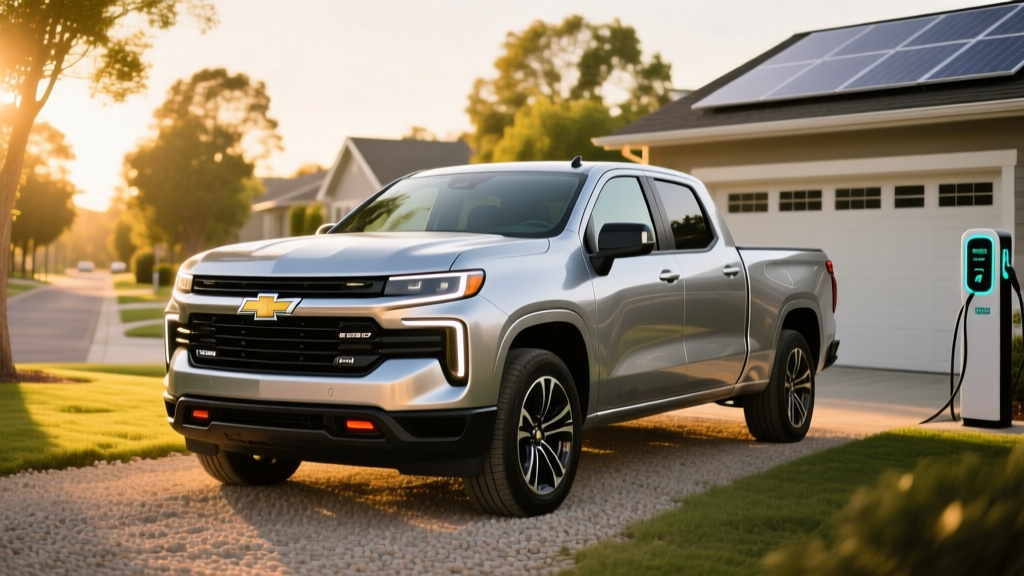
If you've been searching for a chevy hybrid truck, you've likely noticed a frustrating reality: Chevrolet doesn't currently sell a hybrid version of its best-selling Silverado 1500 in the United States. The last Silverado Hybrid was discontinued after the 2013 model year, and as of the 2026 model year, Chevy has not announced a successor. That doesn't mean Chevy has abandoned truck electrification — the fully electric Silverado EV is on sale now — but for buyers specifically seeking a hybrid powertrain in a Chevrolet truck, the options are limited and require some creative cross-shopping.
This guide covers the current state of Chevy hybrid trucks, the closest alternatives available today, real-world MPG expectations, battery longevity, and a framework for deciding whether a hybrid, plug-in hybrid, or full EV truck fits your driving pattern.
The State of Chevy Hybrid Trucks in 2026
Chevrolet's truck lineup for 2026 includes three powertrain paths: conventional gasoline (the standard Silverado 1500 with turbocharged four-cylinder, 5.3L V8, or 6.2L V8), fully electric (the Silverado EV on GM's Ultium platform), and the midsize Colorado, which is gas-only. There is no hybrid or plug-in hybrid Silverado in the current lineup.
This stands in sharp contrast to competitors. Ford offers the F-150 PowerBoost hybrid (a 3.5L V6 paired with an electric motor) and the Maverick hybrid. Toyota sells the Tundra i-FORCE MAX hybrid and the midsize Tacoma hybrid. Even RAM offers the 1500 with the eTorque mild-hybrid system (though it's more of a stop-start assist than a true hybrid). For a buyer committed to the Chevrolet brand, the absence of a hybrid truck is a real gap.
HEV vs. PHEV vs. BEV: Truck Powertrain Types Explained
HEV (Hybrid Electric Vehicle): Uses a gasoline engine + small electric motor and a compact battery (typically 1–2 kWh). The battery charges through regenerative braking and the engine — you never plug it in. Benefit: improved city MPG with zero behavior change.
PHEV (Plug-in Hybrid Electric Vehicle): Larger battery (typically 12–25 kWh) that you plug in to charge, giving 20–50 miles of electric-only driving before the gas engine takes over. Requires access to a plug (home Level 2 or standard 120V outlet) to realize fuel savings.
BEV (Battery Electric Vehicle): No gasoline engine at all. Runs entirely on a large battery pack (100–200+ kWh). Charged at home or via DC fast charging. Zero tailpipe emissions, lowest per-mile fuel cost, but requires charging infrastructure planning.
Chevrolet Silverado EV: The Closest Electrified Chevy Truck
For Chevy loyalists wanting an electrified truck, the Silverado EV is the current option. It's a fully electric truck — not a hybrid — built on GM's Ultium platform. Here's what the 2026 Silverado EV delivers:
| Spec | Value |
|---|---|
| EPA Range (4WT Work Truck) | ~290 miles |
| EPA Range (RST First Edition) | ~440 miles (largest battery option) |
| Battery Capacity | ~200 kWh (Ultium, NMC chemistry) |
| Max DC Fast Charge Rate | 350 kW (peak) |
| 10–80% DC Fast Charge | ~20 minutes (optimal conditions) |
| Horsepower (RST) | 664 hp |
| 0–60 mph | ~4.5 seconds (RST) |
| Max Towing | 10,000 lbs (varies by trim) |
| Starting MSRP | ~$55,000 (4WT); ~$95,000 (RST First Edition) |
| Battery Warranty | 8 years / 100,000 miles |
Sources: Chevrolet Silverado EV specifications, fueleconomy.gov (EPA estimates).
The Silverado EV is a capable truck, but it solves a different problem than a hybrid. A hybrid truck is typically chosen by buyers who want better fuel economy without changing their fueling behavior — they still fill up at gas stations, just less often. The Silverado EV requires home charging access (or reliable public charging) and route planning for longer trips.
Competing Hybrid Trucks: What Chevy Is Missing
To understand what a Chevy hybrid truck would need to deliver, here's how the current hybrid truck competition stacks up on fuel economy and powertrain specs:
| Truck | City MPG | Highway MPG | Combined MPG | Combined HP |
|---|---|---|---|---|
| Ford F-150 PowerBoost Hybrid | 25 | 26 | 25 | 430 |
| Ford Maverick Hybrid | 42 | 33 | 37 | 191 |
| Toyota Tundra i-FORCE MAX | 20 | 24 | 21 | 437 |
| Toyota Tacoma Hybrid | ~26 | ~27 | ~27 | 326 |
Data from fueleconomy.gov. Tacoma Hybrid figures are preliminary estimates; verify at purchase.
Notice something important: full-size hybrid trucks like the F-150 PowerBoost and Tundra i-FORCE MAX don't dramatically beat their gas counterparts on highway MPG. The hybrid advantage in full-size trucks shows up in city driving and combined use, where the electric motor handles low-speed acceleration — the most fuel-intensive part of driving. The Maverick Hybrid, being smaller and lighter, achieves dramatically better numbers, but it's a compact truck, not a direct Silverado competitor.
Real-world MPG note: Conventional hybrids (HEVs) frequently exceed their EPA city estimates in real-world driving because city conditions maximize regenerative braking opportunities. Highway MPG tends to match or slightly fall below EPA estimates, especially at speeds above 70 mph or in cold weather. For the F-150 PowerBoost, owners commonly report 22–24 MPG combined in mixed driving — close to the EPA sticker but dependent on driving style and conditions.
Hybrid vs. PHEV vs. Full EV Truck: Which Fits You?
With no Chevy hybrid truck on the market, buyers cross-shopping a Chevrolet need to choose a path. Here's a decision framework:
Choose a Hybrid Truck (HEV) If:
- You want better fuel economy with zero change to how you refuel
- You don't have access to home or workplace charging
- You drive mostly in the city or do frequent short trips
- You're willing to consider Ford or Toyota instead of Chevy
Choose a Plug-in Hybrid Truck (PHEV) If:
- You have reliable access to a 120V or 240V outlet for daily charging
- Your daily commute is under 30–40 miles round trip (covers most PHEV electric ranges)
- You want electric daily driving but gas flexibility for towing and road trips
- You want to qualify for potential federal tax credits (PHEVs may qualify if battery ≥ 7 kWh)
Choose a Full EV Truck (like the Silverado EV) If:
- You can install a Level 2 home charger (240V, ~$500–$2,000 including electrical work)
- Your typical daily driving is under 200 miles
- You want the lowest per-mile fuel cost and minimal maintenance
- You're committed to the Chevrolet brand
As of 2026, no full-size plug-in hybrid (PHEV) pickup truck is sold in the US market. The PHEV truck segment is essentially unoccupied — a gap that several manufacturers are expected to address in upcoming model years. For now, PHEV buyers looking for truck-like utility are limited to SUVs like the Jeep Wrangler 4xe or the Toyota RAV4 Prime.
Battery Longevity, Warranty, and Replacement Costs
One of the top concerns for hybrid truck buyers is battery lifespan. Let's address this directly with data rather than speculation.
Hybrid Battery Warranty & Lifespan: The Numbers
Federal mandate: All hybrid and EV batteries sold in the US must carry a minimum warranty of 8 years / 100,000 miles (10 years / 150,000 miles in CARB states including California, New York, Massachusetts, and others). This applies to HEVs, PHEVs, and BEVs alike.
Real-world lifespan: Modern hybrid batteries (nickel-metal hydride in older models, lithium-ion in newer ones) routinely last 150,000–200,000+ miles before significant degradation. Toyota's hybrid systems, the longest-proven in the market, have demonstrated battery packs lasting the life of the vehicle in many cases.
Replacement cost: If a hybrid battery does fail out of warranty, replacement typically costs $2,000–$4,000 for a full-size truck hybrid (e.g., F-150 PowerBoost), compared to $5,000–$15,000+ for a full EV battery replacement. Refurbished and aftermarket options can reduce this further.
Key insight: Hybrid batteries are smaller and less expensive to replace than EV batteries. A hybrid truck's ~1.5 kWh battery is a fraction of the cost of the Silverado EV's ~200 kWh pack. Battery anxiety is a significantly smaller concern for hybrids.
For a Chevy Silverado EV, GM provides an 8-year / 100,000-mile battery warranty covering defects and excessive capacity loss (typically defined as falling below 60–70% of original capacity, per GM's warranty documentation). Given the Ultium platform's active thermal management system, degradation should be moderate — but long-term data on the Silverado EV specifically is still limited since the truck launched for the 2024 model year.
Tax Credits and Incentives: What Applies to Hybrid Trucks?
This is an area rife with confusion, so let's be precise about what the IRS §30D Clean Vehicle Credit covers as of 2026:
- Conventional hybrids (HEVs): Do NOT qualify for the federal §30D tax credit. These vehicles don't have a plug and don't meet the battery capacity threshold.
- Plug-in hybrids (PHEVs): May qualify for up to $7,500, but only if they meet all of the following:
- Battery capacity of at least 7 kWh
- MSRP cap: $80,000 for trucks/SUVs/vans
- Buyer income cap: $300,000 (joint), $225,000 (head of household), $150,000 (single)
- Battery components and critical minerals must meet North American sourcing thresholds (phased in annually through 2026)
- Final assembly in North America
- Fully electric vehicles (BEVs): Same §30D rules as PHEVs apply, including sourcing, MSRP, and income caps. The Silverado EV's eligibility varies by trim and battery configuration — check the current IRS qualified vehicle list before purchasing.
Point-of-sale transfer: As of 2024, buyers can transfer the §30D credit to the dealer at the point of sale, receiving the credit as an immediate price reduction rather than waiting to claim it on their tax return. This applies to qualifying PHEVs and BEVs, not HEVs.
Used vehicle credit (§25E): A separate credit of up to $4,000 (or 30% of the sale price, whichever is less) is available for qualifying used EVs and PHEVs purchased from a dealer, with lower income caps ($150,000 joint / $75,000 single). Used conventional hybrids do not qualify.
Important: Tax credit eligibility rules change frequently. Always verify current qualified vehicles on the IRS Clean Vehicle Credits page and consult a tax professional for your specific situation.
Should You Wait for a Chevy Hybrid Truck?
GM has not publicly announced a hybrid Silverado 1500. The company's stated strategy has focused on a direct leap from gasoline to fully electric with the Ultium platform, skipping the hybrid step for its full-size trucks. However, competitive pressure from the Ford F-150 PowerBoost (which has been a sales success) and growing consumer demand for hybrid trucks could shift this calculus.
If a Chevy hybrid truck is a must-have for you, your realistic options as of 2026 are:
✅ What You Can Do Now
- Buy a Silverado EV if you have home charging
- Cross-shop the Ford F-150 PowerBoost hybrid
- Consider the Toyota Tundra i-FORCE MAX hybrid
- Look at the compact Ford Maverick hybrid for lighter-duty needs
- Watch for GM announcements at upcoming auto shows
❌ What You Can't Do
- Buy a new Chevy hybrid truck — none exists
- Find a certified pre-owned Silverado Hybrid (last model was 2013, well outside CPO windows)
- Get a federal tax credit on a conventional hybrid truck
- Expect a Chevy hybrid truck for the 2027 model year based on current GM roadmaps
Real-World Ownership Economics: Hybrid vs. Gas vs. EV Truck
Fuel savings are the primary reason buyers seek a hybrid truck. Here's a simplified 5-year cost comparison assuming 15,000 miles/year, $3.50/gallon gasoline, and $0.14/kWh home electricity:
| Powertrain | Combined MPG / MPGe | 5-Year Fuel Cost | Cost Per Mile |
|---|---|---|---|
| Gas Silverado 1500 (5.3L V8, ~19 MPG combined) | 19 MPG | $13,816 | $0.184 |
| Hybrid Full-Size Truck (~23 MPG combined est.) | 23 MPG | $11,413 | $0.152 |
| Silverado EV (home charging, ~2.0 kWh/mi) | ~2.0 kWh/mi | $5,250 | $0.070 |
The hybrid truck saves roughly $2,400 over 5 years compared to the gas V8 — meaningful, but not transformative. The Silverado EV saves over $8,500 in fuel costs over the same period (assuming consistent home charging at residential rates). However, the EV's higher purchase price partially offsets these savings, and insurance costs for EVs tend to run 10–20% higher than comparable gas vehicles.
Frequently Asked Questions
Does Chevy make a hybrid truck in 2026?
No. Chevrolet does not currently offer a hybrid or plug-in hybrid version of the Silverado 1500 or Colorado. The last Silverado Hybrid was the 2013 model year. For 2026, Chevy's electrified truck option is the fully electric Silverado EV.
How many MPG would a Chevy hybrid truck get if one existed?
Based on competing full-size hybrid trucks, a Silverado hybrid would likely achieve approximately 22–26 MPG combined, with the advantage concentrated in city driving (where hybrid systems are most effective). The Ford F-150 PowerBoost achieves 25 MPG combined; the Toyota Tundra i-FORCE MAX achieves 21 MPG combined. Highway MPG gains over a gas model would be modest.
Is the Silverado EV a hybrid?
No. The Silverado EV is a fully electric vehicle (BEV) with no gasoline engine. It runs exclusively on battery power and must be charged via an electrical outlet or charging station. It cannot use gasoline.
Does a hybrid truck qualify for a federal tax credit?
Conventional hybrids (HEVs) do not qualify for the federal §30D Clean Vehicle Credit. Only plug-in hybrids (PHEVs) with a battery capacity of at least 7 kWh and fully electric vehicles (BEVs) may qualify, subject to MSRP caps ($80,000 for trucks), buyer income limits, and battery sourcing requirements. Check IRS.gov for current eligibility.
What is the most fuel-efficient truck I can buy in 2026?
Among trucks currently on sale, the Ford Maverick Hybrid achieves the highest EPA fuel economy at 37 MPG combined (42 city / 33 highway). For a full-size truck, the Ford F-150 PowerBoost Hybrid at 25 MPG combined is the efficiency leader. The Silverado EV eliminates fuel consumption entirely but requires charging infrastructure.
Are hybrid truck batteries expensive to replace?
Out-of-warranty hybrid battery replacement for a full-size truck typically costs $2,000–$4,000. However, hybrid batteries are federally warranted for 8 years / 100,000 miles (10 years / 150,000 in CARB states), and real-world data shows they often last 150,000–200,000+ miles. Hybrid battery replacement is significantly less expensive than EV battery replacement, which can exceed $10,000–$20,000 for a large pack.
Will Chevy release a hybrid Silverado in the future?
GM has not announced a hybrid Silverado. The company's public strategy centers on the Ultium EV platform for truck electrification. However, strong hybrid truck sales at Ford and Toyota, combined with consumer demand for vehicles that don't require charging infrastructure, could influence future product decisions. There is no confirmed timeline.
Always verify specifications, pricing, and tax credit eligibility at the time of purchase. Refer to fueleconomy.gov for official EPA data, IRS.gov for tax credit rules, and Chevrolet.com for current model specifications.