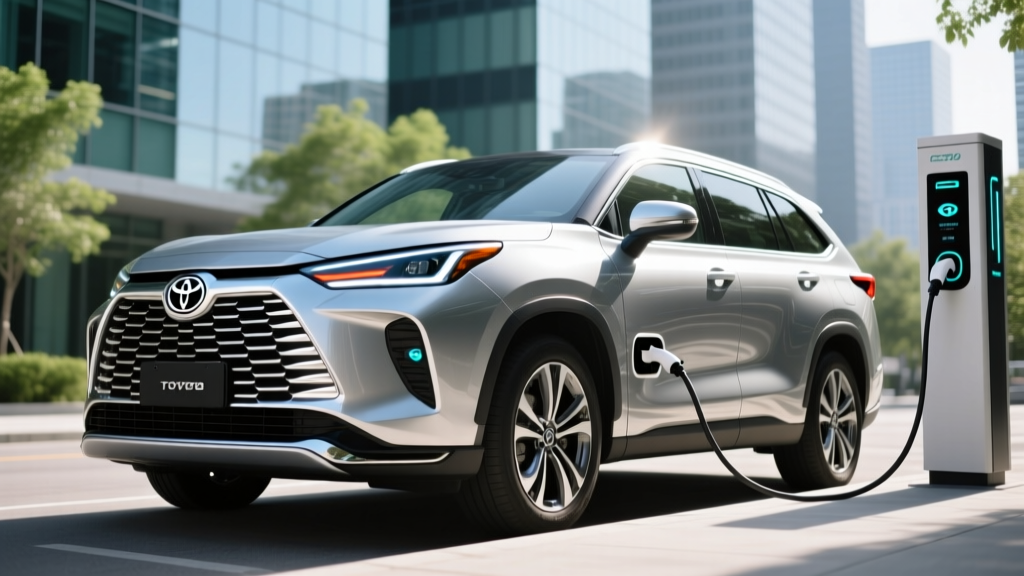
The 2026 Toyota Highlander Platinum Hybrid sits at the top of Toyota's three-row hybrid SUV lineup, pairing a 2.5-liter four-cylinder engine with a dual-motor hybrid system for a combined 243 horsepower and an EPA-estimated 35 MPG combined. For families who need three rows of seating, all-wheel drive, and low running costs — but aren't ready to commit to a full battery-electric vehicle — the Highlander Hybrid Platinum occupies a narrow but compelling sweet spot.
This guide breaks down the exact fuel economy numbers, powertrain specs, real-world efficiency expectations, battery warranty coverage, and pricing for the Platinum trim. We'll also address the question every hybrid shopper eventually faces: Is a conventional hybrid (HEV), plug-in hybrid (PHEV), or full EV the right call for your household?
Fuel Economy: EPA Numbers and Real-World MPG
The Highlander Hybrid's efficiency is its headline act. Here is the EPA-verified fuel economy breakdown for the 2026 model with standard all-wheel drive (AWD-i):
| Metric | EPA Estimate |
|---|---|
| City MPG | 35 |
| Highway MPG | 35 |
| Combined MPG | 35 |
Source: fueleconomy.gov — Toyota Highlander Hybrid AWD 2026.
Toyota's hybrid system thrives in stop-and-go city driving, where regenerative braking and electric-motor assist do the heavy lifting. In real-world urban commuting, owners frequently report 36–38 MPG — slightly exceeding the EPA city estimate. Highway driving at sustained 70–75 mph speeds tends to return 31–33 MPG, as the gasoline engine carries more of the load without regen assistance. In cold weather (below 30°F), expect a 5–8% efficiency drop due to increased engine runtime for cabin heating and reduced battery efficiency. A long road trip averaging 65 mph with moderate temperatures is where this hybrid shines closest to its sticker number.
Compared to the non-hybrid Highlander's turbocharged 2.4-liter four-cylinder (24 MPG combined), the hybrid saves roughly 150–180 gallons of fuel per year at 12,000 miles driven annually — worth approximately $450–$550 per year at $3.00/gallon.
Powertrain: 243 HP from Engine and Dual Motors
The Highlander Hybrid uses Toyota's fourth-generation hybrid synergy drive system. Here is the powertrain breakdown:
| Specification | Detail |
|---|---|
| Engine | 2.5L inline-4 Atkinson-cycle |
| Engine Output | 186 hp / 173 lb-ft torque |
| Front Electric Motor | 134 hp / 199 lb-ft |
| Rear Electric Motor (AWD-i) | 54 hp / 89 lb-ft |
| Combined Net Horsepower | 243 hp |
| Transmission | eCVT (planetary gearset) |
| Drivetrain | AWD-i (standard on Platinum) |
| 0–60 mph | ~7.8 seconds |
| Towing Capacity | 3,500 lbs |
| Hybrid Battery | ~1.6 kWh NiMH (sealed) |
The AWD-i system uses the rear electric motor to power the back axle when needed — there is no mechanical driveshaft connecting the engine to the rear wheels. This keeps weight down and enables the hybrid's strong city MPG, since the rear motor engages primarily during acceleration and low-traction situations.
The eCVT is not a belt-and-cone CVT like those in some competitors. It is a planetary gearset that seamlessly blends engine and motor power with no shifting sensation. The result is smooth, linear acceleration — though not sporty. The 243 hp combined output moves the Platinum's ~4,500-lb curb weight adequately, but this is a cruiser, not a sprinter.
HEV vs PHEV vs EV: Which Fits Your Household?
The Highlander Hybrid is a conventional hybrid (HEV). It does not plug in. It has no meaningful electric-only range. The small 1.6 kWh NiMH battery charges exclusively through regenerative braking and the gasoline engine. This is a critical distinction from plug-in hybrids and full EVs.
| Factor | HEV (Highlander Hybrid) | PHEV (e.g., Toyota RAV4 Prime) | BEV (e.g., Kia EV9) |
|---|---|---|---|
| Plugs In? | No | Yes (Level 1/2) | Yes (Level 1/2/DC) |
| Electric-Only Range | ~1 mile at low speed | 35–42 miles typical | 230–310 miles typical |
| Home Charging Needed? | No | Recommended (Level 2) | Essential (Level 2) |
| Fuel/Running Cost | ~$0.09/mile | ~$0.04/mile (electric) / $0.09/mile (gas) | ~$0.04/mile |
| Federal Tax Credit (§30D) | Not eligible | Up to $7,500 (varies) | Up to $7,500 (varies) |
| Best For | No home charging; simplicity | Short commutes + road trips | Home charging + low running cost |
Choose the Highlander Hybrid (HEV) if: You cannot install a Level 2 charger at home, you frequently take long road trips where charging infrastructure is sparse, you want zero behavior change from your current gas car, or you need three-row seating without the $60,000+ price tag of a three-row EV.
Consider a PHEV instead if: You have a garage or driveway where you can install a 240V Level 2 charger, your daily commute is under 40 miles round-trip, and you still want gas-engine range for weekend road trips. Note: Toyota does not currently offer a Highlander PHEV in the US market. The closest Toyota PHEV alternative is the RAV4 Prime (42 miles electric, two rows).
Consider a full EV if: You have reliable home Level 2 charging, want the lowest per-mile operating cost, and are comfortable with public DC fast charging for road trips. Three-row EVs like the Kia EV9 or Rivian R1S exist but start at higher prices.
Platinum Trim: What You Get for $54,000+
The Platinum is the Highlander Hybrid's top trim for 2026, adding premium features over the Limited. Here is the pricing breakdown:
| Trim | MSRP (AWD) | Key Additions Over Previous Trim |
|---|---|---|
| LE | ~$42,000 | Base hybrid, Toyota Safety Sense 3.0 |
| XLE | ~$45,500 | SofTex seats, sunroof, wireless CarPlay |
| Limited | ~$49,500 | Leather, 12.3" infotainment, JBL audio |
| Platinum | ~$54,000 | Panoramic roof, head-up display, 360° camera, heated/ventilated 2nd row, panoramic view monitor |
The Platinum trim adds roughly $4,500 over the Limited and includes a panoramic glass roof, a 10-inch head-up display, a 360-degree surround-view camera, heated and ventilated second-row captain's chairs, and a panoramic view monitor. Destination charges add approximately $1,395.
Tax Credit Eligibility
The Highlander Hybrid is a conventional HEV and does not qualify for the federal §30D Clean Vehicle Credit. That credit applies only to plug-in vehicles (PHEVs and BEVs) meeting battery sourcing, MSRP caps, and buyer income requirements as outlined by the IRS.
Some states offer rebates for conventional hybrids, but these are uncommon and vary by jurisdiction. Check your state energy office or AFDC state incentive database for local programs.
Battery Warranty, Lifespan, and Replacement Cost
Hybrid battery longevity is the single most common concern among first-time hybrid buyers. Toyota's track record here is among the best in the industry, backed by data from millions of Prius and Highlander Hybrids on the road.
- Coverage: 10 years / 150,000 miles (whichever comes first)
- What's covered: Hybrid battery pack, hybrid control module, inverter
- Applies in: All 50 states (California-emissions states receive identical hybrid battery coverage)
- Transferable: Yes, warranty transfers to subsequent owners
The Highlander Hybrid's NiMH battery pack is relatively small (~1.6 kWh) and is never fully charged or fully discharged during normal operation — Toyota's battery management system keeps the state of charge between roughly 40% and 80%. This shallow cycling dramatically extends cell life.
Real-world lifespan data: Based on long-term fleet data and owner reports, Toyota hybrid batteries routinely last 150,000–200,000+ miles before significant degradation. Failure before 100,000 miles is rare. When replacement is needed outside warranty, a refurbished NiMH pack for the Highlander Hybrid typically costs $2,000–$3,500 installed at an independent hybrid specialist, or $4,000–$5,500 at a Toyota dealer for a new OEM unit.
For context, a conventional vehicle's transmission replacement often costs $3,000–$5,000. The hybrid system replaces the traditional transmission with the eCVT planetary gearset, which has fewer wear components and is generally more reliable than belt-type CVTs or multi-speed automatics.
Reliability and Safety Ratings
Toyota's hybrid powertrain is one of the most proven in the automotive industry. The 2.5L Atkinson-cycle engine and eCVT combination has been in production across multiple Toyota models since 2018 with minimal redesign-related issues.
Safety: The 2026 Highlander carries Toyota Safety Sense 3.0 as standard equipment across all trims, including:
- Pre-Collision System with Pedestrian Detection
- Full-Speed Range Dynamic Radar Cruise Control
- Lane Departure Alert with Steering Assist
- Lane Tracing Assist
- Automatic High Beams
- Road Sign Assist
The Highlander has consistently earned strong marks from the IIHS and NHTSA. Check current ratings on nhtsa.gov for the latest model-year scores, as testing protocols update annually.
Predicted reliability: Toyota's hybrid systems consistently rank at or near the top of J.D. Power and Consumer Reports reliability surveys. The primary wear items unique to the hybrid system — the battery pack and inverter — are covered under the 10-year/150,000-mile warranty. The brake pads on a Highlander Hybrid often last 70,000–100,000 miles thanks to regenerative braking reducing friction brake usage.
Pros, Cons, and the Bottom Line
- 35 MPG combined in a three-row AWD SUV — best-in-class efficiency
- No plug-in required — zero behavior change from a gas car
- 10-year / 150,000-mile hybrid battery warranty
- Platinum trim offers premium features at ~$54K vs $70K+ for three-row EVs
- Smooth eCVT with no traditional transmission wear concerns
- 3,500-lb towing capacity covers most family trailers
- No federal tax credit (HEV, not a plug-in vehicle)
- Not a PHEV — no meaningful electric-only driving range
- Platinum trim pushes price above $55K with destination
- Third row is tight for adults on long trips
- 243 hp is adequate, not quick — 0-60 in ~7.8 seconds
- Highway MPG drops to low 30s at sustained 75 mph
Highlander Hybrid Platinum: Frequently Asked Questions
How many MPG does the Highlander Platinum Hybrid get?
The EPA rates the 2026 Highlander Hybrid AWD at 35 MPG city, 35 MPG highway, and 35 MPG combined. Real-world city driving often returns 36–38 MPG, while sustained highway driving at 70+ mph typically yields 31–33 MPG.
Does the Highlander Hybrid need to be plugged in?
No. The Highlander Hybrid is a conventional hybrid (HEV). Its small battery charges through regenerative braking and the gasoline engine. There is no plug, no charging cable, and no electric-only range beyond very low-speed maneuvering.
Is there a plug-in hybrid (PHEV) version of the Highlander?
As of the 2026 model year, Toyota does not offer a Highlander PHEV in the US market. If you want a Toyota PHEV with electric-only range, the RAV4 Prime (42 miles EV range) is the closest option, though it has only two rows of seating.
Does the Highlander Hybrid qualify for any federal tax credit?
No. The federal §30D Clean Vehicle Credit applies only to plug-in electric vehicles (PHEVs and BEVs) that meet battery sourcing, MSRP, and buyer income requirements. Conventional hybrids like the Highlander Hybrid are not eligible. Some states may offer minor hybrid incentives — check your local programs.
How long will the Highlander Hybrid battery last?
Toyota's hybrid batteries routinely last 150,000–200,000+ miles based on long-term fleet data. The battery is covered by a 10-year / 150,000-mile warranty. Out-of-warranty replacement costs $2,000–$5,500 depending on whether you use a refurbished or new OEM pack.
How does the Highlander Hybrid compare to a three-row EV?
Three-row EVs like the Kia EV9 (~$55,000 starting, 270+ miles range) offer lower per-mile operating costs and zero tailpipe emissions, but require home Level 2 charging, cost more upfront, and involve public charging planning on road trips. The Highlander Hybrid costs less, needs no charging infrastructure, and eliminates range anxiety — at the trade-off of higher fuel costs and no electric-only driving.
Is the AWD-i system capable in snow and rain?
Yes, for typical winter conditions. The rear electric motor engages automatically when front-wheel slip is detected, providing confident traction in snow and rain. It is not a dedicated off-road system — ground clearance is 8.0 inches and there are no low-range gears — but it handles suburban winter driving well.