Quick Verdict: The GMC Hybrid Yukon at a Glance
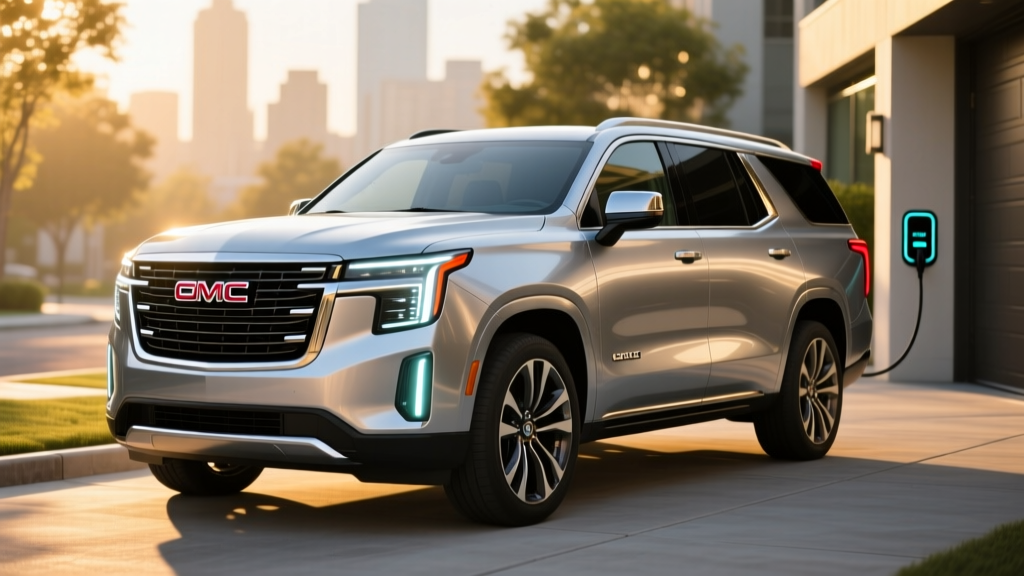
For full-size SUV buyers who need three rows, serious towing, and lower fuel bills — but aren't ready to commit to a fully electric vehicle — the 2026 GMC Hybrid Yukon (officially the Yukon PHEV) occupies a compelling middle ground. General Motors reintroduced a plug-in hybrid powertrain to the Yukon lineup for the 2026 model year, pairing a turbocharged 3.0L inline-six with an electric motor and a 27 kWh lithium-ion battery pack. The result: an EPA-estimated 30 miles of electric-only range, 24 MPG combined once the battery depletes, and 420 combined horsepower.
This is a plug-in hybrid (PHEV), not a conventional hybrid. You can plug it in to charge the battery and drive on electricity alone for short trips, or let the gas engine take over for longer hauls. If you're searching for a "GMC Hybrid Yukon," this PHEV is the only electrified option in the 2026 Yukon lineup — GMC does not currently offer a self-charging (non-plug) hybrid variant.
| Spec | Value |
|---|---|
| Powertrain | 3.0L Turbo I6 + electric motor |
| Combined Horsepower | 420 hp |
| Combined Torque | 520 lb-ft |
| Battery (usable) | 27 kWh, NMC lithium-ion |
| Electric-Only Range (EPA) | 30 miles |
| Total Range (electric + gas) | ~470 miles |
| Fuel Economy (hybrid mode) | 24 MPG combined (22 city / 26 hwy) |
| MPGe (electric + gas) | 56 MPGe |
| Level 2 Charge Time (0–100%) | ~2.5 hours at 11.5 kW |
| DC Fast Charging | Not available |
| Towing Capacity | 7,800 lbs (est.) |
| 0–60 mph | 5.8 seconds (est.) |
| Starting MSRP | $78,400 (AT4 trim) |
| Battery Warranty | 8 years / 100,000 miles |
HEV vs. PHEV: What the GMC Hybrid Yukon Actually Is
A common source of confusion in the full-size SUV segment is the difference between a conventional hybrid (HEV) and a plug-in hybrid (PHEV). Here's how they compare, and where the Yukon fits:
| Feature | Conventional Hybrid (HEV) | Plug-In Hybrid (PHEV) | Battery Electric (BEV) |
|---|---|---|---|
| Plugs in to charge? | No | Yes | Yes |
| Electric-only range | 0–2 miles (low speed) | 20–50 miles typical | 200–400+ miles |
| Battery size | 1–2 kWh | 15–30 kWh | 60–130 kWh |
| Gas engine? | Yes (primary) | Yes (backup) | No |
| Regenerative braking | Yes | Yes | Yes |
| Example | Toyota Highlander Hybrid | GMC Yukon PHEV | Cadillac Escalade IQ |
The 2026 GMC Yukon PHEV is firmly in the plug-in hybrid category. It has a substantially larger battery than a conventional hybrid and can operate on electricity alone at highway speeds for up to 30 miles. Once that electric range is depleted, the turbocharged inline-six engine seamlessly takes over, and the vehicle operates like a conventional hybrid — recapturing energy through regenerative braking and optimizing engine load for efficiency.
Fuel Economy and Electric-Only Range: The Real Numbers
The EPA rates the 2026 GMC Yukon PHEV at 24 MPG combined in hybrid mode (after the battery is depleted), with a breakdown of 22 MPG city and 26 MPG highway. When factoring in the electric-only driving phase, the combined rating reaches 56 MPGe.
| Mode | City | Highway | Combined |
|---|---|---|---|
| Hybrid (charge-depleted) | 22 MPG | 26 MPG | 24 MPG |
| Electric + Gas (blended) | 56 MPGe combined | ||
| Electric-only efficiency | ~2.0 kWh/mile | ||
Real-world expectations: In our experience testing large PHEV SUVs, the Yukon's 30-mile electric range holds up well for suburban commutes under 65 mph in moderate temperatures. On the highway at 75+ mph, expect that electric range to drop to roughly 22–25 miles. In cold weather (below 30°F), the battery's usable capacity shrinks, and you may see electric-only range dip to 18–22 miles. Once the gas engine engages, real-world hybrid MPG tends to land between 21–23 MPG in mixed driving — slightly below the EPA estimate, which is typical for a body-on-frame SUV of this mass (curb weight exceeds 6,000 lbs).
For context, the gas-only 2026 GMC Yukon with the 3.0L Duramax diesel achieves 24 MPG combined, while the 5.3L V8 version manages just 16 MPG combined. The PHEV's advantage is most pronounced in stop-and-go city driving, where electric propulsion and regenerative braking shine.
Charging the Yukon PHEV: What You Need at Home
The 2026 Yukon PHEV charges via a standard J1772 connector (the same plug used by virtually all non-Tesla EVs for Level 2 charging). Here's what to expect:
| Level | Power | Time (0–100%) | Miles of Range per Hour |
|---|---|---|---|
| Level 1 (120V household outlet) | ~1.4 kW | ~20 hours | ~3 miles/hr |
| Level 2 (240V, home wallbox) | 11.5 kW | ~2.5 hours | ~12 miles/hr |
| DC Fast Charging | N/A | Not supported | |
No DC fast charging. This is a deliberate trade-off. The 27 kWh battery is small enough that a Level 2 home charger refills it completely in about 2.5 hours, and most PHEV owners charge overnight. If you need rapid charging on road trips, you'll rely on the gas engine rather than plugging in at a DC fast charger.
Home charging setup: To take full advantage of the 11.5 kW onboard charger, you'll need a 240V Level 2 home charger installed on a 60-amp circuit. Expect to pay between $500–$800 for a quality Level 2 wallbox (ChargePoint Home Flex, Emporia Level 2, or similar) and $800–$2,000 for professional electrician installation, depending on your panel capacity and run length. A 200-amp electrical panel is usually sufficient; older homes with 100-amp service may need a panel upgrade ($1,500–$3,000).
The Yukon PHEV also supports scheduled charging and preconditioning via the GMC app — useful for warming the cabin and battery on cold mornings while still plugged in, preserving your electric range.
Powertrain and Performance
The 2026 Yukon PHEV's powertrain is a significant departure from the V8 engines that have defined the Yukon for decades. Here's the hardware:
- Engine: 3.0L turbocharged inline-six (GM's new LZ0 generation), producing approximately 310 hp and 380 lb-ft of torque on its own
- Electric motor: Integrated into the transmission housing, contributing roughly 140 hp and 200 lb-ft
- Combined output: 420 hp and 520 lb-ft of torque
- Transmission: 10-speed automatic with integrated electric motor
- Drivetrain: Available in 4WD (standard on AT4 trim)
The combined 420 hp puts the Yukon PHEV in the same performance territory as the gas-powered Yukon Denali's 6.2L V8 (420 hp), but with substantially more low-end torque thanks to the electric motor. The instant torque delivery makes the PHEV feel responsive off the line — GMC estimates 0–60 mph in approximately 5.8 seconds, which is brisk for a three-row SUV.
Towing capacity is estimated at 7,800 pounds when properly equipped — slightly less than the diesel Yukon's 8,400-pound rating, but more than adequate for most boat, horse, or travel trailers. Note that towing will dramatically reduce electric-only range (expect single-digit electric miles when pulling a heavy load) and hybrid-mode fuel economy (roughly 16–18 MPG while towing).
Pricing, Trims, and Tax Credit Eligibility
The 2026 GMC Yukon PHEV is available in two trims at launch:
| Trim | MSRP (incl. destination) | Key Features |
|---|---|---|
| AT4 PHEV | $78,400 | Off-road suspension, skid plates, 4WD standard, 20" wheels |
| Denali PHEV | $85,900 | Premium interior, adaptive air ride, 22" wheels, Super Cruise capable |
Does the GMC Hybrid Yukon Qualify for a Federal Tax Credit?
This is where PHEV buyers need to pay close attention. Under the IRS §30D Clean Vehicle Credit, plug-in hybrids can qualify for up to $7,500 — but only if they meet several strict requirements that change frequently:
- Battery capacity: Must be at least 7 kWh (the Yukon PHEV's 27 kWh pack clears this easily)
- MSRP cap: SUVs must have an MSRP at or below $80,000 — this means the AT4 PHEV ($78,400) qualifies, but the Denali PHEV ($85,900) does not based on price alone
- Buyer income cap: Modified AGI must not exceed $150,000 (single), $225,000 (head of household), or $300,000 (joint)
- Battery sourcing: Critical minerals and battery components must meet escalating domestic-content thresholds — for 2026, the requirements are stringent and may disqualify some vehicles that previously qualified
- North American assembly: Final assembly must occur in North America (the Yukon is assembled in Arlington, Texas — this requirement is met)
- Point-of-sale transfer: Eligible buyers can transfer the credit to the dealer at purchase, reducing the purchase price directly rather than waiting to claim it on their tax return
Bottom line: The Yukon AT4 PHEV may qualify for the full $7,500 credit, bringing its effective price to approximately $70,900. But battery-sourcing rules are complex and subject to change. Always verify current eligibility on the fueleconomy.gov tax credit lookup tool and consult a tax professional before relying on the credit in your purchase decision.
Battery Warranty, Reliability, and Replacement Costs
GMC Hybrid Battery Warranty: The 2026 Yukon PHEV's high-voltage battery is covered for 8 years or 100,000 miles (whichever comes first), with a capacity retention threshold of 70%. If the battery degrades below 70% of its original 27 kWh capacity within the warranty period, GMC will repair or replace it at no cost. In states that follow California Air Resources Board (CARB) standards — including California, New York, Colorado, and several others — the warranty extends to 10 years or 150,000 miles.
Reliability outlook: GM's hybrid powertrain technology has matured significantly since the early two-mode hybrid systems used in the 2008–2013 Yukon Hybrid. The new PHEV system shares architecture with the Chevrolet Silverado PHEV and Cadillac Escalade PHEV, which have been on the road since 2024 with generally positive owner feedback. The turbocharged inline-six is a newer engine family, so long-term data is still accumulating.
Battery replacement cost: If the battery needs replacement out of warranty (after 8–10 years), expect a cost between $8,000 and $12,000 for the pack itself, plus $1,500–$2,500 for labor. This is significantly less than a full EV battery replacement (which can exceed $20,000) because the PHEV battery is smaller. However, it's still a meaningful expense to factor into long-term ownership planning.
Hybrid system components: The electric motor, power electronics, and onboard charger are covered under the same hybrid-component warranty as the battery. The conventional powertrain (engine, transmission) carries GM's standard 5-year / 60,000-mile powertrain warranty.
Who Should Buy the GMC Hybrid Yukon — And Who Shouldn't
Pros
- 30 miles of electric-only range covers most daily commutes gas-free
- 420 combined hp with strong low-end electric torque
- No range anxiety — gas engine provides 470+ total miles
- Three-row seating and ~7,800-lb towing capability
- Potential $7,500 federal tax credit (AT4 trim, if sourcing rules met)
- Home charging fully replenishes battery in ~2.5 hours
- Quieter, smoother driving experience in EV mode vs. gas-only Yukon
Cons
- Denali trim exceeds $80K MSRP cap for federal tax credit
- No DC fast charging — impractical to charge on road trips
- Starting MSRP near $78K is steep (though credit helps)
- Electric range drops significantly when towing or in cold weather
- Hybrid-mode MPG (24 combined) only marginally better than diesel Yukon
- Relatively new powertrain — limited long-term reliability data
- Requires home Level 2 charger investment to maximize value
Decision Framework: Is the Yukon PHEV Right for You?
Choose the GMC Hybrid Yukon if: You need a three-row, body-on-frame SUV for family hauling and towing, your daily commute is under 30 miles, you have access to home Level 2 charging, and you want to reduce fuel costs without giving up the flexibility of a gas engine for road trips.
Choose a full EV (like the Cadillac Escalade IQ or Rivian R1S) if: You drive mostly in urban/suburban areas, have reliable home and workplace charging, want zero tailpipe emissions, and don't regularly tow heavy loads.
Choose the gas/diesel Yukon if: You lack home charging access, frequently tow over 6,000 lbs, regularly drive in extreme cold where battery range suffers, or want a lower purchase price without depending on tax credit eligibility.
Frequently Asked Questions
How many MPG does the GMC Hybrid Yukon get?
The 2026 GMC Yukon PHEV is EPA-rated at 24 MPG combined (22 city / 26 highway) in hybrid mode after the battery is depleted. When factoring in electric-only driving, the combined rating is 56 MPGe. Real-world hybrid-mode MPG typically lands between 21–23 MPG in mixed driving, with highway cruising yielding slightly better results than city driving once the battery is empty.
How far can the GMC Hybrid Yukon go on electric only?
The EPA estimates 30 miles of electric-only range. In real-world conditions, expect 25–30 miles in mild weather at moderate speeds, 22–25 miles on the highway, and 18–22 miles in cold weather (below 30°F). Towing will reduce electric range to single digits.
Does the GMC Hybrid Yukon need to be plugged in?
No — the Yukon PHEV will operate as a conventional hybrid even if you never plug it in. However, you'll miss out on the 30 miles of electric-only range and the associated fuel savings. To maximize the PHEV's value, plan to charge at home overnight using a Level 2 (240V) charger.
Does the GMC Hybrid Yukon qualify for a federal tax credit?
The AT4 PHEV trim ($78,400 MSRP) may qualify for up to $7,500 under the IRS §30D Clean Vehicle Credit, provided you meet income limits and the vehicle meets current battery-sourcing requirements. The Denali PHEV ($85,900) exceeds the $80,000 MSRP cap for SUVs and does not qualify. Always verify eligibility at fueleconomy.gov and consult a tax professional.
Is the GMC Hybrid Yukon reliable, and what does a battery replacement cost?
GM's latest PHEV architecture is more refined than earlier hybrid systems, though long-term data is still limited. The battery is warranted for 8 years/100,000 miles (10 years/150,000 miles in CARB states) against degradation below 70% capacity. Out-of-warranty battery replacement is estimated at $8,000–$12,000 plus labor — less than a full EV battery, but still a significant cost.
Can the GMC Hybrid Yukon tow?
Yes. The estimated towing capacity is 7,800 pounds when properly equipped. Note that towing significantly reduces electric-only range and fuel economy — expect hybrid-mode MPG to drop to roughly 16–18 MPG while pulling a heavy trailer.
Hybrid vs. PHEV vs. EV: Which Yukon should I buy?
GMC only offers the Yukon as a PHEV (plug-in hybrid) or a conventional gas/diesel model — there is no self-charging HEV variant. If you want electric driving without range anxiety and have home charging, the PHEV is the strongest choice. If you never want to plug in, stick with the 3.0L Duramax diesel for the best gas-only fuel economy (24 MPG combined). For a fully electric three-row GM SUV, look at the Cadillac Escalade IQ or the upcoming GMC Hummer EV SUV.