Quick Verdict: The Grand Highlander Hybrid MAX at a Glance
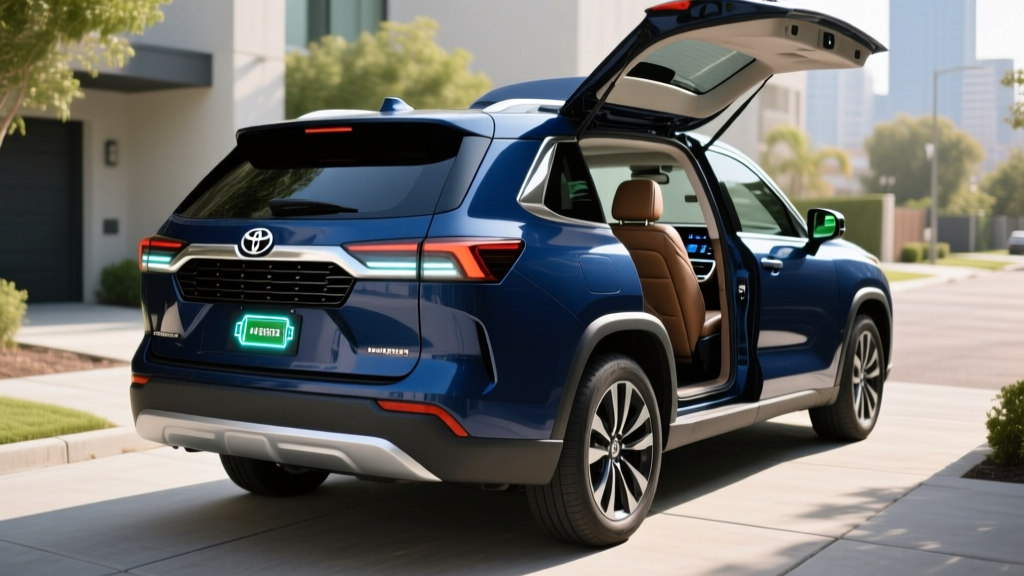
The 2026 Toyota Grand Highlander Hybrid MAX occupies a specific niche: a three-row family hauler with genuine passing power and hybrid efficiency, without the plug. It pairs a turbocharged 2.4-liter four-cylinder with a high-output electric motor and a 6-speed automatic transmission to produce a combined 362 horsepower and 400 lb-ft of torque — figures that make it the most potent Grand Highlander variant Toyota offers. The tradeoff for that extra thrust is fuel economy: the Hybrid MAX is rated at 27 MPG combined by the EPA, trailing the standard Hybrid powertrain by about 7 MPG. For buyers who want three-row space, all-wheel drive, and highway merging confidence without ever searching for a charger, this powertrain makes a compelling case.
| Specification | Value |
|---|---|
| Powertrain | 2.4L turbo I4 + high-output electric motor + 6-speed auto |
| Combined Horsepower | 362 hp |
| Combined Torque | 400 lb-ft |
| Drivetrain | AWD (standard on Hybrid MAX) |
| EPA MPG (City / Hwy / Combined) | 26 / 27 / 27 |
| Fuel Tank Capacity | 17.1 gallons |
| Estimated Total Range | ~460 miles |
| 0–60 mph | ~5.9 seconds (est.) |
| Seating | 7 or 8 passengers |
| Cargo (behind 3rd row / max) | 20.6 / 97.5 cu ft |
| Towing Capacity | 5,000 lbs |
| Hybrid Battery Warranty | 10 years / 150,000 miles |
| Starting MSRP (Limited trim) | ~$55,000 |
HEV vs PHEV: What the Grand Highlander Hybrid MAX Actually Is
Before evaluating the Hybrid MAX, it's essential to understand where it sits in the electrification spectrum. The Grand Highlander Hybrid MAX is a conventional hybrid electric vehicle (HEV) — not a plug-in hybrid (PHEV) and not a battery-electric vehicle (BEV). You never plug it in. The small nickel-metal hydride (NiMH) traction battery charges itself through regenerative braking and the gasoline engine. The electric motor assists during acceleration, enables low-speed electric-only creeping, and smooths stop-start traffic, but it cannot propel the vehicle for meaningful distances on electricity alone.
| Feature | HEV (This Vehicle) | PHEV (e.g., RAV4 Prime) | BEV (e.g., Tesla Model X) |
|---|---|---|---|
| Plug-in Charging? | No | Yes | Yes |
| Electric-Only Range | <1 mile (low-speed) | 20–45 miles typical | 250–400+ miles |
| Battery Size | ~1–2 kWh | ~15–25 kWh | ~75–130 kWh |
| Fuel Needed? | Yes (always) | Yes (after EV range) | No |
| Federal Tax Credit (§30D) | Not eligible | Up to $7,500 (if eligible) | Up to $7,500 (if eligible) |
| Home Charger Needed? | No | Recommended (Level 2) | Essential |
Toyota does not currently offer a plug-in hybrid version of the Grand Highlander. If electric-only commuting is a priority and you need three rows, you'd need to look at vehicles like the Kia Sorento PHEV or wait for future product announcements. The Hybrid MAX is designed for buyers who want hybrid efficiency gains with zero lifestyle change — no charging cables, no range planning, no home electrical upgrades.
Fuel Economy: EPA Ratings and Real-World MPG
The Hybrid MAX's EPA ratings reflect its performance-oriented tuning. Here's how it breaks down according to fueleconomy.gov:
| Powertrain | City MPG | Highway MPG | Combined MPG |
|---|---|---|---|
| Hybrid (standard, AWD) | 34 | 34 | 34 |
| Hybrid MAX (AWD) | 26 | 27 | 27 |
| Gas Turbo 2.4L (AWD) | 20 | 26 | 23 |
The Hybrid MAX sacrifices about 7 MPG combined compared to the standard Hybrid, but it still handily beats the conventional gas-only turbo model by 4 MPG — and delivers an extra 96 horsepower over the standard Hybrid's 245 hp combined output.
Real-World MPG: What to Actually Expect
Toyota hybrids tend to meet or slightly exceed their EPA city ratings in stop-and-go driving, where regenerative braking recaptures the most energy. On the highway, however, the Hybrid MAX's turbocharged engine and full-time AWD system work harder at sustained speeds. In mixed real-world driving, owners commonly report:
- City / suburban driving: 26–29 MPG (regen braking maximizes hybrid assist)
- Highway (70–80 mph): 24–27 MPG (aerodynamic drag and turbo boost reduce gains)
- Cold weather (below 30°F): Expect a 2–4 MPG drop as the engine runs longer to warm the cabin and the battery operates less efficiently
- Towing: 14–18 MPG when pulling near the 5,000-lb maximum
With the 17.1-gallon fuel tank, real-world range typically falls between 400 and 480 miles depending on conditions — enough for most family road trips with a single fill-up.
Powertrain Deep Dive: How Hybrid MAX Works
The Hybrid MAX powertrain is Toyota's performance hybrid architecture, also found in the Crown and Tacoma. Here's how the components work together:
- 2.4L Turbocharged Inline-4: Produces approximately 271 hp and 310 lb-ft on its own. The turbo provides strong low-end torque, which pairs well with electric motor assist for seamless acceleration.
- High-Output Electric Motor: Integrated into the transaxle, the motor adds roughly 83 hp of assist and fills in torque gaps during turbo spool-up and gear shifts.
- 6-Speed Automatic Transmission: Unlike the e-CVT found in the standard Hybrid, the Hybrid MAX uses a conventional geared automatic. This gives it a more familiar driving feel with perceptible gear changes and stronger engine braking.
- NiMH Traction Battery: A compact battery pack (approximately 1.5–2.0 kWh) stores energy from regenerative braking. It's small by PHEV or BEV standards but sufficient for hybrid assist duties.
- AWD System: Standard on all Hybrid MAX trims. A rear-mounted electric motor provides rear-wheel drive when needed, improving traction without a mechanical driveshaft.
The result is a 0–60 mph time in the high-5-second range — genuinely quick for a three-row SUV carrying up to eight passengers. The Hybrid MAX also earns a 5,000-lb towing rating, matching the gas-only turbo model and exceeding the standard Hybrid's 3,500-lb limit.
Pricing, Trims, and Tax Credit Eligibility
The Hybrid MAX is offered exclusively in the upper Grand Highlander trims for the 2026 model year. Pricing starts in the mid-$50,000 range:
- Limited (Hybrid MAX): ~$55,000 MSRP
- Platinum (Hybrid MAX): ~$59,000 MSRP
These prices reflect the Hybrid MAX's standard AWD, upgraded powertrain, and premium trim content. The standard Grand Highlander Hybrid (non-MAX) starts around $47,000 in LE trim, making the MAX a significant step up.
Does the Hybrid MAX Qualify for a Federal Tax Credit?
No. The Grand Highlander Hybrid MAX is a conventional HEV, and under current IRS §30D rules, only plug-in electric vehicles (PHEVs and BEVs) with sufficient battery capacity qualify for the federal Clean Vehicle Credit. Conventional hybrids like the Hybrid MAX are not eligible for the $7,500 credit, the point-of-sale transfer, or the used-EV credit. Some states may offer modest incentives for hybrid purchases — check your state's energy or DMV website — but these are typically $500–$1,500 and vary widely.
Battery Warranty, Reliability, and Replacement Costs
Toyota Hybrid Battery Warranty
Coverage: 10 years or 150,000 miles (whichever comes first), applicable to all 50 states for 2020 and newer Toyota hybrids.
What's covered: The hybrid traction battery and related hybrid-system components (inverter, control module, hybrid-specific cooling). If the battery's capacity drops below a defined threshold or the system fails under normal use, Toyota covers diagnosis, parts, and labor.
Long-Term Reliability Outlook
Toyota's hybrid systems have an extensive track record spanning more than 25 years since the original Prius. The NiMH chemistry used in the Hybrid MAX is less energy-dense than the lithium-ion packs in PHEVs and BEVs, but it is extremely well-proven for longevity. Toyota's hybrid taxi fleets routinely exceed 200,000 miles on original batteries. The Hybrid MAX's turbocharged engine adds a variable — turbos are reliable when maintained but require strict adherence to oil-change intervals (Toyota recommends every 10,000 miles with synthetic 0W-20).
According to IIHS and NHTSA testing, the Grand Highlander platform has performed well in crashworthiness evaluations, and Toyota Safety Sense 3.0 (standard across trims) provides comprehensive ADAS coverage including automatic emergency braking, lane-keeping assist, and adaptive cruise control. Note: Toyota Safety Sense is an SAE Level 2 driver-assistance system — it requires the driver to remain fully engaged at all times and is not a self-driving system.
Battery Replacement Cost (Out of Warranty)
If the hybrid battery fails outside the warranty window, replacement costs for Toyota's mid-size and large hybrid systems typically range from $3,000 to $5,000 including parts and labor. Independent hybrid specialists can sometimes reduce this to $2,000–$3,500 using refurbished or reconditioned packs. Given the 10-year/150,000-mile warranty and Toyota's hybrid reliability history, out-of-pocket battery replacement is uncommon for most original owners.
Who Should Choose the Hybrid MAX — and Who Shouldn't
The Decision Framework
Choose the Grand Highlander Hybrid MAX if:
- You need three rows, AWD, and strong towing capacity (5,000 lbs)
- You want hybrid fuel savings without plugging in or changing habits
- Passing power and highway confidence matter to you (362 hp, 400 lb-ft)
- You drive in cold climates where EV range loss is a concern
- You take frequent road trips to areas with sparse charging infrastructure
Choose the standard Grand Highlander Hybrid (non-MAX) if:
- Maximum fuel economy (34 MPG combined) is your top priority
- You don't need the extra horsepower or 5,000-lb towing capacity
- You want a lower starting price (~$47,000 vs ~$55,000)
Consider a PHEV or BEV instead if:
- You have home charging access and a commute under 30–40 miles (a PHEV could eliminate gas use on most weekdays)
- You want to qualify for the $7,500 federal tax credit (requires a PHEV or BEV)
- You want to minimize lifetime fuel cost and local emissions as much as possible
- You don't need three rows — three-row PHEV options remain limited in 2026
Pros
- 362 hp / 400 lb-ft — quickest Grand Highlander variant
- 27 MPG combined is strong for a 362-hp three-row SUV
- No plugging in — zero lifestyle change vs a gas car
- 5,000-lb towing capacity (standard Hybrid: 3,500 lbs)
- 10-year / 150,000-mile hybrid battery warranty
- Standard AWD with rear electric motor
- Proven Toyota hybrid reliability
Cons
- 7 MPG less than the standard Hybrid powertrain
- No federal tax credit eligibility
- Starts ~$55,000 — limited to upper trims only
- Turbo engine requires strict oil-change discipline
- No plug-in hybrid Grand Highlander option exists
- Real-world highway MPG can dip to mid-20s under load
Frequently Asked Questions
How many MPG does the Grand Highlander Hybrid MAX get?
The EPA rates the 2026 Grand Highlander Hybrid MAX at 26 city / 27 highway / 27 combined MPG. In real-world driving, expect 26–29 MPG in city conditions and 24–27 MPG on the highway. Cold weather and towing will reduce these figures.
Is the Grand Highlander Hybrid MAX a plug-in hybrid?
No. The Hybrid MAX is a conventional hybrid (HEV). It charges its own battery through regenerative braking and the gasoline engine. You never plug it in. Toyota does not currently offer a plug-in hybrid (PHEV) version of the Grand Highlander.
How far can the Hybrid MAX drive on electric power alone?
Like all conventional Toyota hybrids, the Hybrid MAX can travel short distances (typically under 1 mile) at low speeds on electric power alone, such as creeping through a parking lot. It is not designed for meaningful electric-only driving — that's what PHEVs and BEVs are for.
Does the Grand Highlander Hybrid MAX qualify for a tax credit?
Not for the federal §30D Clean Vehicle Credit, which requires plug-in capability and minimum battery capacity. Some states may offer small incentives for hybrid vehicles, but these vary by jurisdiction. Check your state's energy office or DMV for current programs.
How reliable is the Hybrid MAX powertrain?
Toyota's hybrid systems have over 25 years of proven reliability across millions of vehicles. The NiMH battery chemistry is exceptionally durable. The turbocharged 2.4L engine is newer to Toyota's hybrid lineup but shares architecture with well-tested Toyota turbo engines. The hybrid battery is covered by a 10-year / 150,000-mile warranty.
What does a hybrid battery replacement cost?
Out-of-warranty replacement for Toyota's large hybrid battery packs typically costs $3,000–$5,000 at a dealership. Independent hybrid specialists may offer refurbished packs for $2,000–$3,500. Given the 10-year warranty and Toyota's hybrid longevity track record, most original owners never face this expense.
Hybrid MAX vs standard Hybrid — which should I choose?
If you prioritize fuel economy and a lower price, the standard Hybrid (34 MPG combined, starting ~$47,000) is the better value. If you need more power (362 hp vs 245 hp), higher towing capacity (5,000 vs 3,500 lbs), and prefer the feel of a geared automatic over a CVT, the Hybrid MAX justifies its premium — especially if you regularly drive loaded or tow.
Can the Hybrid MAX tow a boat or camper?
Yes. The Hybrid MAX has a 5,000-lb towing capacity when properly equipped, sufficient for most small boats, pop-up campers, and light utility trailers. Expect fuel economy to drop to 14–18 MPG while towing near maximum capacity.