The 2026 GMC Sierra Hybrid: What Truck Buyers Need to Know
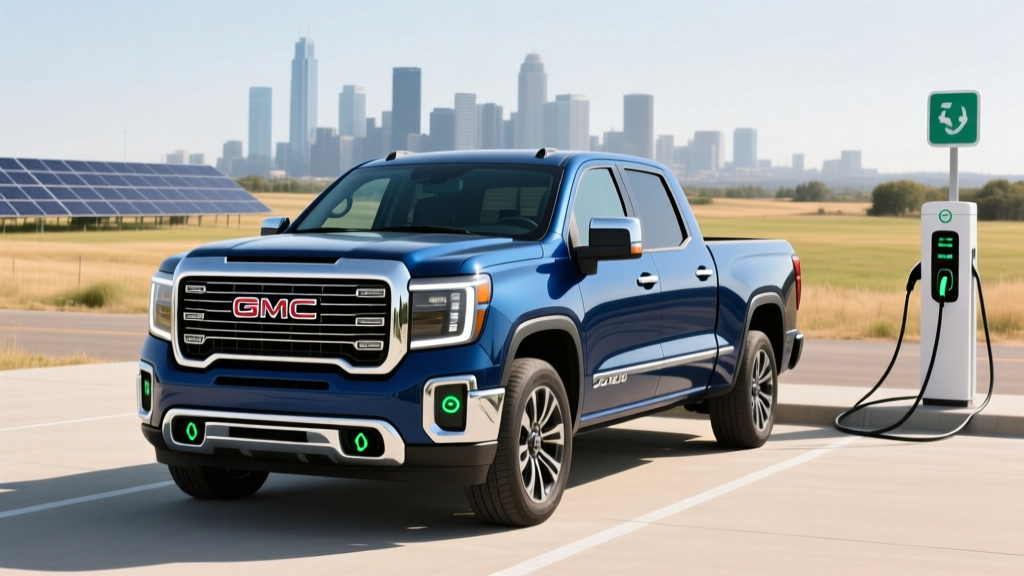
GMC's electrified truck strategy in 2026 centers on the Sierra EV — a fully electric pickup built on GM's Ultium platform. But for buyers searching for a GMC hybrid truck, the picture requires some clarification. Unlike Toyota's Tundra Hybrid (i-Force MAX) or Ford's F-150 PowerBoost, GMC does not currently offer a conventional hybrid (HEV) or plug-in hybrid (PHEV) version of the Sierra. The Sierra lineup splits into two camps: traditional gasoline V8/turbo-four models and the all-electric Sierra EV.
This guide breaks down exactly what GMC offers in 2026 for truck buyers who want electrification, compares the Sierra EV against hybrid competitors, and helps you determine whether a full EV truck, a rival hybrid, or a conventional Sierra best fits your needs.
GMC's 2026 Truck Powertrain Lineup: Gas, EV, and the Missing Hybrid
To understand where a GMC hybrid truck fits — or doesn't — here's how the 2026 Sierra lineup is structured:
Powertrain Definitions
Conventional Hybrid (HEV): Combines a gas engine with a small electric motor and battery (typically 1-2 kWh). The battery recharges through regenerative braking and the engine — you never plug it in. Examples: Toyota Tundra Hybrid, Ford F-150 PowerBoost.
Plug-in Hybrid (PHEV): Pairs a gas engine with a larger battery (typically 12-20+ kWh) and more powerful electric motor. Offers 20-40+ miles of electric-only driving before the gas engine kicks in. You can plug in to recharge. Example: Jeep Wrangler 4xe, Ford Explorer PHEV. No full-size PHEV pickup is currently on the US market.
Battery Electric (BEV): No gas engine at all. Runs entirely on a large battery pack (100+ kWh). Must be plugged in to recharge. Example: GMC Sierra EV, Ford F-150 Lightning, Rivian R1T.
GMC's 2026 Sierra is available as a gasoline truck (2.7L TurboMax I4, 5.3L V8, 6.2L V8, or 3.0L Duramax diesel) or as the Sierra EV (battery electric). There is no HEV or PHEV Sierra for the 2026 model year.
2026 GMC Sierra EV Specs: The Electrified Option
Since the Sierra EV is GMC's only electrified truck, here's a detailed spec breakdown for buyers cross-shopping it against hybrid rivals.
| Specification | Sierra EV Elevation (Extended Range) | Sierra EV AT4 (Extended Range) | Sierra EV Denali (Max Range) |
|---|---|---|---|
| Powertrain | Dual-motor AWD | Dual-motor AWD | Dual-motor AWD |
| Combined Horsepower | ~625 hp | ~625 hp | ~760 hp |
| Battery (usable) | ~200 kWh (Ultium, NMC) | ~200 kWh (Ultium, NMC) | ~200 kWh (Ultium, NMC) |
| EPA Range | ~390 miles | ~360 miles | ~440 miles |
| Max DC Fast Charge | 350 kW (peak) | 350 kW (peak) | 350 kW (peak) |
| 10-80% DC Charge | ~25-30 min | ~25-30 min | ~30-35 min |
| Level 2 Charging (kW) | 11.5 kW | 11.5 kW | 11.5 kW |
| 0-60 mph | ~5.5 sec | ~5.5 sec | ~4.3 sec |
| Max Towing | 12,000 lbs | 12,000 lbs | 10,000 lbs |
| Base MSRP | ~$72,000 | ~$78,000 | ~$98,000 |
Note: Specs based on GM's published 2026 model-year data. Final EPA certification figures may vary slightly by trim and wheel configuration. Source: GMC Sierra EV official page.
Fuel Economy and Range: Sierra EV vs Hybrid Truck Competitors
The most common question from truck buyers considering electrification is efficiency. Here's how the Sierra EV stacks up against the hybrid trucks it competes with on paper:
| Vehicle | Powertrain | EPA City | EPA Highway | EPA Combined | Total Range |
|---|---|---|---|---|---|
| GMC Sierra EV (Elevation) | BEV | — | — | ~58 MPGe | ~390 mi |
| Toyota Tundra Hybrid (i-Force MAX) | HEV | 20 mpg | 24 mpg | 21 mpg | ~670 mi |
| Ford F-150 PowerBoost | HEV | 25 mpg | 26 mpg | 25 mpg | ~700 mi |
| Ford F-150 Lightning | BEV | — | — | ~70 MPGe | ~320 mi |
| GMC Sierra 5.3L V8 (gas) | Gas | 15 mpg | 19 mpg | 17 mpg | ~440 mi |
Sources: fueleconomy.gov, manufacturer specifications. MPGe (miles per gallon equivalent) converts electricity consumption into a gasoline-comparable figure. One gallon of gasoline = 33.7 kWh of electricity.
Real-World Range & MPG Reality Check
Sierra EV: The EPA-estimated 390-mile range assumes mixed driving at moderate temperatures. In real-world highway use at 70+ mph, expect roughly 300-330 miles. In cold weather (below 32°F), range can drop 15-25%, putting realistic winter range at 290-330 miles for the Elevation trim.
Hybrid trucks (Tundra/F-150): Hybrids frequently exceed EPA city estimates in stop-and-go driving where regenerative braking shines. The F-150 PowerBoost often delivers 26-28 mpg in real-world city use. Highway MPG tends to land close to or slightly below EPA stickers — expect 23-25 mpg at 70 mph.
Charging the Sierra EV: Home and Public Infrastructure
Unlike a hybrid truck that you simply fill with gas, the Sierra EV requires a charging strategy. Here's what that looks like in practice:
| Charging Level | Power (kW) | Miles Added Per Hour | Full Charge Time | Where |
|---|---|---|---|---|
| Level 1 (120V) | ~1.4 kW | ~3-4 mi/hr | 50+ hours | Standard outlet |
| Level 2 (240V) | 11.5 kW | ~30-35 mi/hr | ~18-20 hours | Home wallbox, public L2 |
| DC Fast Charge | Up to 350 kW (peak) | ~800+ mi/hr (peak) | 10-80% in ~25-30 min | Public DCFC stations |
Home charging is essential. The Sierra EV's massive ~200 kWh battery makes Level 1 (standard outlet) charging impractical for daily use. A Level 2 home charger (240V, 48-amp circuit) is strongly recommended and adds roughly 30-35 miles of range per hour — enough to fully replenish overnight.
DC fast charging reality: While the Sierra EV can peak at 350 kW on compatible chargers, that peak rate only holds for a portion of the session. The charge curve tapers significantly above 80% state of charge (SoC) to protect battery health. A typical 10-80% session at a 350 kW Electrify America or Tesla Supercharger (with NACS adapter) takes roughly 25-30 minutes. Plan for 35-45 minutes total including slowdown and connector handling.
Connector note: The 2026 Sierra EV uses the NACS (North American Charging Standard) connector, giving it native access to Tesla's Supercharger network — a major infrastructure advantage over CCS-equipped rivals. GM completed its transition to NACS for the 2026 model year.
Pricing, Tax Credits, and Total Cost of Ownership
The Sierra EV's premium pricing is the biggest barrier for buyers cross-shopping hybrid trucks, which start $25,000-$35,000 lower.
| Cost Factor | Sierra EV Elevation | Ford F-150 PowerBoost Hybrid | GMC Sierra 5.3L V8 Gas |
|---|---|---|---|
| Base MSRP | ~$72,000 | ~$58,000 | ~$48,000 |
| Estimated Federal Tax Credit | Up to $7,500* | $0 (HEV ineligible) | $0 |
| 5-Year Fuel/Energy Cost** | ~$5,500 | ~$10,800 | ~$14,500 |
| Estimated Maintenance (5 yr) | ~$1,800 | ~$3,500 | ~$4,000 |
| Estimated Insurance (5 yr) | ~$12,000 | ~$9,500 | ~$8,500 |
| 5-Year Total (before depreciation) | ~$91,300 | ~$81,800 | ~$75,000 |
*Federal §30D tax credit eligibility depends on MSRP caps ($80,000 for trucks/vans), buyer income limits ($300k joint / $150k individual AGI), battery component and critical mineral sourcing requirements, and final assembly in North America. The Sierra EV is assembled at GM's Factory ZERO in Michigan. Credit can now be transferred to the dealer as a point-of-sale discount. Verify current-year eligibility at IRS.gov or consult a tax professional.
**Fuel/energy costs based on 15,000 miles/year, national average electricity rate of $0.17/kWh, and gasoline at $3.40/gallon. Your costs will vary significantly by state and utility rate.
Battery Warranty, Reliability, and Longevity
GMC Sierra EV Battery & Powertrain Warranty
Battery: 8 years / 100,000 miles (whichever comes first), with GM warranting that the Ultium battery will retain at least 70% of its original capacity during the coverage period.
Powertrain (motors, inverter, onboard charger): 5 years / 60,000 miles.
Limited vehicle warranty: 3 years / 36,000 miles bumper-to-bumper.
Reliability considerations: The Sierra EV is still relatively new (first deliveries in 2024), so long-term reliability data spanning 5-10 years doesn't exist yet. GM's Ultium platform has seen fewer widespread battery degradation complaints compared to earlier-generation EVs, and the NMC chemistry used in Ultium packs is well-understood. However, the Sierra EV's complexity — dual motors, large battery pack, advanced thermal management — means repair costs outside warranty could be significant.
Battery replacement cost: If the ~200 kWh Ultium battery requires full replacement outside warranty, current industry estimates for a pack of this size range from $20,000 to $30,000+ including labor. However, full battery replacement is rare; most out-of-warranty failures involve individual module replacements at a fraction of that cost.
Hybrid truck comparison: The Toyota Tundra Hybrid and Ford F-150 PowerBoost both carry 8-year/100,000-mile hybrid battery warranties (10 years/150,000 miles in CARB states). Because their hybrid batteries are much smaller (1.5-2 kWh), replacement costs are typically $2,000-$5,000 — dramatically less than an EV battery swap.
Sierra EV vs Hybrid Trucks: Which Should You Choose?
Choose the GMC Sierra EV if:
- You can charge at home (Level 2 strongly recommended for a 200 kWh battery)
- Your daily driving is under 250 miles and you take road trips infrequently, or you're comfortable planning DC fast-charge stops
- You want maximum torque (580+ lb-ft), instant acceleration, and a quiet powertrain
- You value access to Tesla's Supercharger network via NACS
- You qualify for the $7,500 federal tax credit, narrowing the price gap
- You need V2H (vehicle-to-home) backup power capability — available on Sierra EV with the Energy Transfer Pro accessory
Choose a Hybrid Truck (Tundra Hybrid / F-150 PowerBoost) if:
- You cannot install a home charger (apartment, no garage, landlord restrictions)
- You regularly tow heavy loads over long distances — hybrids don't suffer the 30-50% range loss that EVs experience when towing
- You need total range exceeding 600+ miles without stopping
- Upfront cost is a primary concern — hybrids start $20,000-$35,000 lower
- You drive in extreme cold frequently and don't want to manage range loss
- You prefer proven long-term reliability data — Toyota's hybrid system has two decades of real-world track record
Choose a Gas Sierra if:
- You need the lowest purchase price and simplest ownership
- You drive low annual miles (under 8,000) where fuel savings won't offset higher upfront costs
- You frequently operate in remote areas with no charging or reliable fuel infrastructure
Sierra EV Pros
- Class-leading range (up to 440 mi on Denali Max Range)
- 350 kW DC fast charging capability
- NACS connector = native Tesla Supercharger access
- Massive torque, smooth acceleration, quiet cabin
- V2H backup power capability
- Lower per-mile "fuel" cost vs gas/diesel
- Minimal scheduled maintenance (no oil changes, fewer brake replacements due to regen)
Sierra EV Cons
- High starting price (~$72,000+)
- Very large battery means long Level 2 charge times (~18-20 hrs from empty)
- Significant range loss when towing (expect 40-50% reduction)
- Limited long-term reliability data
- Potentially expensive out-of-warranty battery repair
- Insurance premiums 15-25% higher than gas equivalents
- Heavy curb weight (~9,000 lbs) affects tire wear and handling
Frequently Asked Questions
Does GMC make a hybrid truck in 2026?
No. GMC does not offer a conventional hybrid (HEV) or plug-in hybrid (PHEV) version of the Sierra for the 2026 model year. GMC's electrified truck option is the Sierra EV, which is a fully electric (BEV) pickup. If you specifically need a full-size hybrid pickup, the Toyota Tundra i-Force MAX and Ford F-150 PowerBoost are the primary options.
How many MPGe does the GMC Sierra EV get?
The 2026 Sierra EV Elevation Extended Range is rated at approximately 58 MPGe combined by the EPA. The Denali Max Range, due to its heavier weight and larger wheel options, drops slightly. For context, the Ford F-150 Lightning achieves roughly 70 MPGe combined — the Lightning is lighter and uses a smaller battery. MPGe is useful for comparing energy costs but doesn't tell the full story; the Sierra EV's efficiency is roughly 55-60 kWh per 100 miles driven.
How far can the Sierra EV go on a single charge in the real world?
The EPA rates the Elevation Extended Range at approximately 390 miles. In real-world mixed driving at moderate temperatures, owners report 340-370 miles. Highway-only driving at 75+ mph drops that to roughly 300-330 miles. In winter conditions below freezing, expect 290-330 miles. The Denali Max Range's 440-mile EPA figure translates to roughly 370-400 real-world miles in favorable conditions.
Does the Sierra EV qualify for the $7,500 federal tax credit?
The Sierra EV is assembled at GM's Factory ZERO in Detroit-Hamtramck, Michigan, satisfying the North American final assembly requirement. It falls under the $80,000 MSRP cap for trucks/vans/SUVs (though higher trims like the Denali Max Range may exceed this cap). Eligibility also depends on buyer income limits, battery component sourcing, and critical mineral requirements that evolve annually. Check the latest eligibility at fueleconomy.gov and confirm with a tax professional before purchasing.
Is the Sierra EV reliable? What about battery replacement cost?
Long-term reliability data is limited since the Sierra EV launched for the 2024 model year. GM's Ultium battery platform is backed by an 8-year/100,000-mile warranty with a 70% capacity retention guarantee. Full battery replacement outside warranty is estimated at $20,000-$30,000+, though individual module repairs cost far less. For buyers prioritizing proven reliability, hybrid trucks from Toyota carry a strong long-term track record.
Can I charge the Sierra EV at Tesla Superchargers?
Yes. The 2026 Sierra EV comes equipped with the NACS (North American Charging Standard) connector, providing native access to Tesla's Supercharger network without an adapter. This is a significant advantage for long-distance travel, as Tesla's network remains the largest and most reliable DC fast-charging network in North America.
How much does it cost to charge the Sierra EV at home?
At the national average electricity rate of $0.17/kWh, fully charging the Sierra EV's ~200 kWh battery from empty costs roughly $34. In practice, most owners charge from 20-80% daily, costing approximately $20. This compares to roughly $75-$90 to fill the gas Sierra's 24-gallon tank at $3.40/gallon. Over 15,000 miles per year, Sierra EV electricity costs average roughly $1,100 versus $2,900 for the gas Sierra at 17 mpg combined.