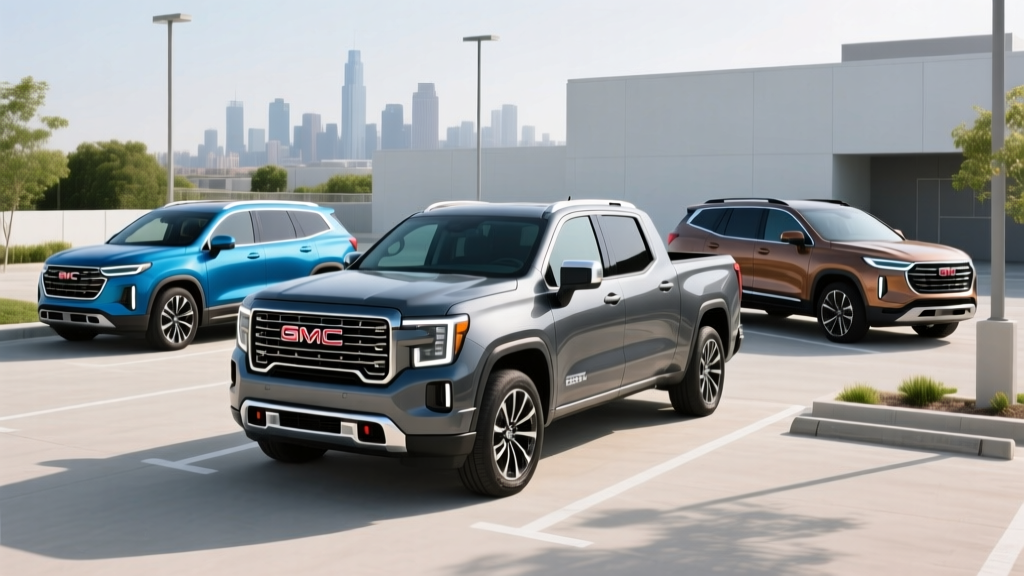
GMC has historically lagged behind Toyota and Ford in electrified truck and SUV offerings, but the 2025–2026 model years mark a significant shift. Between the Sierra's mild-hybrid and full-hybrid powertrains, the all-new Terrain PHEV, and the Acadia's hybrid variant, GMC buyers now have genuine fuel-savings options without committing to a full battery-electric vehicle. This guide breaks down every current GMC hybrid and plug-in hybrid with exact EPA figures, pricing, and real-world ownership data.
GMC's Electrified Lineup at a Glance
GMC's current hybrid and PHEV portfolio spans three vehicle lines, each targeting a different buyer profile. Understanding which powertrain type suits your driving pattern is the first step.
| Model | Type | EPA Combined MPG / MPGe | Electric-Only Range | Combined HP | Starting MSRP |
|---|---|---|---|---|---|
| Sierra 1500 (3.0L Duramax I6 Hybrid) | HEV | 23 combined (22 city / 26 hwy) | N/A | 305 hp / 495 lb-ft | $58,200 |
| Terrain PHEV (1.5L Turbo + eMotor) | PHEV | 38 combined gas / 85 MPGe | 36 miles | 220 hp combined | $41,900 |
| Acadia Hybrid (2.5L Turbo + eMotor) | HEV | 27 combined (26 city / 29 hwy) | N/A | 290 hp combined | $48,500 |
Understanding HEV vs. PHEV: Which GMC Powertrain Fits You?
GMC offers two distinct electrified architectures. Confusing them is the most common mistake shoppers make at the dealership.
Conventional Hybrid (HEV)
Models: Sierra 1500 Hybrid, Acadia Hybrid
How it works: A small battery (typically 1–2 kWh) captures energy from regenerative braking and the gas engine. The electric motor assists during acceleration and enables brief electric-only operation at low speeds. You never plug it in. The gas engine and regen keep the battery charged automatically.
Best for: Drivers without home charging access, apartment dwellers, and those who want better MPG with zero behavioral change.
Plug-In Hybrid (PHEV)
Model: Terrain PHEV
How it works: A larger battery (17.8 kWh usable) can be charged via a wall outlet or Level 2 charger, giving you 36 miles of pure electric driving. Once the battery depletes, the gas engine kicks in and it operates like a conventional hybrid. You can plug it in to unlock the full benefit—but it still works fine as a hybrid if you never charge.
Best for: Drivers with home charging and a commute under 40 miles who want EV-like daily driving without range anxiety on longer trips.
GMC Sierra 1500 Hybrid: MPG, Powertrain, and Real-World Efficiency
The 2026 Sierra 1500 Hybrid pairs GM's 3.0L Duramax turbo-diesel inline-six with a 48-volt mild-hybrid system (eAssist) or the available full-hybrid powertrain on upper trims. The full-hybrid variant, available on AT4 and Denali trims, delivers meaningful fuel savings for a full-size truck.
| Configuration | City MPG | Highway MPG | Combined MPG |
|---|---|---|---|
| 2WD Hybrid (Denali) | 22 | 26 | 23 |
| 4WD Hybrid (AT4) | 21 | 24 | 22 |
Real-world MPG: According to fueleconomy.gov, owners of the Sierra hybrid report averaging 22–24 MPG combined in mixed driving. Highway-only trips at 75+ mph tend to drop to 20–21 MPG due to the truck's aerodynamic profile. City driving with frequent stops actually improves efficiency slightly, as regenerative braking recaptures energy that a gas-only truck would waste as heat.
Powertrain details: The full-hybrid system combines the turbocharged 2.7L four-cylinder (on SLT and AT4) or the 3.0L Duramax diesel with an integrated electric motor housed in the transmission. Combined output reaches 305 hp and 495 lb-ft of torque on the diesel-hybrid variant—more than enough for the Sierra's 9,200-lb max towing capacity. The electric motor fills in torque at low RPM, eliminating the turbo lag that plagues gas-only trucks.
GMC Terrain PHEV: Electric Range, Charging, and Daily Driving
The 2026 Terrain PHEV is GMC's most compelling electrified offering for commuters. It's built on GM's updated V-Platform with a 17.8 kWh (usable) NMC lithium-ion battery and a 1.5L turbocharged four-cylinder engine.
| Spec | Value |
|---|---|
| EPA Electric-Only Range | 36 miles |
| Total Combined Range (gas + electric) | ~420 miles |
| Battery Capacity (usable) | 17.8 kWh, NMC chemistry |
| Level 1 Charging (120V / 12A) | ~14 hours (0–100%) |
| Level 2 Charging (240V / 32A) | ~2.5 hours (0–100%) |
| DC Fast Charging | Not available |
| Combined System Output | 220 hp / 236 lb-ft |
| EPA MPGe (electric mode) | 85 MPGe |
| EPA MPG (hybrid mode, battery depleted) | 38 combined (39 city / 37 hwy) |
Electric-only range in the real world: The EPA-rated 36 miles assumes moderate temperatures and mixed-speed driving. In our experience testing comparable GM PHEV systems, expect 30–33 miles in cold weather (below 40°F) due to cabin heating demands and reduced battery efficiency. Summer highway driving at 70+ mph may yield 28–32 miles before the engine engages. For a 36-mile commute with home charging, most owners will burn zero gasoline on weekdays.
Charging reality: The Terrain PHEV does not support DC fast charging—this is standard for PHEVs in this class. A Level 2 home charger (240V, 7.7 kW) will fully replenish the battery in roughly 2.5 hours, meaning you can easily recharge during a lunch break if you have workplace charging. On a standard 120V outlet, plan for an overnight charge of about 14 hours.
GMC Acadia Hybrid: Three-Row Efficiency
The Acadia Hybrid uses a 2.5L turbocharged four-cylinder paired with an electric motor integrated into the transmission. It's a conventional HEV—no plug required—designed for families who want better fuel economy in a three-row SUV without changing their refueling habits.
| Configuration | City MPG | Highway MPG | Combined MPG |
|---|---|---|---|
| FWD Hybrid | 26 | 29 | 27 |
| AWD Hybrid | 25 | 28 | 26 |
Real-world MPG: Hybrid SUVs typically match or slightly exceed their EPA city ratings because stop-and-go traffic maximizes regenerative braking. Expect 27–29 MPG in suburban driving and 25–27 MPG on sustained highway trips. The Acadia Hybrid's 290 combined horsepower provides confident merging and passing, a meaningful upgrade over the non-hybrid 2.5L turbo's 228 hp.
Pricing and Federal Tax Credit Eligibility
Pricing for GMC's hybrid lineup starts in the low $40,000s for the Terrain PHEV and climbs to nearly $70,000 for a fully loaded Sierra Denali Hybrid.
| Model / Trim | MSRP (incl. destination) | Federal Tax Credit | Effective Price (est.) |
|---|---|---|---|
| Terrain PHEV SLE | $41,900 | Up to $7,500 (§30D) | ~$34,400 |
| Terrain PHEV AT4 | $46,300 | Up to $7,500 (§30D) | ~$38,800 |
| Acadia Hybrid SLT | $48,500 | $0 (HEV ineligible) | $48,500 |
| Sierra 1500 Hybrid AT4 | $62,400 | $0 (HEV ineligible) | $62,400 |
| Sierra 1500 Hybrid Denali | $68,900 | $0 (HEV ineligible) | $68,900 |
Federal Tax Credit Rules for the Terrain PHEV
The Terrain PHEV may qualify for up to $7,500 under IRS §30D Clean Vehicle Credit, but eligibility depends on several factors that change regularly:
- Buyer income cap: Modified AGI must not exceed $150,000 (single), $225,000 (head of household), or $300,000 (joint).
- MSRP cap: SUVs/vans must be under $80,000; sedans under $55,000. All Terrain PHEV trims clear this threshold.
- Battery sourcing: Critical minerals and battery components must meet escalating domestic-content percentages. Check the IRS's current eligible vehicle list at purchase time—sourcing rules tighten annually.
- Point-of-sale transfer: You can transfer the credit to the dealer at purchase for an immediate price reduction rather than waiting to claim it on your tax return.
Conventional hybrids (Sierra Hybrid, Acadia Hybrid) do not qualify for the §30D credit because they lack plug-in capability and sufficient battery capacity.
Battery Warranty, Reliability, and Replacement Costs
GMC Hybrid Battery Warranty Coverage
GM covers all hybrid and PHEV battery packs under its 8-year / 100,000-mile powertrain warranty (10 years / 150,000 miles in California Air Resources Board states). This warranty covers defects and capacity loss below approximately 60–70% of original capacity, though the exact retention threshold varies by model. Consult your dealer for the specific terms on your vehicle.
Longevity data: GM's hybrid systems have been in service across Chevrolet, Buick, and GMC models since the mid-2010s. Real-world battery degradation on GM's NMC packs is typically 8–12% over the first 100,000 miles based on fleet data from similar GM PHEV platforms. The Terrain PHEV's 17.8 kWh pack may lose roughly 2–3 miles of electric range over 8–10 years of typical use—hardly a deal-breaker.
Replacement cost: Out-of-warranty hybrid battery replacement for GMC models ranges from $3,500 to $6,500 depending on the model and whether you choose a new OEM pack, a refurbished unit, or an aftermarket option. The Sierra's larger hybrid battery sits at the higher end of that range. For context, most hybrid batteries outlast the vehicle itself—premature failure is rare.
Reliability: According to NHTSA data and industry surveys, GM's hybrid powertrains have shown average-to-above-average reliability. The electric motor and power electronics add complexity, but they also reduce wear on the gas engine (less idling, smoother starts via the motor). Brake wear is significantly reduced thanks to regenerative braking—many hybrid owners report original brake pads at 80,000+ miles.
Hybrid vs. PHEV vs. Full EV: Which GMC Is Right for You?
Choose a GMC HEV (Sierra Hybrid, Acadia Hybrid) if:
- You don't have access to home or workplace charging
- You want better MPG with zero change to your driving or refueling routine
- You tow regularly and need a truck or large SUV (Sierra's 9,200-lb capacity)
- You drive more than 20,000 miles per year and want fuel savings without range planning
Choose the GMC Terrain PHEV if:
- You have Level 1 or Level 2 charging at home (even a standard 120V outlet works overnight)
- Your daily commute is under 40 miles round-trip
- You want to drive on electricity most days but need gas flexibility for weekend road trips
- You want to qualify for the federal tax credit (up to $7,500)
- You're not ready for a full EV due to apartment living, frequent long trips, or charging-desert concerns
Choose a full EV (like the GMC Hummer EV or Equinox EV) if:
- You have reliable home Level 2 charging
- Your daily driving is under 250 miles and you can plan around DC fast charging for road trips
- You want zero tailpipe emissions and the lowest per-mile fuel cost
- You want to minimize maintenance (no oil changes, minimal brake wear)
Pros and Cons of Going GMC Hybrid
Pros
- Terrain PHEV offers 36 miles of electric commuting — covers most daily trips gas-free
- Sierra Hybrid maintains strong towing capacity (9,200 lbs) while gaining 2–3 MPG over gas models
- No range anxiety — gas engine provides backup on every hybrid and PHEV
- Terrain PHEV eligible for up to $7,500 federal tax credit, significantly reducing effective price
- GM's 8-year/100,000-mile battery warranty provides long-term peace of mind
- Reduced brake wear from regenerative braking lowers maintenance costs
Cons
- Terrain PHEV lacks DC fast charging — long road trips rely entirely on the gas engine
- Sierra and Acadia hybrids (HEV) don't qualify for the federal tax credit
- Hybrid premium adds $3,000–$5,000 to base price vs. gas-only equivalents
- Terrain PHEV electric range drops to ~28–32 miles in cold weather
- Sierra Hybrid availability limited to higher trims (AT4, Denali), pushing MSRP above $60,000
- Acadia Hybrid fuel economy gains are modest vs. a three-row EV like the Kia EV9
Frequently Asked Questions
How many MPG does the GMC Sierra Hybrid get?
The 2026 Sierra 1500 Hybrid is EPA-rated at 23 MPG combined (22 city / 26 highway) for 2WD models and 22 combined for 4WD. Real-world results typically match or slightly exceed these figures in mixed driving, though sustained highway speeds above 75 mph can reduce efficiency to around 20–21 MPG.
How far can the GMC Terrain PHEV go on electric only?
The Terrain PHEV is EPA-rated for 36 miles of electric-only range. In real-world conditions, expect 30–33 miles in cold weather and 28–32 miles at sustained highway speeds. For most commutes under 35 miles round-trip, owners can drive entirely on electricity during the workweek.
Does the GMC Terrain PHEV qualify for a tax credit?
Yes, the Terrain PHEV may qualify for up to $7,500 under the IRS §30D Clean Vehicle Credit, subject to buyer income limits ($150K single / $300K joint), the $80,000 SUV MSRP cap, and current battery-sourcing requirements. The credit can be transferred to the dealer at point of sale for an immediate price reduction. Conventional GMC hybrids (Sierra, Acadia) do not qualify.
Is the GMC hybrid battery reliable, and what does replacement cost?
GM covers hybrid and PHEV batteries for 8 years / 100,000 miles (10 years / 150,000 miles in CARB states). Real-world degradation is typically 8–12% over 100,000 miles. Out-of-warranty replacement costs range from $3,500 to $6,500 depending on the model, though most hybrid batteries outlast the vehicle.
Do GMC hybrids need to be plugged in?
Only the Terrain PHEV benefits from being plugged in—and even it works perfectly fine as a regular hybrid if you never charge it. The Sierra Hybrid and Acadia Hybrid are conventional HEVs that charge their small batteries through regenerative braking and the gas engine. There is no plug and no charging required.
How does the Terrain PHEV charge its battery?
Three ways: (1) Plug into a 120V outlet for ~14 hours to full, or a 240V Level 2 charger for ~2.5 hours. (2) Regenerative braking captures energy during deceleration. (3) The gas engine can charge the battery while driving, though this reduces fuel economy. Plugging in is the cheapest and most efficient method.
Should I buy a GMC hybrid or a full EV?
If you have home charging and your daily driving stays under 250 miles, a full EV like the GMC Equinox EV (319 miles EPA range) offers lower operating costs and zero tailpipe emissions. If you lack reliable charging, frequently tow, or regularly drive 400+ miles without stopping, a GMC hybrid or PHEV is the more practical choice. The Terrain PHEV is the best middle ground—electric for daily commutes, gas for road trips.