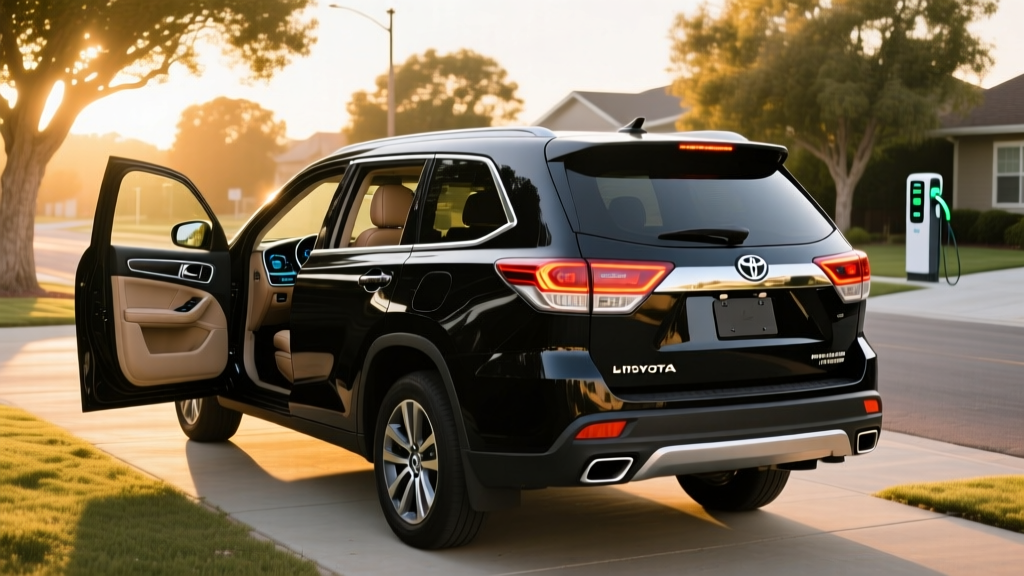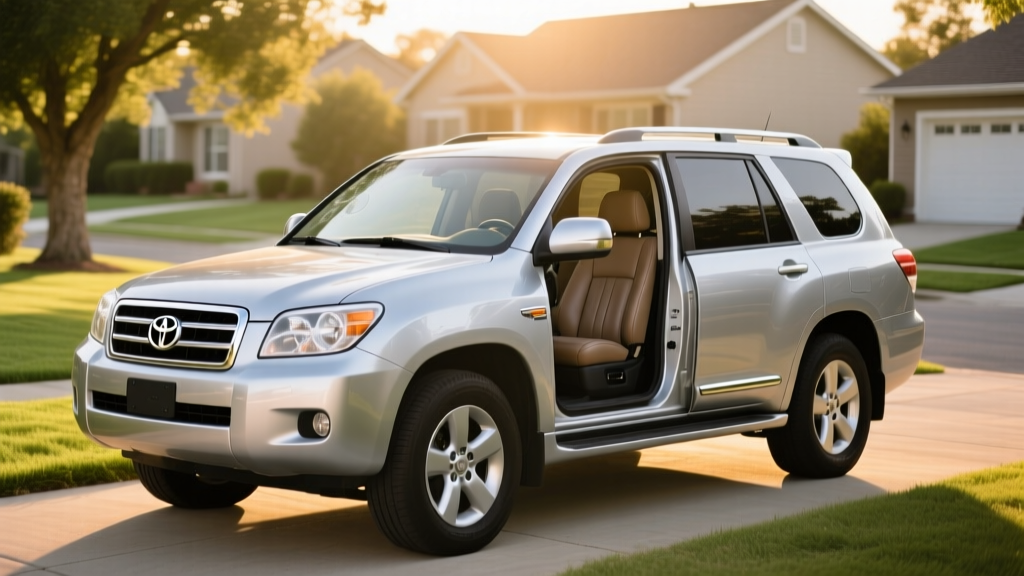
Why the 2007 Toyota Highlander Hybrid SUV Still Matters in 2026
Nearly two decades after it rolled off the assembly line, the 2007 Toyota Highlander Hybrid SUV remains one of the most searched used hybrids on the market — and for good reason. It was Toyota's first hybrid SUV sold in the United States, pairing a 3.3-liter V6 with an electric motor system to deliver mid-20s fuel economy in a three-row family hauler. For budget-conscious buyers eyeing the used hybrid market in 2026, the second-generation Highlander Hybrid represents a known quantity: proven Toyota Hybrid Synergy Drive (HSD) engineering, widely available parts, and a track record that stretches across hundreds of thousands of real-world miles.
But buying a nearly 20-year-old hybrid SUV requires clear-eyed analysis, not nostalgia. The nickel-metal hydride (NiMH) traction battery is well past its original warranty window, fuel economy figures need context against modern hybrids, and the AWD system behaves differently than Toyota's current e-AWD setups. This guide breaks down every number that matters — MPG, horsepower, battery specs, replacement costs, and reliability data — so you can decide whether a 2007 Highlander Hybrid is a smart buy or a money pit waiting to happen.
HEV vs PHEV: Where the 2007 Highlander Hybrid Fits
Important distinction: The 2007 Toyota Highlander Hybrid is a conventional hybrid (HEV), not a plug-in hybrid (PHEV). It does not have a charging port, cannot be plugged in, and has no electric-only driving range. The high-voltage battery recharges exclusively through regenerative braking and the gasoline engine. If you're looking for plug-in capability with electric-only miles, you'll need to consider a newer PHEV like the Toyota RAV4 Prime or the current-generation Highlander Hybrid (which remains an HEV — Toyota has never offered a plug-in Highlander).
This matters because some used-car shoppers conflate "hybrid" with "plug-in." The 2007 Highlander Hybrid operates exactly like a modern Toyota Camry Hybrid or Corolla Hybrid: the electric motor assists the gas engine, captures braking energy, and enables brief low-speed electric-only movement, but the gasoline V6 is always the primary energy source. You fuel it at a gas station. No home charger required, no charging anxiety, no plug.
Fuel Economy: EPA Ratings vs Real-World MPG
| Driving Condition | EPA Rating | Real-World Expectation |
|---|---|---|
| City | 31 MPG | 28–33 MPG (hybrids often exceed EPA in stop-and-go) |
| Highway | 25 MPG | 23–26 MPG (hybrid advantage diminishes at sustained speed) |
| Combined | 26 MPG | 24–28 MPG depending on driving mix |
The EPA's fueleconomy.gov listing rates the 2007 Highlander Hybrid at 31 city / 25 highway / 26 combined MPG for the 4WD-i model. For a 4,000-pound, three-row SUV from 2007, those numbers were genuinely impressive — and they still hold up against many non-hybrid crossovers sold today.
Real-world context: Hybrid systems shine in city driving where regenerative braking frequently recaptures energy and the engine shuts off at stops. Owners who do mostly urban and suburban driving often report 28–30+ MPG combined. Highway-heavy commuters should expect figures closer to 23–25 MPG, since the electric motor provides minimal assistance at sustained 70+ mph speeds and the V6 does most of the work. Cold weather reduces MPG by roughly 10–15% as the engine runs more often to provide cabin heat and the NiMH battery operates less efficiently at low temperatures.
For comparison, a 2026 Toyota Highlander Hybrid (the current generation) achieves an EPA-rated 35–36 MPG combined — roughly 35% better than this 2007 model. That efficiency gap reflects nearly two decades of hybrid system refinement, a lighter unibody platform, and a more efficient 2.5-liter four-cylinder-based powertrain replacing the original 3.3L V6.
Powertrain Specs: Horsepower, Engine, and Hybrid System
| Specification | 2007 Highlander Hybrid |
|---|---|
| Engine | 3.3L V6 (3MZ-FE) |
| Engine HP | 208 HP @ 5,600 RPM |
| Engine Torque | 212 lb-ft @ 4,400 RPM |
| Electric Motor (front) | Permanent magnet synchronous, integrated in transaxle |
| Net System HP | 208 HP (combined engine + motor output) |
| Rear Motor (4WD-i) | Independent rear electric motor, no mechanical driveshaft |
| Transmission | eCVT (electronically controlled continuously variable) |
| Drivetrain | FWD standard; 4WD-i (electric rear axle) optional |
| 0–60 MPH | ~7.8 seconds (est.) |
| Towing Capacity | 3,500 lbs (when properly equipped) |
| Seating | Up to 7 passengers |
The 2007 Highlander Hybrid uses Toyota's Hybrid Synergy Drive system, which combines the 3.3-liter 3MZ-FE V6 engine with a front-mounted electric motor/generator inside the transaxle. The net system output is 208 horsepower — a figure determined by the combined power available at the point where both the engine and motor contribute simultaneously, not by simply adding peak outputs together.
The 4WD-i models feature an independent rear electric motor that powers the rear wheels when the system detects front-wheel slip or during hard acceleration. There is no mechanical driveshaft connecting the front and rear axles — this was an early version of what Toyota now calls "e-AWD." The system is effective for light traction needs (rain, snow, gravel) but is not designed for serious off-road use.
The eCVT transmission uses a planetary gearset rather than a belt-and-pulley design, which is a key reliability advantage. Unlike conventional CVTs found in some competitors, Toyota's eCVT has no belts or cones to wear out. It's essentially a mechanical power-split device with very few failure points, and it's a major reason these drivetrains routinely exceed 200,000 miles with basic maintenance.
Hybrid Battery: Specs, Lifespan, and Replacement Cost
Original Battery Warranty: Toyota covered the hybrid battery and related components for 8 years / 100,000 miles (extended to 10 years / 150,000 miles in states following California emissions standards — CARB states). For a 2007 model, this warranty expired between 2015 and 2017 at the latest.
Battery Chemistry: Nickel-Metal Hydride (NiMH), approximately 1.9 kWh capacity (nominal). This is a small, high-voltage (~288V) pack designed for assist and regen, not for electric-only range.
How long does the battery last? The NiMH battery in the 2007 Highlander Hybrid has proven to be one of the more durable hybrid batteries Toyota has produced. Many examples have exceeded 150,000–200,000 miles on the original pack. However, at 17–19 years old in 2026, age-related degradation is a real factor regardless of mileage. NiMH cells lose capacity over time even with moderate use, and heat exposure accelerates this process.
Signs of hybrid battery degradation:
- Noticeably reduced fuel economy (dropping below 22–23 MPG combined)
- More frequent engine cycling on and off
- The battery charge indicator on the dash rarely shows full or drops rapidly
- Reduced regenerative braking feel
- A hybrid system warning light or check engine light with codes P0A80 (replace hybrid battery) or individual module imbalance codes
Battery replacement cost in 2026:
- New OEM Toyota battery: $2,500–$3,500 installed at a dealership (part number varies; availability for the 2007 model year may be limited)
- Remanufactured/reconditioned battery: $1,200–$2,200 installed from hybrid battery specialists (companies like Green Bean Battery, Dorman, or regional hybrid shops)
- Individual module replacement: $300–$800 if only one or two of the 30 NiMH modules have failed — a hybrid specialist can test and replace individual modules rather than the entire pack
- Used/salvage battery: $400–$800 from a junkyard, but this is risky given the age of any donor pack from a similar-era vehicle
For a used 2007 Highlander Hybrid purchase, budget $1,500–$2,500 as a contingency for hybrid battery service within your first few years of ownership unless the seller can provide documentation of a recent replacement. This is the single biggest financial variable when buying this vehicle.
Pricing and Tax Credit Eligibility
Original MSRP (2007): The Highlander Hybrid started at approximately $33,000–$35,000 for the base trim and reached $40,000+ for a fully loaded Limited model — a significant premium over the non-hybrid Highlander at the time.
Used market pricing in 2026: Expect to pay between $4,500 and $8,500 for a 2007 Highlander Hybrid depending on mileage, condition, battery health, and trim level. Examples with a documented recent battery replacement command a $1,500–$2,000 premium. Clean, low-mileage Limited models can push toward $9,000–$10,000 from private sellers.
Federal tax credit status: The 2007 Toyota Highlander Hybrid does not qualify for any current federal tax credit. The original hybrid vehicle tax credit under the Energy Policy Act of 2005 phased out for Toyota in 2007 after the manufacturer hit the 60,000-unit cap. Under current IRS §30D rules, only new plug-in electric vehicles (BEVs and PHEVs) with sufficient battery capacity qualify for credits — conventional hybrids like this one are ineligible. The IRS clean vehicle credit page confirms that HEVs do not meet the criteria.
There is also no federal used-EV credit (§25E) available for this vehicle, as that credit applies only to used plug-in EVs and fuel cell vehicles with a minimum 7 kWh battery capacity sold for $25,000 or less. The Highlander Hybrid's NiMH pack is far below that threshold.
Reliability: What Owners and Data Show
The 2007 Highlander Hybrid benefits from Toyota's reputation for hybrid system durability, but it's essential to separate the hybrid powertrain from the rest of the vehicle.
Hybrid system reliability: Excellent. The eCVT transaxle, electric motors, and power electronics in this generation have proven remarkably robust. The planetary gearset design has virtually no wear components beyond standard transmission fluid, and the electric motors have no brushes or contacts to degrade. Inverter failures are rare but not unheard of — a replacement inverter runs $1,000–$1,800 if needed.
Non-hybrid reliability concerns:
- Power steering: The electric power steering rack on this generation can develop leaks or fail; replacement runs $800–$1,200
- Brake actuator: The regenerative braking system uses an electro-hydraulic brake actuator that can fail on higher-mileage examples. This is a known issue and replacement costs $1,200–$1,800 at a dealer. Check for any outstanding recalls or TSBs
- Water pump: Both the engine water pump and the inverter coolant pump should be inspected; the inverter pump failure can overheat the hybrid system
- Suspension and bushings: At 17–19 years old, control arm bushings, struts, and sway bar links are likely due for replacement if not already done
- Rust: Frame and underbody rust is a concern in salt-belt states; inspect thoroughly before purchase
The NHTSA vehicle page lists any open recalls and complaints for this model year — always check by VIN before purchasing.
Who Should Buy the 2007 Highlander Hybrid vs Alternatives
Pros
- Proven, durable hybrid system with 200,000+ mile potential
- 26 MPG combined is solid for a three-row AWD SUV of this era
- 3,500-lb towing capacity (rare for hybrids at this price point)
- No plug-in charging required — fuel it like any gas car
- Abundant parts availability and hybrid specialist support
- 35% better city MPG than the non-hybrid V6 Highlander
Cons
- Hybrid battery replacement risk ($1,200–$3,500) is likely within first few years
- 10+ MPG behind the current-generation Highlander Hybrid
- Outdated infotainment and safety tech (no backup camera standard, no Toyota Safety Sense)
- Brake actuator failures are a known costly issue
- No tax credits or incentives available
- Dated interior materials and ride quality by 2026 standards
Buy the 2007 Highlander Hybrid if:
- You need a three-row SUV with AWD on a sub-$10,000 budget
- Your driving is mostly city and suburban (where the hybrid advantage is greatest)
- You can verify hybrid battery health before purchase or budget for replacement
- You want hybrid fuel savings without any charging infrastructure
- You need 3,500-lb towing on a hybrid budget
Look elsewhere if:
- You want modern safety tech (automatic emergency braking, lane-keeping, blind-spot monitoring) — consider a 2018+ Highlander Hybrid or RAV4 Hybrid
- You want plug-in electric-only range — the RAV4 Prime PHEV offers 42 miles electric-only
- You drive mostly highway miles — the hybrid advantage shrinks, and a clean diesel or efficient gas crossover may be comparable
- You want to avoid the battery replacement gamble entirely — a conventional gas Highlander at a lower purchase price may cost the same over 3–5 years once a $2,000 battery job is factored in
Frequently Asked Questions
How many MPG does the 2007 Toyota Highlander Hybrid get?
The EPA rates it at 31 city / 25 highway / 26 combined MPG. Real-world results typically range from 24–28 MPG combined depending on driving conditions, with city-heavy drivers seeing the best results and highway commuters seeing figures closer to 23–25 MPG.
Does the 2007 Highlander Hybrid need to be plugged in?
No. This is a conventional hybrid (HEV), not a plug-in hybrid. It has no charging port. The battery recharges through regenerative braking and the gasoline engine. You simply fill it with regular unleaded gasoline.
Is the 2007 Highlander Hybrid reliable?
The hybrid powertrain itself — the eCVT, electric motors, and power electronics — is among the most reliable Toyota has ever built. The main reliability concerns are age-related: the NiMH hybrid battery may need replacement ($1,200–$3,500), the brake actuator is a known failure point, and suspension components are likely worn at this age. With proper maintenance and a healthy battery, these vehicles routinely exceed 200,000 miles.
How much does a hybrid battery replacement cost?
In 2026, expect $2,500–$3,500 for a new OEM battery from a Toyota dealer, $1,200–$2,200 for a remanufactured pack from a hybrid specialist, or $300–$800 for individual module replacement if only a few cells have failed. Always get a hybrid battery health check before purchase.
Does the 2007 Highlander Hybrid qualify for any tax credit?
No. The original federal hybrid tax credit phased out for Toyota in 2007, and current IRS §30D and §25E credits apply only to plug-in electric vehicles and fuel cell vehicles. Conventional hybrids are not eligible for any federal purchase credit.
Hybrid vs PHEV vs EV — which is right for me?
Choose a conventional hybrid (HEV) like this Highlander if you want better fuel economy with zero lifestyle changes — no charging, no range planning. Choose a PHEV (like a RAV4 Prime) if you can charge at home and want 30–42 miles of electric-only commuting with a gas engine for longer trips. Choose a full EV (BEV) if you have reliable home charging, mostly drive under 250 miles per day, and want the lowest per-mile energy cost and minimal maintenance. For budget buyers spending under $10,000, a used HEV like the 2007 Highlander Hybrid is often the most practical electrified option since it eliminates the charging-access question entirely.
Can the 2007 Highlander Hybrid tow?
Yes. When properly equipped with the factory tow package, it's rated for 3,500 pounds — adequate for a small utility trailer, a pair of jet skis, or a lightweight pop-up camper. Towing will reduce fuel economy to roughly 18–20 MPG.