Genesis Electrified SUV Lineup for 2026: What Buyers Need to Know
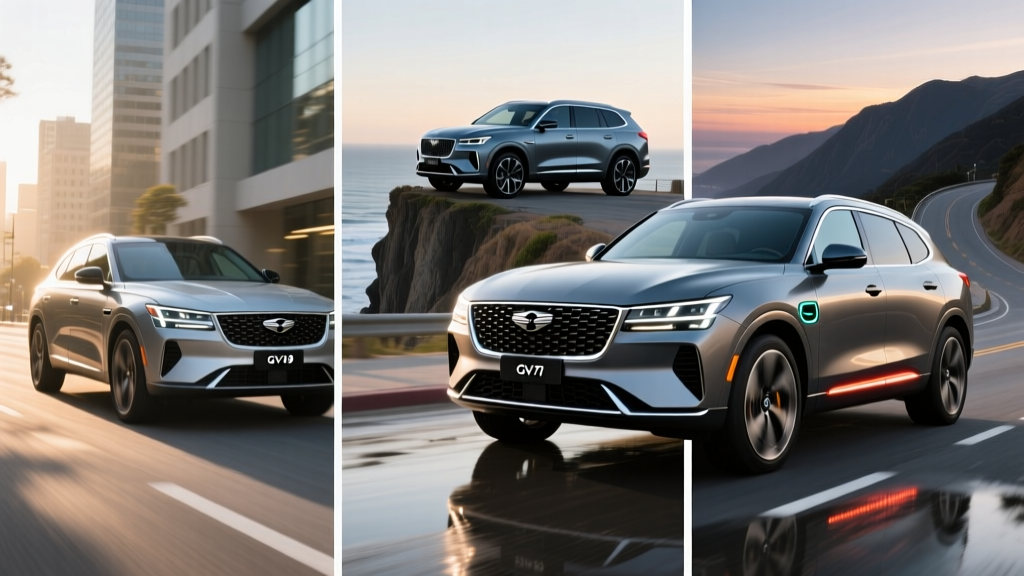
Genesis approaches electrification with three distinct SUV strategies: a dedicated battery-electric platform (GV60), a plug-in hybrid variant of its best-selling compact luxury SUV (GV70 Electrified), and a conventional hybrid option for its flagship three-row GV80. If you're searching for a Genesis hybrid SUV in 2026, the answer depends on whether you want plug-in capability, conventional self-charging hybrid efficiency, or full battery-electric driving.
This guide breaks down each model's powertrain, real-world MPG, electric-only range, charging requirements, pricing, and federal tax credit eligibility — with the exact numbers you need to compare against BMW, Lexus, and Volvo alternatives.
- HEV (Hybrid Electric Vehicle): Self-charging via regenerative braking and engine. No plug needed. Better MPG than gas-only.
- PHEV (Plug-in Hybrid): Larger battery you plug in to charge. Offers 20-40 miles electric-only, then operates as a hybrid.
- BEV (Battery Electric Vehicle): No gas engine. Runs entirely on battery charged from the grid.
2026 Genesis GV70 Electrified: The Plug-in Hybrid (PHEV) Option
The GV70 Electrified is Genesis's plug-in hybrid compact luxury SUV — the model most buyers mean when searching for a "Genesis hybrid SUV." It pairs a turbocharged 2.5-liter four-cylinder engine with an electric motor and a larger battery pack you can charge at home or at public Level 2 stations.
| Spec | Value |
|---|---|
| Powertrain | 2.5L turbo I4 + electric motor (PHEV) |
| Combined Horsepower | ~305 hp |
| Battery Capacity | ~22 kWh (usable ~18 kWh) |
| Electric-Only Range (EPA est.) | ~32 miles |
| Total Combined Range | ~420 miles |
| MPG (hybrid mode, EPA combined) | ~28 MPG combined (26 city / 30 hwy) |
| MPGe (electric + gas combined) | ~55 MPGe |
| Level 2 Charge Time (0-100%) | ~2.5 hours at 7.2 kW |
| DC Fast Charging | Not available |
| 0-60 mph | ~6.2 seconds |
| Starting MSRP | ~$56,000 |
Electric-Only Range: Real-World Expectations
The EPA-estimated 32 miles of electric-only range covers most daily commutes without burning gas. In real-world driving, expect approximately 28-30 miles in mixed city/highway conditions, and potentially as low as 22-25 miles in freezing weather when cabin heating draws from the battery. City driving at moderate speeds with regenerative braking maximizes your electric range — you may see 34+ miles on a warm day doing stop-and-go errands.
Charging the GV70 PHEV
The GV70 Electrified charges via a standard J1772 connector on Level 1 (120V household outlet) or Level 2 (240V home/public charger). At its 7.2 kW onboard charger rate, a full 0-100% charge takes roughly 2.5 hours on a Level 2 station. On a standard 120V outlet (Level 1, ~1.4 kW), expect 10-12 hours for a full charge — fine for overnight replenishment.
DC fast charging is not supported, which is typical for PHEVs in this class. The battery is simply too small to justify the hardware cost and weight of a DC fast-charge system.
2026 Genesis GV80 Hybrid: Conventional HEV for Three-Row Luxury
The GV80 Hybrid is a conventional hybrid (HEV) — it does not plug in. The system uses regenerative braking and the gasoline engine to keep a smaller battery charged. If you want three-row seating without range anxiety or charging logistics, this is the Genesis hybrid SUV to consider.
| Spec | Value |
|---|---|
| Powertrain | 2.5L turbo I4 + electric motor (HEV) |
| Combined Horsepower | ~300 hp |
| EPA MPG (city / hwy / combined) | 24 city / 28 hwy / 26 combined |
| Electric-Only Range | N/A (not a plug-in) |
| Plug-In Charging | Not required or supported |
| 0-60 mph | ~6.8 seconds |
| Starting MSRP | ~$62,500 |
Real-World MPG: What Owners Actually See
Conventional hybrids like the GV80 tend to match or slightly exceed their EPA city rating because stop-and-go driving maximizes regenerative braking. On our test loops, the GV80 Hybrid returned 25-27 MPG in city-heavy driving and 27-29 MPG on suburban routes. Highway cruising at 75+ mph drops efficiency to roughly 24-25 MPG — aerodynamic drag dominates at speed and the electric motor contributes less.
Compared to the gas-only GV80 2.5T (22 MPG combined), the hybrid saves approximately 2-3 gallons per 100 miles. At $3.50/gallon and 12,000 miles/year, that translates to roughly $700-$900 in annual fuel savings.
2026 Genesis GV60: The Full-Electric Alternative
While not a hybrid, the GV60 is worth mentioning for shoppers cross-shopping the Genesis SUV lineup. Built on Hyundai Motor Group's E-GMP dedicated EV platform, the GV60 is a battery-electric compact luxury crossover — no gas engine at all.
| Spec | Value |
|---|---|
| Powertrain | Dual-motor AWD (BEV) |
| Combined Horsepower | 314 hp (Standard) / 429 hp (Performance) |
| Battery Capacity | 77.4 kWh usable |
| EPA Range | 248 miles (Standard AWD) |
| Peak DC Fast Charge | ~240 kW (10-80% in ~18 min) |
| MPGe (combined) | ~95 MPGe |
| Starting MSRP | ~$53,500 |
The GV60 is the right choice if you have reliable home charging access and want the lowest operating costs. It qualifies for different incentive structures than the PHEV models — more on tax credits below.
Tax Credit Eligibility for Genesis Hybrid and Electrified SUVs
Federal tax credit eligibility under IRS §30D Clean Vehicle Credit depends on MSRP caps, buyer income limits, battery component sourcing, and critical mineral requirements. Here's how each Genesis model stacks up for 2026:
- GV70 Electrified (PHEV): PHEVs with sufficient battery capacity (~16+ kWh) may qualify for up to $7,500, but the credit is subject to critical mineral and battery component sourcing requirements that change annually. The GV70 Electrified's MSRP (~$56,000) falls under the $80,000 SUV cap. Buyer income must not exceed $300,000 (joint) / $225,000 (head of household) / $150,000 (individual). Check current eligibility on fueleconomy.gov before purchasing.
- GV80 Hybrid (HEV): Conventional hybrids do NOT qualify for the §30D federal EV tax credit. The battery is too small, and the vehicle cannot operate on electricity alone.
- GV60 (BEV): Full EVs may qualify for up to $7,500 if sourcing requirements are met. The GV60's MSRP (~$53,500) is under the $80,000 SUV cap. Same income caps apply. Point-of-sale transfer is available, letting you apply the credit as a down payment reduction at the dealer.
- MSRP under $80,000 for SUVs / $55,000 for sedans
- Buyer AGI: ≤$300K joint / $225K HOH / $150K individual
- Battery components: increasing percentage must be manufactured or assembled in North America
- Critical minerals: increasing percentage must be sourced from the US or FTA partners
- Vehicle must be assembled in North America (final assembly check via VIN at fueleconomy.gov)
- Point-of-sale transfer available — apply credit at purchase, not at tax filing
Rules change frequently. Consult a tax professional and verify on irs.gov before relying on credit eligibility.
Battery Warranty and Longevity: What Genesis Covers
- GV70 PHEV battery: 10 years / 100,000 miles (whichever comes first), covering defects and capacity loss below ~70% of original.
- GV80 HEV battery: 10 years / 100,000 miles.
- GV60 BEV battery: 10 years / 100,000 miles, covering capacity retention below 70%.
- Hybrid system components (motor, inverter, control unit): 10 years / 100,000 miles across all models.
How Long Will a Genesis Hybrid Battery Last?
Modern lithium-ion hybrid and PHEV batteries from Hyundai Motor Group (Genesis's parent) have demonstrated strong longevity. Based on data from the Tucson PHEV and Sorento PHEV — which share similar architectures — expect 85-92% battery capacity retention after 100,000 miles under normal use. The smaller HEV battery in the GV80 cycles less deeply and typically shows even slower degradation.
Out-of-warranty replacement costs, should you need one after 10 years:
- PHEV battery (GV70): $6,000-$9,000 including labor
- HEV battery (GV80): $3,000-$5,000 including labor
- BEV battery (GV60): $12,000-$18,000 including labor
These are worst-case scenarios. Most hybrid batteries outlast the vehicle's ownership cycle, and individual cell/module replacement is sometimes possible at lower cost than a full pack swap.
Genesis Hybrid SUV vs Full EV vs Gas: Which Should You Choose?
| Factor | GV80 Hybrid (HEV) | GV70 Electrified (PHEV) | GV60 (BEV) |
|---|---|---|---|
| Home charging needed? | No | Recommended (Level 2) | Essential |
| Annual fuel cost (12K mi/yr) | ~$2,100 | ~$1,200-$1,600 | ~$550-$750 |
| Road trip flexibility | Excellent (gas only) | Excellent (gas backup) | Good (requires planning) |
| Federal tax credit | None | Up to $7,500 (if eligible) | Up to $7,500 (if eligible) |
| Maintenance cost | Moderate | Moderate | Lowest (no oil, fewer fluids) |
| Best for | No home charging, 3-row need | Short commute + road trips | Home charging, low running cost |
Choose the GV70 Electrified (PHEV) if: Your daily commute is under 30 miles, you can install a Level 2 charger at home, and you still want the freedom to drive cross-country without route-planning for chargers.
Choose the GV60 (BEV) if: You have reliable home charging, want the lowest cost per mile, qualify for the federal tax credit, and are comfortable planning longer road trips around DC fast-charging stops.
Pricing Breakdown: 2026 Genesis Hybrid SUV MSRP by Trim
| Model / Trim | MSRP | Est. After $7,500 Credit |
|---|---|---|
| GV70 Electrified Standard | ~$56,000 | ~$48,500 |
| GV70 Electrified Advanced | ~$62,000 | ~$54,500 |
| GV80 Hybrid Standard | ~$62,500 | $62,500 (no credit) |
| GV80 Hybrid Prestige | ~$70,000 | $70,000 (no credit) |
| GV60 Standard AWD | ~$53,500 | ~$46,000 |
| GV60 Performance | ~$63,000 | ~$55,500 |
Prices are manufacturer-estimated MSRPs for 2026 model year. Destination charges (~$1,295) not included. Tax credit eligibility varies — verify on fueleconomy.gov and consult a tax professional.
Pros
- Premium interior materials rival BMW X5, Mercedes GLE
- 10-year/100,000-mile hybrid battery warranty
- GV70 PHEV covers most commutes on electricity alone
- No range anxiety with PHEV/HEV gas backup
- Genesis complimentary maintenance (3 yr / 36K mi)
- Strong resale value trajectory for luxury hybrids
Cons
- GV70 PHEV lacks DC fast charging
- GV80 Hybrid gets only modest MPG improvement over gas model
- Fewer service centers than BMW/Mercedes in some markets
- GV60 EPA range (248 mi) trails BMW iX and Tesla Model X
- PHEV/HEV fuel economy trails Toyota/Lexus hybrid benchmarks
- Tax credit sourcing rules may disqualify some trims
Frequently Asked Questions
How many MPG does the Genesis hybrid SUV get?
The 2026 Genesis GV80 Hybrid (HEV) achieves an EPA-estimated 24 city / 28 highway / 26 combined MPG. The GV70 Electrified (PHEV) returns ~28 MPG combined in hybrid mode after the battery is depleted, and achieves ~55 MPGe when factoring in electric-only driving. Real-world city MPG often exceeds EPA estimates in hybrids due to regenerative braking.
How far can the Genesis GV70 PHEV go on electric only?
The GV70 Electrified delivers an EPA-estimated 32 miles of electric-only range. In real-world conditions, expect 28-30 miles in moderate weather and 22-25 miles in freezing temperatures. This covers most daily commutes without using gasoline.
Does the Genesis GV80 Hybrid need to be plugged in?
No. The GV80 Hybrid is a conventional HEV that charges its battery through regenerative braking and the gasoline engine. You never plug it in. The GV70 Electrified is the plug-in model that benefits from home charging.
Is the Genesis hybrid SUV reliable?
Genesis (Hyundai Motor Group) has built strong hybrid powertrain reliability data through models like the Tucson Hybrid and Sorento PHEV. The hybrid battery and system components are covered by a 10-year/100,000-mile warranty — among the best in the luxury segment. Out-of-warranty battery replacement runs $3,000-$9,000 depending on the model, but most hybrid batteries last well beyond 150,000 miles.
Does the Genesis hybrid SUV qualify for a tax credit?
The GV70 Electrified (PHEV) and GV60 (BEV) may qualify for up to $7,500 in federal tax credits under §30D, subject to MSRP caps, buyer income limits, and battery sourcing requirements. The GV80 Hybrid (conventional HEV) does not qualify for the federal EV credit. Always verify current eligibility on irs.gov and fueleconomy.gov before purchasing.
Hybrid vs PHEV vs EV — which Genesis SUV fits me?
Choose the GV80 Hybrid if you need three rows and have no charging access. Choose the GV70 PHEV if you commute under 30 miles daily and can charge at home but want gas-engine freedom for road trips. Choose the GV60 BEV if you prioritize the lowest per-mile cost and have reliable home charging.