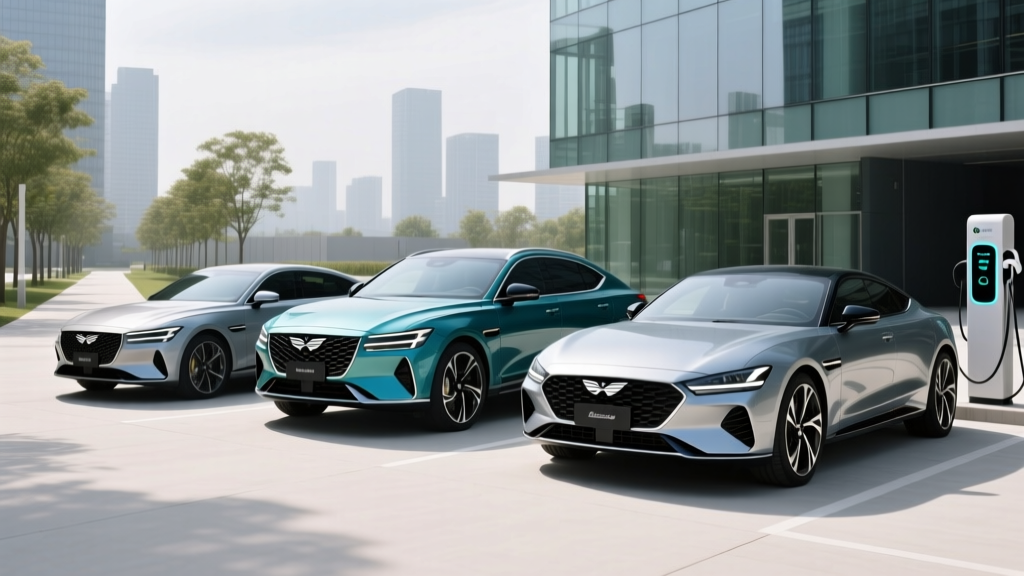
Genesis has taken a deliberate path into electrification, and for shoppers searching for a hybrid Genesis, the answer in 2026 requires some nuance. Unlike Toyota or Hyundai, Genesis does not currently sell a conventional hybrid (HEV) in the United States. Instead, the luxury brand has focused its electrified strategy on battery-electric vehicles (BEVs) and, in select markets, plug-in hybrid (PHEV) variants. If you want an electrified Genesis, you're choosing between fully electric models like the GV60, Electrified GV70, and Electrified G80 — or waiting to see if a PHEV variant reaches US showrooms.
This guide breaks down every electrified Genesis available or announced for 2026, with exact range figures, charging speeds, pricing, and federal tax credit eligibility so you can decide which model fits your driving pattern.
Genesis Electrification Strategy: HEV vs PHEV vs BEV
Before diving into specific models, it helps to understand the three types of electrified powertrains and where Genesis fits:
| Type | How It Works | Needs a Plug? | Genesis Offers in US? |
|---|---|---|---|
| HEV (Conventional Hybrid) | Gas engine + small electric motor; regenerative braking recharges a small battery | No | No |
| PHEV (Plug-in Hybrid) | Gas engine + larger motor and battery; can drive on electric-only for 20-50 miles | Yes (Level 1/2) | Not currently |
| BEV (Battery Electric) | Battery and electric motor only; no gas engine | Yes (Level 1/2/DC) | Yes — GV60, GV70, G80 |
Genesis parent company Hyundai offers PHEVs in the US (Tucson PHEV, Santa Fe PHEV), but the Genesis luxury division has skipped straight to full electric for its US lineup. In South Korea and Europe, the Genesis G80 PHEV has been sold with a 2.5-liter turbo engine paired with an electric motor, but Genesis has not confirmed a US launch for this variant as of early 2026.
2026 Electrified Genesis Models: Full Spec Breakdown
Here's exactly what Genesis offers US buyers who want an electrified luxury vehicle:
| Spec | GV60 | Electrified GV70 | Electrified G80 |
|---|---|---|---|
| Body Style | Compact SUV/Crossover | Midsize SUV | Full-size Sedan |
| EPA Range | 264 mi (AWD Advance) | 236 mi | 282 mi |
| Battery (usable) | 74.0 kWh (NMC) | 74.0 kWh (NMC) | 87.2 kWh (NMC) |
| Drivetrain | RWD or AWD | AWD standard | AWD standard |
| Horsepower | 225 hp (RWD) / 314 hp (AWD) | 429 hp | 365 hp |
| 0-60 mph | 7.3s (RWD) / 5.3s (AWD) | 4.2s | 4.9s |
| Max DC Fast Charge | ~240 kW (peak) | ~240 kW (peak) | ~240 kW (peak) |
| 10-80% DC Charge | ~18 min | ~18 min | ~22 min |
| Level 2 Charge Rate | 10.9 kW | 10.9 kW | 10.9 kW |
| MPGe (combined) | 95 MPGe (AWD) | 87 MPGe | 91 MPGe |
| Base MSRP | ~$53,350 | ~$67,350 | ~$80,300 |
| Battery Warranty | 10 yr / 100,000 mi | 10 yr / 100,000 mi | 10 yr / 100,000 mi |
Source: fueleconomy.gov (EPA) and Genesis USA official specifications for 2025-2026 model years.
EPA range estimates assume mixed driving at moderate temperatures. In real-world highway driving at 75 mph, expect roughly 10-15% less range — so a GV60 AWD rated at 264 miles EPA may deliver around 225-240 miles on a long interstate trip. In cold weather (below 30°F), range can drop 20-30% due to battery chemistry limitations and cabin heating demands. The Electrified G80's larger 87.2 kWh battery provides a bigger buffer, making it the most road-trip-capable of the three.
Charging Speed and Infrastructure: What Genesis Owners Need to Know
All three electrified Genesis models use the E-GMP platform (shared with Hyundai Ioniq 5 and Kia EV6), which supports 800-volt architecture. This means exceptionally fast DC charging when you find a capable station.
| Charging Level | Power (kW) | Approx. Miles Added per Hour | Where You'll Use It |
|---|---|---|---|
| Level 1 (120V household) | ~1.4 kW | ~4-5 mi/hr | Emergency top-ups, overnight |
| Level 2 (240V home/public) | 10.9 kW | ~30-35 mi/hr | Home garage, workplace, hotels |
| DC Fast Charge | Up to ~240 kW peak | ~600+ mi/hr (peak) | Highway rest stops, Electrify America, Tesla Superchargers (with adapter) |
Important kW vs kWh distinction: kW (kilowatts) measures the rate of power delivery — how fast you're charging. kWh (kilowatt-hours) measures total energy stored in the battery. A 74 kWh battery charged at 240 kW peak will fill from 10-80% in roughly 18 minutes, but the charge rate tapers significantly above 80% to protect battery health.
Genesis models ship with a CCS1 connector. As Tesla's Supercharger network opens to non-Tesla EVs via the NACS standard, Genesis owners can use a CCS-to-NACS adapter (Genesis has offered complimentary adapter programs — check with your dealer for current availability). Electrify America remains the most widely compatible DC network for CCS-equipped Genesis vehicles.
Federal Tax Credit Eligibility for Genesis EVs in 2026
The IRS §30D Clean Vehicle Credit offers up to $7,500 for qualifying new EVs, but eligibility depends on multiple factors that change frequently:
- MSRP Cap: SUVs (GV60, GV70) must be under $80,000; sedans (G80) under $55,000. The Electrified G80 at ~$80,300 likely exceeds the sedan cap — confirm with your dealer.
- Buyer Income Limits: AGI must not exceed $300,000 (married filing jointly), $225,000 (head of household), or $150,000 (single).
- Battery Sourcing: Critical minerals and battery components must meet phased-in US/free-trade-agreement sourcing requirements. Genesis has faced challenges here due to South Korean battery supply chains — check the fueleconomy.gov tax credit lookup for current eligibility by VIN.
- Point-of-Sale Transfer: As of 2024+, buyers can transfer the credit to the dealer for an immediate price reduction at purchase, rather than waiting to claim it on their tax return.
- Assembly Requirement: Final assembly must occur in North America. The GV60 and Electrified GV70 are assembled in South Korea, which may disqualify them — verify on the IRS eligible vehicle list.
Because Genesis vehicles are largely assembled in South Korea with Korean-sourced battery cells, tax credit eligibility has been inconsistent. Always confirm with your dealer and cross-reference the official IRS list before assuming the $7,500 credit applies.
Battery Longevity, Warranty, and Replacement Costs
All Genesis electric models carry a 10-year / 100,000-mile high-voltage battery warranty. Genesis guarantees the battery will retain at least 70% of its original capacity during the warranty period. If degradation exceeds 30% under normal use, Genesis will repair or replace the battery at no cost.
For comparison, most conventional hybrid (HEV) batteries from Toyota or Hyundai carry an 8-year/100,000-mile or 10-year/150,000-mile warranty, and replacement costs for a small HEV battery typically range from $2,000-$4,000. Full EV battery replacements are significantly more expensive — a Genesis GV60 or GV70 pack replacement out of warranty could cost $15,000-$25,000+ based on current parts pricing, though this is a worst-case scenario that rarely materializes in practice.
Real-world degradation data from the E-GMP platform suggests most owners see 5-10% capacity loss over the first 100,000 miles when following recommended charging practices (avoiding frequent 100% charges, using preconditioning for DC fast charging, and limiting prolonged storage at very low or very high state of charge).
Genesis Electrified Models: Pros and Cons
- 800V architecture enables 10-80% DC charging in ~18 minutes (GV60/GV70)
- Class-leading 10-year/100,000-mile battery warranty
- Luxury interior quality competitive with BMW iX, Mercedes EQE
- Standard AWD on GV70 and G80 for all-weather capability
- Complimentary 3 years of Electrify America charging (30 min sessions)
- Quiet, refined ride quality with instant electric torque
- No conventional hybrid (HEV) or PHEV option in the US lineup
- Federal tax credit eligibility uncertain due to South Korean assembly
- EPA range lags behind competitors (Tesla Model Y: 310+ mi, Hyundai Ioniq 5: 303 mi)
- Electrified G80 pricing pushes past $80K, potentially exceeding sedan tax credit cap
- CCS connector requires adapter for Tesla Supercharger access
- Limited dealer network compared to German luxury competitors
Hybrid vs PHEV vs EV: Which Electrified Vehicle Fits You?
Choose a conventional hybrid (HEV) if: You want better fuel economy without changing your habits. No plug needed, no range anxiety, and you can fill up at any gas station. (Look at the Lexus RX Hybrid or Toyota Grand Highlander Hybrid — Genesis doesn't offer this.)
Choose a PHEV if: You can charge at home and want 25-40 miles of electric commuting with a gas engine for longer road trips. Best of both worlds, but you need a garage or driveway with a 240V outlet. (Consider the Hyundai Santa Fe PHEV or BMW X5 xDrive50e as alternatives to Genesis.)
Choose a full EV (BEV) like the Genesis GV60/GV70/G80 if: You have reliable home charging (Level 2), your daily commute is under 150 miles round-trip, and you want the lowest per-mile fuel cost with minimal maintenance. The 10-80% fast-charge time of ~18 minutes makes road trips viable with planning.
Who Should Buy an Electrified Genesis?
The Genesis electrified lineup is best suited for luxury buyers who prioritize interior refinement, warranty coverage, and design over maximum range or the lowest price. The GV60 competes with the Tesla Model Y, Hyundai Ioniq 5, and BMW iX1 in the compact electric crossover segment, offering a more premium cabin than the Hyundai at a moderate price premium. The Electrified GV70 and G80 target buyers cross-shopping the BMW iX, Mercedes EQS SUV, and Lucid Air who want something less common on the road.
If you specifically need a hybrid Genesis — meaning a vehicle that runs on both gas and electric without plugging in — the brand does not currently serve that need. Your closest alternatives within the Hyundai Motor Group are the Hyundai Tucson Hybrid, Santa Fe Hybrid, or the Kia Sorento Hybrid, all of which offer 33-38 MPG combined with conventional hybrid powertrains.
Frequently Asked Questions
Does Genesis make a hybrid car in 2026?
Genesis does not sell a conventional hybrid (HEV) in the United States. The brand's electrified US lineup consists of three battery-electric vehicles: the GV60, Electrified GV70, and Electrified G80. A G80 PHEV exists in South Korea but has not been confirmed for US sale.
How much does it cost to charge a Genesis GV60 at home?
At the US average residential electricity rate of ~$0.16/kWh, fully charging the GV60's 74 kWh battery costs roughly $11.84, providing about 264 miles of range. That works out to approximately $0.045 per mile — compared to $0.12-$0.15 per mile for a gas-powered luxury SUV getting 22 MPG at $3.50/gallon.
What is the real-world range of the Electrified GV70?
The EPA rates the Electrified GV70 at 236 miles. In real-world highway driving at 70-75 mph, expect approximately 200-215 miles. In cold weather (below 30°F), range can drop to 165-190 miles depending on cabin heating use and driving conditions.
Do Genesis EVs qualify for the $7,500 federal tax credit?
Eligibility is uncertain and changes frequently. Because Genesis vehicles are assembled in South Korea, they may not meet the North American final assembly requirement of the §30D credit. Always verify current eligibility at fueleconomy.gov and consult a tax professional before relying on the credit.
How long will a Genesis EV battery last?
Genesis warranties the high-voltage battery for 10 years or 100,000 miles, guaranteeing at least 70% capacity retention. Based on E-GMP platform data, most batteries retain 90-95% capacity at 50,000 miles when properly maintained. Full battery replacement out of warranty could cost $15,000-$25,000 but is rarely needed.
Can I use Tesla Superchargers with a Genesis electric vehicle?
Genesis vehicles use the CCS1 connector. As Tesla opens Supercharger stations to non-Tesla EVs, you'll need a CCS-to-NACS adapter. Genesis has offered complimentary adapter programs — check with your dealer. Not all Supercharger stalls are equipped with the Magic Dock CCS adapter, so plan routes using the Tesla or Electrify America apps.
Sources: fueleconomy.gov (EPA range and MPGe data), Genesis USA (manufacturer specifications), IRS.gov (§30D tax credit rules). Specifications reflect 2025-2026 model year data available at time of publication.