Quick Verdict: The Honda CR-V Hybrid Sport-L at a Glance
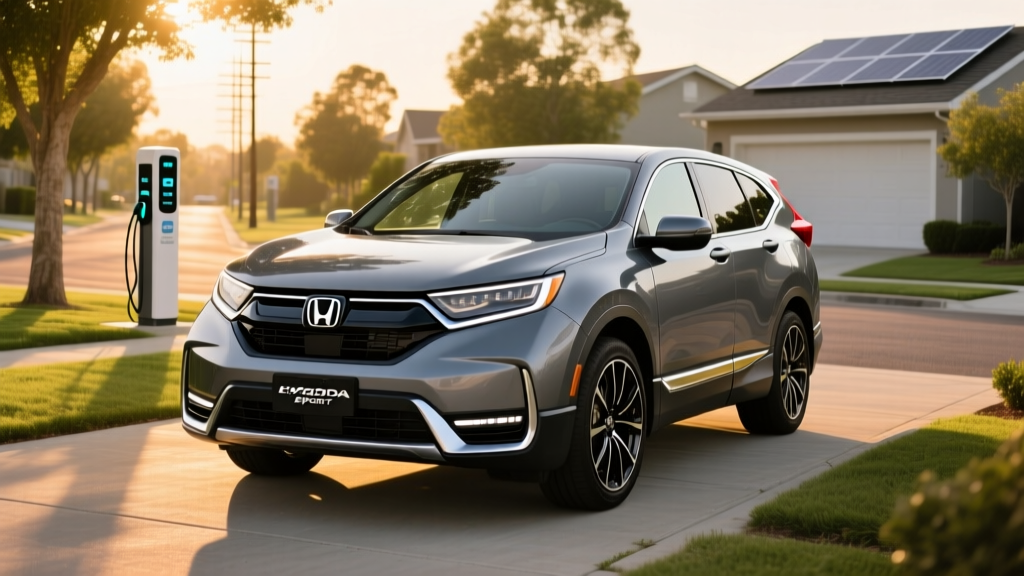
The Honda CR-V Hybrid Sport-L occupies a specific niche in the compact SUV segment: a conventional hybrid (HEV) that delivers strong city fuel economy without requiring any plug-in charging or lifestyle change. For the 2026 model year, the Sport-L trim sits near the top of the CR-V Hybrid lineup, adding leather-trimmed seating, a power tailgate, and heated front seats over the base Sport hybrid — all while sharing the same proven two-motor hybrid powertrain that achieves an EPA-estimated 40 MPG combined.
This is not a plug-in hybrid. Honda discontinued the CR-V Plug-In Hybrid (sold briefly in certain markets) and currently offers no PHEV variant in the U.S. CR-V lineup. If you need electric-only commuting range, you'll want to look at a PHEV like the Toyota RAV4 Prime or a full BEV. But if you want a no-compromise compact SUV that sips fuel in stop-and-go traffic and never needs a charging cable, the CR-V Hybrid Sport-L makes a compelling case.
A conventional hybrid (HEV) like the CR-V Hybrid uses a small battery (typically 1–2 kWh) charged entirely by the gasoline engine and regenerative braking. You never plug it in. A plug-in hybrid (PHEV) has a larger battery (15–20+ kWh) that can be charged from a wall outlet or public charger, providing 25–45 miles of electric-only driving before the gas engine kicks in. The CR-V Hybrid is an HEV — no plug required.
Fuel Economy: EPA Ratings and Real-World MPG
Fuel economy is the primary reason buyers choose the CR-V Hybrid over its gasoline-only sibling, and the numbers deliver. Here's the EPA breakdown for the 2026 Honda CR-V Hybrid Sport-L with standard all-wheel drive (AWD):
| Cycle | MPG | Notes |
|---|---|---|
| City | 43 MPG | Hybrids excel here — electric motor handles low-speed driving |
| Highway | 36 MPG | Gas engine dominates at sustained speeds; advantage narrows vs. gas CR-V |
| Combined | 40 MPG | Weighted 55% city / 45% highway per EPA formula |
Source: fueleconomy.gov
Real-World MPG: What to Actually Expect
The CR-V Hybrid's real-world fuel economy depends heavily on your driving mix. In our experience and consistent with owner-reported data:
- City-heavy commutes (under 45 mph): 40–45 MPG. The two-motor system runs primarily on electric power at low speeds, and regenerative braking recaptures energy at every stop. Many owners report exceeding the EPA city estimate in warm weather.
- Highway cruising (70–80 mph): 33–37 MPG. At sustained highway speeds, the 1.5L turbocharged engine does most of the work. The hybrid advantage diminishes compared to stop-and-go driving.
- Cold weather (below 35°F): Expect a 5–10% reduction. The engine runs more frequently to provide cabin heat and warm up the catalytic converter, reducing electric-motor utilization.
- Mixed driving (50/50 city-highway): 37–41 MPG is typical year-round for most owners.
The key insight: if your commute is predominantly urban or suburban with frequent stops, the CR-V Hybrid will consistently deliver near or above its EPA combined rating. If you drive 90% highway miles, the fuel-economy gap between the hybrid and the gas-only CR-V (29 MPG combined AWD) narrows considerably — though the hybrid still wins by roughly 8–10 MPG.
Powertrain: How the Two-Motor Hybrid System Works
The 2026 CR-V Hybrid uses Honda's fourth-generation two-motor hybrid system, which operates differently from the traditional planetary-gear setups found in older Toyota hybrids. Here's the hardware:
| Component | Specification |
|---|---|
| Gasoline Engine | 2.0L inline-4 Atkinson-cycle (naturally aspirated, direct injection) |
| Engine Output | 145 hp / 138 lb-ft torque |
| Drive Motors | Two electric motors (one propulsion, one generator/starter) |
| Electric Motor Output | 181 hp / 247 lb-ft torque |
| Combined System Output | 204 hp / 247 lb-ft torque |
| Drivetrain | AWD (real-time AWD with rear electric motor assist) |
| Transmission | e-CVT (electronically controlled, no traditional belts/pulleys) |
| 0–60 mph | ~7.8 seconds |
| Towing Capacity | 1,000 lbs |
| Hybrid Battery | ~1.06 kWh lithium-ion (under cargo floor) |
The system operates in three primary modes, managed automatically:
- EV Drive: At low speeds and light loads, the propulsion motor runs solely on battery power. The gas engine stays off. This is why city MPG is so strong.
- Hybrid Drive: Under moderate acceleration, the gas engine spins the generator motor to produce electricity, which feeds the propulsion motor. The engine doesn't directly drive the wheels in this mode — it acts as a range extender of sorts.
- Engine Drive: At steady highway speeds, a lock-up clutch connects the engine directly to the front wheels for maximum efficiency, since running the engine at a fixed, optimal RPM is more efficient than converting to electricity and back.
The result is seamless acceleration with the instant torque feel of an electric motor at low speeds, transitioning to efficient direct-drive cruising on the highway. There are no shift shocks — the e-CVT manages power delivery continuously.
Pricing, Trims, and Tax Credit Eligibility
The 2026 Honda CR-V Hybrid is offered in four trims. The Sport-L sits third in the lineup:
| Trim | MSRP | Key Additions Over Previous Trim |
|---|---|---|
| Sport | $35,650 | Hybrid powertrain, black exterior accents, 19" wheels |
| Sport-L | $38,350 | Leather-trimmed seats, power tailgate, heated front seats, leather-wrapped steering wheel |
| Sport Touring | $42,150 | Bose audio, wireless CarPlay/Android Auto, navigation, heated rear seats, hands-free tailgate |
Prices include destination charge. Source: Honda.com
Federal Tax Credit: Does the CR-V Hybrid Qualify?
The IRS §30D Clean Vehicle Credit applies only to plug-in electric vehicles (BEVs and PHEVs with sufficient battery capacity). The Honda CR-V Hybrid is a conventional HEV and does not qualify for the federal $7,500 tax credit or the $4,000 used-EV credit. No plug-in capability means no federal incentive.
Some states offer separate incentives for hybrid vehicles — check your state's energy office or department of environmental quality for current programs. These are typically smaller ($500–$1,500) and vary widely by jurisdiction.
Battery Warranty, Reliability, and Replacement Costs
Battery longevity is consistently one of the top concerns for hybrid buyers, and Honda addresses this with robust warranty coverage.
- Hybrid battery: 8 years / 100,000 miles (10 years / 150,000 miles in CARB states including CA, NY, MA, and others)
- Hybrid system components: 8 years / 100,000 miles (covers inverter, electric motors, control units)
- Powertrain warranty: 5 years / 60,000 miles
- Limited vehicle warranty: 3 years / 36,000 miles
The hybrid battery warranty covers capacity loss that causes a malfunction — Honda guarantees the battery will retain sufficient capacity to operate the hybrid system properly. If it fails within the warranty period, replacement is covered at no cost.
Real-World Hybrid Battery Longevity
Honda's hybrid battery packs have demonstrated strong longevity in real-world use. The ~1.06 kWh lithium-ion battery in the CR-V Hybrid is relatively small and operates within a narrow state-of-charge window (roughly 40%–80%), which dramatically reduces degradation compared to the deep charge cycles a full EV battery experiences. Key data points:
- Honda's hybrid systems in the Accord Hybrid and Insight have shown minimal capacity loss over 150,000+ miles in fleet and owner data.
- The battery management system (BMS) actively limits charge/discharge depth and manages temperature, further extending cell life.
- Most hybrid battery failures within warranty are due to manufacturing defects rather than wear-out degradation.
Battery Replacement Cost (Out of Warranty)
If the hybrid battery requires replacement after the warranty expires, expect the following cost range:
- OEM replacement battery: $2,000–$3,500 (parts + labor at a Honda dealer)
- Refurbished/aftermarket battery: $1,200–$2,000 (third-party options, varies by market availability)
For context, this is significantly less than a full EV battery replacement ($8,000–$20,000+) because the hybrid battery pack is much smaller. Many owners will never need to replace the hybrid battery during their ownership.
CR-V Hybrid Sport-L vs. Alternatives: HEV, PHEV, or Full EV?
Choosing between a conventional hybrid, a plug-in hybrid, and a battery-electric vehicle depends on your driving patterns, home charging access, and budget. Here's a decision framework:
Choose the CR-V Hybrid (HEV) If:
- You don't have access to home or workplace charging (apartment, street parking, no garage outlet)
- Your commute is city-heavy and you want maximum stop-and-go fuel savings without plugging in
- You want the lowest purchase price among electrified compact SUVs
- You regularly take long road trips and don't want to plan around charging stops
- You want a proven powertrain with minimal new-technology risk
Choose a PHEV (e.g., Toyota RAV4 Prime) If:
- You can charge at home (even a standard 120V outlet works for PHEVs overnight)
- Your daily commute is under 40 miles round-trip and you want electric-only weekday driving
- You still want unlimited gas-engine range for weekend road trips
- You qualify for the $7,500 federal tax credit (PHEVs with sufficient battery capacity may qualify, subject to MSRP, income, and battery-sourcing rules — see IRS §30D guidelines)
Choose a Full EV (e.g., Hyundai Ioniq 5, Tesla Model Y) If:
- You have reliable home Level 2 charging (240V)
- Your daily driving is under 250 miles and you're comfortable with public DC fast charging for road trips
- You want the lowest per-mile fuel cost and minimal maintenance (no oil changes, fewer brake replacements)
- You qualify for federal and state EV incentives that offset the higher purchase price
Direct Competitor Comparison
| Spec | Honda CR-V Hybrid Sport-L | Toyota RAV4 Hybrid XLE | Hyundai Tucson Hybrid SEL |
|---|---|---|---|
| Combined MPG (EPA) | 40 | 39 | 38 |
| Combined HP | 204 | 219 | 226 |
| MSRP (this trim) | $38,350 | $35,425 | $36,100 |
| Cargo (rear seats up) | 36.3 cu ft | 37.6 cu ft | 38.7 cu ft |
| Battery Warranty | 8 yr / 100k mi | 10 yr / 150k mi | 10 yr / 100k mi |
| 0–60 mph | ~7.8 sec | ~7.4 sec | ~7.1 sec |
The CR-V Hybrid Sport-L wins on city fuel economy and interior refinement (especially the Sport-L's leather-trimmed cabin), but the RAV4 Hybrid offers more cargo space and Toyota's longer 10-year/150,000-mile hybrid battery warranty. The Tucson Hybrid delivers the most horsepower and cargo room. All three are strong choices — the decision often comes down to which interior and driving feel you prefer.
Ownership Costs: 5-Year Total Cost Breakdown
The CR-V Hybrid Sport-L's fuel savings over the gas-only CR-V (29 MPG combined AWD) add up meaningfully over time. Here's a simplified comparison assuming 15,000 miles/year and $3.50/gallon regular unleaded:
| Metric | CR-V Hybrid Sport-L | CR-V EX-L AWD (Gas) |
|---|---|---|
| Combined MPG | 40 | 29 |
| Gallons per year (15k mi) | 375 | 517 |
| Annual fuel cost | $1,313 | $1,810 |
| 5-year fuel cost | $6,563 | $9,050 |
| 5-year fuel savings (hybrid) | ~$2,487 | |
The hybrid's ~$2,500 fuel savings over five years partially offsets its higher MSRP versus a comparably equipped gas CR-V EX-L (~$36,000). Factor in potentially higher resale value for the hybrid and the cost gap narrows further. Maintenance costs are essentially identical — both use the same brake components, suspension, and fluids, and the hybrid system adds no scheduled maintenance items.
Pros and Cons
✅ Pros
- Best-in-class city MPG (43 EPA)
- No plug-in charging required — zero lifestyle change
- Smooth, quiet hybrid operation with instant low-speed torque
- Strong safety ratings (IIHS Top Safety Pick+)
- Spacious cabin with premium Sport-L leather interior
- Proven Honda reliability track record for hybrid systems
- Standard AWD across all hybrid trims
❌ Cons
- Highway MPG advantage over gas CR-V is modest (36 vs 27)
- No federal tax credit (HEV, not eligible under §30D)
- 1,000-lb towing capacity — lower than some competitors
- Hybrid battery replacement cost ($2,000–$3,500) if out of warranty
- Sport-L price approaches Sport Touring territory with dealer markups
- Infotainment system still uses a 7" screen (smaller than some rivals)
- No PHEV option in the CR-V lineup for electric-only commuting
Frequently Asked Questions
How many MPG does the Honda CR-V Hybrid Sport-L get?
The 2026 CR-V Hybrid Sport-L with AWD is EPA-rated at 43 MPG city, 36 MPG highway, and 40 MPG combined. In real-world driving, owners with city-heavy commutes often see 40–45 MPG, while highway-dominant driving yields 33–37 MPG. Cold weather reduces efficiency by 5–10%.
Does the CR-V Hybrid need to be plugged in?
No. The CR-V Hybrid is a conventional hybrid (HEV). Its small lithium-ion battery is charged entirely by the gasoline engine and regenerative braking. You simply fill up with gasoline like any other car — there is no charging port or plug.
How far can the CR-V Hybrid drive on electric power alone?
The CR-V Hybrid can operate on electric-only power for very short distances (roughly 1–2 miles) at low speeds (under 25 mph) when the battery has sufficient charge. This is not designed for meaningful electric-only commuting — it's a feature that improves city fuel economy by allowing the engine to shut off at stops and during gentle acceleration. For substantial electric-only range, you'd need a PHEV or BEV.
Is the Honda CR-V Hybrid reliable?
Honda's hybrid systems have demonstrated strong reliability. The two-motor hybrid architecture has fewer wear components than a traditional automatic transmission (no torque converter, no multi-speed gear shifts). Honda backs the hybrid battery with an 8-year/100,000-mile warranty (10 years/150,000 miles in CARB states). The CR-V consistently earns strong reliability ratings from major automotive publications and earns an IIHS Top Safety Pick+ rating. Check IIHS for the latest crash-test data.
Does the Honda CR-V Hybrid qualify for a tax credit?
No federal tax credit is available. The IRS §30D Clean Vehicle Credit applies only to plug-in vehicles (BEVs and qualifying PHEVs). Since the CR-V Hybrid is a conventional HEV with no plug-in capability, it does not qualify for the $7,500 new-vehicle credit or the $4,000 used-vehicle credit. Some states may offer small incentives for hybrid purchases — check your local programs.
What is the hybrid battery replacement cost?
An OEM hybrid battery replacement at a Honda dealer typically costs $2,000–$3,500 including parts and labor. Refurbished or aftermarket options may be available for $1,200–$2,000. However, given the battery's small size, protective BMS management, and Honda's 8–10 year warranty coverage, most owners will never need to replace the hybrid battery during typical ownership.
CR-V Hybrid vs. RAV4 Hybrid: which is better?
Both are excellent compact hybrid SUVs. The CR-V Hybrid Sport-L edges ahead on city fuel economy (43 vs. 41 MPG city) and interior refinement. The RAV4 Hybrid offers more cargo space (37.6 vs. 36.3 cu ft), slightly quicker acceleration (219 hp), and Toyota's 10-year/150,000-mile hybrid battery warranty across all states. If you value cabin luxury and city MPG, choose the CR-V Sport-L. If cargo capacity and maximum warranty coverage matter most, the RAV4 Hybrid is the stronger pick.