Quick Verdict: The Premium Compact Hybrid Truck
The Ford Maverick Hybrid Lariat sits at the intersection of two things buyers increasingly want: a truck bed and exceptional fuel economy — without the plug-in complexity or full-EV charging logistics. For 2026, the Lariat trim adds leather-trimmed seats, a larger infotainment display, and Ford's Co-Pilot360 suite on top of the same proven 2.5-liter Atkinson-cycle hybrid powertrain that delivers an EPA-estimated 42 MPG city. It remains one of the most fuel-efficient pickup trucks you can buy, and the only hybrid in the compact truck segment.
This guide breaks down exactly what the Maverick Hybrid Lariat offers, how its real-world fuel economy compares to the EPA sticker, what the battery warranty actually covers, and whether this HEV (conventional hybrid) makes more sense for your situation than a PHEV or full battery-electric vehicle.
HEV vs PHEV: Where the Maverick Hybrid Fits
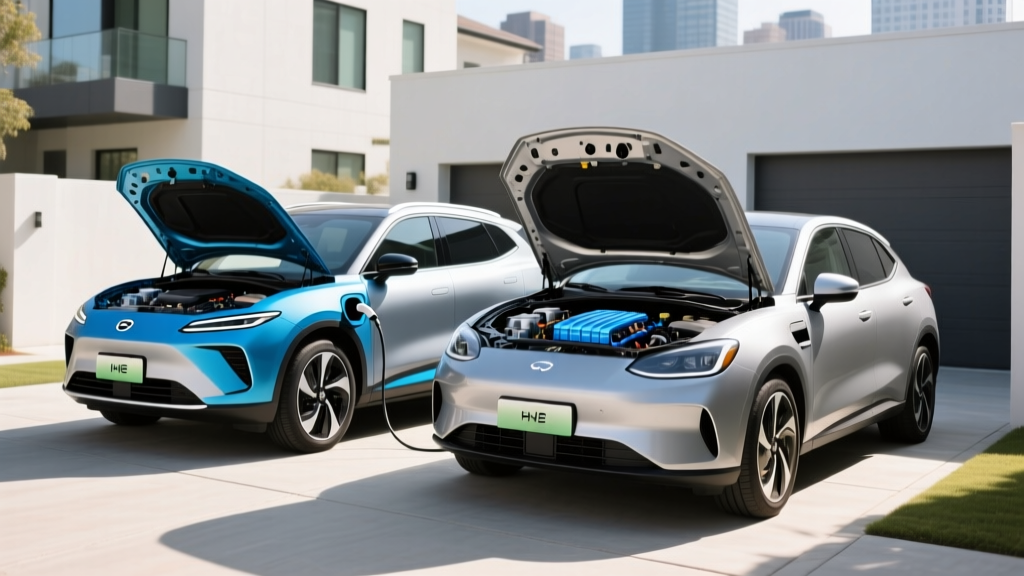
Before diving into specs, it's essential to understand what the Maverick Hybrid is — and what it isn't.
| Feature | Conventional Hybrid (HEV) e.g., Maverick Hybrid | Plug-In Hybrid (PHEV) e.g., Toyota RAV4 Prime | Battery Electric (BEV) e.g., Ford F-150 Lightning |
|---|---|---|---|
| Plug-in charging required? | No — self-charging via regen + engine | Yes — Level 1/2 for EV range | Yes — Level 2/DC required |
| Electric-only range | ~1 mile at low speed (EV mode) | 25–42 miles typical | 230–400+ miles (full range) |
| Battery size | 1.1 kWh (small buffer) | 13–18 kWh usable | 75–131 kWh usable |
| Fuel economy | 38–42 MPG combined | 94+ MPGe (electric) / 36–40 MPG (gas) | N/A — electricity only |
| Federal tax credit (§30D) | Not eligible | Up to $7,500 if eligible | Up to $7,500 if eligible |
| Best for | No home charging, want simplicity | Short commutes + road trips | Home charging access, daily driving |
The Maverick Hybrid is a conventional hybrid (HEV). It has a small 1.1 kWh lithium-ion battery that charges itself through regenerative braking and the gasoline engine. You never plug it in. The electric motor assists the gas engine during acceleration and enables brief low-speed EV-mode driving (typically under 1 mile in stop-and-go traffic), but this is not a vehicle designed for electric-only commuting. If you need 25+ miles of pure electric range, you'd be looking at a PHEV like the RAV4 Prime or a full BEV.
Powertrain Specs: 194 HP from a Proven Hybrid System
| Specification | 2026 Ford Maverick Hybrid Lariat |
|---|---|
| Engine | 2.5L Atkinson-cycle 4-cylinder |
| Electric motor | Permanent-magnet synchronous (integrated in eCVT) |
| Combined system output | 194 hp |
| Engine-only output | 162 hp @ 5,600 rpm / 155 lb-ft torque |
| Transmission | eCVT (electronically controlled continuously variable) |
| Drivetrain | FWD standard (AWD available) |
| Battery capacity | 1.1 kWh lithium-ion |
| 0–60 mph (est.) | ~8.5 seconds (FWD) |
| Max towing capacity | 2,000 lbs (4,000 lbs with 4K Tow Package on AWD) |
| Payload capacity | ~1,500 lbs |
| Bed length | 4.5 feet (54.4 cu ft volume) |
The 2.5L hybrid powertrain is the same architecture Ford uses in the Escape Hybrid and has deployed across millions of vehicles. The eCVT is not a belt-driven CVT like you'd find in some competitors — it uses a planetary gearset to blend engine and motor power, which means no rubber band effect and better long-term durability. The 194 combined horsepower is adequate for a compact truck: merging onto highways is confident, and the electric motor's instant torque fills in the low-end gap that small displacement engines typically suffer.
For 2026, Ford offers the Maverick Hybrid with available AWD, which uses a rear-mounted electric motor to power the rear axle when traction demands it. This adds roughly 1 MPG penalty versus FWD but significantly improves wet-weather and light-snow capability.
Fuel Economy: EPA Ratings vs Real-World MPG
| Configuration | EPA City | EPA Highway | EPA Combined |
|---|---|---|---|
| FWD Hybrid | 42 MPG | 33 MPG | 38 MPG |
| AWD Hybrid | 40 MPG | 33 MPG | 37 MPG |
| Gas 2.0L EcoBoost AWD (comparison) | 23 MPG | 30 MPG | 26 MPG |
Source: fueleconomy.gov
Hybrid fuel economy is heavily city-favoring because regenerative braking recovers energy that a gas-only truck wastes as heat. In real-world mixed driving, expect:
• City-heavy commute (70%+ city): 40–44 MPG — many owners report exceeding the EPA city figure
• Mixed driving (50/50): 36–39 MPG
• Highway-dominant (70+ mph sustained): 30–33 MPG — the hybrid advantage narrows at high speed
• Cold weather (below 30°F): 32–36 MPG — the engine runs more often for cabin heat and battery warming
• Loaded bed / towing: 25–30 MPG depending on weight
The Maverick Hybrid's 15.7-gallon fuel tank yields a theoretical maximum range of roughly 596 miles (FWD, combined). In practice, expect 500–560 miles per tank in mixed driving. That's fewer fuel stops than any gas compact truck and a genuine advantage for road trips where charging infrastructure isn't a concern.
Compared to the gas-only 2.0L EcoBoost Maverick (26 MPG combined), the hybrid saves approximately 3.8 gallons per 100 miles driven. At $3.40/gallon, that's roughly $1,292/year in fuel savings for a driver covering 15,000 miles annually — enough to offset the hybrid powertrain's modest price premium in 2–3 years depending on your local fuel prices.
2026 Lariat Trim: Pricing and Tax Credit Eligibility
| Trim Level | Powertrain | MSRP (est.) |
|---|---|---|
| XL (base) | 2.5L Hybrid FWD | ~$28,490 |
| XLT | 2.5L Hybrid FWD | ~$30,990 |
| Lariat | 2.5L Hybrid FWD | ~$34,490 |
| Lariat AWD | 2.5L Hybrid AWD | ~$36,090 |
Prices are manufacturer-estimated MSRP before destination charges. Actual dealer prices may vary.
The Lariat trim justifies its ~$6,000 premium over the base XL with meaningful upgrades: ActiveX trimmed leatherette seats (easier to clean than cloth in a work truck), a 13.2-inch touchscreen with wireless Apple CarPlay and Android Auto, a power-adjustable driver's seat, dual-zone automatic climate control, ambient interior lighting, keyless entry with push-button start, and the full Ford Co-Pilot360 suite (blind-spot monitoring with trailer coverage, rear cross-traffic alert, lane-keeping system, and automatic emergency braking).
Options that push the Lariat toward $40,000 include the 4K Tow Package (requires AWD, bumps towing to 4,000 lbs), the Lux Package (adds a sunroof, 360-degree camera, and premium audio), and bed accessories like the tonneau cover and bed extender.
Battery Warranty, Reliability, and Replacement Cost
• Hybrid battery: 8 years / 100,000 miles (whichever comes first) — covers defects and capacity loss below a defined threshold
• Hybrid system components (eCVT, electric motor, power electronics): 8 years / 100,000 miles
• Basic vehicle warranty: 3 years / 36,000 miles
• Powertrain warranty: 5 years / 60,000 miles
Source: Ford Motor Company warranty guide
The Maverick Hybrid's battery pack is small (1.1 kWh) and operates within a conservative state-of-charge window — Ford's hybrid system rarely lets the battery drop below ~40% or charge above ~80%, which dramatically reduces degradation stress compared to a full BEV that cycles from 10% to 90% regularly.
Real-world reliability data: Ford's 2.5L hybrid system has been in production since the mid-2000s (originally in the Escape Hybrid and Fusion Hybrid). Fleet operators and taxi services have logged 200,000+ miles on these powertrains with original batteries. The most common hybrid-specific maintenance item is the hybrid battery cooling fan filter, which should be inspected annually and replaced every 30,000–50,000 miles (~$25–40 part).
Battery replacement cost: If the hybrid battery fails outside warranty, a new OEM replacement runs approximately $2,500–$3,500 installed. However, given the conservative charge management and proven track record, out-of-warranty battery failure before 150,000 miles is uncommon. Refurbished and aftermarket cells are available for $1,200–$2,000 from third-party suppliers.
The 12V auxiliary battery (which powers accessories and starts the hybrid system) is a separate concern — it's a standard AGM battery that typically lasts 4–6 years and costs $150–$250 to replace. If the 12V dies, the vehicle won't start even though the high-voltage hybrid battery is fully charged.
Who Should Buy the Maverick Hybrid Lariat?
Choose the Maverick Hybrid Lariat if:
- You want a truck bed for weekend projects but commute daily in city/suburban traffic
- You don't have access to home or workplace EV charging and don't want to rely on public chargers
- Your daily driving is under 60 miles and you want to minimize fuel costs without plugging in
- You want premium features (leatherette, larger screen, Co-Pilot360) in a compact truck under $40K
- You value simplicity — no charging cables, no range planning, just drive and refuel
Consider a PHEV or full EV instead if:
- You have home Level 2 charging and a commute under 30 miles (a PHEV could eliminate gas entirely on weekdays)
- You want federal tax credit eligibility (up to $7,500 for qualifying PHEVs/BEVs under §30D rules)
- You need more than 4,000 lbs towing (the F-150 Lightning or Rivian R1T handle heavier loads)
- You want the instant torque and silent operation that only a full BEV provides
Pros
- 42 MPG city — best-in-class for any pickup truck
- No plug-in charging needed — works with existing gas infrastructure
- 500+ mile total range per tank
- Proven hybrid powertrain with 8yr/100K battery warranty
- Lariat trim adds premium features at a reasonable price
- Compact size makes it easy to park and maneuver
- AWD available for all-weather capability
Cons
- No federal tax credit eligibility (HEV, not PHEV/BEV)
- Highway MPG drops to 33 — less advantage on long road trips
- 2,000 lb base towing limit (4,000 with AWD + 4K Tow Package)
- Smaller bed (4.5 ft) than mid-size trucks
- eCVT drone under heavy acceleration
- 194 hp adequate but not quick — ~8.5 sec 0–60
- No DC fast charging capability (not applicable — HEV)
Maverick Hybrid vs the Competition
The Maverick Hybrid occupies a unique niche. No other compact pickup offers a hybrid powertrain. The closest comparisons come from outside the truck segment or from gas-only trucks:
| Vehicle | Type | EPA Combined | Starting MSRP | Tax Credit |
|---|---|---|---|---|
| Ford Maverick Hybrid Lariat | HEV truck | 38 MPG | ~$34,490 | None |
| Hyundai Santa Cruz (gas AWD) | Gas truck | 24 MPG | ~$33,000 | None |
| Toyota RAV4 Prime | PHEV SUV | 94 MPGe / 38 MPG | ~$44,500 | Check §30D eligibility |
| Ford F-150 Lightning | BEV truck | 70 MPGe (230 mi range) | ~$52,000 | Up to $7,500 if eligible |
The Maverick Hybrid's 38 MPG combined crushes the Santa Cruz's 24 MPG, saving roughly $900–$1,100/year in fuel. The RAV4 Prime offers more electric-only range (42 miles) but costs $10,000 more and isn't a truck. The F-150 Lightning is a full-size BEV with far more capability but at a significantly higher price and with charging logistics to manage.
Frequently Asked Questions
How many MPG does the Ford Maverick Hybrid Lariat get?
The EPA rates the FWD Maverick Hybrid at 42 city / 33 highway / 38 combined MPG. The AWD version drops slightly to 40/33/37. In real-world city-heavy driving, many owners report 40–44 MPG. Highway-dominant driving at 70+ mph yields 30–33 MPG. Cold weather reduces economy by roughly 10–15%.
Is the Maverick Hybrid a plug-in? Do I need to charge it?
No. The Maverick Hybrid is a conventional hybrid (HEV). It charges its own 1.1 kWh battery through regenerative braking and the gasoline engine. You never plug it in. There is no EV-only commuting range to speak of — the electric motor assists the engine but cannot propel the truck at highway speeds on battery alone.
Does the Ford Maverick Hybrid qualify for a tax credit?
No. The federal §30D Clean Vehicle Credit requires a plug-in vehicle with at least 7 kWh of battery capacity. The Maverick Hybrid's 1.1 kWh battery and lack of a charging port make it ineligible. Some states offer separate hybrid incentives — check your state energy office or irs.gov for current rules.
How long will the Maverick Hybrid battery last?
Ford covers the hybrid battery for 8 years / 100,000 miles. Based on the track record of Ford's 2.5L hybrid system in the Escape and Fusion, these batteries routinely last 150,000–200,000 miles before significant capacity loss. The conservative charge window (40–80% SoC) minimizes degradation. If replacement is needed out of warranty, expect $2,500–$3,500 for an OEM battery installed.
Can the Maverick Hybrid tow?
Yes. The FWD hybrid tows up to 2,000 lbs. With AWD and the optional 4K Tow Package (which adds an upgraded cooling system, trailer brake controller, and hitch receiver), the Maverick Hybrid can tow up to 4,000 lbs — enough for a small boat, motorcycle trailer, or light utility trailer. Expect fuel economy to drop to 25–30 MPG while towing.
Hybrid vs PHEV vs EV — which is right for me?
Choose the Maverick Hybrid (HEV) if you want maximum simplicity, no charging infrastructure, and excellent city fuel economy in a truck. Choose a PHEV if you have home charging and a short commute (under 30 miles) — you'll drive on electricity most weekdays and use gas only for road trips. Choose a full EV if you have reliable home charging, want the lowest per-mile energy cost, and don't need a truck bed (or are willing to step up to the F-150 Lightning at a higher price).
Is the Maverick Hybrid Lariat reliable?
Ford's 2.5L hybrid powertrain has been in continuous production since 2004 and is among the most proven hybrid systems in the US market. The eCVT uses a planetary gearset (no belts, no clutches to wear), and the battery management system is conservative. The Lariat's additional electronics (larger screen, Co-Pilot360 sensors) carry the same warranty as the rest of the vehicle. Overall, it's one of the lower-risk hybrid purchases available.