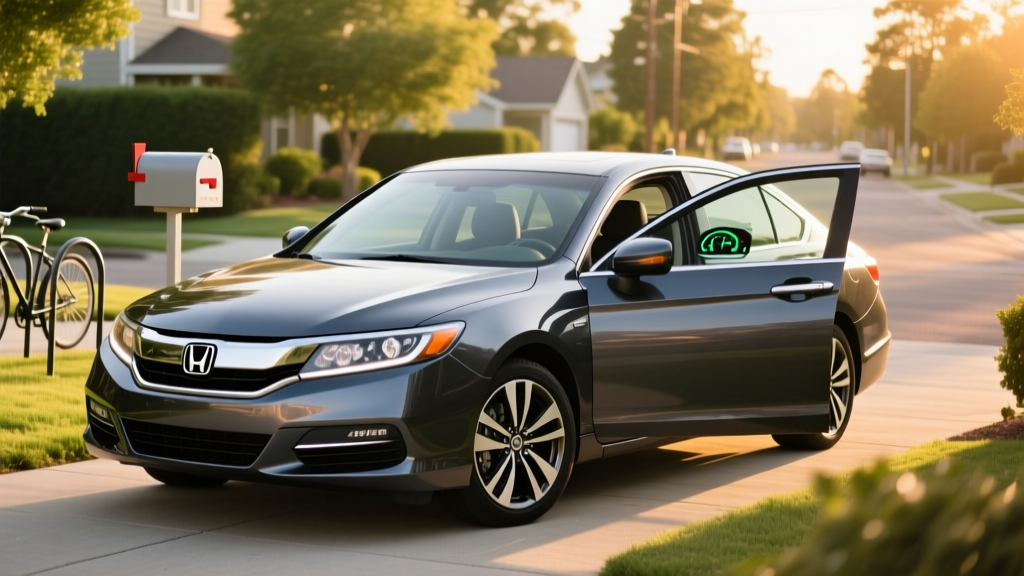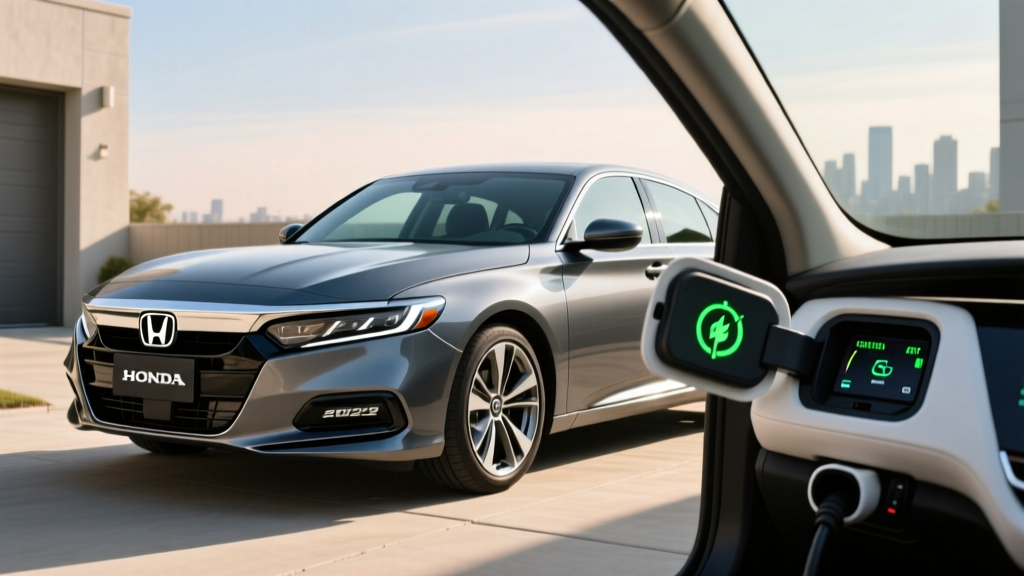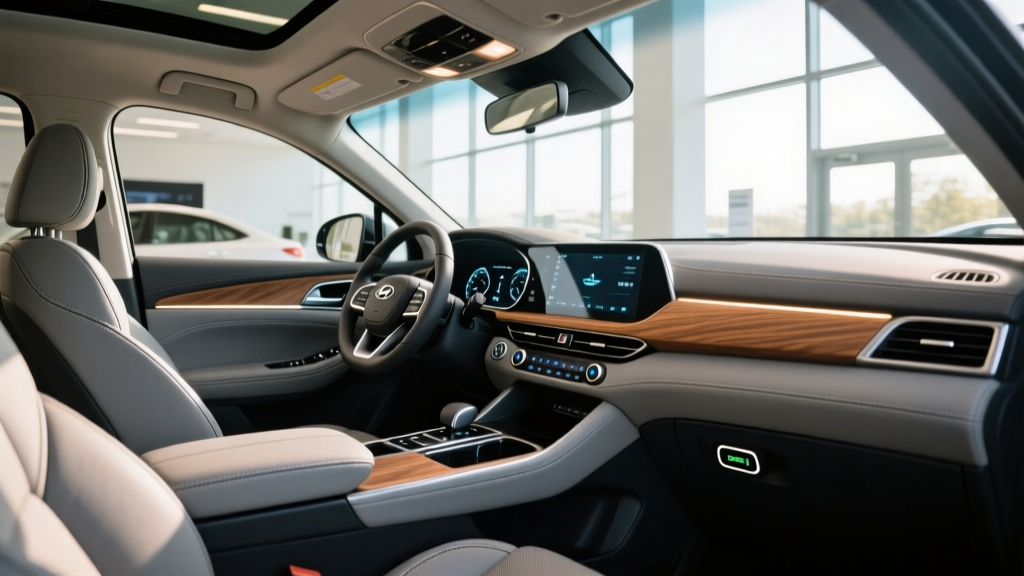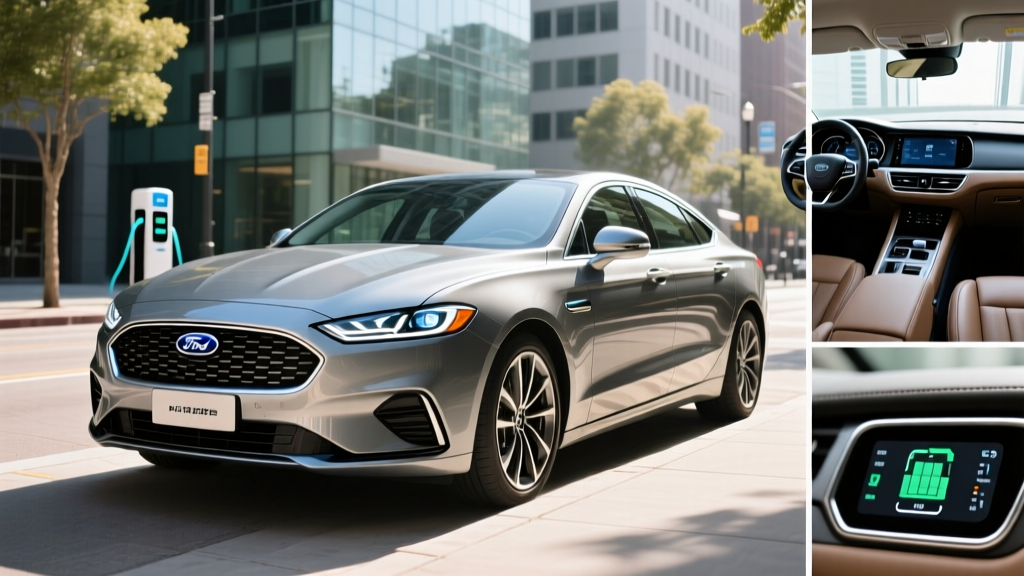
The Ford Fusion Hybrid and Fusion Energi plug-in hybrid were discontinued after the 2020 model year, but they remain among the most searched used midsize sedans on the market. If you're researching a Ford hybrid Fusion in 2026, you're likely weighing a well-priced used sedan against newer hybrid and EV alternatives. This guide covers the exact EPA fuel economy figures, real-world MPG expectations, battery longevity data, powertrain specs, and whether any tax credits still apply to a used purchase.
Ford Fusion Hybrid vs. Fusion Energi: HEV and PHEV Explained
Ford offered two electrified Fusion variants, and confusing them is the most common mistake buyers make. Here's the fundamental distinction:
Ford Fusion Hybrid (HEV) — 2013–2020
- Type: Conventional hybrid — no plug, no charging cable
- How it works: A small battery (1.4 kWh usable) is charged entirely by the gasoline engine and regenerative braking
- Driver experience: Fill up at any gas station; the hybrid system operates automatically
- Best for: Drivers without home charging access who want maximum MPG with zero lifestyle change
Ford Fusion Energi (PHEV) — 2013–2020
- Type: Plug-in hybrid — requires a charging cable for electric-only driving
- How it works: A larger battery (7.6 kWh usable on 2017–2020 models) provides electric-only miles before the gas engine engages
- Driver experience: Plug in at home overnight for a short electric commute; drive on gas for longer trips
- Best for: Drivers with home Level 2 charging and short daily commutes who still want gas flexibility
Neither vehicle is a battery-electric vehicle (BEV). Both have a gasoline engine and require fuel for extended driving. The HEV never plugs in. The Energi can operate as a pure EV for a limited range, then seamlessly transitions to hybrid operation.
Ford Fusion Hybrid MPG: EPA Ratings vs. Real-World Results
Fuel economy is the primary reason buyers seek out the Fusion Hybrid. The numbers vary by model year because Ford revised the powertrain and aerodynamics during the production run.
| Model Year | City MPG | Highway MPG | Combined MPG |
|---|---|---|---|
| 2020 Fusion Hybrid (FWD) | 43 | 41 | 42 |
| 2019 Fusion Hybrid (FWD) | 43 | 41 | 42 |
| 2017–2018 Fusion Hybrid | 43 | 41 | 42 |
| 2013–2016 Fusion Hybrid | 44 | 41 | 42 |
Source: fueleconomy.gov — U.S. Environmental Protection Agency
Fusion Energi PHEV: Electric-Only Range and Combined Efficiency
The Fusion Energi's appeal is its dual personality: a short electric-only commute followed by hybrid driving. Ford upgraded the battery for the 2017 model year, which significantly changed the range figures.
| Specification | 2017–2020 Energi | 2013–2016 Energi |
|---|---|---|
| Battery Capacity (usable) | 7.6 kWh | 5.8 kWh (approx.) |
| EPA Electric-Only Range | 26 miles | 19 miles |
| Combined MPGe (electric + gas) | 103 MPGe | 88 MPGe |
| Gas-Only Combined MPG (after battery depleted) | 42 MPG | 38 MPG |
| Total Combined Range (electric + gas) | ~610 miles | ~550 miles |
| Level 2 Charge Time (240V, 3.3 kW) | ~2.5 hours | ~2 hours |
| Level 1 Charge Time (120V, 1.4 kW) | ~7 hours | ~6 hours |
| DC Fast Charging | Not supported | Not supported |
The 26-mile electric-only range on 2017–2020 models is meaningful for commutes under 25 miles round-trip. You'll burn zero gasoline on most workdays if you charge nightly. However, the 3.3 kW onboard charger means Level 2 replenishment takes about 2.5 hours — there is no DC fast-charging capability on any Fusion Energi. This is strictly a home or workplace charging vehicle.
MPGe explained: MPGe (miles per gallon equivalent) converts electricity consumption into a gasoline-equivalent metric. The 103 MPGe figure applies only while driving on battery power. Once the battery is depleted, the Energi reverts to conventional hybrid operation at 42 MPG combined.
Powertrain Specs: Engine, Motor, and Combined Output
Both the Fusion Hybrid and Energi share the same fundamental powertrain architecture, with the Energi receiving the larger battery pack and onboard charger.
| Component | Fusion Hybrid (HEV) | Fusion Energi (PHEV) |
|---|---|---|
| Gasoline Engine | 2.0L Atkinson-cycle I4 | 2.0L Atkinson-cycle I4 |
| Engine Horsepower | 141 hp | 141 hp |
| Electric Motor Output | 118 hp | 118 hp |
| Combined System Horsepower | 188 hp | 188 hp |
| Transmission | eCVT (planetary gearset) | eCVT (planetary gearset) |
| Drivetrain | FWD only | FWD only |
| 0–60 mph (est.) | ~8.3 seconds | ~8.5 seconds |
The eCVT is not a belt-driven continuously variable transmission like those in some competitors. It uses a planetary gearset that blends engine and motor power mechanically — there's no rubber-band acceleration feel or traditional gear shifts. The 188 combined horsepower provides adequate acceleration for merging and passing, though the Fusion Hybrid is tuned for efficiency, not sportiness.
Battery Longevity, Warranty, and Replacement Cost
Battery lifespan is the number-one concern for used hybrid buyers, and it should be. Here's what the data shows for the Fusion platform.
• Standard warranty: 8 years / 100,000 miles (whichever comes first)
• CARB-state warranty: 10 years / 150,000 miles in California and states adopting California emissions standards (including NY, MA, NJ, CT, and others)
• Capacity threshold: Ford warranted the battery against failure or capacity loss below a defined threshold (typically ~65–70% of original capacity)
For a 2026 used buyer, a 2017–2020 Fusion Hybrid may still have partial factory battery warranty remaining if mileage is under 100,000. A 2013–2016 model will almost certainly be outside warranty coverage regardless of mileage.
Real-world degradation data: The Fusion Hybrid's 1.4 kWh battery is relatively small and operates within a conservative state-of-charge window (roughly 40–80% SoC), which significantly reduces degradation stress. Owner reports and fleet data suggest most Fusion Hybrid batteries retain 85–92% of original capacity after 150,000 miles. Complete battery failures before 200,000 miles are uncommon but not unheard of.
Replacement cost: A new OEM replacement battery pack for the Fusion Hybrid runs approximately $2,500–$4,000 including parts and labor at a Ford dealer. Third-party rebuilt packs are available for $1,500–$2,500. The Energi's larger 7.6 kWh pack costs more to replace — typically $4,000–$6,500 OEM. These are meaningful expenses that should factor into your used-car budget, especially for vehicles approaching or exceeding 120,000 miles.
Practical tip: Before purchasing any used Fusion Hybrid or Energi, request a battery health diagnostic from a Ford dealer or qualified hybrid technician. The OBD-II system can report battery state of health (SoH) as a percentage. Avoid vehicles showing SoH below 80% unless the price reflects an imminent battery replacement.
Pricing, Trims, and Tax Credit Eligibility in 2026
Because Ford discontinued the Fusion after 2020, every Fusion Hybrid and Energi on the market in 2026 is a used vehicle. Pricing varies heavily by model year, mileage, condition, and region.
| Model | Used Price Range (2026 est.) | Original MSRP (when new) |
|---|---|---|
| 2019–2020 Fusion Hybrid (SE/Titanium) | $16,000–$24,000 | $28,000–$34,000 |
| 2017–2018 Fusion Hybrid | $12,000–$18,000 | $26,000–$32,000 |
| 2013–2016 Fusion Hybrid | $7,000–$12,000 | $26,000–$30,000 |
| 2019–2020 Fusion Energi (Titanium) | $17,000–$25,000 | $35,000–$38,000 |
| 2017–2018 Fusion Energi | $13,000–$19,000 | $33,000–$36,000 |
Does a Used Fusion Hybrid or Energi Qualify for a Tax Credit?
The federal §30D new clean vehicle credit does not apply — these vehicles are used and no longer in production. However, the §25E used clean vehicle credit may apply to a used Fusion Energi (PHEV only — the conventional HEV does not qualify for any federal credit). Here are the requirements under current IRS rules:
- Maximum credit: $4,000 or 30% of the sale price, whichever is less
- Vehicle sale price cap: $25,000 or less
- Vehicle age: Must be at least 2 model years old (all Fusion Energi models qualify)
- Buyer income limits (MAGI): $75,000 single / $112,500 head of household / $150,000 married filing jointly
- Battery capacity: At least 7 kWh — the 2017–2020 Energi (7.6 kWh) qualifies; verify 2013–2016 eligibility
- Dealer requirement: Must be purchased from a licensed dealer (private-party sales do not qualify)
- Claim frequency: One used-vehicle credit per buyer every 3 years
Source: IRS.gov — Used Clean Vehicle Credit. Tax rules are subject to change. Consult a tax professional to confirm eligibility for your specific situation.
The conventional Fusion Hybrid (HEV) does not qualify for any federal tax credit — neither new nor used — because it has no plug and its battery is well under the minimum kWh threshold.
Reliability Record and Ownership Costs
The Fusion Hybrid's powertrain is one of Ford's most reliable. The 2.0L Atkinson-cycle engine is under-stressed, the eCVT planetary gearset has no belts or clutches to wear, and regenerative braking extends brake pad life significantly (many owners report original brake pads past 80,000 miles).
Common issues to watch for:
- 12V auxiliary battery drain: Like all hybrids, the Fusion relies on a conventional 12V battery for electronics. If the car sits for extended periods, the 12V can die, preventing the vehicle from starting even though the hybrid battery is charged.
- Coolant pump (hybrid system): Some 2013–2016 models experienced premature hybrid coolant pump failures. Check service records for pump replacement.
- Infotainment (SYNC 3): The SYNC 3 system (2017+) is generally stable, but earlier SYNC/MyFord Touch systems (2013–2016) are prone to freezing and slow response.
Insurance costs for the Fusion Hybrid are typically 5–10% lower than comparable non-hybrid midsize sedans, reflecting the model's safety record and lower performance profile. The IIHS rated the 2017–2020 Fusion as a Top Safety Pick when equipped with optional front crash prevention.
Who Should Buy a Ford Hybrid Fusion — and Who Shouldn't
Choose the Fusion Hybrid (HEV) if:
- You want 40+ MPG without changing your fueling habits (no plug, no charging)
- You don't have access to home or workplace EV charging
- Your budget is under $20,000 and you want a spacious midsize sedan
- You drive 15,000+ miles per year and want to minimize fuel costs
- You want proven hybrid reliability with widely available service
Choose the Fusion Energi (PHEV) if:
- You have home Level 2 charging and a daily commute under 25 miles
- You want electric-only commuting but need gas flexibility for road trips
- You want to potentially claim the $4,000 used clean vehicle credit
- You live in an area with high gasoline prices where electric driving saves meaningfully
Consider a Full EV (BEV) Instead if:
- You want zero gasoline use and minimal maintenance (no oil changes, no engine)
- You have reliable home charging and your daily driving is under 250 miles
- You want access to the full $7,500 federal tax credit on a new EV purchase (subject to §30D eligibility)
- You want current-model-year technology, warranty, and safety features
Stick with a Gas Car if:
- You drive very few miles per year (under 8,000) — the hybrid premium won't pay back
- You need AWD (no Fusion Hybrid or Energi was ever offered with AWD)
- You frequently tow (the Fusion Hybrid is not rated for towing)
Pros
- 42 MPG combined is excellent for a midsize sedan with a spacious rear seat
- Proven, mature hybrid powertrain with low failure rates
- Strong regenerative braking extends brake pad life
- Comfortable ride quality and quiet cabin at highway speeds
- Competitive used pricing — significant depreciation from original MSRP
- Energi PHEV may qualify for $4,000 used clean vehicle credit
Cons
- Discontinued after 2020 — no new models available, limited future parts support
- FWD only — no AWD option for snow-belt buyers
- Energi PHEV has only 26 miles of electric range and no DC fast charging
- Infotainment technology is dated compared to 2026 models
- Battery replacement cost ($2,500–$6,500) is a real risk on high-mileage examples
- Energi's smaller trunk (8.2 cu ft vs 12.0 cu ft on HEV) due to battery placement
Frequently Asked Questions
How many MPG does the Ford Fusion Hybrid get?
The 2017–2020 Ford Fusion Hybrid is EPA-rated at 43 city / 41 highway / 42 combined MPG. Real-world results typically match or slightly exceed the EPA combined figure in mixed driving, with city-heavy routes sometimes yielding 45–48 MPG. Highway-only driving at speeds above 70 mph tends to drop to 37–39 MPG.
How far can the Fusion Energi go on electric only?
The 2017–2020 Fusion Energi achieves 26 miles of EPA-rated electric-only range. The earlier 2013–2016 models manage about 19 miles. In practice, gentle driving in mild weather can stretch the 2017+ Energi to 28–30 miles, while cold weather or aggressive acceleration may reduce it to 20–22 miles.
Is the Ford Fusion Hybrid reliable?
Yes. The Fusion Hybrid's powertrain — the 2.0L Atkinson-cycle engine paired with the eCVT planetary gearset — is one of Ford's most dependable setups. The system has fewer wear components than a conventional automatic transmission. The primary long-term reliability risk is the hybrid battery, which typically lasts 150,000–200,000 miles but can cost $2,500–$4,000 to replace.
What does a Ford Fusion Hybrid battery replacement cost?
Expect $2,500–$4,000 for an OEM replacement battery on the Fusion Hybrid (HEV) and $4,000–$6,500 for the Fusion Energi (PHEV) at a Ford dealership. Third-party rebuilt batteries are available for $1,500–$2,500. Most hybrid batteries last 150,000+ miles with normal use, and gradual capacity loss (rather than sudden failure) is the typical end-of-life pattern.
Does the Ford Fusion Hybrid qualify for any tax credit in 2026?
The conventional Fusion Hybrid (HEV) does not qualify for any federal tax credit. The Fusion Energi (PHEV) may qualify for the federal §25E used clean vehicle credit of up to $4,000, provided the sale price is $25,000 or less, the buyer meets income limits ($75K single / $150K joint), and the vehicle is purchased from a licensed dealer. Verify current rules at IRS.gov before purchasing.
Can I charge the Fusion Hybrid at home?
No. The conventional Fusion Hybrid (HEV) has no plug and cannot be charged externally — it charges its small battery through the gasoline engine and regenerative braking. Only the Fusion Energi (PHEV) can be plugged in, using a standard 120V outlet (Level 1, ~7 hours) or a 240V Level 2 charger (~2.5 hours). The Energi does not support DC fast charging.
Hybrid vs. PHEV vs. EV — which should I choose?
Choose the HEV if you have no charging access and want maximum MPG with zero behavior change. Choose the PHEV if you have home charging, a short commute, and want gas-free daily driving with road-trip flexibility. Choose a full EV if you have reliable charging, want zero gasoline dependence, and prefer new-vehicle warranty and technology. The Fusion platform covers the first two options well on a used-car budget.