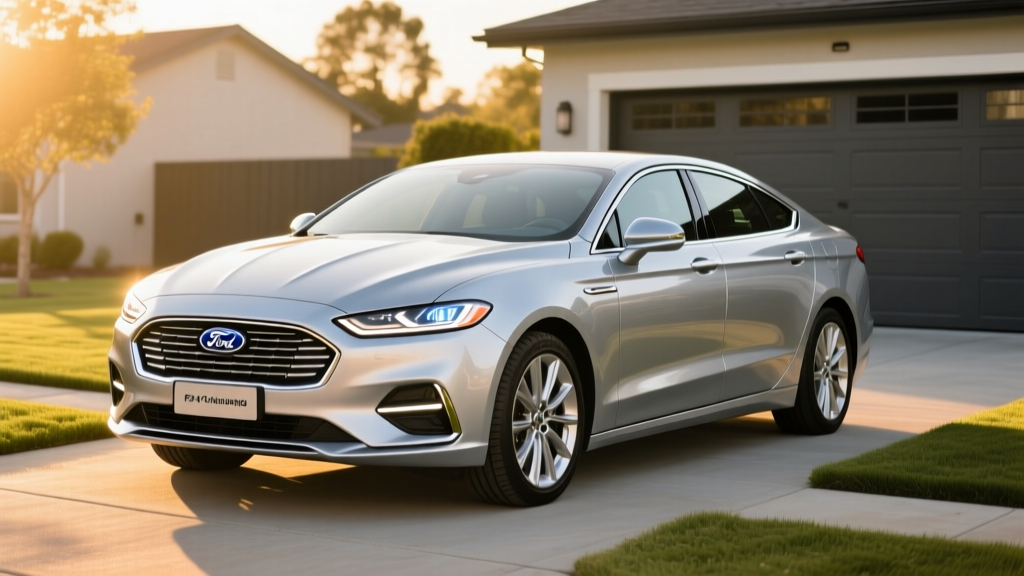
The Ford Fusion Hybrid was one of the most popular midsize hybrid sedans sold in the United States, competing directly with the Toyota Camry Hybrid and Honda Accord Hybrid through its 2020 model-year discontinuation. If you're researching Ford Fusion Hybrid fuel mileage today, you're most likely evaluating the used market or comparing the Fusion's efficiency against current hybrid sedans. This guide covers every model year's EPA MPG, the plug-in Energi variant's electric-only range, real-world efficiency expectations, battery longevity, and whether a used Fusion Hybrid still makes financial sense in 2026.
Ford Fusion Hybrid MPG: EPA Ratings by Generation
The Fusion Hybrid was produced across two distinct generations with a mid-cycle powertrain revision that significantly affected fuel economy. Here is the complete EPA breakdown according to fueleconomy.gov:
| Model Years | Generation | City MPG | Highway MPG | Combined MPG |
|---|---|---|---|---|
| 2013–2016 | 2nd Gen (early) | 44 | 41 | 42 |
| 2017–2020 | 2nd Gen (refreshed) | 43 | 41 | 42 |
| 2010–2012 | 1st Gen | 41 | 36 | 39 |
The 2013 redesign was a watershed moment: Ford switched to a 2.0-liter Atkinson-cycle four-cylinder paired with a more powerful electric motor and a lighter lithium-ion battery pack, replacing the first generation's 2.5-liter engine and nickel-metal-hydride (NiMH) battery. The result was a combined 42 MPG — a figure that still holds up against many 2026 hybrid sedans.
Real-World MPG: What Owners Actually See
EPA estimates are a starting point, not a guarantee. The Fusion Hybrid's real-world fuel mileage depends heavily on driving style, climate, and trip length. Based on owner-reported data from Fuelly and Edmunds long-term tests, here's what to expect:
- City / stop-and-go commuting: 40–46 MPG (hybrids often exceed EPA city estimates in heavy traffic thanks to regenerative braking and engine-off idle)
- Highway cruising (70+ mph): 36–40 MPG (the electric motor assists less at sustained high speed; aerodynamic drag dominates)
- Mixed driving: 38–43 MPG
- Cold weather (below 30°F): Expect a 10–15% drop to roughly 35–38 MPG combined — the engine runs more frequently to heat the cabin and maintain battery temperature
The Fusion Hybrid rewards hypermiling techniques. Drivers who use the coach mode display (which shows braking and acceleration efficiency scores) and rely on regenerative braking in city traffic routinely report 45+ MPG on shorter urban trips. However, aggressive highway driving with frequent passing will push consumption closer to 35 MPG.
Fusion Hybrid vs. Fusion Energi (PHEV): Key Differences
Ford also sold a plug-in hybrid version called the Fusion Energi from 2013 through 2020. It is critical not to confuse the two, as their powertrains, fuel economy, and ownership requirements differ substantially.
HEV vs. PHEV: What's the Difference?
Conventional Hybrid (Fusion Hybrid — HEV): No plug. The battery charges through regenerative braking and the gasoline engine. You never need to plug it in. It cannot drive on electric power alone for more than about 1 mile at low speed.
Plug-in Hybrid (Fusion Energi — PHEV): Has a larger battery and a charging port. You plug it in to access electric-only driving range. Once the battery is depleted, it operates like a conventional hybrid.
| Specification | Fusion Hybrid (HEV) | Fusion Energi (PHEV) |
|---|---|---|
| Powertrain | 2.0L I4 + electric motor | 2.0L I4 + electric motor |
| Combined System HP | 188 hp | 188 hp (2013–2016); 195 hp (2017–2020) |
| Battery Chemistry | Lithium-ion (1.4 kWh) | Lithium-ion (7.6 kWh usable, 2017+) |
| Electric-Only Range | ~1 mi (low-speed creep) | 21–26 mi (EPA, varies by year) |
| Combined MPG (gas only) | 42 MPG | 42 MPG (after battery depleted) |
| MPGe (electric + gas) | N/A | 97–103 MPGe (2017–2020) |
| Total Range | ~700+ mi | ~610 mi (electric + gas combined) |
| Plug Required? | No | Yes (Level 1 or Level 2) |
| DC Fast Charging | No | No |
| Level 2 Charge Time (0–100%) | N/A | ~2.5 hours at 240V / 3.3 kW |
| Trunk Space | 12.0 cu ft | 8.2 cu ft (battery intrudes) |
Fusion Energi Electric-Only Range by Model Year
The Energi's electric range improved after the 2017 refresh when Ford upgraded the battery from 5.8 kWh to 7.6 kWh usable capacity:
- 2013–2016 Energi: 19–21 miles EPA electric-only
- 2017–2020 Energi: 25–26 miles EPA electric-only
In real-world driving, expect roughly 18–22 miles of electric range on the 2017+ Energi in warm weather, dropping to 14–17 miles in freezing temperatures. The Energi uses a J1772 connector for Level 1 (120V, ~7 hours for a full charge) and Level 2 (240V, ~2.5 hours) charging. Like all PHEVs of this era, it does not support DC fast charging.
Powertrain Details and Driving Experience
Both the Fusion Hybrid and Energi share Ford's eCVT (electronically controlled continuously variable transmission) architecture, which uses a planetary gearset to blend power from the gasoline engine and electric motor — not a belt-driven CVT like those in some Nissan models. This design is mechanically simple and has proven durable.
The 2.0-liter Atkinson-cycle inline-four produces 141 hp on its own, with the electric motor adding 118 hp (though peak combined output is 188 hp because the engine and motor don't hit peak power simultaneously). The result is adequate, not quick: expect 0–60 mph in approximately 8.1 seconds for the Hybrid and 8.4 seconds for the heavier Energi.
The driving experience prioritizes smoothness and efficiency over sportiness. The transition between electric and gas power is generally seamless, though you'll notice the engine fire up under hard acceleration or when cabin heat is demanded in cold weather. The regenerative braking feels progressive and is less grabby than some competitors.
Battery Warranty, Lifespan, and Replacement Cost
Battery longevity is the single biggest concern for used hybrid buyers. Here's what you need to know:
- Original factory warranty: 8 years / 100,000 miles (hybrid battery and hybrid-specific components). In California Air Resources Board (CARB) states, coverage extends to 10 years / 150,000 miles.
- Expected battery lifespan: 150,000–200,000+ miles with normal use. Many Fusion Hybrids have surpassed 200,000 miles on the original battery pack.
- Degradation pattern: Lithium-ion hybrid batteries lose capacity gradually. You may notice slightly reduced electric-only assist range after 100,000+ miles, but MPG typically remains within 1–2 MPG of original figures.
Battery Replacement Cost
If the hybrid battery does fail outside warranty:
- New OEM battery (Ford dealer): $2,500–$4,000 including labor
- Refurbished/remanufactured battery: $1,200–$2,000 installed
- Individual cell module replacement: $500–$900 at a hybrid specialist shop (often only 1–2 modules fail, not the entire pack)
For context, the Fusion Hybrid's lithium-ion pack is far less expensive to replace than a full EV battery because it's only 1.4 kWh. The Energi's 7.6 kWh pack is costlier — budget $4,000–$6,500 for a full replacement if needed.
Tax Credits and Used-Buying Economics in 2026
When new, the Fusion Energi (PHEV) qualified for a federal tax credit of up to $4,007 under the pre-2023 rules. The conventional Fusion Hybrid never qualified for a federal purchase credit.
Under current IRS §30D rules, the Fusion is no longer produced, so no new-vehicle credit applies. However, the Used Clean Vehicle Credit (§25E) may apply if you purchase a qualifying used Fusion Energi from a licensed dealer:
- Credit amount: 30% of the sale price, up to a maximum of $4,000
- Price cap: Vehicle sale price must be $25,000 or less (easily met — used Fusion Energis typically sell for $8,000–$16,000 depending on year and mileage)
- Income limits: Modified AGI must not exceed $75,000 (single), $112,500 (head of household), or $150,000 (joint)
- Vehicle requirements: Must be at least 2 model years old, purchased from a dealer, and have a battery capacity of at least 7 kWh (only the 2017–2020 Energi with its 7.6 kWh pack qualifies; the earlier 5.8 kWh Energi may not)
- Conventional Fusion Hybrid: Does NOT qualify for the used EV credit because it is not a plug-in vehicle
Always verify eligibility with a tax professional and check the IRS's current qualified vehicle list before purchasing.
Who Should Buy a Used Fusion Hybrid in 2026?
Pros
- 42 MPG combined still competitive with 2026 hybrids
- Low used prices ($7,000–$16,000 depending on year/miles)
- Comfortable ride, spacious rear seat (Hybrid; Energi trunk is compromised)
- Proven eCVT powertrain with strong reliability record
- Hybrid battery typically lasts 150K–200K+ miles
- Good safety scores (IIHS Top Safety Pick for multiple years)
Cons
- Discontinued after 2020 — no new models available
- Energi trunk space severely limited (8.2 cu ft vs 12.0 in Hybrid)
- Energi electric range (21–26 mi) trails modern PHEVs (30–45 mi)
- Infotainment (SYNC 3) feels dated vs 2026 systems
- No DC fast charging on Energi
- Modest 188 hp — not a performance sedan
- Remaining factory battery warranty shrinking on older models
The Decision Framework
Choose the Fusion Hybrid (HEV) if: You want a low-cost, no-plug commuter that sips fuel in city traffic. Ideal for apartment dwellers without charging access. Budget $8,000–$14,000 for a 2017–2020 model with under 80,000 miles.
Choose the Fusion Energi (PHEV) if: You have home charging (even a standard 120V outlet works overnight) and a commute under 25 miles round-trip. You can drive mostly on electricity daily and use gas only for longer trips. Look for 2017–2020 models to get the upgraded 26-mile electric range and potential used-vehicle tax credit.
Choose a full EV instead if: You want zero tailpipe emissions, have reliable home or workplace charging, and your daily driving stays under 200 miles. A used Chevrolet Bolt EV or new Hyundai Ioniq 5 will offer lower operating costs but at a higher purchase price.
Choose a newer hybrid instead if: You want a full factory warranty, modern infotainment, and the latest ADAS features. The 2026 Toyota Camry Hybrid (44–51 MPG combined) or Honda Accord Hybrid (44–48 MPG combined) are worthy successors, starting around $29,000–$32,000 new.
Frequently Asked Questions
How many MPG does the Ford Fusion Hybrid get?
The 2013–2020 Ford Fusion Hybrid is EPA-rated at 43 city / 41 highway / 42 combined MPG. The first-generation 2010–2012 model achieves 41 city / 36 highway / 39 combined. Real-world mixed driving typically yields 38–43 MPG, with city-heavy routes sometimes exceeding 44 MPG.
How far can the Fusion Energi go on electric only?
The 2017–2020 Fusion Energi achieves 25–26 miles of EPA-rated electric-only range. The 2013–2016 model manages 19–21 miles. Real-world electric range is typically 18–22 miles (2017+) in warm weather, dropping to 14–17 miles in freezing temperatures.
Is the Ford Fusion Hybrid reliable?
Yes. The Fusion Hybrid's eCVT powertrain has proven durable, with few major failure points. The lithium-ion hybrid battery commonly lasts 150,000–200,000+ miles. Consumer Reports and J.D. Power have rated the 2017–2020 model years above average for reliability. The most common complaints involve minor electrical gremlins (SYNC infotainment glitches, 12V battery drain) rather than powertrain issues.
Does the Ford Fusion Hybrid qualify for a tax credit?
Not when purchased new — production ended in 2020. However, a used Fusion Energi (PHEV only, not the conventional Hybrid) purchased from a dealer may qualify for the IRS §25E Used Clean Vehicle Credit of up to $4,000, subject to income limits, the $25,000 sale-price cap, and battery-capacity requirements. Confirm eligibility with a tax professional before purchasing.
How much does it cost to replace a Fusion Hybrid battery?
A new OEM hybrid battery replacement runs $2,500–$4,000 at a Ford dealer. Refurbished packs cost $1,200–$2,000 installed, and individual cell module replacement (when only one or two modules fail) can cost as little as $500–$900 at a hybrid specialist. The Fusion Energi's larger 7.6 kWh pack costs more — roughly $4,000–$6,500 for a full replacement.
Does the Fusion Hybrid need to be plugged in?
No. The conventional Fusion Hybrid (HEV) charges its battery entirely through regenerative braking and the gasoline engine. You never plug it in. Only the Fusion Energi (PHEV) requires plugging in to access its electric-only driving range — but even the Energi operates as a normal hybrid if you never charge it.