Quick Verdict: The Fusion Hybrid's Value Proposition in 2026
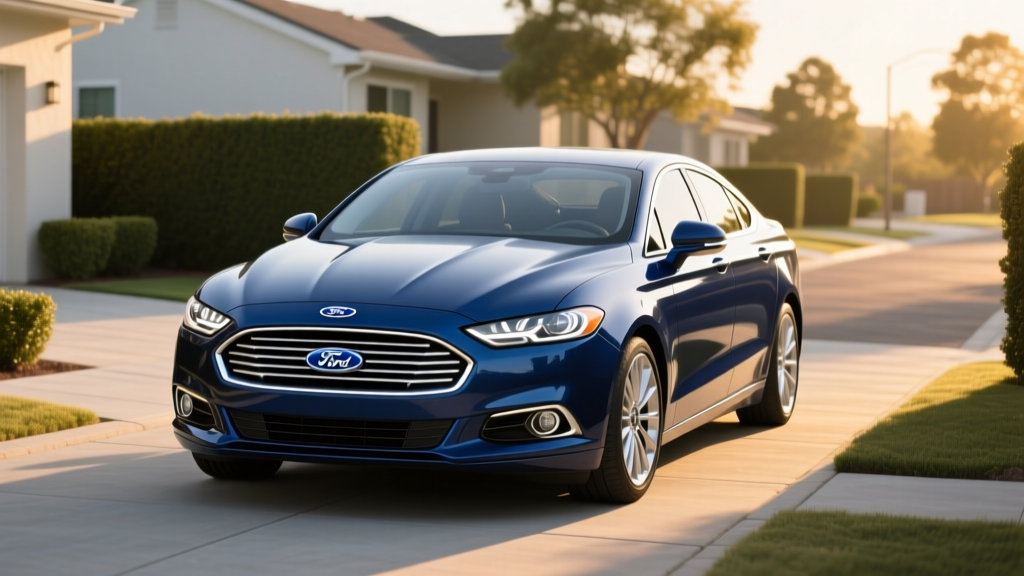
Ford discontinued the Fusion Hybrid after the 2020 model year, but thousands remain on the used market — and buyers searching for the cost of a Ford Fusion Hybrid are typically weighing a proven midsize hybrid sedan against newer competition. A 2019–2020 Ford Fusion Hybrid in good condition trades between $16,000 and $23,000 depending on mileage and trim, while the plug-in variant (Fusion Energi) runs $17,000–$25,000. The real question isn't just purchase price — it's whether the battery will last, what ownership costs look like, and how this discontinued model stacks up against current hybrids like the Toyota Camry Hybrid or Hyundai Sonata Hybrid.
This guide breaks down total cost of ownership, real-world fuel economy, battery longevity data, and the specific trade-offs of buying a used Fusion Hybrid versus a new hybrid or a full EV.
HEV vs. PHEV: Which Fusion Hybrid Are You Looking At?
Ford sold two electrified Fusion variants, and the distinction matters enormously for cost, fuel savings, and daily usability:
Ford Fusion Hybrid (HEV)
- No plug required — the battery charges via regenerative braking and the engine
- 1.4 kWh battery (gross) — small, used only for assist and low-speed electric driving
- 42 MPG combined EPA (2020 model year)
- Seamless gas-electric operation, no range anxiety
- No federal tax credit eligibility (used or new)
Ford Fusion Energi (PHEV)
- Plug-in required for maximum benefit — charges via Level 1 or Level 2
- 7.6 kWh usable battery (later models; earlier models had 6.5 kWh usable)
- 26 miles electric-only range EPA (2019–2020)
- 42 MPG combined on gas after battery depletes
- Originally eligible for a $4,609 federal tax credit when new — no longer available on used purchases
If you don't have access to home or workplace charging, the conventional HEV is the straightforward pick. The Energi only delivers its cost advantage if you can plug in nightly to capture those 26 electric miles on most daily commutes.
Fuel Economy: EPA Numbers vs. Real-World MPG
| Metric | Fusion Hybrid (HEV) | Fusion Energi (PHEV) |
|---|---|---|
| EPA City | 43 MPG | 103 MPGe (electric+gas) |
| EPA Highway | 41 MPG | 41 MPG (gas-only mode) |
| EPA Combined | 42 MPG | 42 MPG (gas-only) / 103 MPGe (blended) |
| Electric-Only Range | N/A | 26 miles (EPA) |
| Total Range | ~620 miles | ~610 miles (gas + electric) |
| Fuel Tank | 13.5 gal | 11.8 gal |
Powertrain Specs and What They Mean for Daily Driving
| Specification | Fusion Hybrid (HEV) | Fusion Energi (PHEV) |
|---|---|---|
| Engine | 2.0L Atkinson-cycle I4 | 2.0L Atkinson-cycle I4 |
| Combined Horsepower | 188 hp (net system) | 188 hp (net system) |
| Electric Motor | 88 kW (118 hp) permanent-magnet | 88 kW (118 hp) permanent-magnet |
| Transmission | eCVT (power-split device) | eCVT (power-split device) |
| Battery (usable) | 1.4 kWh lithium-ion | 7.6 kWh lithium-ion (2017+ models) |
| Battery Chemistry | NMC (nickel manganese cobalt) | NMC |
| 0–60 MPH | ~8.1 seconds | ~9.1 seconds (heavier due to larger battery) |
| Level 2 Charge Time (0–100%) | N/A (self-charging) | ~2.5 hours at 3.3 kW onboard charger |
| DC Fast Charging | N/A | Not supported |
| Drivetrain | FWD | FWD |
The Fusion Hybrid uses Ford's power-split eCVT architecture — not a belt-driven CVT like some competitors, but a planetary gearset that blends engine and motor torque seamlessly. It's a proven, durable design shared conceptually with Toyota's Hybrid Synergy Drive. The trade-off is modest acceleration: 188 net horsepower in a ~3,700 lb sedan means adequate but unexciting performance. The Energi adds roughly 300 lbs of battery mass, which slightly dulls acceleration and handling, but provides that valuable 26-mile electric commute buffer.
How Much Does a Ford Fusion Hybrid Actually Cost?
Since the Fusion Hybrid is only available on the used market, pricing varies by model year, mileage, trim level, and regional demand. Here's what to expect as of early 2026:
Used Market Pricing (2017–2020 Model Years)
| Model Year | Trim | Mileage Range | Typical Price Range |
|---|---|---|---|
| 2020 | Hybrid S / SE | 30k–60k mi | $19,000–$23,000 |
| 2020 | Hybrid Titanium | 25k–50k mi | $21,000–$25,000 |
| 2019 | Hybrid SE | 50k–80k mi | $16,000–$20,000 |
| 2019 | Energi Titanium | 40k–70k mi | $18,000–$23,000 |
| 2017–2018 | Hybrid SE / Titanium | 70k–110k mi | $13,000–$18,000 |
| 2017–2018 | Energi Platinum | 60k–100k mi | $14,000–$19,000 |
Tax Credit Eligibility
- Federal §30D credit: Not available. The Fusion Energi's original $4,609 credit applied only to new purchases and is not transferable to used buyers.
- Used EV credit (§25E): The Fusion Energi (PHEV) may qualify for the up to $4,000 used clean vehicle credit if purchased from a licensed dealer, the sale price is $25,000 or less, buyer income is under $75,000 (single) / $150,000 (joint), and the vehicle has not previously been claimed under §25E. The conventional HEV does not qualify. Verify current rules at IRS.gov §25E.
- State incentives: Vary by jurisdiction. Some states offer rebates or HOV lane access for PHEVs — check your local DMV or energy office.
Battery Longevity, Warranty, and Replacement Cost
For a 2026 buyer: A 2017 model's 8-year warranty has expired unless you're in a CARB state with 10-year coverage. A 2019–2020 model may still have limited factory warranty remaining. Always verify warranty transfer status with a Ford dealer using the VIN.
Battery Degradation and Real-World Data
Ford's hybrid battery systems have proven durable in practice. The Fusion Hybrid's small 1.4 kWh pack operates within a narrow state-of-charge window (roughly 40–60% SoC), which dramatically reduces stress on the cells. This is a key advantage of conventional hybrids — the battery management system prevents the deep cycles that accelerate degradation in full EVs.
Based on fleet data and owner reports, Fusion Hybrid batteries commonly reach 150,000–200,000 miles before significant capacity loss. The Energi's larger 7.6 kWh pack experiences more cycling, and owners who regularly charge to 100% and deplete to 0% may see 15–20% range degradation by year 8–10. However, even with degradation, a 20% loss still yields ~21 electric miles — still useful for short commutes.
Battery Replacement Cost
| Component | Estimated Cost (2026) |
|---|---|
| Fusion Hybrid (HEV) battery replacement | $2,500–$4,000 (parts + labor) |
| Fusion Energi (PHEV) battery replacement | $5,000–$8,500 (parts + labor) |
| Refurbished/remanufactured pack | $1,500–$3,000 (HEV) / $3,500–$5,500 (Energi) |
| Hybrid inverter replacement | $1,200–$2,500 |
These are worst-case costs. Most Fusion Hybrids will never need a full battery replacement — individual module swaps (a fraction of the cost) are sometimes possible. The eCVT power-split device is mechanically simple and has a strong reliability record compared to conventional automatic transmissions.
Reliability Track Record
The Fusion Hybrid consistently earned above-average reliability scores during its production run. Consumer Reports rated the 2019–2020 Fusion Hybrid favorably, and the powertrain architecture — shared in concept with millions of Toyota hybrids — is one of the most proven in the industry. Common non-powertrain issues include:
- Infotainment glitches (SYNC 3 system) — usually software-update fixable
- 12V auxiliary battery drain if the vehicle sits unused for weeks
- Rear suspension noise on higher-mileage examples (standard wear items)
The hybrid-specific components (battery, inverter, eCVT) are notably less failure-prone than a conventional automatic transmission and its associated parts. There are fewer wear items — no traditional starter motor, no alternator, no torque converter, and regenerative braking extends pad life significantly.
Who Should Buy a Used Fusion Hybrid?
Pros
- 42 MPG combined with no behavior change needed — just drive normally
- Spacious midsize cabin with 16 cu-ft trunk (HEV) or 8.2 cu-ft (Energi — battery intrudes)
- Strong reliability record on hybrid powertrain components
- Comfortable ride quality and composed highway manners
- Lower used-car cost than equivalent Camry Hybrid or Accord Hybrid
- Energi owners with home charging can commute 22–26 miles on electricity daily
Cons
- Discontinued — no new models available, shrinking dealer support over time
- Energi trunk space significantly compromised by battery pack
- No DC fast charging on Energi — Level 2 only, at just 3.3 kW
- Modest acceleration (8–9 seconds to 60 MPH)
- Older SYNC 3 infotainment lacks wireless CarPlay/Android Auto on most trims
- Factory warranty expiring or expired on older models
- Used-car market pricing can be inconsistent
Fusion Hybrid vs. New Hybrid vs. Full EV: The Decision Framework
Choose a used Ford Fusion Hybrid (HEV) if:
- Your budget is $15,000–$22,000 and you want maximum fuel savings per dollar spent
- You don't have access to home or workplace charging (no plug needed)
- You drive 12,000–18,000 miles/year and want to cut fuel costs by ~40% vs. a gas sedan
- You're comfortable buying used and having a pre-purchase inspection done by a hybrid-qualified mechanic
Choose a used Ford Fusion Energi (PHEV) if:
- Your commute is under 25 miles round-trip and you can charge at home nightly
- You want electric-only daily driving but need gas flexibility for longer road trips
- You can purchase from a dealer for under $25,000 and potentially claim the §25E used EV credit
- You accept the reduced trunk space as a trade-off for electric commuting
Choose a new hybrid (e.g., 2026 Toyota Camry Hybrid, Hyundai Sonata Hybrid) if:
- You want a full factory warranty and the latest safety tech (automatic emergency braking, lane-keeping, etc.)
- Your budget allows $28,000–$35,000 for a new vehicle
- You plan to keep the car 10+ years and want maximum peace of mind
Choose a full EV (e.g., Tesla Model 3, Hyundai Ioniq 6) if:
- You have reliable home Level 2 charging and your daily driving is under 250 miles
- You want zero tailpipe emissions, minimal maintenance, and access to the full §30D federal credit (up to $7,500 for eligible new models and buyers)
- You're comfortable with route planning for longer road trips using DC fast charging
Cost Comparison: Annual Fuel Spend
| Vehicle | MPG / MPGe | Annual Fuel Cost* | 5-Year Fuel Cost |
|---|---|---|---|
| Fusion Hybrid (HEV) | 42 MPG combined | ~$1,140 | ~$5,700 |
| Fusion Energi (PHEV, charged daily) | 103 MPGe blended | ~$650 | ~$3,250 |
| 2020 Toyota Camry (gas, 4-cyl) | 29 MPG combined | ~$1,650 | ~$8,250 |
| Tesla Model 3 RWD (EV) | 132 MPGe | ~$540 | ~$2,700 |
*Based on 15,000 miles/year, $3.30/gallon regular gas, and $0.14/kWh national average electricity. Actual costs vary by region and driving pattern. Source: fueleconomy.gov methodology.
Frequently Asked Questions
How many MPG does the Ford Fusion Hybrid get?
The 2019–2020 Ford Fusion Hybrid is EPA-rated at 43 city / 41 highway / 42 combined MPG. In real-world driving, city-dominant commuters often see 44–46 MPG thanks to regenerative braking, while sustained highway driving at 75+ MPH typically yields 37–39 MPG.
How far can the Ford Fusion Energi go on electric only?
The 2019–2020 Fusion Energi has an EPA-rated 26 miles of electric-only range. Real-world results range from 22–28 miles depending on temperature, speed, and terrain. In freezing weather, expect closer to 18–22 miles as the battery's available capacity decreases and cabin heating draws additional power.
Does the Ford Fusion Hybrid qualify for any tax credit?
The conventional Fusion Hybrid (HEV) does not qualify for any federal tax credit. The Fusion Energi (PHEV) originally qualified for a $4,609 federal credit when new — this is no longer available. However, used Energi purchases from licensed dealers priced at $25,000 or below may qualify for the §25E used clean vehicle credit (up to $4,000 or 30% of sale price, whichever is less), subject to buyer income caps. Consult IRS guidance and a tax professional before claiming.
Is the Ford Fusion Hybrid reliable, and what does battery replacement cost?
Yes — the Fusion Hybrid has an above-average reliability record, particularly for its powertrain. The eCVT and hybrid battery system are proven technologies. Hybrid battery replacement costs $2,500–$4,000 for the HEV and $5,000–$8,500 for the Energi, but most packs last 150,000+ miles without needing replacement. Refurbished packs offer a lower-cost alternative.
Should I buy a Fusion Hybrid or a newer hybrid like the Camry Hybrid?
If your budget is under $23,000, a used Fusion Hybrid offers excellent value — comparable fuel economy to a new Camry Hybrid at roughly half the price. If you want full warranty coverage, the latest ADAS features (adaptive cruise, lane-centering), and plan to keep the car 10+ years, a new Camry Hybrid ($29,000+) or Sonata Hybrid ($30,000+) is the safer long-term bet despite the higher upfront cost.
Does the Fusion Hybrid need to be plugged in?
No. The conventional Fusion Hybrid (HEV) never needs to be plugged in — it generates all its electrical energy through regenerative braking and the gasoline engine. Only the Fusion Energi (PHEV) benefits from plug-in charging. Plugging in an Energi is optional but strongly recommended to capture the 26-mile electric range; without charging, it simply operates as a 42 MPG hybrid with extra weight.
What should I check before buying a used Fusion Hybrid?
Request a pre-purchase inspection from a hybrid-qualified technician. Key items: hybrid battery state of health (SoH) via OBD-II scan, 12V battery age, brake pad thickness (regen braking preserves pads, but corroded calipers can occur in snow-belt states), and eCVT fluid condition. Also verify whether any remaining hybrid warranty is transferable by running the VIN at a Ford dealer.