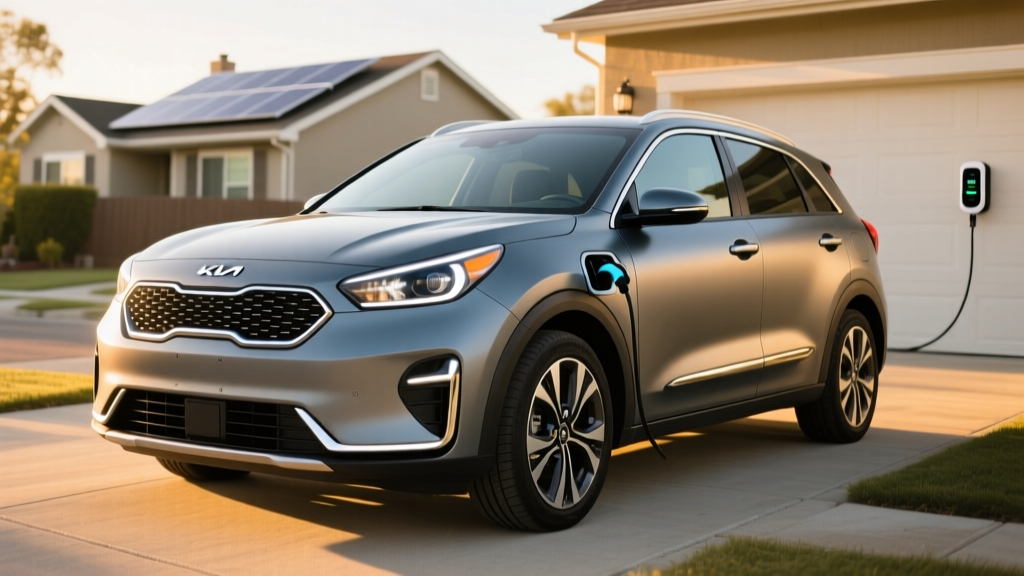
The 2023 Kia Niro Plug-In Hybrid occupies a narrow but compelling slot in the electrified-vehicle market: it's a compact crossover that can handle most daily commutes on electricity alone while retaining a gas engine for road trips. For buyers not yet ready to commit to a full battery-electric vehicle (BEV) but who want to cut fuel consumption dramatically, the Niro PHEV is one of the most practical entries in its segment. This guide covers the exact numbers — EPA ratings, real-world expectations, charging logistics, powertrain specs, and tax-credit eligibility — so you can determine whether it fits your driving pattern.
HEV vs PHEV: What the 2023 Kia Niro Plug-In Hybrid Actually Is
Kia sells the Niro in three powertrain variants for the 2023 model year: a conventional hybrid (HEV), a plug-in hybrid (PHEV), and a fully electric version (EV). The distinction between HEV and PHEV matters because it changes how you fuel the car, what your daily cost looks like, and whether you qualify for federal incentives.
| Feature | Niro HEV (Conventional Hybrid) | Niro PHEV (Plug-In Hybrid) |
|---|---|---|
| Needs to plug in? | No — charges via regenerative braking and engine | Yes — plug in for max electric range; also self-charges |
| Battery size | 1.56 kWh | 11.1 kWh (usable) |
| Electric-only driving | Minimal — assists at low speeds only | Up to 33 miles (EPA) |
| Fueling | Gasoline only | Gasoline + electricity |
| Federal tax credit | Not eligible | Previously eligible (see tax credit section) |
If you cannot charge at home or at work, the conventional Niro HEV still delivers excellent fuel economy with zero behavioral change. But if you have access to a standard 120V outlet or a Level 2 charger, the PHEV variant lets you drive most weekday commutes without burning a drop of gasoline.
Fuel Economy and Electric-Only Range: The Numbers
The EPA rates the 2023 Kia Niro Plug-In Hybrid at 48 MPGe combined when operating in electric mode (blending electricity and gasoline equivalently) and 48 MPG combined when the battery is depleted and the car runs as a conventional hybrid. Here is the full breakdown from fueleconomy.gov:
| Mode | City | Highway | Combined |
|---|---|---|---|
| Charge-sustaining (hybrid mode) | 49 MPG | 47 MPG | 48 MPG |
| Charge-depleting (electric + gas blend) | 48 MPGe combined | ||
EPA Electric-Only Range: 33 miles
Real-World Expectation: Expect 28–33 miles in mild weather with moderate acceleration. In cold weather (below 35°F), cabin heating and reduced battery efficiency can drop electric-only range to 22–27 miles. Highway-speed driving (70+ mph) also reduces electric range because the PHEV system blends in the engine sooner at sustained high loads.
Total Combined Range: Approximately 440+ miles (33 mi electric + ~407 mi on the 10.5-gallon tank in hybrid mode).
How many MPG does this hybrid get in practice? Real-world owners frequently report exceeding the EPA city rating of 49 MPG in stop-and-go traffic, where regenerative braking recaptures the most energy. Highway fuel economy tends to land closer to the EPA estimate or slightly below, especially at speeds above 70 mph or in headwinds. If your commute is within the 33-mile electric envelope and you charge nightly, you may use gasoline only on weekend road trips — effectively achieving triple-digit MPGe on a monthly basis.
Powertrain Specs: Engine, Motor, and Combined Output
| Specification | Value |
|---|---|
| Engine | 1.6L 4-cylinder GDI (104 hp) |
| Electric motor | Permanent-magnet synchronous (83 hp) |
| Combined system output | 180 hp / 195 lb-ft torque |
| Transmission | 6-speed dual-clutch automatic (DCT) |
| Battery capacity | 11.1 kWh (lithium-ion polymer) |
| 0–60 mph | ~6.8 seconds (est.) |
| Drivetrain | Front-wheel drive |
| Cargo volume | 19.4 cu ft (rear seats up) / 51.4 cu ft (folded) |
The 180-hp combined output makes the Niro PHEV feel adequately quick in city and suburban driving. The 6-speed dual-clutch transmission is a notable engineering choice — most competitors use a continuously variable transmission (CVT) or a planetary gearset. The DCT provides more direct acceleration feel and avoids the "rubber-band" sensation some drivers dislike in CVT-equipped hybrids, though you may notice occasional low-speed shift hesitation in stop-and-go traffic.
Charging the Niro PHEV: Times, Levels, and What You Need
Unlike full EVs, the 2023 Kia Niro PHEV does not support DC fast charging. This is standard for plug-in hybrids in this class — the battery is small enough that AC charging is sufficient. Here is what to expect:
| Charging Level | Power | 0–100% Time | Notes |
|---|---|---|---|
| Level 1 (120V household outlet) | ~1.4 kW | ~9 hours | Sufficient for overnight charging; included cord |
| Level 2 (240V home/public) | ~3.3 kW (onboard charger limit) | ~2 hours 45 min | Recommended for daily convenience |
| DC Fast Charge | N/A | N/A | Not supported — no CCS or CHAdeMO port |
The Niro PHEV's onboard charger is rated at 3.3 kW, which means even if you plug into a 7.2 kW or 11.5 kW Level 2 station, the car will only accept 3.3 kW. This is not a limitation in practice — a full charge in under three hours on Level 2 means you can easily top up during the workday or between errands.
The vehicle uses a standard J1772 connector for AC charging, which is universal across all non-Tesla plug-in vehicles in North America. If you install a home Level 2 charger, expect to spend $500–$1,500 on the unit plus $300–$1,200 for electrician installation, depending on whether your electrical panel needs an upgrade. Many Niro PHEV owners find that a simple 120V outlet in their garage is adequate if the car sits parked for 9+ hours overnight.
Pricing, Trims, and Federal Tax Credit Eligibility
The 2023 Kia Niro Plug-In Hybrid was offered in three trims at launch:
| Trim | MSRP (at launch) | Key Features |
|---|---|---|
| LX | ~$33,840 | 16" alloy wheels, 8" touchscreen, wireless Apple CarPlay/Android Auto, heated front seats |
| EX | ~$36,540 | Synthetic leather seats, power driver seat, smart power liftgate, highway driving assist |
| SX Touring | ~$39,690 | Harman Kardon audio, sunroof, ventilated front seats, 10.25" dual displays, navigation |
Federal tax credit update (2026 perspective): Under current IRS §30D rules, the 2023 Kia Niro PHEV's eligibility for the $7,500 federal clean vehicle credit has changed significantly since the vehicle's launch. The Inflation Reduction Act's battery-sourcing and critical-minerals requirements, along with the MSRP cap ($80,000 for SUVs) and buyer income limits ($150K single / $300K joint), all apply. Because Kia's battery supply chain has shifted over time, you must verify the specific VIN's eligibility on the IRS qualified-vehicles list before purchase. If buying new remaining inventory or certified pre-owned, the used clean vehicle credit (up to $4,000 or 30% of sale price, whichever is lower) may apply instead, subject to a $25,000 MSRP cap and lower income thresholds ($75K single / $150K joint).
- MSRP cap: $80,000 for SUVs (Niro PHEV qualifies at all trims)
- Income cap (new): $150,000 single / $225,000 head of household / $300,000 joint
- Battery sourcing: Must meet critical-mineral and battery-component requirements — verify by VIN
- Point-of-sale transfer: Eligible credits can be transferred to the dealer at purchase for an immediate price reduction
- Consult a tax professional to confirm your personal eligibility before relying on the credit
Reliability, Battery Warranty, and Long-Term Costs
Hybrid Battery Warranty: 10 years / 100,000 miles (whichever comes first) — covers the 11.1 kWh lithium-ion traction battery against defects and excessive capacity loss.
Powertrain Warranty: 10 years / 100,000 miles
Bumper-to-Bumper: 5 years / 60,000 miles
Is this hybrid reliable? The 2023 Niro PHEV benefits from Kia's mature hybrid powertrain, which has been in production across multiple Kia and Hyundai models since 2017. The lithium-ion polymer battery pack is smaller and less stressed than a full-EV battery, meaning degradation is typically minimal over the vehicle's lifespan. Most PHEV batteries retain 85–95% of their original capacity after 100,000 miles, and the warranty covers replacement if capacity drops below a manufacturer-defined threshold (typically around 70%).
Should the battery need replacement outside warranty, expect a cost in the range of $3,000–$5,500 for the pack itself, plus labor. However, out-of-warranty PHEV battery failures remain rare based on historical data from the Kia Niro and Hyundai Ioniq PHEV platforms. The 1.6L GDI engine is a well-proven unit with conventional maintenance requirements (oil changes, spark plugs, timing chain), and the 6-speed DCT has shown good durability in this application.
According to IIHS, the 2023 Niro earned strong crash-test ratings, adding to its long-term ownership appeal. Routine hybrid-specific maintenance is minimal — the regenerative braking system extends brake pad life significantly compared to conventional vehicles, and there is no transmission fluid to change on the typical maintenance schedule.
Who Should Choose the Niro PHEV vs a Full EV or Gas Car
Choose the 2023 Kia Niro PHEV if:
- Your daily round-trip commute is under 35 miles and you can charge at home
- You take road trips longer than 200 miles several times per year and want zero range anxiety
- You live in an area with limited DC fast-charging infrastructure
- You want EV-like daily driving without the $40K+ price of a long-range BEV
- You need a compact crossover with practical cargo space (up to 51.4 cu ft)
Choose a full EV instead if:
- You have reliable home Level 2 charging and rarely drive more than 250 miles in a day
- You want zero gasoline purchases and minimal powertrain maintenance
- You qualify for the full $7,500 federal credit on a BEV with better battery-sourcing compliance
Choose a conventional hybrid (HEV) or gas car if:
- You cannot charge at home or work — a PHEV's advantage disappears without plugging in
- Your budget is tighter — the Niro HEV starts lower and still delivers ~50 MPG combined
Pros
- 33 mi electric-only covers most commutes
- 48 MPG hybrid mode beats most compact SUVs
- 440+ mi total range eliminates road-trip anxiety
- 10-year/100K-mile battery and powertrain warranty
- Strong cargo utility for its class
- Comfortable ride with modern tech features
Cons
- No DC fast charging (2.75 hr minimum on Level 2)
- 3.3 kW onboard charger limits Level 2 speed
- Electric range drops to ~22–27 mi in cold weather
- FWD only — no AWD option for snow-belt buyers
- Federal tax credit eligibility uncertain for remaining stock
- Higher MSRP than Niro HEV with long payback period if you don't plug in
Frequently Asked Questions
How many MPG does the 2023 Kia Niro Plug-In Hybrid get?
The EPA rates it at 49 MPG city, 47 MPG highway, and 48 MPG combined in charge-sustaining (hybrid) mode. In real-world city driving with frequent regenerative braking, many owners report 50–53 MPG. Highway driving at 75+ mph typically yields 44–47 MPG.
How far can the Niro PHEV go on electric only?
The EPA rates the electric-only range at 33 miles. In mild conditions (60–75°F, city/suburban speeds), you can reliably achieve 30–33 miles. In cold weather or at sustained highway speeds, expect 22–27 miles before the gas engine engages.
Does the 2023 Kia Niro PHEV qualify for a tax credit?
Eligibility for the federal §30D clean vehicle credit depends on the specific vehicle's battery sourcing, your income, and the MSRP. Because sourcing requirements have tightened since 2023, you must verify the exact VIN on the IRS qualified-vehicles list. The used-EV credit (up to $4,000) may be available on pre-owned examples under $25,000. Always consult a tax professional before making a purchase decision based on credit eligibility.
Is the 2023 Niro PHEV reliable, and what does battery replacement cost?
Kia's PHEV powertrain has a strong reliability track record since 2017. The 11.1 kWh battery is covered by a 10-year/100,000-mile warranty. Out-of-warranty replacement costs approximately $3,000–$5,500, but premature battery failures are rare in this platform.
Do I need to install a Level 2 charger at home?
Not necessarily. The included Level 1 (120V) charging cord will fully recharge the 11.1 kWh battery in about 9 hours — adequate if you park overnight. A Level 2 (240V) home charger reduces that to roughly 2 hours 45 minutes and is worth considering if you want to top up between daily trips or if your schedule doesn't allow 9+ hours of parking.
Can the Niro PHEV use DC fast chargers?
No. The 2023 Kia Niro Plug-In Hybrid does not have a DC fast-charge port. It charges exclusively via AC (Level 1 or Level 2) using a J1772 connector. This is standard for compact PHEVs — the battery is small enough that AC charging is practical.