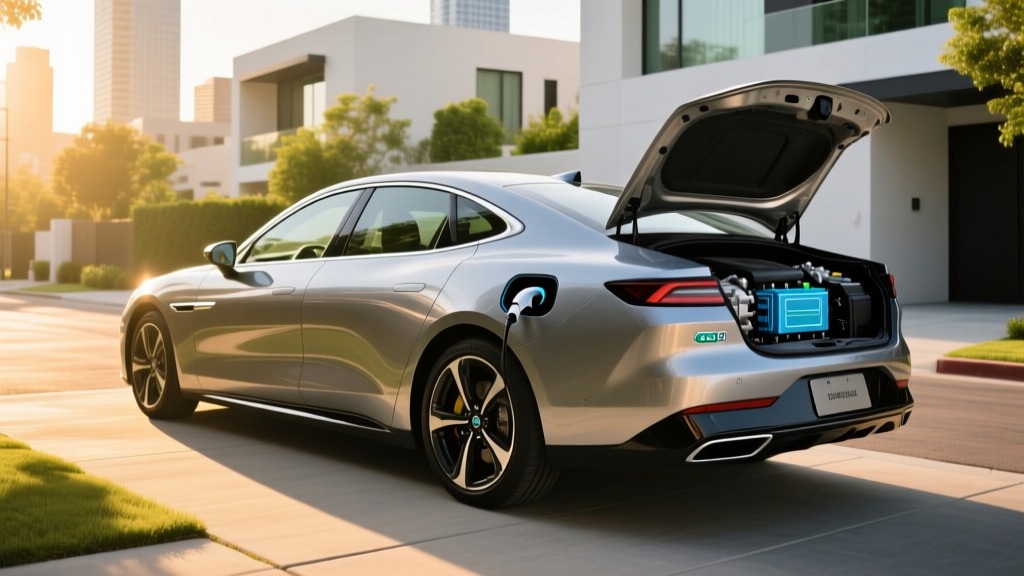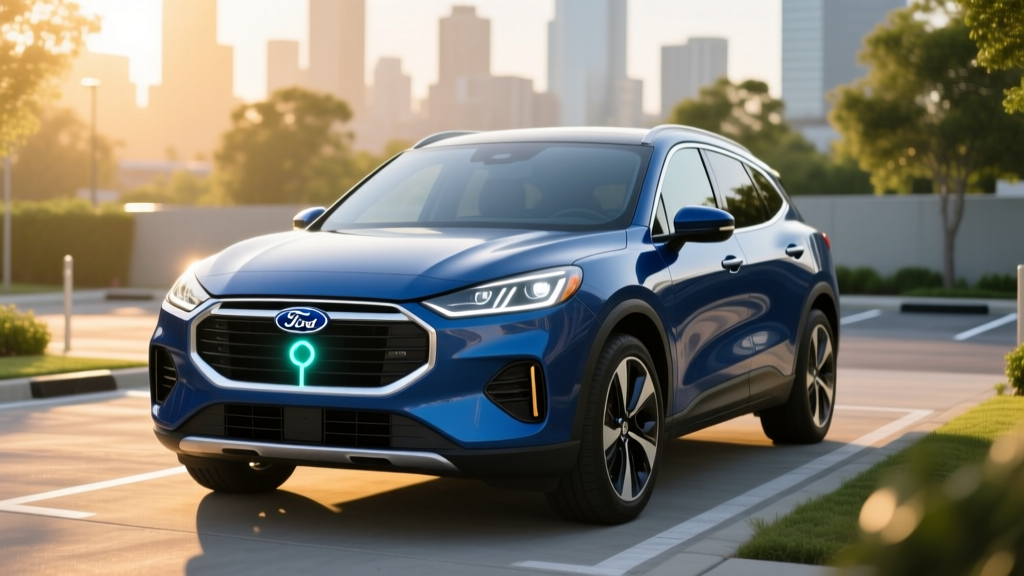
If you've been searching for what hybrid is Freedom WOF, you're likely navigating Ford's trim naming conventions and landing on one of the brand's most practical plug-in hybrids. "Freedom" is a mid-tier trim level available on the Ford Escape, and "WOF" stands for Without Optional Features — Ford's internal designation for a trim sold in its standard configuration without add-on packages. When buyers encounter a listing for an Escape Hybrid or Escape PHEV labeled "Freedom WOF," they're looking at a well-equipped, no-package plug-in hybrid crossover aimed at cost-conscious electrified-vehicle shoppers.
This guide breaks down exactly what the 2026 Ford Escape PHEV in Freedom trim delivers — from its EPA-rated electric-only range and fuel economy to battery longevity, tax credit eligibility, and how it stacks up against full EVs and conventional hybrids.
HEV vs PHEV: Which Escape Hybrid Are We Talking About?
Ford sells the Escape in two electrified flavors, and confusing them is a common buyer mistake. Here's the critical distinction:
| Attribute | Escape HEV (Conventional Hybrid) | Escape PHEV (Plug-In Hybrid) |
|---|---|---|
| Needs to be plugged in? | No — regenerative braking charges the battery | Yes — for maximum electric-only driving |
| Battery size | ~1.1 kWh (small buffer) | 14.4 kWh usable |
| Electric-only driving | Brief low-speed EV mode only | EPA-rated 37 miles |
| Combined MPG / MPGe | ~39 MPG combined | 105 MPGe (electric) / 40 MPG (gas-only) |
| Federal tax credit (§30D) | Not eligible | Up to $3,750 (subject to sourcing/income rules) |
| DC fast charging | N/A | No — Level 2 AC only |
The "Freedom WOF" badge most commonly appears on the PHEV variant, which is the model this guide focuses on. If you're looking at a conventional HEV listing with the same badge, the powertrain is different and it does not qualify for the federal EV tax credit.
Fuel Economy: Real-World MPG vs EPA Sticker
The 2026 Ford Escape PHEV pairs a 2.5-liter Atkinson-cycle four-cylinder engine with a permanent-magnet electric motor, routed through an eCVT (electronically controlled continuously variable transmission). Total system output is 210 horsepower.
| Driving Mode | EPA City | EPA Highway | EPA Combined |
|---|---|---|---|
| Electric-only (MPGe) | 119 MPGe | 93 MPGe | 105 MPGe |
| Hybrid (gas engine, MPG) | 42 MPG | 37 MPG | 40 MPG |
Real-world expectations: In mixed suburban driving with regular plug-in charging, many owners report exceeding the 40 MPG combined figure once the battery is depleted — the Escape PHEV's regenerative braking system is particularly effective in stop-and-go traffic, where city MPG can climb to 44–46. On sustained highway trips at 75+ mph with a depleted battery, expect closer to 35–37 MPG. Cold weather (below 30°F) reduces electric-only range by roughly 20–30%, dropping the 37-mile EV range to approximately 25–30 miles.
Real-World Electric Range: ~30–35 miles (moderate temps, mixed driving); ~25–30 miles (cold weather or highway-heavy)
Total Combined Range (gas + electric): ~490 miles
Electric-Only Range, Battery, and Charging Specs
The Escape PHEV's 14.4 kWh usable lithium-ion battery (NMC chemistry) sits beneath the rear seats and cargo floor, preserving interior space. Here's the complete charging picture:
| Spec | Value |
|---|---|
| Battery capacity (usable) | 14.4 kWh |
| Battery chemistry | NMC (Nickel Manganese Cobalt) |
| EPA electric-only range | 37 miles |
| Level 1 charging (120V, 12A) | ~1.4 kW — full charge in ~10–11 hours |
| Level 2 charging (240V, 32A) | ~7.7 kW — full charge in ~2–2.5 hours |
| DC fast charging | Not supported |
| Charge port | J1772 (standard AC connector) |
| Combined system horsepower | 210 HP |
| 0–60 MPH | ~8.5 seconds |
| Drivetrain | FWD only (no AWD on PHEV) |
Charging reality check: The Escape PHEV does not support DC fast charging, which is typical for plug-in hybrids in this class. A full Level 2 charge in roughly 2 hours means you can easily top up during a workday or while running errands. On a standard 120V household outlet (Level 1), an overnight charge of 10–11 hours will fully replenish the battery — making Level 1 viable for PHEVs in a way it isn't for full EVs.
2026 Pricing, Freedom Trim, and Tax Credit Eligibility
The 2026 Ford Escape PHEV in Freedom trim starts at approximately $39,990 MSRP (including destination charge). This positions it between the base PHEV trim and the loaded Titanium, offering features like a 13.2-inch touchscreen with SYNC 4, wireless Apple CarPlay/Android Auto, Ford Co-Pilot360 assist technologies, heated front seats, and a power liftgate — without paying for option packages.
Does the Escape PHEV qualify for the federal tax credit?
The 2026 Escape PHEV is eligible for up to $3,750 under IRS §30D, not the full $7,500. The reduced amount is because the vehicle meets the critical-minerals sourcing requirement but does not fully satisfy the battery-component sourcing threshold under current rules. Key eligibility conditions:
- Income caps: Modified AGI must not exceed $150,000 (single), $225,000 (head of household), or $300,000 (joint filers)
- MSRP cap: Vehicle MSRP must be under $80,000 (SUVs/vans) — the Escape PHEV qualifies
- Point-of-sale transfer: You can apply the credit as a down-payment reduction at the dealer (effective Jan 1, 2024 onward)
- Battery sourcing: Partial compliance = $3,750; verify current-year status at IRS.gov §30D page
Note: State incentives vary. California's CVRP, Colorado's state credit, and other programs may stack on top. Check your state's energy office for current amounts.
Battery Warranty, Reliability, and Replacement Cost
Hybrid Component Warranty: 8 years / 100,000 miles on the electric motor, power control unit, and related high-voltage components.
Limited Vehicle Warranty: 3 years / 36,000 miles bumper-to-bumper; 5 years / 60,000 miles powertrain.
Reliability: Ford's 2.5L Atkinson-cycle engine is one of the most proven hybrid powertrains in the industry — it's mechanically simple (no turbocharger, no traditional alternator) and shares architecture with millions of units across Ford and Mazda platforms. The eCVT has no traditional gears or belts, reducing failure points. IIHS has historically rated the Escape well in crashworthiness; check the latest model-year results.
Battery replacement cost: If the PHEV battery needs replacement outside of warranty, expect $4,000–$7,000 including parts and labor at a Ford dealer. However, PHEV battery degradation is generally modest — the smaller battery cycles less aggressively than a full EV battery, and Ford's thermal management system keeps cells within optimal temperature ranges. Most PHEV batteries outlast the vehicle's economic life when properly maintained.
Who Should Choose the Escape PHEV Freedom WOF?
Choose the Escape PHEV if:
- You can charge at home (Level 1 or 2) and your daily commute is under 35 miles — you'll drive almost entirely on electricity
- You want EV-like daily driving without range anxiety on road trips (the gas engine covers long hauls seamlessly)
- You don't have reliable access to public DC fast chargers and want a vehicle that doesn't depend on them
- You want lower upfront cost than a full EV while still reducing fuel consumption by 60–80% for typical commutes
Choose a full BEV instead if:
- You can install a Level 2 home charger and have DC fast charging access for road trips
- You want zero tailpipe emissions and minimal drivetrain maintenance (no oil changes, no gas engine)
- Your budget supports a higher upfront price in exchange for lower per-mile energy cost
Choose the conventional Escape HEV instead if:
- You cannot plug in at home or work — a PHEV driven without charging is just a heavier, less efficient hybrid
- You want the lowest possible purchase price while still getting 39+ MPG combined
- You prefer AWD (available on the HEV, not on the PHEV)
Pros
- 37 miles EV range covers most daily commutes gas-free
- ~490 miles total range eliminates trip-planning anxiety
- Charges fully on 120V overnight — no Level 2 required
- Up to $3,750 federal tax credit (point-of-sale eligible)
- Proven, reliable 2.5L hybrid powertrain
- Practical cargo space and comfortable ride quality
Cons
- No DC fast charging capability
- FWD only — no AWD option on PHEV variant
- ~$40K starting price is steep for a compact crossover
- Only $3,750 tax credit, not the full $7,500
- 8.5-second 0–60 time is adequate, not quick
- Real-world EV range drops significantly in cold weather
Ownership Cost Snapshot: 5-Year Estimate
| Cost Factor | Escape PHEV (Freedom) | Notes |
|---|---|---|
| MSRP (before credit) | $39,990 | Destination included |
| Federal tax credit | –$3,750 | If eligible under §30D |
| Effective purchase price | ~$36,240 | Excludes state incentives, dealer fees |
| Annual fuel cost (12K mi/yr) | ~$550–$900 | Depends on % of driving on electricity vs gas |
| Annual insurance (avg) | ~$1,500–$1,900 | PHEVs cost slightly more to insure than HEVs |
| Maintenance (5-yr total) | ~$2,200–$2,800 | Includes oil changes, tire rotation, brake fluid |
| Estimated 5-yr total cost | ~$48,000–$55,000 | Incl. purchase, fuel, insurance, maintenance |
Source for efficiency data: fueleconomy.gov. Verify exact model-year figures as EPA ratings are updated annually.
Frequently Asked Questions
How many MPG does the Ford Escape PHEV get?
The 2026 Escape PHEV achieves an EPA-rated 42 MPG city / 37 MPG highway / 40 MPG combined when operating as a hybrid (battery depleted). In electric-only mode, it earns 105 MPGe combined. Real-world city driving often exceeds the EPA figure thanks to aggressive regenerative braking — 44–46 MPG is common in stop-and-go traffic.
How far can the Escape PHEV go on electric only?
The EPA rates it at 37 miles of electric-only range. In moderate temperatures with mixed suburban driving, expect 30–35 real-world miles. In cold weather (below 30°F) or at sustained highway speeds, that drops to 25–30 miles. For commuters with a sub-30-mile round trip and home charging, this means months between gas station visits.
Hybrid vs PHEV vs EV — which fits my lifestyle?
If you can plug in at home and your daily driving is under 35 miles, the PHEV gives you EV-like daily operation with a gas safety net for road trips. If you can't plug in, the conventional HEV is a better choice — a PHEV that's never charged wastes its battery weight and costs more. A full BEV makes sense if you want the lowest operating cost, can charge at home, and have DC fast-charger access for longer trips.
Is the Escape PHEV reliable and what does battery replacement cost?
The 2.5L Atkinson-cycle hybrid powertrain is one of Ford's most reliable systems, with no turbocharger and a proven eCVT design. The PHEV battery is warranted for 8 years/100,000 miles against defects and capacity loss below 70%. Out-of-warranty replacement runs $4,000–$7,000, though most PHEV batteries last well beyond 150,000 miles with normal use.
Does the Escape PHEV Freedom qualify for a tax credit?
Yes — the 2026 Escape PHEV qualifies for up to $3,750 under the federal §30D clean vehicle credit, subject to buyer income caps ($150K single / $300K joint), MSRP limits (under $80K for SUVs), and battery sourcing requirements. The credit can be transferred to the dealer at point of sale as a purchase-price reduction. Check IRS.gov for current-year eligibility details, as sourcing rules are subject to change.
What does "WOF" mean on a Ford Escape listing?
WOF stands for "Without Optional Features." It means the vehicle is built in the standard Freedom trim configuration with no additional option packages added. This typically results in a lower MSRP and a cleaner build sheet — you get the standard Freedom equipment (SYNC 4, Co-Pilot360, heated seats, power liftgate) without premium audio, panoramic sunroof, or technology packages.
Can the Escape PHEV charge on DC fast chargers?
No. Like most plug-in hybrids, the Escape PHEV supports only AC charging — Level 1 (120V) and Level 2 (240V via J1772 connector). This is intentional: the 14.4 kWh battery is small enough to fill in ~2 hours on Level 2, making DC fast-charging hardware unnecessary and cost-prohibitive for a PHEV.
Sources: EPA ratings via fueleconomy.gov; federal tax credit rules via IRS §30D; safety data via IIHS. Specifications reflect the 2026 model year and are subject to change. Always verify current pricing, credit eligibility, and EPA ratings before purchasing.