Quick Verdict: The Original Hybrid SUV in 2026
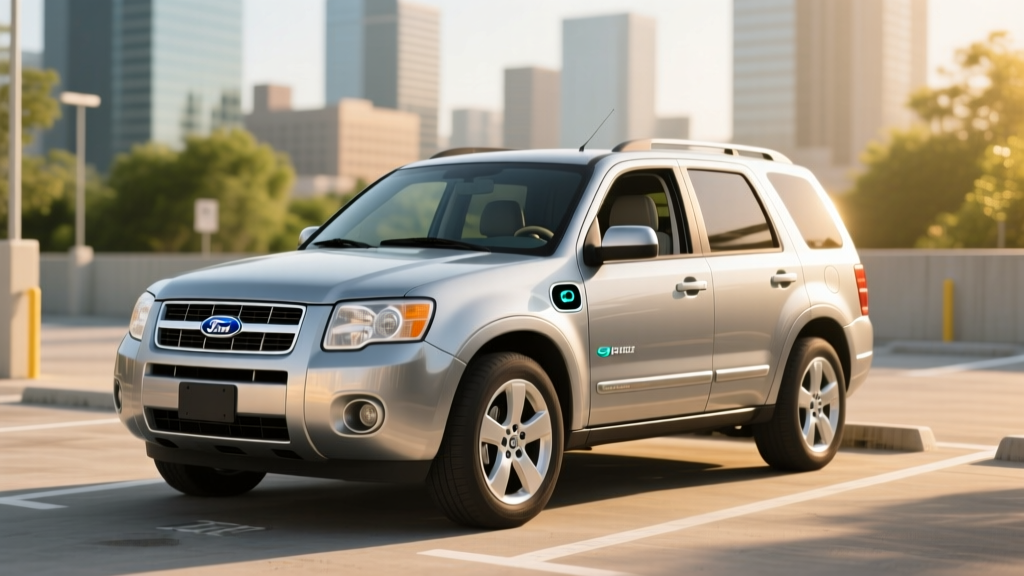
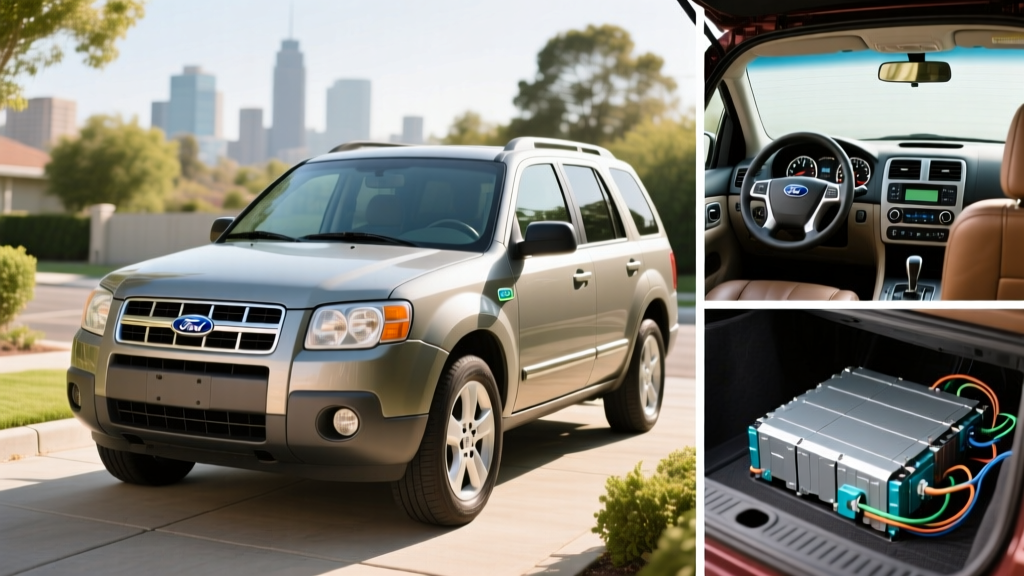
The 2005 Ford Escape Hybrid holds a unique place in automotive history: it was the first hybrid SUV ever sold in the United States, beating the Toyota Highlander Hybrid to market by several months. Nearly two decades later, used examples still pop up on dealer lots and private-party listings, often priced between $3,000 and $6,500 depending on mileage and condition. For budget-conscious commuters, the question isn't whether this pioneering HEV was innovative — it was — but whether a 20-year-old hybrid battery and aging powertrain electronics still deliver meaningful fuel savings today.
This guide covers the 2005 Escape Hybrid's real-world efficiency, battery longevity, replacement costs, and how it stacks up against modern hybrids, PHEVs, and full EVs for buyers shopping in 2026.
2005 Ford Escape Hybrid: Core Specifications
| Specification | 2005 Escape Hybrid FWD | 2005 Escape Hybrid AWD |
|---|---|---|
| Powertrain Type | Conventional Hybrid (HEV) | Conventional Hybrid (HEV) |
| Engine | 2.3L Atkinson-cycle I4 | 2.3L Atkinson-cycle I4 |
| Engine HP | 133 hp @ 6,000 rpm | 133 hp @ 6,000 rpm |
| Electric Motor | Permanent-magnet AC synchronous | Permanent-magnet AC synchronous |
| Combined System HP | 155 hp | 155 hp |
| Transmission | eCVT (planetary gearset) | eCVT (planetary gearset) |
| Hybrid Battery | 1.3 kWh NiMH (330V nominal) | 1.3 kWh NiMH (330V nominal) |
| EPA City MPG | 36 | 33 |
| EPA Highway MPG | 31 | 29 |
| EPA Combined MPG | 33 | 31 |
| Fuel Tank | 16.5 gallons | 16.5 gallons |
| 0-60 mph | ~10.8 seconds | ~11.3 seconds |
| Curb Weight | ~3,690 lbs | ~3,810 lbs |
| Cargo Volume | 27.6 cu ft (rear seats up) | 27.6 cu ft (rear seats up) |
| Original MSRP (base) | ~$26,970 | ~$28,595 |
Source: EPA / fueleconomy.gov
How Many MPG Does the 2005 Escape Hybrid Actually Get?
The EPA rated the front-wheel-drive 2005 Escape Hybrid at 36 city / 31 highway / 33 combined MPG. The all-wheel-drive variant drops to 33 city / 29 highway / 31 combined. These figures were remarkable for a compact SUV in 2005, when the average new vehicle achieved roughly 22 MPG combined.
Like most conventional hybrids, the Escape Hybrid tends to outperform its EPA city rating in stop-and-go driving, where regenerative braking recaptures energy most effectively. Owners on fueleconomy.gov report an average of 29-32 MPG combined in real-world mixed driving. Highway-only trips at 70+ mph typically yield 27-29 MPG, as the electric motor contributes less at sustained high speeds and aerodynamic drag dominates. In cold weather (below 35°F), expect a 5-10% efficiency drop due to increased engine idling for cabin heat and reduced NiMH battery efficiency.
For context, a 2026 Ford Escape Hybrid FWD is rated at 37 city / 34 highway / 36 combined — only marginally better than its 2005 ancestor in city driving, though highway efficiency has improved noticeably. The original Escape Hybrid's Atkinson-cycle engine and eCVT architecture were so well-engineered that Toyota licensed the planetary-gearset hybrid synergy drive concept in a cross-licensing agreement with Ford.
HEV vs. PHEV vs. Full EV: Where Does This Fit?
The 2005 Escape Hybrid is a conventional hybrid (HEV). It has no plug, no electric-only driving range to speak of, and no external charging capability. The 1.3 kWh nickel-metal hydride (NiMH) battery charges exclusively through regenerative braking and engine-driven generation. This is fundamentally different from a plug-in hybrid (PHEV) or a battery electric vehicle (BEV).
| Feature | HEV (e.g., 2005 Escape Hybrid) | PHEV (e.g., 2026 Escape PHEV) | BEV (e.g., 2026 Ford Mustang Mach-E) |
|---|---|---|---|
| Plug-in Charging | No | Yes | Yes |
| Electric-Only Range | ~0.5 mi at low speed | 37 mi (EPA) | 250-320 mi (EPA) |
| Battery Capacity | 1.3 kWh (NiMH) | 14.4 kWh (NMC) | 70-91 kWh (NMC/LFP) |
| Home Charging Required | No | Recommended (Level 2) | Essential |
| Federal Tax Credit (2026) | None | Up to $3,750 (§30D, income/MSRP limits) | Up to $7,500 (§30D, income/MSRP/sourcing) |
| Best For | No-charging-access commuters | Short-commute + road-trip flexibility | Home-charging access + low running costs |
- You have no access to home or workplace charging
- Your budget is under $7,000 and you need an SUV
- Your commute is city-heavy (under 35 mph average)
- You want zero range-anxiety without behavioral change
- You can install a Level 2 charger at home
- You want electric-only commuting and lower per-mile fuel cost
- You qualify for the federal §30D tax credit (income under $150K single / $300K joint)
- You prioritize modern safety features (ESC, side curtain airbags, AEB)
Hybrid Battery Longevity and Replacement Cost
The single biggest concern for any used hybrid buyer is battery health. The 2005 Escape Hybrid uses a nickel-metal hydride (NiMH) pack manufactured by Sanyo, rated at 330 volts nominal with 25 modules. Ford originally warranted this battery for 8 years / 100,000 miles (10 years / 150,000 miles in California Air Resources Board states). That factory warranty expired over a decade ago for every 2005 model on the road.
Original warranty: 8 yr / 100,000 mi (10 yr / 150,000 mi in CARB states)
Expected lifespan: NiMH packs in the Escape Hybrid have demonstrated 150,000-200,000+ miles before significant capacity loss, though individual module failures can occur earlier.
Replacement cost (2026): A remanufactured NiMH pack from suppliers like Green Bean Battery or Dorman costs $1,800-$2,800 installed. A new OEM pack from Ford, if still available, runs $3,500-$4,500 plus labor. Individual module replacement (for isolated cell failures) can cost $400-$800 at a hybrid-specialist shop.
NiMH chemistry degrades more gradually than early lithium-ion packs, and the Escape Hybrid's battery management system was conservative — it never uses the full state-of-charge window, buffering the top and bottom to prolong cell life. Many 2005-2007 Escape Hybrids have surpassed 200,000 miles on the original pack, though capacity loss of 15-25% is common at that mileage, resulting in slightly reduced city MPG and more frequent engine engagement.
When evaluating a used 2005 Escape Hybrid, request a hybrid battery health scan via an OBD-II tool that reads State of Health (SoH) data. Look for balanced module voltages (all within 0.2V of each other) and a reported SoH above 70%. A dashboard "Check Hybrid System" warning is a dealbreaker unless the seller has already replaced the pack and can provide documentation.
Powertrain and Driving Experience
The 2005 Escape Hybrid pairs a 2.3-liter Atkinson-cycle four-cylinder engine (133 hp) with a 70 kW (94 hp) permanent-magnet electric motor through Ford's eCVT — a planetary gearset that blends power from both sources seamlessly. Combined system output is 155 horsepower, adequate for city merging but leisurely for highway passing. The 0-60 mph time of roughly 10.8 seconds feels unhurried by 2026 standards.
The eCVT has no fixed gears and no traditional belt-and-cone continuously variable transmission feel. It's mechanically robust — there are no clutch packs or bands to wear — and has proven to be one of the most reliable transmissions Ford has ever shipped. Regenerative braking is moderate by modern standards; the Escape Hybrid does not offer true one-pedal driving. The friction brakes blend with regen seamlessly, though the pedal feel is notably softer and less linear than a conventional vehicle.
At low speeds (under ~25 mph), the Escape Hybrid can operate in electric-only mode for very short distances — roughly half a mile on flat ground with a fully charged pack. This is not plug-in hybrid territory; the engine restarts frequently for climate control, battery maintenance, or moderate acceleration demands. The experience is best understood as "electric-assist" rather than "electric-drive."
Pricing, Tax Credits, and Ownership Economics
As of early 2026, used 2005 Ford Escape Hybrid pricing typically falls in the $3,000-$6,500 range depending on mileage, condition, and battery health. Clean-title examples under 120,000 miles with documented battery replacement command the top of that range. High-mileage examples (160,000+) with original batteries often sell for $2,500-$4,000.
The 2005 Escape Hybrid does not qualify for any current federal tax credit. The IRS §30D new clean vehicle credit applies only to new PHEVs and BEVs meeting battery sourcing, MSRP, and buyer income requirements. The used EV credit (§25E, up to $4,000) applies only to used BEVs and PHEVs — conventional hybrids like the Escape HEV are excluded. No state incentives currently target used conventional hybrids either.
Despite the lack of incentives, the ownership economics can still work for a budget buyer. At 31 MPG combined and $3.20/gallon regular unleaded (2026 national average), annual fuel cost for 12,000 miles is approximately $1,238. A comparable 2005 gas-only Escape 4-cylinder (rated ~22 MPG combined) would cost roughly $1,745 — a difference of about $500 per year. That gap narrows further if the hybrid battery needs replacement during ownership, so buyers should factor a $2,000-$2,500 contingency into the purchase budget.
Reliability, Safety, and Known Issues
The 2005 Escape Hybrid has a strong reliability reputation, particularly for its powertrain. The eCVT and hybrid system have fewer wear items than a conventional automatic transmission. However, this is a 20-year-old vehicle, and age-related concerns extend beyond the hybrid battery:
- Brake actuator assembly: The electrohydraulic brake system (unique to the hybrid) can fail and cost $1,200-$1,800 to replace. Listen for unusual grinding or a firm pedal on startup.
- Electric power steering: The 2005 model year was among the first with EPAS. Failures are not epidemic but do occur; replacement runs $800-$1,200.
- Rust: Rear wheel arches, rocker panels, and subframe mounts are rust-prone, especially in salt-belt states. Inspect from underneath.
- Safety: The 2005 Escape earned a 4-star driver / 5-star passenger front crash rating from NHTSA. However, it lacks electronic stability control (standard only from 2008), side curtain airbags (optional, not standard), and any modern ADAS features like automatic emergency braking or lane-keeping. By 2026 safety standards, this is a significant deficit.
For reference, the NHTSA safety database shows the 2005 Escape predates mandatory ESC and advanced side-impact protection. Families with young children should weigh this carefully against the fuel savings.
Pros and Cons
- 33 MPG combined — still competitive for a compact SUV
- eCVT is nearly bulletproof; no belt or clutch wear
- No plug required; zero behavioral change from gas cars
- Low purchase price ($3K-$6.5K used)
- Strong city MPG from regen braking
- Proven NiMH battery with gradual degradation curve
- No federal or state tax credits available
- Outdated safety: no ESC, no standard curtain airbags, no AEB
- Highway MPG (29-31) is unremarkable by 2026 standards
- Hybrid battery replacement ($1,800-$4,500) is likely needed
- 10.8-second 0-60 time feels sluggish
- No DC fast charging, no electric-only commuting
- Parts availability declining for hybrid-specific components
Frequently Asked Questions
Is the 2005 Ford Escape Hybrid a plug-in?
No. The 2005 Escape Hybrid is a conventional hybrid (HEV). It has no plug, no external charging port, and no meaningful electric-only range. The battery charges solely through regenerative braking and the gasoline engine. Ford did not introduce a plug-in Escape until the 2020 model year.
How much does it cost to replace the hybrid battery?
A remanufactured NiMH battery pack for the 2005 Escape Hybrid costs $1,800-$2,800 installed at a hybrid specialist. An OEM replacement (if available through Ford) runs $3,500-$4,500 plus labor. Some shops offer individual module replacement for $400-$800 if only one or two cells have failed, though this is a temporary fix on a 20-year-old pack.
Can I still get the Escape Hybrid serviced in 2026?
Yes, but with caveats. Any competent independent mechanic can handle the gasoline engine, suspension, and brakes. Hybrid-specific diagnostics (battery health scans, inverter service, brake actuator replacement) require a technician with hybrid training and a scan tool that reads Ford's hybrid system data. Dealership service departments can handle this, but labor rates are higher. Independent hybrid specialists exist in most metro areas.
How does the 2005 Escape Hybrid compare to a 2026 hybrid?
A 2026 Ford Escape Hybrid FWD achieves 37 city / 34 highway / 36 combined MPG — only 3 MPG better combined. However, the modern version offers 210 combined horsepower, a 10-second 0-60 time, standard AEB, lane-keeping, adaptive cruise, and an available PHEV variant with 37 miles of electric-only range. The efficiency gap is small; the safety and technology gap is enormous.
Does the 2005 Escape Hybrid qualify for any tax credit?
No. The federal §30D new vehicle credit and §25E used vehicle credit both require plug-in capability (PHEV or BEV). Conventional hybrids are excluded from all current federal incentive programs. Check your state's energy office for any local programs, though none currently target used HEVs.
What should I check before buying a used 2005 Escape Hybrid?
Prioritize a hybrid battery health scan (module voltage balance and SoH percentage), a brake actuator function test, a thorough undercarriage rust inspection, and verification that the "Check Hybrid System" light has not been recently cleared. A pre-purchase inspection at a hybrid-knowledgeable shop ($150-$250) is strongly recommended before purchase.