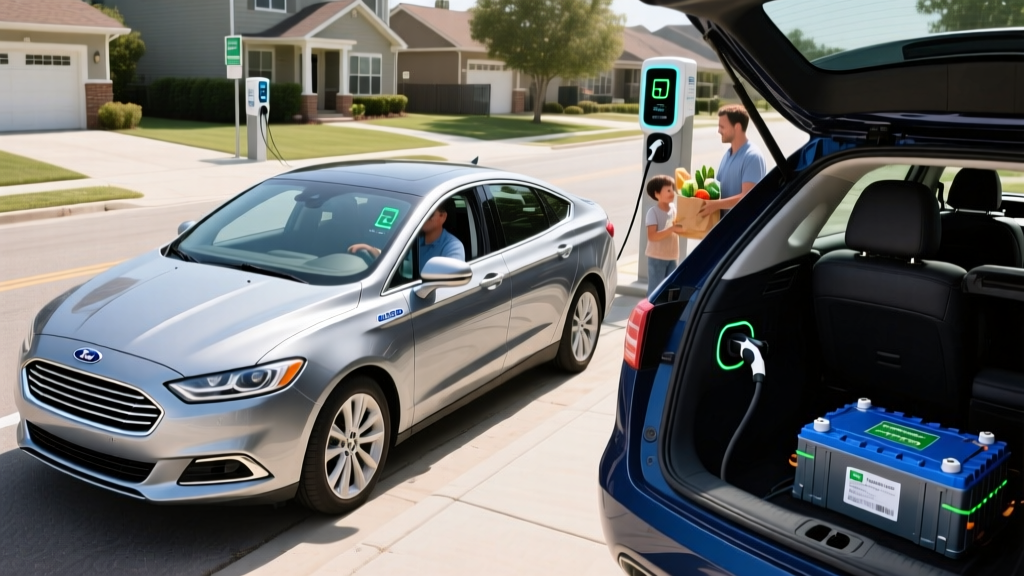
The Ford C-Max Hybrid was discontinued after the 2018 model year, but it remains one of the most practical used hybrid wagons on the market. With a spacious hatchback body, a proven Toyota-rivaling hybrid powertrain, and EPA-rated 42 MPG combined, the 2018 C-Max Hybrid is a strong pick for budget-conscious drivers who want hybrid efficiency without plugging in. This guide covers everything a used buyer in 2026 needs to know — real-world fuel economy, battery longevity, replacement costs, and how it stacks up against modern alternatives.
2018 Ford C-Max Hybrid: Quick Specs at a Glance
| Specification | 2018 Ford C-Max Hybrid |
|---|---|
| Powertrain | 2.0L Atkinson-cycle I-4 + electric motor (HEV) |
| Combined Horsepower | 188 hp (net system) |
| Transmission | eCVT (planetary gearset) |
| EPA MPG (City / Hwy / Combined) | 42 / 38 / 42 |
| Hybrid Battery | 1.4 kWh lithium-ion (air-cooled) |
| Plug-In Required? | No — self-charging via regen and engine |
| 0–60 mph | ~8.1 seconds |
| Cargo Volume (behind rear seats) | 24.5 cu ft (52.8 cu ft folded) |
| Curb Weight | ~3,680 lbs |
| Battery Warranty (original) | 8 years / 100,000 miles |
| Original MSRP (SE base) | ~$24,120 |
| Typical Used Price (2026) | $9,000–$15,000 depending on mileage |
HEV vs. PHEV: What the C-Max Lineup Offered
Ford sold the C-Max in two hybrid variants. Understanding the difference is essential before shopping the used market.
C-Max Hybrid (HEV)
- Type: Conventional hybrid — no plug needed
- Battery: 1.4 kWh lithium-ion
- Electric-only driving: Brief low-speed EV mode (~1 mile max)
- Refueling: Gas station only; battery recharges via regenerative braking and engine
- EPA MPG: 42 combined
C-Max Energi (PHEV) — Separate Model
- Type: Plug-in hybrid — requires Level 1 or Level 2 charging
- Battery: 7.6 kWh usable lithium-ion
- Electric-only range: 21 miles (EPA)
- Total combined range: ~550 miles (electric + gas)
- EPA: 95 MPGe (electric+gas) / 42 MPG (gas-only after battery depleted)
- Charging: Level 1 (~7 hours), Level 2 (~2.5 hours); no DC fast charging
This article focuses on the C-Max Hybrid (HEV). If you're specifically looking for plug-in capability and a meaningful electric-only commute, you want the C-Max Energi — a fundamentally different vehicle with a much larger battery. Both were discontinued after 2018, so all examples on the market are used.
Fuel Economy: EPA Ratings vs. Real-World MPG
The 2018 C-Max Hybrid carries an EPA rating of 42 MPG city, 38 MPG highway, and 42 MPG combined, per fueleconomy.gov. That city-heavy advantage is typical of series-parallel hybrids: the electric motor handles low-speed driving where gasoline engines are least efficient, while regenerative braking recovers energy that would otherwise be lost as heat.
| Driving Scenario | EPA Rating | Real-World Expectation |
|---|---|---|
| City | 42 MPG | 40–46 MPG (hybrids often beat EPA in stop-and-go) |
| Highway (70+ mph) | 38 MPG | 34–38 MPG (aero drag and engine-only cruising) |
| Combined | 42 MPG | 38–43 MPG |
| Cold Weather (below 32°F) | — | 34–38 MPG (engine runs more for cabin heat) |
Why the city number matches the combined: Ford's hybrid system is optimized for urban efficiency. The 2.0L Atkinson-cycle engine only engages when needed, and below ~25 mph the car can operate in electric-only mode for short distances. On the highway, the engine does most of the work directly, which is why the highway figure drops to 38 MPG.
Real-world note: Owners on fuel-tracking platforms consistently report 38–44 MPG combined, with city-dominant drivers occasionally exceeding the EPA rating. Highway-heavy commuters should expect closer to 35–38 MPG, especially at speeds above 75 mph or in mountainous terrain.
Powertrain and Driving Experience
The C-Max Hybrid pairs a 2.0-liter Atkinson-cycle inline-four (141 hp on its own) with a permanent-magnet electric motor integrated into the eCVT transaxle. Combined net system output is 188 horsepower — competitive with the Toyota Prius of the same era, though the C-Max is roughly 400 pounds heavier.
The eCVT is not a belt-driven continuously variable transmission. It uses a planetary gearset to blend engine and motor power seamlessly. This means no rubber-band acceleration feel and no shift shock. Acceleration to 60 mph takes approximately 8.1 seconds, which is adequate for merging and passing but not quick by modern EV standards.
Driving dynamics are a relative strength. The C-Max sits on the Ford Focus platform, giving it more planted handling than the Prius. The trade-off is a slightly firmer ride over rough pavement. Cabin noise is well-managed at city speeds, though the engine becomes vocal under hard acceleration — a characteristic of Atkinson-cycle engines operating at high RPM to generate power.
Hybrid Battery: Longevity, Warranty, and Replacement Cost
2018 C-Max Hybrid Battery Warranty
Original coverage: 8 years / 100,000 miles (10 years / 150,000 miles in CARB states including CA, NY, MA, and others)
Capacity retention threshold: Ford does not publish a specific degradation percentage trigger, but warranty covers defects and significant capacity loss that impairs function.
2026 status: All 2018 models are now outside the standard 8-year warranty window unless registered in a CARB state with the 10-year provision (expiring in 2028).
Battery chemistry and size: The 2018 C-Max Hybrid uses a 1.4 kWh lithium-ion pack (upgraded from the earlier 1.2 kWh NiMH in pre-2013 models). The pack is air-cooled and located beneath the rear cargo floor. Because conventional hybrids keep the battery in a relatively narrow state-of-charge window (roughly 40–60%), degradation is typically slow.
Expected lifespan: Based on owner reports and fleet data, Ford's lithium-ion hybrid packs from this generation commonly reach 150,000–200,000 miles before significant capacity loss. Some examples exceed this. The key failure mode is not gradual degradation but individual cell imbalance, which can trigger a check-engine light and reduced efficiency.
Battery replacement cost (2026 estimates):
- New OEM pack (Ford dealer): $2,500–$3,500 including labor
- Remanufactured pack (specialist hybrid shops): $1,500–$2,200 including labor
- Used/salvage pack: $600–$1,000 plus labor (~$500–$800)
The C-Max's relatively small battery keeps replacement costs far lower than a full EV pack. A remanufactured unit from a reputable hybrid specialist is often the most cost-effective route for a vehicle now worth $9,000–$15,000 on the used market.
Tax Credits and Incentives in 2026
Federal tax credit (§30D): The 2018 Ford C-Max Hybrid does not qualify for the federal Clean Vehicle Credit. The §30D credit applies only to new plug-in electric vehicles (BEVs and PHEVs with sufficient battery capacity). Conventional hybrids (HEVs) have never been eligible for §30D.
Used EV credit (§25E): This credit of up to $4,000 for qualifying used plug-in vehicles also excludes conventional hybrids. The C-Max Energi (PHEV) may qualify if it meets the income, price, and sourcing requirements outlined on IRS.gov, but the HEV C-Max Hybrid does not.
State incentives: A small number of states offer rebates or HOV lane access for hybrids, but these programs are increasingly focused on plug-in vehicles. Check your state energy office or DMV for current hybrid-specific incentives, as they vary by jurisdiction and change frequently.
Bottom line: When buying a used 2018 C-Max Hybrid, expect zero federal tax credits. The value proposition rests entirely on the low purchase price and strong fuel economy.
Pros and Cons: The C-Max Hybrid in 2026
Pros
- 42 MPG EPA combined — still competitive with newer hybrids
- Hatchback versatility: 52.8 cu ft cargo with seats folded
- Proven, simple hybrid system with affordable battery replacement
- No plug-in infrastructure needed — works for apartment dwellers
- Focus-based chassis offers better handling than most hybrid competitors
- Low used pricing ($9K–$15K) makes it a strong budget pick
- Standard features include SYNC infotainment, rear camera, and MyFord Mobile app connectivity
Cons
- Discontinued — no new examples, limited future parts support
- Dated interior materials and technology vs. 2025+ hybrids
- No Apple CarPlay or Android Auto (SYNC 3 supports limited mirroring)
- Highway MPG drops to 34–38 in real-world driving
- Heavier than Prius — affects braking distances and tire wear
- No federal tax credit eligibility (HEV limitation)
- Some owners report wind noise around the A-pillars at highway speed
Who Should Buy the 2018 C-Max Hybrid vs. Alternatives?
The C-Max Hybrid occupies a specific niche. Here's a practical decision framework:
Choose the 2018 C-Max Hybrid if:
- You drive 15,000+ miles per year, mostly in city or mixed conditions
- You cannot charge at home (apartment, street parking, no garage outlet)
- Your budget is under $15,000 and you want maximum MPG per dollar
- You need hatchback cargo space for gear, pets, or kids' equipment
- You prefer a conventional car experience with zero plug-in complexity
Look at a PHEV (Prius Prime, C-Max Energi, RAV4 Prime) if:
- You have a garage or driveway with a 120V outlet and a short commute (under 25 miles)
- You want to drive mostly on electricity but need gas backup for road trips
- You want to qualify for the used clean vehicle credit (§25E) on a qualifying model
Look at a full EV (Bolt EV, Model 3, Leaf) if:
- You have reliable home Level 2 charging access
- Your daily commute is under 200 miles round-trip
- You want to eliminate gas station visits entirely and minimize maintenance
- You want modern ADAS features (lane-keeping, adaptive cruise) that the 2018 C-Max lacks
For a direct comparison: the Toyota Prius (2018) gets 54 MPG combined but offers less cargo space and a tighter rear seat. The Honda Insight (2019+) is more refined inside but costs more on the used market. The C-Max wins on interior volume per dollar.
What to Inspect When Buying a Used 2018 C-Max Hybrid
Since every 2018 C-Max is now a used vehicle, a pre-purchase inspection should focus on hybrid-specific items:
- Battery state of health: Ask for a hybrid battery diagnostic report from a Ford dealer or hybrid specialist. Look for cell voltage variance under 0.2V across all modules.
- Coolant system: The hybrid battery and inverter have separate cooling loops. Check for coolant leaks around the rear battery tray and inverter (front, driver-side engine bay).
- Brake actuator: Ford's regenerative braking system uses an electrohydraulic brake actuator. Listen for unusual grinding or buzzing at startup. Replacement runs $1,200–$1,800.
- 12V battery: Like all hybrids, the C-Max has a conventional 12V battery that powers electronics. If it's original (unlikely in 2026), replace it proactively — a dead 12V battery prevents the car from starting even though the hybrid pack is full.
- Transmission fluid: The eCVT uses MERCON LV ATF. Ford recommends inspection at 150,000 miles. If the fluid is dark or smells burned, budget for a fluid exchange (~$150–$200).
Frequently Asked Questions
How many MPG does the 2018 Ford C-Max Hybrid get?
The EPA rates it at 42 MPG city, 38 MPG highway, and 42 MPG combined. In real-world driving, expect 38–44 MPG combined depending on your driving mix. City-heavy drivers often match or slightly exceed the EPA figure, while highway-dominant commutes at 75+ mph typically yield 34–38 MPG.
Does the C-Max Hybrid need to be plugged in?
No. The C-Max Hybrid (HEV) is a conventional self-charging hybrid. The 1.4 kWh battery recharges through regenerative braking and the gasoline engine. You only ever visit a gas station. The separate C-Max Energi model is a plug-in hybrid that requires charging for its 21-mile electric range.
How long will the hybrid battery last?
Ford's lithium-ion hybrid packs from this generation commonly reach 150,000–200,000 miles. The narrow state-of-charge operating window (roughly 40–60%) reduces stress on the cells. Original battery warranty was 8 years/100,000 miles (10 years/150,000 in CARB states). As of 2026, most 2018 models are nearing or past the standard warranty window.
What does it cost to replace the hybrid battery?
A new OEM battery from a Ford dealer runs $2,500–$3,500 installed. Remanufactured packs from hybrid specialists cost $1,500–$2,200 installed. Used/salvage packs are available for $600–$1,000 plus $500–$800 in labor. Given the vehicle's used value, a remanufactured pack is typically the most economical choice.
Does the 2018 C-Max Hybrid qualify for any tax credits?
No. Conventional hybrids (HEVs) are not eligible for the federal §30D Clean Vehicle Credit or the §25E Used Clean Vehicle Credit. These credits require plug-in capability and minimum battery capacity. Some states may offer minor hybrid incentives — check your state energy office for current programs.
Is the C-Max Hybrid reliable?
The C-Max Hybrid's powertrain is generally reliable, with the eCVT planetary gearset being one of the most durable transmission designs in the industry (no belts, no clutches to wear). Common complaints include the brake actuator (electrohydraulic unit), occasional 12V battery drain issues, and SYNC infotainment glitches. The hybrid system itself has a strong longevity record. NHTSA shows no major safety recalls specific to the hybrid powertrain for the 2018 model year.
Hybrid vs. PHEV vs. EV — which should I choose?
If you cannot charge at home and want zero lifestyle change from a gas car, the C-Max Hybrid (HEV) is the simplest option. If you have a garage outlet and a short commute, a PHEV like the C-Max Energi or Prius Prime lets you drive on electricity most days while keeping gas flexibility. If you have Level 2 home charging and a predictable daily range under 200 miles, a used EV like the Chevrolet Bolt or Tesla Model 3 eliminates fuel costs almost entirely and requires less maintenance.
Sources: EPA fueleconomy.gov, IRS Used Clean Vehicle Credit, NHTSA 2018 Ford C-Max Hybrid.