Ford Bronco Fuel Economy: What the 2026 Numbers Actually Show
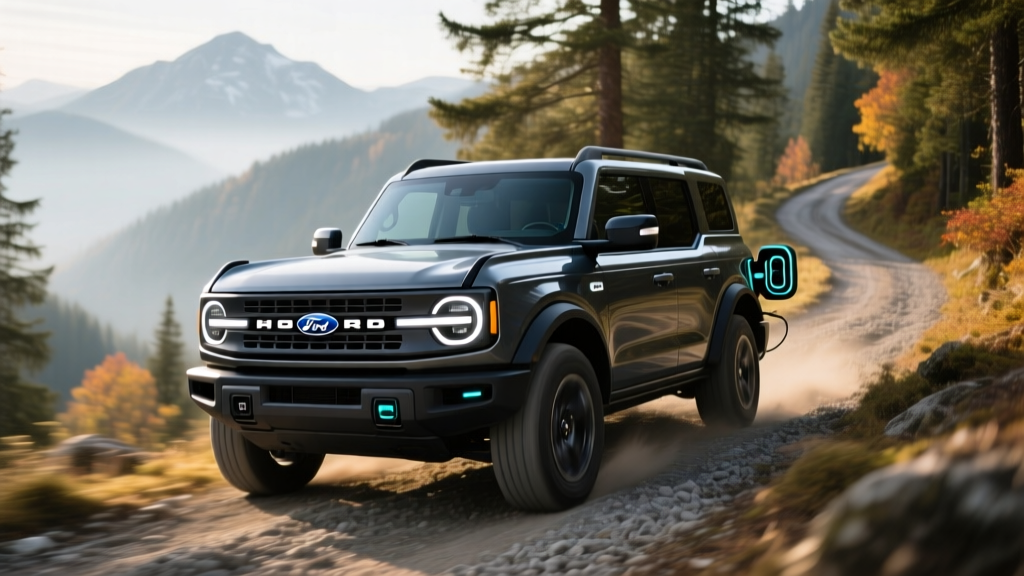
The Ford Bronco remains one of the most capable off-road SUVs on the market, but its boxy aerodynamics and heavy curb weight make fuel efficiency a persistent concern for daily drivers and commuters. If you've been searching for ford bronco mpg hybrid information, here's the essential reality for the 2026 model year: Ford does not currently offer a hybrid or plug-in hybrid variant of the full-size Bronco. Every 2026 Bronco sold in the U.S. is powered by a conventional internal combustion engine — either the turbocharged 2.3-liter EcoBoost four-cylinder or the twin-turbo 2.7-liter EcoBoost V6.
That said, understanding the Bronco's actual fuel economy — and what electrified alternatives exist in Ford's lineup or from competitors — is critical for buyers weighing efficiency against off-road capability. Below, we break down every EPA figure, real-world expectation, and the closest hybrid alternatives worth considering.
2026 Ford Bronco EPA MPG by Engine and Configuration
The Bronco's fuel economy varies significantly depending on engine choice, transmission, drivetrain, and tire package. The Sasquatch package with 35-inch mud-terrain tires and lifted suspension drops MPG noticeably compared to a base model with all-season tires. Here's the EPA breakdown based on fueleconomy.gov data for recent Bronco configurations:
| Engine | Drivetrain | City MPG | Highway MPG | Combined MPG |
|---|---|---|---|---|
| 2.3L EcoBoost I4 Turbo | 4WD (10-speed auto) | 20 | 21 | 20 |
| 2.3L EcoBoost I4 Turbo (manual) | 4WD (7-speed manual) | 19 | 21 | 20 |
| 2.7L EcoBoost V6 Twin-Turbo | 4WD (10-speed auto) | 18 | 20 | 19 |
| 2.7L EcoBoost V6 (Sasquatch pkg) | 4WD (10-speed auto) | 17 | 18 | 17 |
| 3.0L EcoBoost V6 (Bronco Raptor) | 4WD (10-speed auto) | 15 | 16 | 15 |
Is There a Ford Bronco Hybrid or PHEV?
As of the 2026 model year, there is no hybrid (HEV) or plug-in hybrid (PHEV) Ford Bronco. Ford has not officially announced a Bronco Hybrid or Bronco PHEV for any upcoming model year. Industry speculation has persisted for years — particularly after Ford introduced the Maverick hybrid and the Escape PHEV — but the Bronco's body-on-frame architecture and off-road-focused drivetrain have so far kept it combustion-only.
This is worth understanding in context. Here's the distinction between hybrid types that buyers often confuse:
Conventional Hybrid (HEV)
A small battery (typically 1–2 kWh) and electric motor assist the gas engine. The battery recharges through regenerative braking and the engine — no plug-in required. Improves city MPG significantly. Examples: Toyota RAV4 Hybrid, Ford Maverick Hybrid.
Plug-In Hybrid (PHEV)
A larger battery (typically 12–25 kWh) provides 20–40 miles of electric-only driving before the gas engine engages. Requires plug-in charging to realize full benefit. Eligible for federal tax credits up to $7,500 if requirements are met. Examples: Toyota RAV4 Prime, Jeep Wrangler 4xe.
The closest competitor offering a plug-in hybrid in the off-road SUV segment is the Jeep Wrangler 4xe, which pairs a 2.0L turbocharged engine with a 17.3 kWh battery for an EPA-rated 22 miles of electric-only range and 49 MPGe combined when the battery is charged. If Ford were to introduce a Bronco PHEV, it would likely target similar figures.
Bronco MPG vs. Hybrid and PHEV Competitors
For buyers cross-shopping the Bronco against electrified SUVs, here's how the fuel economy stacks up against vehicles that offer similar utility, if not identical off-road chops:
| Vehicle | Powertrain | Combined MPG / MPGe | Electric-Only Range | Starting MSRP (2026) |
|---|---|---|---|---|
| Ford Bronco (2.3L EcoBoost) | Gasoline (turbo I4) | 20 MPG | N/A | $39,695 |
| Ford Bronco (2.7L V6) | Gasoline (turbo V6) | 19 MPG | N/A | $43,395 |
| Jeep Wrangler 4xe | PHEV (turbo I4 + electric) | 49 MPGe / 20 MPG (gas only) | 22 miles | $51,795 |
| Toyota 4Runner (2.4L turbo) | Gasoline (turbo I4) | 21 MPG | N/A | $42,245 |
| Toyota RAV4 Prime | PHEV (2.5L I4 + electric) | 94 MPGe / 38 MPG (gas only) | 42 miles | $44,990 |
| Ford Escape PHEV | PHEV (2.5L I4 + electric) | 105 MPGe / 40 MPG (gas only) | 37 miles | $38,400 |
The Wrangler 4xe is the only direct off-road competitor with a plug-in powertrain. Its 22-mile electric range covers most daily commutes, and when the battery depletes, it reverts to roughly 20 MPG on gas alone — comparable to the Bronco's best figures. However, the 4xe carries a significant price premium and adds roughly 600 lbs of battery weight.
Powertrain Specs: What Moves the 2026 Bronco
Since no hybrid option exists, here are the powertrain details for every available 2026 Bronco engine:
| Engine | Horsepower | Torque (lb-ft) | Transmission | 0-60 mph (est.) | Towing Capacity |
|---|---|---|---|---|---|
| 2.3L EcoBoost Turbo I4 | 300 hp | 325 | 10-speed auto / 7-speed manual | 6.8 sec | 3,500 lbs |
| 2.7L EcoBoost Turbo V6 | 330 hp | 415 | 10-speed auto | 6.3 sec | 4,500 lbs |
| 3.0L EcoBoost Turbo V6 (Raptor) | 418 hp | 440 | 10-speed auto | 5.5 sec | 4,500 lbs |
A hybrid powertrain would likely pair the 2.3L or 2.7L engine with a motor-integrated transmission (similar to Ford's modular hybrid system in the F-150 PowerBoost), potentially adding 40–50 hp of electric assist and improving city MPG by 3–5 MPG through regenerative braking and electric launch. But until Ford commits to that engineering investment, these remain the only options.
Tax Credits and Ownership Costs for the Bronco
Because the 2026 Ford Bronco is a conventional gasoline vehicle with no hybrid or plug-in variant, it does not qualify for the federal §30D new clean vehicle tax credit (up to $7,500). That credit is reserved for battery electric vehicles (BEVs) and plug-in hybrids (PHEVs) meeting battery sourcing, MSRP cap, and buyer income requirements per IRS guidelines.
For context, here's what the Bronco's ownership costs look like versus a hypothetical hybrid or the Wrangler 4xe:
The Bronco does benefit from strong resale value. According to industry depreciation data, the Bronco retains approximately 55–60% of its value after five years, outperforming most SUVs. This partially offsets its higher fuel costs compared to hybrid alternatives.
Reliability, Battery Warranty, and Long-Term Costs
While the Bronco has no hybrid battery to worry about, its turbocharged engines and complex 4WD systems have their own maintenance profile:
If Ford does eventually introduce a Bronco Hybrid, federal law requires hybrid battery components to be warrantied for at least 8 years/100,000 miles (10 years/150,000 miles in California and states adopting CARB standards). Hybrid battery replacement costs for comparable Ford systems (like the Maverick Hybrid) are estimated at $3,000–$5,000 out of warranty, though most modern hybrid batteries last well beyond their warranty period with minimal degradation.
Who Should Buy the Gas Bronco vs. Wait for a Hybrid or Choose an Alternative?
Choose the Gas Bronco If:
- You need maximum off-road capability (locking diffs, sway bar disconnect, G.O.A.T. modes)
- You prioritize removable doors and roof — features no hybrid competitor offers
- You tow regularly (up to 4,500 lbs with the V6)
- You accept 17–20 MPG as the cost of the platform
- You don't have home charging access
Consider an Alternative If:
- Your commute exceeds 30 miles/day and fuel cost matters
- You want electric-only driving for school runs and errands (Wrangler 4xe, RAV4 Prime)
- You want the $7,500 federal tax credit (requires a PHEV or BEV)
- You mostly drive on pavement and rarely go off-road
- You're willing to wait 1–3 years to see if Ford announces a Bronco PHEV
Frequently Asked Questions
How many MPG does the 2026 Ford Bronco get?
The 2026 Ford Bronco gets an EPA-estimated 20 MPG combined with the 2.3L EcoBoost engine (20 city / 21 highway), 19 MPG combined with the 2.7L V6 (18 city / 20 highway), and 15 MPG combined for the Bronco Raptor (15 city / 16 highway). Real-world results vary from 14–20 MPG depending on tires, driving style, and conditions.
Is there a Ford Bronco Hybrid available in 2026?
No. Ford does not offer a hybrid (HEV) or plug-in hybrid (PHEV) version of the Bronco for the 2026 model year, and no official announcement has been made for future model years. All 2026 Broncos are powered by turbocharged gasoline engines.
Does the Ford Bronco qualify for any federal tax credit?
No. The federal §30D clean vehicle tax credit (up to $7,500) applies only to battery electric vehicles and plug-in hybrids meeting specific battery sourcing, MSRP, and buyer income requirements. The gasoline-only Bronco does not qualify. Some states may offer separate incentives for efficient vehicles, but the Bronco's MPG figures typically don't meet those thresholds either.
What is the closest hybrid alternative to the Ford Bronco?
The Jeep Wrangler 4xe is the closest competitor with a plug-in hybrid powertrain, offering 22 miles of electric-only range, similar off-road capability, and 49 MPGe when charged. For buyers willing to sacrifice some off-road capability, the Toyota RAV4 Prime (42 miles electric, 94 MPGe) offers dramatically better efficiency in a crossover package.
Would a Bronco PHEV make sense if Ford builds one?
Potentially yes, for a specific buyer. A Bronco PHEV with 25–30 miles of electric range would cover most daily commutes while preserving off-road capability. It would likely qualify for a partial or full federal tax credit, offsetting the expected $5,000–$8,000 price premium over a gas model. The trade-off would be added weight (reducing off-road breakover angle) and complexity. Ford's F-150 PowerBoost hybrid system demonstrates they have the technology — the question is whether Bronco volume justifies the investment.
How reliable is the Ford Bronco's powertrain?
The 2.3L and 2.7L EcoBoost engines are proven designs with years of service across Ford's lineup. Ford's powertrain warranty covers 5 years/60,000 miles. Long-term reliability is generally acceptable, though turbo engines require consistent oil change intervals and are more costly to repair out of warranty than naturally aspirated engines. There is no hybrid battery to replace or degrade.
Sources: U.S. Department of Energy / fueleconomy.gov, IRS §30D New Clean Vehicle Tax Credit, Ford Motor Company official specifications.