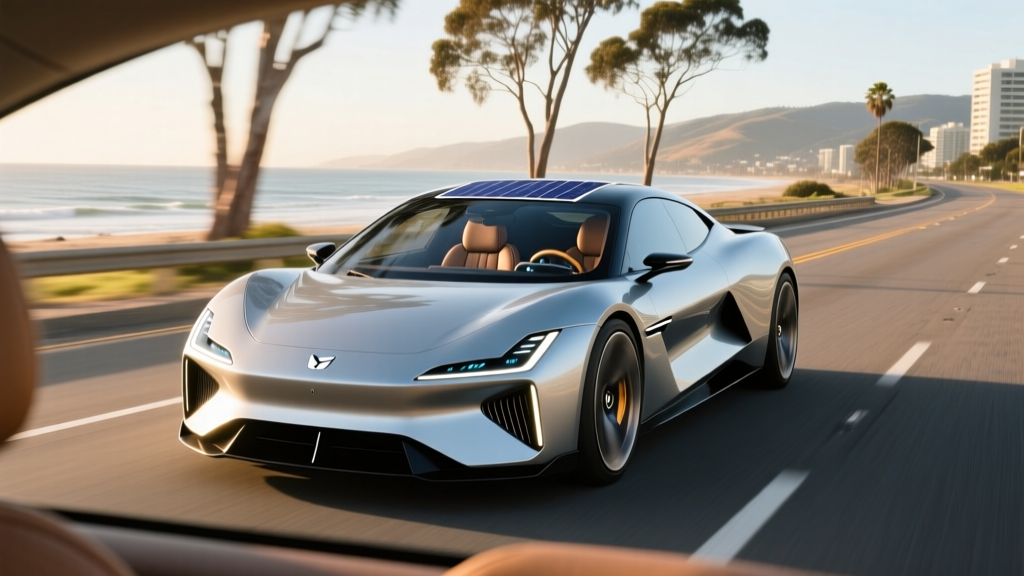
If you've been searching for a Fisker hybrid sports car, you're likely remembering one of the most visually striking plug-in hybrids ever built — or you've encountered the name in a recent headline and wondered what's available today. The short answer requires some context: the Fisker brand has had a turbulent history, and as of 2026, the landscape of Fisker-badged vehicles looks very different from what many buyers expect.
This guide untangles the Fisker nameplate, explains what happened to the original hybrid sports car that made headlines, and provides concrete alternatives for buyers who want hybrid sports car performance with real-world availability, warranty coverage, and dealer support today.
The Fisker Karma: The Original Hybrid Sports Car That Started It All
The vehicle most people associate with the search term "Fisker hybrid sports car" is the Fisker Karma, produced for the 2011–2012 model years. It was a range-extended electric vehicle (technically an EREV, not a conventional hybrid) that paired a 2.0-liter turbocharged GM Ecotec engine with two rear-mounted electric motors producing a combined 403 horsepower and 960 lb-ft of torque.
| Spec | Value |
|---|---|
| Powertrain Type | Range-Extended EV (EREV) |
| Combined Output | 403 hp / 960 lb-ft |
| Battery | 20.1 kWh (usable ~18 kWh), NMC lithium-ion |
| EPA Electric-Only Range | 32 miles |
| EPA Combined MPG (gas mode) | 20 MPG |
| MPGe (electric mode) | 54 MPGe |
| 0–60 mph | 5.8 seconds (Sport mode) |
| Original MSRP | $96,850 – $110,000+ |
The Karma's 32-mile electric-only range was competitive for 2012, and its design — penned by Henrik Fisker, who also designed the Aston Martin DB9 and BMW Z8 — turned heads everywhere. But the vehicle suffered from high pricing, limited production, battery supplier issues (A123 Systems' bankruptcy), and a recall related to battery cooling fans. Fisker Automotive filed for bankruptcy in 2013.
What Happened to Fisker? The Brand's 2026 Status
After Fisker Automotive's collapse, the Karma's tooling and intellectual property were acquired by Chinese conglomerate Wanxiang Group, which later revived the car under the Karma Automotive brand as the Karma Revero (and later the Revero GT). These are separate from Henrik Fisker's subsequent ventures.
Henrik Fisker went on to found Fisker Inc., which focused exclusively on battery electric vehicles — notably the Fisker Ocean SUV. Critically, Fisker Inc. never produced a hybrid sports car. The Ocean was a pure BEV. In mid-2024, Fisker Inc. filed for Chapter 11 bankruptcy, halting production and sales. As of 2026, Fisker Inc. is not manufacturing or selling vehicles, and no new Fisker hybrid sports car is in announced production.
Clarifying the Hybrid Terminology
When researching the Fisker Karma or any hybrid sports car, it's important to understand the distinction:
- HEV (Conventional Hybrid): Charges its battery through regenerative braking and the gas engine. No plug. Example: Toyota Prius.
- PHEV (Plug-In Hybrid): Has a larger battery you charge by plugging in, offering 20–50 miles of electric-only driving before the gas engine engages. Example: Toyota Prius Prime.
- EREV (Range-Extended EV): The original Fisker Karma's architecture — the gas engine acts as a generator and never directly drives the wheels. Electric motors provide all propulsion.
The Karma Revero GT: The Closest Living Relative
If you want a car descended from the original Fisker Karma, the closest current equivalent is the Karma Revero GT, sold by Karma Automotive (not Fisker Inc.). However, Karma Automotive's production has been extremely limited, with sporadic availability and a niche dealer network. The Revero GT features a BMW-sourced 1.5-liter three-cylinder range extender and a 28 kWh battery pack, offering roughly 61 miles of electric-only range (EPA) and a combined range exceeding 360 miles.
That said, Karma Automotive has faced its own financial and production challenges. As of 2026, new-vehicle availability is limited, and buyers should verify current production status and dealer support directly with Karma Automotive before committing.
Hybrid Sports Cars You Can Actually Buy in 2026
For buyers who want the hybrid sports car experience — performance, efficiency, and electrified driving — with full manufacturer backing, dealer networks, and warranty coverage, these are the strongest alternatives available in 2026:
| Vehicle | Type | EPA City | EPA Hwy | EPA Combined | EV Range (PHEV) | Combined HP | Starting MSRP |
|---|---|---|---|---|---|---|---|
| BMW i8 (used market) | PHEV | 28 | 29 | 28 MPG / 69 MPGe | 18 mi | 369 hp | ~$65,000 (used) |
| Toyota GR Supra (I6) | Gas (baseline) | 22 | 30 | 25 MPG | N/A | 382 hp | $56,250 |
| Chevrolet Corvette E-Ray | HEV | 19 | 25 | 21 MPG | N/A (mild hybrid AWD) | 655 hp | $106,595 |
| Porsche 911 Turbo S E-Hybrid (2025+) | PHEV | TBD* | TBD* | TBD* | ~30 mi (est.) | 711 hp | ~$240,000 (est.) |
| McLaren Artura | PHEV | TBD* | TBD* | ~39 MPGe (est.) | 19 mi | 671 hp | $249,750 |
* EPA figures pending or estimated for newest model-year variants. Check fueleconomy.gov for finalized ratings.
Corvette E-Ray: The American Hybrid Sports Car Benchmark
The Chevrolet Corvette E-Ray is the most accessible hybrid sports car on the U.S. market in 2026. It pairs the standard 6.2L LT2 V8 (495 hp) with a front-axle electric motor (160 hp) for a combined 655 hp and standard all-wheel drive. It's a mild hybrid (HEV) — no plug required — and delivers a 0–60 time of 2.5 seconds. The small 1.9 kWh battery recharges via regenerative braking and offers brief electric-only "Stealth Mode" driving at low speeds, though it's not designed for meaningful electric-only range.
EPA fuel economy sits at roughly 21 MPG combined — modest, but impressive for a 655-hp AWD supercar. The E-Ray starts at $106,595 and comes with GM's standard 5-year/60,000-mile powertrain warranty and an 8-year/100,000-mile hybrid component warranty.
McLaren Artura: Exotic PHEV Performance
The McLaren Artura pairs a 3.0L twin-turbo V6 with an axial-flux electric motor and a 7.4 kWh battery for 19 miles of electric-only range and a combined 671 hp. It can DC fast charge (rare for PHEVs) and offers genuine plug-in capability for short commutes. Starting at $249,750, it occupies the ultra-premium segment the Karma once targeted.
Hybrid vs. PHEV vs. Full EV: Which Fits Your Driving?
The search for a Fisker hybrid sports car often reflects a desire to blend electric driving with gas-powered range. Here's how to decide which powertrain type fits your actual use case:
Choose a Conventional Hybrid (HEV) If:
- You don't have reliable access to home or workplace charging
- You want better fuel economy with zero behavior change — no plugging in
- Example: Corvette E-Ray (performance-focused mild hybrid)
Choose a Plug-In Hybrid (PHEV) If:
- You can charge at home (Level 2) and your daily commute is under 30–50 miles
- You want electric-only daily driving but gas flexibility for road trips
- You may qualify for the federal §30D tax credit (up to $7,500, with income, MSRP, and battery sourcing requirements)
- Examples: McLaren Artura, Porsche 911 E-Hybrid
Choose a Full BEV If:
- You have consistent home charging and drive under 300 miles/day
- You want maximum performance per dollar, lowest running costs, and zero tailpipe emissions
- Examples: Porsche Taycan, Tesla Model S Plaid, Lucid Air
Tax Credits, Reliability, and Battery Costs for Hybrid Sports Cars
Hybrid and PHEV sports cars sit in a complex space when it comes to incentives, long-term ownership costs, and battery reliability. Here's what you need to know before buying.
Hybrid Battery Warranty: What to Expect
Federal law mandates that hybrid and PHEV batteries carry a minimum warranty of 8 years / 100,000 miles (in California Air Resources Board states, this extends to 10 years / 150,000 miles for emissions-related components). Most manufacturers match or exceed this:
- Chevrolet (Corvette E-Ray): 8 yr / 100,000 mi hybrid battery & components
- BMW (PHEV models): 8 yr / 80,000 mi high-voltage battery
- McLaren (Artura): 8 yr / unlimited miles high-voltage battery
Battery replacement cost: Out-of-warranty hybrid battery replacement typically ranges from $2,000–$8,000 for mild hybrids (smaller packs) to $8,000–$18,000 for larger PHEV packs. The Corvette E-Ray's small 1.9 kWh pack would be on the lower end; the Artura's 7.4 kWh pack on the higher end. Full replacement is rare before 150,000+ miles with modern NMC chemistry.
Does a Hybrid Sports Car Qualify for a Federal Tax Credit?
Under current IRS §30D rules for 2026, only plug-in hybrids (PHEVs) and full EVs qualify for the federal clean vehicle credit — conventional hybrids (HEVs) like the Corvette E-Ray do not qualify. For PHEVs, the credit can reach up to $7,500, but eligibility depends on:
- MSRP cap: Sedans and sports cars must be under $55,000; SUVs, trucks, and vans under $80,000 (most PHEV sports cars exceed this cap)
- Buyer income limits: AGI must not exceed $150,000 (single), $225,000 (head of household), or $300,000 (joint)
- Battery sourcing: Critical minerals and battery components must meet escalating domestic-content thresholds
- Point-of-sale transfer: Eligible buyers can transfer the credit to the dealer for an upfront price reduction
In practice, most PHEV sports cars — the McLaren Artura at $249,750, the Porsche 911 E-Hybrid at ~$240,000 — far exceed the $55,000 MSRP cap and are ineligible. Buyers should consult a tax professional and verify current-year rules at irs.gov.
Real-World MPG: What Hybrid Sports Cars Actually Deliver
EPA stickers tell part of the story, but hybrid sports cars often behave differently in real-world driving. Here's what to expect:
Conventional hybrids (HEV): Hybrids typically exceed their EPA city rating in stop-and-go traffic because regenerative braking recaptures energy that gas-only cars waste as heat. Highway MPG tends to run slightly below the EPA sticker due to sustained high-speed loads. For the Corvette E-Ray, owners report 18–20 MPG in mixed aggressive driving and up to 25–27 MPG on gentle highway cruises — closely tracking the EPA combined estimate when driven moderately.
Plug-in hybrids (PHEV): Your real-world MPG depends entirely on how often you charge. If you plug in nightly and commute under the electric-only range, you may use almost no gasoline for months. On road trips with a depleted battery, PHEVs revert to gas-only MPG, which can be lower than a comparable HEV due to the extra battery weight. The McLaren Artura, for instance, delivers roughly 28–30 MPG gas-only on the highway once the battery is depleted.
Frequently Asked Questions
Is there a Fisker hybrid sports car available new in 2026?
No. Fisker Inc. filed for bankruptcy in 2024 and never produced a hybrid — only the all-electric Fisker Ocean SUV. The original Fisker Karma (2011–2012) was a range-extended EV, and its spiritual successor, the Karma Revero GT, is sold by Karma Automotive, a separate company with very limited 2026 availability.
How many MPG did the original Fisker Karma get?
The 2012 Fisker Karma was EPA-rated at 54 MPGe in electric mode and 20 MPG combined in gas (charge-sustaining) mode. Its 32-mile electric-only range meant most short trips used no gasoline, but highway driving on gas alone was thirsty for a four-cylinder range extender.
What is the best hybrid sports car I can buy right now?
The Chevrolet Corvette E-Ray offers the best combination of performance (655 hp, 2.5-second 0–60), hybrid efficiency (21 MPG combined), dealer support, and warranty coverage at $106,595. For exotic-car budgets, the McLaren Artura PHEV offers 19 miles of electric-only range with 671 hp.
Do hybrid sports cars need to be plugged in?
It depends on the type. Conventional hybrids (HEVs) like the Corvette E-Ray never need plugging in — the battery charges through regenerative braking and the gas engine. Plug-in hybrids (PHEVs) like the McLaren Artura can be plugged in for electric-only driving, and you'll get the most benefit from them if you charge regularly.
How long do hybrid sports car batteries last?
Modern hybrid batteries (NMC chemistry) are designed to last the life of the vehicle. Most manufacturers warranty them for 8 years / 100,000 miles minimum. Real-world data from Toyota, BMW, and GM hybrid platforms shows most packs retain 85–90%+ capacity at 150,000 miles. Out-of-warranty replacement costs range from $2,000 for mild-hybrid packs to $18,000 for larger PHEV batteries.
Does the Corvette E-Ray qualify for a federal tax credit?
No. The Corvette E-Ray is a conventional hybrid (HEV), not a plug-in hybrid, and only PHEVs and BEVs are eligible for the federal §30D clean vehicle credit. Some states offer separate hybrid incentives — check your state's energy office or fueleconomy.gov for local programs.
Pros of Buying a Hybrid Sports Car in 2026
- Instant electric torque supplements gas-engine power for explosive acceleration
- No range anxiety — gas engine provides unlimited range for road trips
- Regenerative braking reduces brake wear significantly
- Hybrid batteries carry 8–10 year warranties backed by federal law
- Lower fuel costs vs. gas-only sports cars, especially in city driving
Cons to Consider
- Most hybrid sports cars exceed the $55K MSRP cap for federal tax credits
- Added battery weight can affect handling dynamics vs. gas-only counterparts
- PHEV sports cars require home charging access to realize efficiency benefits
- Out-of-warranty battery replacement is a real (if distant) cost
- Insurance premiums for hybrid/exotic sports cars run 15–30% above average
The Fisker hybrid sports car occupies a fascinating place in automotive history — it proved that electrified performance cars could be beautiful, practical, and exciting more than a decade before the market caught up. While the Fisker badge no longer produces vehicles in 2026, the hybrid sports car segment it helped inspire is stronger than ever. Whether you choose the Corvette E-Ray's accessible American V8 hybrid formula, the McLaren Artura's exotic PHEV engineering, or decide to go full EV with a Taycan or Model S Plaid, the key is matching the powertrain to your actual driving patterns, charging access, and budget — not chasing a badge.