The phrase first hybrid automobile sends most people searching for the Toyota Prius, but the real origin story reaches back more than a century before Toyota's engineers ever sketched a hybrid synergy drive. Understanding where hybrid technology began — and how it has fractured into distinct HEV, PHEV, and EREV categories — is the fastest way to figure out which electrified powertrain actually fits your daily driving in 2026.
This guide traces the engineering lineage from the earliest gas-electric prototypes to the current-generation plug-in hybrids selling in U.S. showrooms, then gives you the exact EPA numbers, battery specs, and tax-credit rules you need to make a purchase decision.
The First Hybrid Automobile: Lohner-Porsche Mixte (1900)
The distinction of building the first hybrid automobile belongs to Ferdinand Porsche, who in 1900 created the Lohner-Porsche Mixte Hybrid while working for coachbuilder Ludwig Lohner in Vienna. The Mixte used a gasoline Daimler engine to spin a generator, which fed electricity to hub-mounted electric motors — a series-hybrid architecture that wouldn't feel out of place in a 2026 BMW i3 REx or a Ramcharger EREV.
The Mixte produced roughly 7 horsepower, could reach about 35 mph, and weighed over a ton — mostly because of its large lead-acid battery bank. Only a handful were built, and the concept was shelved as cheap gasoline and mass-produced ICE vehicles (notably the Model T in 1908) made electric and hybrid drivetrains economically unviable for decades.
Several other early claims circulate — Henri Pieper's 1899 Belgian prototype, for instance, used a parallel hybrid layout where an electric motor assisted a small gas engine — but the Mixte is the most documented and technically complete example of a functional hybrid car predating the modern era.
The Long Gap: Why Hybrids Disappeared for 90 Years
Between 1910 and the mid-1990s, hybrid automobiles were essentially extinct in the consumer market. The reasons were straightforward:
- Energy density: Lead-acid batteries weighed far too much per kWh to be practical.
- Fuel cost: Gasoline remained cheap for most of the 20th century, removing the economic incentive.
- Power electronics: Efficient inverters, motor controllers, and regenerative braking systems didn't exist in compact, affordable form.
It took the convergence of nickel-metal hydride (NiMH) battery commercialization, stricter emissions regulations (particularly California's ZEV mandate in the 1990s), and rising oil prices to make the hybrid car viable again. Toyota answered with the Prius (1997, Japan; 2000, U.S.), and Honda followed with the original Insight (1999).
HEV vs PHEV in 2026: What's the Actual Difference?
Modern hybrid buyers face a taxonomy that didn't exist in the early 2000s. Here is the clear distinction:
Conventional Hybrid (HEV)
- Battery: 1–2 kWh, recharged only by regenerative braking and the engine.
- No plug. You fuel it like a gas car.
- Electric motor assists the gas engine; can drive short distances at low speed on electric alone.
- Typical efficiency gain: 30–50% better MPG than an equivalent gas-only model.
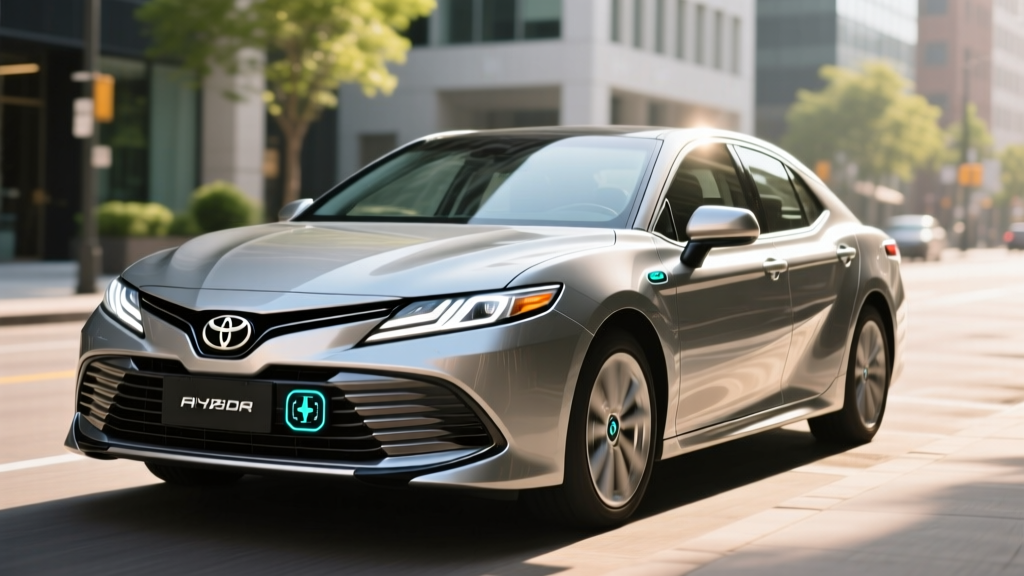
- Example: 2026 Toyota Camry Hybrid (51 city / 49 hwy / 50 combined MPG).
Plug-In Hybrid (PHEV)
- Battery: 12–30 kWh usable, rechargeable via plug (Level 1 or Level 2).
- 20–50 miles of true electric-only driving before the gas engine starts.
- After battery depletion, operates as a conventional hybrid.
- Eligible for up to $7,500 federal tax credit under IRS §30D if sourcing and MSRP rules are met.
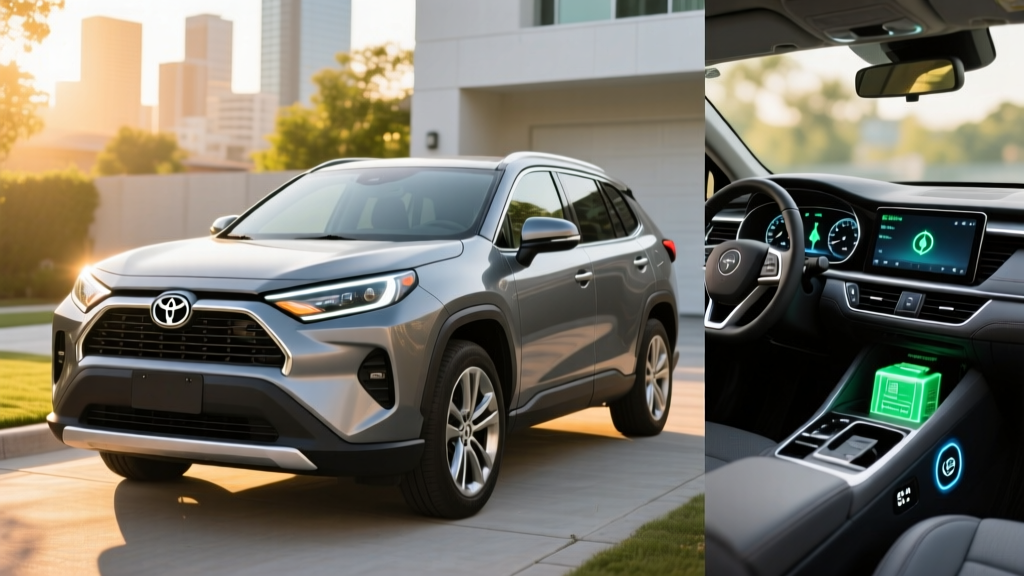
- Example: 2026 Toyota RAV4 Prime (42 mi electric-only, 94 MPGe combined, 38 MPG after depletion).
A common mistake: calling a standard HEV a "plug-in." Conventional hybrids never plug in. If it has a charge port, it's a PHEV (or a BEV).
2026 PHEV Spec Snapshot: Five Popular Models
| Model | EV Range | Battery (kWh) | MPGe (combined) | MPG after depletion | Combined HP | Level 2 charge time | DC Fast Charge | MSRP |
|---|---|---|---|---|---|---|---|---|
| Toyota RAV4 Prime | 42 mi | 18.1 | 94 | 38 | 302 | ~2.5 hr | No | $44,900 |
| Chrysler Pacifica Hybrid | 32 mi | 16.0 | 82 | 30 | 260 | ~2.0 hr | No | $51,095 |
| Jeep Wrangler 4xe | 22 mi | 17.3 | 49 | 20 | 375 | ~2.5 hr | No | $52,690 |
| BMW X5 xDrive50e | 38 mi | 25.7 | 58 | 22 | 483 | ~3.5 hr | No (7.4 kW AC max) | $72,500 |
| Toyota Prius Prime | 44 mi | 13.6 | 127 | 52 | 220 | ~4.0 hr | No | $34,395 |
Sources: fueleconomy.gov, manufacturer specifications. All figures EPA-estimated for 2026 model year.
Real-World MPG: Where Hybrids Beat (or Miss) Their Stickers
Hybrids — particularly HEVs — tend to exceed their EPA city rating in stop-and-go driving because regenerative braking recovers energy that a gas car wastes as heat. On the highway, the advantage narrows because steady-speed driving gives the electric motor less to do.
| Model | EPA Combined | Real-world owner average | Notes |
|---|---|---|---|
| Toyota Camry Hybrid | 50 MPG | 48–54 MPG | Owners routinely beat EPA in city; highway drops to ~44. |
| Honda Accord Hybrid | 48 MPG | 44–50 MPG | Cold weather and short trips lower real-world numbers. |
| Ford Maverick Hybrid | 42 MPG | 37–45 MPG | Heavy payload and towing cut MPG sharply. |
| Toyota Prius (HEV) | 57 MPG | 52–60 MPG | Hyper-milers exceed 60; winter drops to ~48. |
For PHEVs, real-world efficiency depends heavily on how often you plug in. A RAV4 Prime owner who charges nightly and commutes 30 miles may use almost zero gasoline. The same vehicle driven 500 miles without charging returns only ~36–38 MPG — still excellent for an AWD SUV, but far from the 94 MPGe sticker figure, which blends electric and gas operation.
Battery Warranty, Lifespan, and Replacement Cost
Federal Mandate: 8 Years / 100,000 Miles
U.S. federal law requires that hybrid and PHEV traction batteries carry a minimum warranty of 8 years or 100,000 miles (whichever comes first). In CARB states (California and states adopting California emissions standards), that warranty extends to 10 years or 150,000 miles.
Warranty typically covers capacity loss below 60–70% of original, plus defects. Check your manufacturer's specific terms.
Real-world longevity data from millions of Prius, Camry Hybrid, and RAV4 Hybrid units shows NiMH and lithium-ion hybrid batteries lasting 150,000–250,000 miles with 15–25% capacity loss. Many first-generation Prius vehicles are still on their original packs past 200,000 miles.
If a replacement is needed:
- HEV battery (e.g., Camry Hybrid): $2,000–$4,000 installed (remanufactured packs are cheaper).
- PHEV battery (e.g., RAV4 Prime): $6,000–$10,000 installed, depending on pack size and labor.
- Third-party refurbishers and cell-level repair shops now offer lower-cost alternatives in major metro areas.
Because hybrid batteries are smaller than BEV packs (18 kWh vs. 75–100 kWh), replacement is far less financially catastrophic than a full EV pack swap.
Federal Tax Credits for PHEVs in 2026
Under IRS §30D, qualifying new PHEVs can receive up to $7,500 in federal tax credits, transferable at point of sale as an immediate discount. However, eligibility hinges on several rules that change yearly:
- MSRP cap: SUVs, vans, and pickups must be ≤$80,000; sedans ≤$55,000.
- Buyer income cap: Modified AGI ≤$150,000 (single), $225,000 (head of household), $300,000 (joint).
- Battery sourcing: Critical minerals and battery components must meet phased-in domestic/FTEA sourcing thresholds that tighten each year through 2029.
- Final assembly: Vehicle must be assembled in North America.
- Battery capacity: Minimum 7 kWh for PHEVs.
For 2026, models like the RAV4 Prime, Jeep Wrangler 4xe, and Chrysler Pacifica Hybrid have historically qualified for the full $7,500, but component-sourcing rules shift annually. Always verify current eligibility on fueleconomy.gov before purchasing. Conventional HEVs (non-plug-in) do not qualify for §30D.
Who Should Choose HEV, PHEV, or a Full BEV?
Choose a Conventional Hybrid (HEV) if:
- You cannot charge at home or work (apartment, street parking).
- You want zero behavior change — just fuel up and drive.
- Your budget is under $35,000 and you want max MPG per dollar.
- You do mostly city driving where regen recovers the most energy.
Choose a Plug-In Hybrid (PHEV) if:
- You can install a Level 2 charger at home (or have reliable workplace charging).
- Your daily commute is under 40 miles round-trip (coverable on electric).
- You take regular long road trips and don't want to plan around DC fast chargers.
- You want EV-like daily driving with gas-car fallback for towing and trips.
Choose a Full BEV if:
- Home Level 2 charging is available and your daily driving is under 250 miles.
- You want the lowest per-mile energy cost (~$0.04/mi vs. ~$0.12/mi for gas).
- You want zero oil changes, zero emissions system maintenance.
- You can accept cold-weather range loss (15–30% in sub-freezing temps) and plan road trips around charging infrastructure.
The Engineering Thread: From 1900 to Now
What Ferdinand Porsche demonstrated with the Mixte in 1900 — that an electric motor could provide instant torque and regenerative capability while a combustion engine solved the energy-density problem — is the exact same principle behind every 2026 PHEV on sale today. The difference is execution: modern lithium-ion cells store roughly 10× the energy per kilogram of the Mixte's lead-acid bank, silicon-carbide inverters waste far less energy as heat, and software manages the power split thousands of times per second.
The first hybrid automobile wasn't a dead end; it was a proof of concept that needed a century of materials science to catch up. Today's buyer inherits the result: PHEVs that deliver 40+ electric miles for the commute and 500+ total miles for the road trip, with battery warranties that outlast most ownership cycles.
Frequently Asked Questions
What was the first hybrid automobile ever made?
The Lohner-Porsche Mixte Hybrid, built in 1900 by Ferdinand Porsche for the Lohner coachworks in Vienna, Austria. It used a gasoline engine to generate electricity for hub-mounted motors — a series-hybrid layout that predated the Toyota Prius by 97 years.
How many MPG does a modern hybrid get?
It varies by model. The 2026 Toyota Prius HEV achieves an EPA-estimated 57 MPG combined. The Toyota Camry Hybrid returns 50 MPG combined (51 city / 49 highway). Real-world numbers often exceed EPA city ratings in stop-and-go driving but drop on sustained highway runs and in cold weather.
How far can a PHEV drive on electric only?
Current 2026 PHEVs offer 22–44 miles of electric-only range depending on the model. The Toyota Prius Prime leads at 44 miles EPA; the RAV4 Prime delivers 42 miles. After the battery depletes, the vehicle operates as a conventional hybrid with no loss of drivability.
Do conventional hybrids need to be plugged in?
No. Conventional hybrids (HEVs) recharge their small battery pack entirely through regenerative braking and the gasoline engine. There is no charge port. Only plug-in hybrids (PHEVs) and battery-electric vehicles (BEVs) require external charging.
Is a hybrid battery expensive to replace?
HEV battery replacement typically costs $2,000–$4,000 installed; PHEV packs run $6,000–$10,000 due to larger capacity. Federal law mandates an 8-year/100,000-mile warranty on hybrid batteries (10/150,000 in CARB states). Real-world data shows most hybrid packs lasting 150,000–250,000 miles before significant degradation.
Does a hybrid qualify for a federal tax credit?
Only plug-in hybrids (PHEVs) with at least 7 kWh of battery capacity can qualify for the §30D federal clean vehicle credit, up to $7,500. Conventional hybrids (HEVs) do not qualify. Eligibility depends on MSRP caps, buyer income limits, and battery sourcing requirements — verify current rules on irs.gov.
Hybrid vs PHEV vs EV — which should I buy?
If you lack home charging access, choose an HEV. If you can charge at home and commute under 40 miles but still take long road trips, a PHEV is the most versatile option. If you have reliable home charging, mostly drive under 250 miles daily, and want the lowest operating cost and maintenance burden, a full BEV is the better long-term pick.