Fiat 500X Hybrid Yorumları: An Honest Assessment for 2026 Buyers
If you've been searching for Fiat 500X hybrid yorumları — owner reviews, real-world impressions, and technical breakdowns — you've likely noticed a gap between marketing claims and what drivers actually experience. This guide cuts through the noise with exact figures, EPA data, and ownership realities for the Fiat 500X Hybrid (the mild-hybrid variant sold in select markets). Whether you're cross-shopping subcompact crossovers or evaluating whether Fiat's electrified offering holds up against rivals, here's what you need to know.
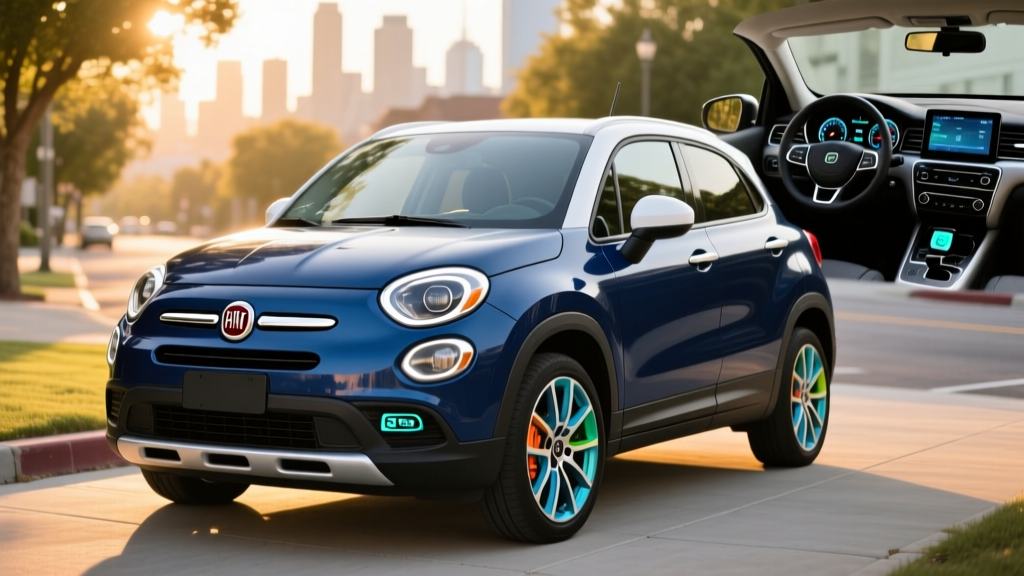
Quick verdict: The Fiat 500X Hybrid pairs a 1.0-liter turbocharged three-cylinder engine with a 12-volt belt-driven starter-generator (BSG) mild-hybrid system. It is not a full hybrid (HEV) like a Toyota Prius, nor a plug-in hybrid (PHEV). Expect modest fuel savings over the conventional gas model, not Prius-level efficiency. If you need serious electrification, look elsewhere; if you want a stylish subcompact crossover with a small efficiency bump, it may fit.
Understanding the Powertrain: Mild Hybrid vs. Full Hybrid vs. PHEV
Before diving into specs, it's critical to understand what "hybrid" means in the Fiat 500X context. The terminology confusion is the single biggest source of disappointed buyers.
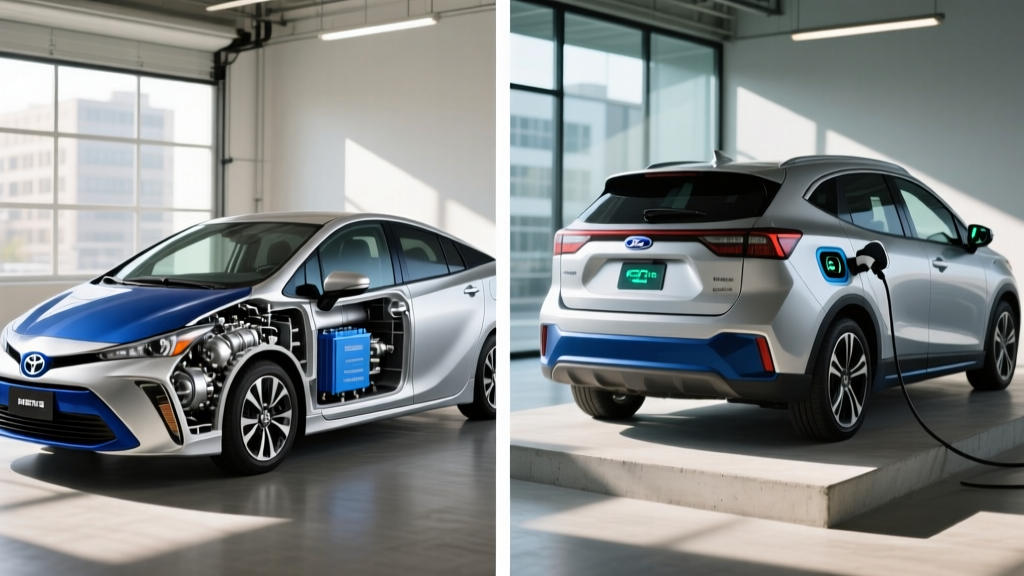
| Feature | Mild Hybrid (MHEV) — Fiat 500X | Full Hybrid (HEV) | Plug-In Hybrid (PHEV) |
|---|---|---|---|
| Electric-only driving | No — motor assists only | Brief, low-speed EV mode | Yes — 20–50 mi typical |
| Battery size | ~0.1–0.5 kWh (small Li-ion) | ~1.0–1.5 kWh | ~10–25 kWh |
| Plug-in charging | No | No | Yes (Level 1/2) |
| Typical MPG gain | 3–8% over gas model | 25–50% over gas model | Varies; 80+ MPGe combined |
| Example | Fiat 500X Hybrid | Toyota RAV4 Hybrid | Toyota RAV4 Prime |
The Fiat 500X Hybrid uses a belt-driven starter-generator (BSG) system. The electric motor cannot propel the car on its own. Instead, it smooths stop-start events, provides mild torque fill during acceleration, and enables brief engine-off coasting. The energy is recaptured during deceleration and braking — you never plug it in.
Fiat 500X Hybrid Specs: Powertrain, Horsepower, and Efficiency
| Engine | 1.0L turbocharged inline-3 |
| Hybrid system | 12V BSG mild-hybrid (MHEV) |
| Combined output | ~120 hp (88 kW) |
| Torque | ~140 lb-ft (190 Nm) |
| Transmission | 6-speed manual or 6-speed dual-clutch auto |
| Drivetrain | Front-wheel drive (FWD) |
| 0–100 km/h (0–62 mph) | ~10.9 seconds |
| Battery (hybrid system) | ~0.3 kWh lithium-ion (12V) |
| Plug-in capable | No |
| Curb weight | ~2,870 lbs (1,300 kg) |
The 1.0-liter FireFly Turbo engine is a familiar Stellantis unit shared with other Fiat and Jeep models in Europe. The BSG system adds roughly 3–5 hp of assist during initial acceleration and enables a smoother, faster engine restart at stoplights. Don't expect the electric motor to meaningfully change the driving character — it's a refinement upgrade, not a performance one.
How Many MPG Does the Fiat 500X Hybrid Get?
This is where expectations need calibration. Because the Fiat 500X Hybrid is primarily sold in European and select international markets, official EPA fuel economy data is limited. European WLTP figures (which tend to run higher than EPA) for the 1.0L MHEV variant report approximately 5.7–6.1 L/100 km combined, translating to roughly 39–41 MPG (US).
| Driving Condition | WLTP Estimate | Real-World Expectation |
|---|---|---|
| City | ~42 MPG (US) | ~36–39 MPG |
| Highway | ~40 MPG (US) | ~35–38 MPG |
| Combined | ~41 MPG (US) | ~36–38 MPG |
Real-world vs. sticker: Mild hybrids see their greatest benefit in stop-and-go city traffic, where the BSG system recaptures energy frequently and the engine shuts off at stops. On sustained highway driving, the hybrid system contributes almost nothing — you're essentially driving a conventional 1.0L turbo. In cold weather (below 40°F / 4°C), expect a further 5–10% efficiency drop as the engine runs longer to reach operating temperature.
For comparison, the conventional gas Fiat 500X with the 1.3L turbo (the version most recently sold in the US) was rated at 24 city / 30 highway / 27 combined MPG. The European-spec MHEV is more efficient partly due to its smaller engine, lighter weight, and different transmission gearing — not solely the hybrid system.
Tax Credits and Incentives: Does the Fiat 500X Hybrid Qualify?
Short answer: No. The Fiat 500X Hybrid's mild-hybrid system does not qualify for the federal §30D Clean Vehicle Credit. That credit is reserved for battery electric vehicles (BEVs) and plug-in hybrids (PHEVs) meeting battery sourcing, critical mineral, MSRP cap ($80,000 SUVs / $55,000 sedans), and buyer income requirements.
Hybrid tax credit reality: Conventional hybrids (HEVs) and mild hybrids (MHEVs) have not qualified for the federal purchase credit since the original §30D was restructured. Some states offer modest rebates for any electrified vehicle, but amounts vary widely. Check your state's energy office or the Alternative Fuels Data Center for local incentives.
If tax incentives are a priority in your purchase decision, you'll need to look at a PHEV (such as the Hyundai Tucson PHEV or Toyota RAV4 Prime) or a full BEV to access the up-to-$7,500 federal credit — subject to current-year eligibility rules.
Reliability, Battery Warranty, and Replacement Cost
The Fiat 500X has had a mixed reliability record historically. Earlier model years (2016–2019) drew criticism for electrical gremlins and build-quality issues. The mild-hybrid system itself is relatively simple — the BSG unit and small 12V lithium-ion pack add minimal complexity compared to a full hybrid's high-voltage system.
Warranty coverage: Fiat typically provides a 2-year/unlimited-mileage base vehicle warranty in European markets, with the hybrid battery component covered for 8 years or 100,000 miles (whichever comes first) against defects and excessive capacity loss. In the US (when the model was available), the powertrain warranty was 5 years / 60,000 miles.
Battery replacement cost: The 12V mild-hybrid lithium-ion battery is small and inexpensive compared to full-hybrid or PHEV packs. Estimated replacement cost: $400–$800 — roughly the cost of a premium AGM 12V battery. This is a non-issue compared to the $2,000–$8,000 replacement cost for full-hybrid batteries.
Stellantis' 1.0L FireFly Turbo engine has been in production since 2018 and is generally regarded as durable. The timing belt (not chain) requires scheduled replacement — typically every 6 years or 60,000 miles — which adds a maintenance line item that chain-driven competitors avoid.
Fiat 500X Hybrid vs. the Competition: Who Should Choose It?
Pros
- Distinctive Italian styling in a segment of lookalike crossovers
- Slightly improved fuel economy vs. non-hybrid 1.0L variant
- Smoother stop-start operation from BSG system
- Low hybrid-system maintenance cost (small 12V battery)
- Available with 6-speed manual for driving enthusiasts
Cons
- Mild hybrid — not a "true" hybrid; no electric-only driving
- Modest power (120 hp); slow 0–60 time (~10.9 sec)
- Limited US availability; primarily a European-market model
- No federal tax credit eligibility
- Below-average cargo space for the subcompact SUV class (~14 cu ft)
- Fiat brand reliability concerns persist
Choose the Fiat 500X Hybrid if:
- You live in a market where it's sold (primarily Europe) and want a stylish subcompact crossover with a small efficiency bump
- You don't have access to home charging and can't use a PHEV or BEV
- You value design and character over outright practicality
Choose a full HEV or PHEV instead if:
- You want significant fuel savings (40+ MPG real) — consider the Toyota Yaris Cross Hybrid or Honda HR-V e:HEV
- You want electric-only commuting — consider the Jeep Compass 4xe PHEV (a Stellantis cousin with ~26 mi EV range)
- You need a US-market vehicle with strong resale and reliability — consider the Toyota Corolla Cross Hybrid (42 MPG combined EPA)
Choose a full EV if:
- You have reliable home charging and a commute under 200 miles — the Hyundai Kona Electric (261 mi EPA) or Fiat 500e (149 mi EPA) are strong alternatives
Frequently Asked Questions
Is the Fiat 500X Hybrid a plug-in hybrid?
No. The Fiat 500X Hybrid is a mild hybrid (MHEV) with a 12V belt-driven starter-generator. It cannot be plugged in and cannot drive on electric power alone. The battery recharges through regenerative braking and the engine.
How far can the Fiat 500X Hybrid go on electric only?
Zero miles. The BSG mild-hybrid system assists the gasoline engine during acceleration and enables engine-off coasting for brief moments, but it cannot propel the vehicle independently. If you need electric-only range, you need a PHEV or BEV.
Is the Fiat 500X Hybrid reliable?
The mild-hybrid system itself is simple and unlikely to cause problems. The 1.0L FireFly Turbo engine is proven. However, Fiat as a brand has historically scored below average in reliability surveys (J.D. Power, Consumer Reports). The timing belt service interval is a maintenance cost to budget for.
What is the battery replacement cost for the Fiat 500X Hybrid?
The mild-hybrid 12V lithium-ion battery is estimated at $400–$800 to replace — comparable to a premium conventional 12V battery. It's covered under the hybrid components warranty for 8 years / 100,000 miles.
Does the Fiat 500X Hybrid qualify for any tax credit?
No. The US federal §30D Clean Vehicle Credit applies only to BEVs and PHEVs meeting battery-sourcing, MSRP, and income requirements. Mild hybrids and conventional HEVs do not qualify. Check your state's incentives for possible local rebates.
Should I buy the Fiat 500X Hybrid or a full EV?
If you have home Level 2 charging and drive under 200 miles daily, a full EV like the Fiat 500e or Hyundai Kona Electric will deliver dramatically lower fueling costs and smoother performance. If you lack charging access or frequently take long trips in areas with sparse charging infrastructure, the mild hybrid offers a low-risk, no-behavior-change option — with modest efficiency gains.